Support

Ubon Ratchathani National Museum

About

A journey into the cultural wealth of the northeastern region of Thailand should begin right here. The Ubon Ratchathani National Museum is the first and most significant museum in the city of Ubon Ratchathani, having opened its doors in 1989 to preserve the unique heritage of the Isan region.
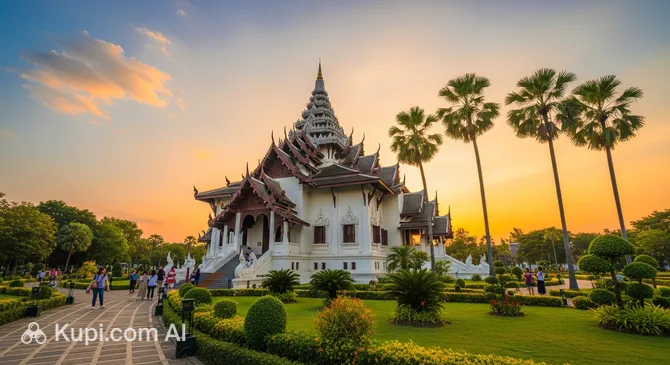
Ubon Ratchathani National Museum
Ubon Ratchathani National Museum. Иллюстрация. Источник: Kupi.com AI

The building itself is a work of art: it is a former city hall built in 1918 in the style of Thai-European eclecticism. The elegant one-story structure is decorated with carved floral panels and a garuda figure at the top, making it one of the city's most beautiful architectural landmarks.

Inside, visitors are treated to a grand journey through the centuries, from prehistoric times to modern ethnology. The collection includes rare artifacts, such as statues from the Thai-Khmer period, ceramics over 3,000 years old, and the only seated statue of Shiva in Southeast Asia in the form of Ardhanarishvara.

Contacts

For those planning a visit to this iconic site, we have compiled the relevant contact information. The museum is located in the heart of the city and is easy to find by looking for the historic city hall.

How to contactContact
Address318 Khuanthani Rd, Amphoe Mueang Ubon Ratchathani, Chang Wat Ubon Ratchathani 34000, Таиланд
Phone+66 45 251 015
Websitewww.virtualmuseum.finearts.go.th

What to Do

A walk through the museum is organized chronologically, allowing you to literally travel through time. Be sure to pay attention to the textile gallery, which features exquisite local silk products, and the hall with ancient musical instruments. Khmer sculptures from the 8th–12th centuries, demonstrating the supreme skill of ancient sculptors, are of particular value.

Despite the lack of air conditioning, the building remains pleasantly cool thanks to its clever architecture and natural ventilation. Information plaques in Thai and English will help you understand the purpose of the ancient items. The museum is ideal for a thoughtful study of history in a calm and quiet atmosphere.

A visit to the museum pairs perfectly with a trip to the neighboring Wat Si Ubon Rattanaram temple. It houses a sacred 7-cm topaz Buddha statue—one of the most revered relics in the city. This combination allows you to experience both the scientific and spiritual aspects of Isan culture in one go.

Getting There

Getting to this cultural center is easy, as it is centrally located at 318 Khuanthani Rd. If you are staying in the center of Ubon Ratchathani, you can reach the building on foot or take a colorful tuk-tuk for a small fee. The City Pillar Shrine, located nearby, serves as a great landmark.

For travelers arriving at Ubon Ratchathani Airport (UBP), the simplest way is to use a taxi or the Grab service. The ride takes about 15–20 minutes and costs approximately 200–300 baht. From the city's main bus terminal, songthaew minibuses are available, which will take you to the museum for 20–50 baht.

For those who prefer traveling independently by rented scooter or car, free parking is available on the museum grounds. The convenient location allows you to combine your museum visit with a walk in the nearby Thung Si Muang park.

Ближайший город: Ubon Ratchathani

History & Facts

The building that houses the exposition today is an outstanding architectural monument in its own right. Built in 1918 during the reign of King Rama VI, it originally served as the city hall. The land for this important public project was donated by Lady Chiangkham Chumphon Na Ayutthaya.

In 1983, the provincial administration handed over this elegant rectangular building to the Fine Arts Department to be converted into a cultural center. The Ubon Ratchathani National Museum received official status in 1986, and the grand opening took place on June 30, 1989, with the participation of Princess Maha Chakri Sirindhorn.

For its unique architectural features combining Thai style and European eclecticism, the building was honored with a prestigious award from the Association of Siamese Architects. In October 2001, the museum was officially registered as a historical monument protected by the state.

Today, the museum is the primary guardian of the Isan region's heritage. Its collections highlight close historical ties with the ancient cultures of Laos, Cambodia, and Vietnam, which flourished in this area long before the construction of the famous Angkor Wat.

Time Needed

To see all the halls and delve into the details of the region's rich history without rushing, an average visitor will need between 1.5 and 2 hours. This is enough time to get acquainted with the main exhibits, ranging from prehistoric tools to fine textiles.

If you are interested in archaeology or professional photography, we recommend setting aside about 2.5 hours for your visit. This will allow you not only to study rare artifacts but also to watch the introductory video and enjoy the unique architecture of the city hall building itself.

Working Hours

When planning your itinerary, please note that the museum is closed on Mondays and Tuesdays. On other days, from Wednesday to Sunday, the doors are open to visitors from 09:00 to 16:00.

Before your trip, it is recommended to check the official website or verify information with local guides, as the schedule may change during public holidays.

DayWorking hours
понедельникЗакрыто
вторникЗакрыто
среда09:00–16:00
четверг09:00–16:00
пятница09:00–16:00
суббота09:00–16:00
воскресенье09:00–16:00

Nearby

Exploring the surroundings of the national museum will allow you to get an even better feel for the atmosphere of the region and its daily life. Nearby, you will find both majestic monuments and cozy modern cafes to relax in after your tour.

NameDistance
Thung Sri Mueang0.3 km
Wat Thung Si Mueang0.5 km
Ubon Ocha0.6 km
Phadaeng Hotel0.7 km
Wat Chaeng1 km
Huai Muang Park2.7 km
Central Ubon3.9 km

Reached the end of the page?

That means the route is fully explored