Support

Hue Museum of Royal Antiquities

About

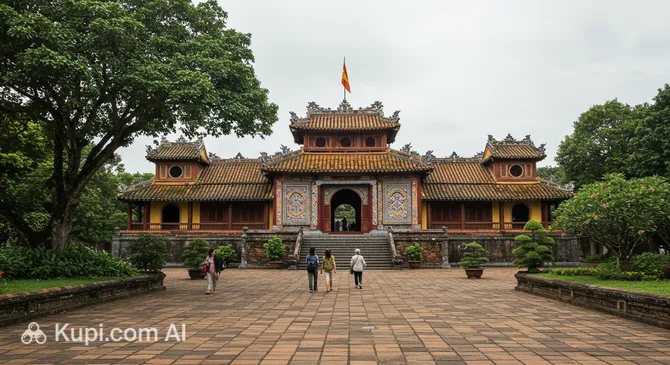
The Hue Museum of Royal Antiquities invites you to immerse yourself in the atmosphere of the former grandeur and splendor of the imperial court. Located in the historic heart of Hue, this treasury occupies the ornate Long An Palace, which is a masterpiece of Vietnamese architecture in its own right. This site is a must-visit for anyone wishing to understand the culture that ancient Vietnam is famous for.
\n\n

Museum of Royal Antiquities
Museum of Royal Antiquities. Иллюстрация. Источник: Kupi.com AI

\n\n

Inside the museum lies an exceptional collection of artifacts from the Nguyen Dynasty—the country's last royal family. Here, you can see not only state regalia, such as the imperial throne and seals, but also the personal belongings of the rulers: exquisite robes, unique ceramics, bronze items, and lacquerware. The palace walls are adorned with wooden panels engraved with poems, giving the space a particularly poetic feel.

\n\n

As an important part of the Imperial Citadel complex, the site is included in the UNESCO World Heritage List. Despite its relatively modest size, the museum is rightfully considered one of the most interesting and insightful in the region, offering guests a rare opportunity to see authentic national treasures in their historical setting.

Contacts

To confirm the latest information regarding special exhibitions or visiting rules, you can use the following contact details:

\n\n
How to contactContact
Address03 Lê Trực, Phú Hậu, Huế, Thành phố Huế, Vietnam
Phone+84 234 3524 429
Websitewww.baotangcungdinh.vn

What to Do

Inside the museum's halls, a fascinating world of the imperial family's daily and ceremonial life will unfold before you. The main highlights to focus on are the royal throne and the magnificent robes embroidered with gold thread. By examining the seals and personal utensils of the monarchs, you can imagine how official receptions and secret palace councils took place centuries ago.

\n\n

Be sure to notice the architectural details of the building itself: the carved wooden panels with calligraphy and relief sculptures from the Minh Mang era are striking in their delicate craftsmanship. Art lovers will appreciate the rich collections of bronze items and famous Vietnamese lacquer, which were created over centuries by the country's finest masters for the imperial court.

\n\n

For a deeper immersion into the context, it is recommended to use an audio guide or book a tour, as there is a story or legend behind every object here. Visitors are permitted to photograph most exhibits (without flash), allowing you to capture memories of these rare treasures. A visit here perfectly complements a walk through the Citadel gardens, creating a complete impression of Hue's heritage.

Getting There

Finding your way to this treasury of history is easy, as the building is located at 03 Lê Trực, Phú Hậu, in the very heart of the city, right next to the Imperial Citadel on the right bank of the Huong (Perfume) River. If you are already within the Citadel grounds, the walk to the museum takes only a few minutes and serves as a pleasant extension of your tour through the palace complex.

\n\n

For those traveling from other districts, the most convenient way to arrive is by calling a taxi via the Grab app or renting a bicycle, which is very popular among tourists in this part of the country. Travelers arriving from Phu Bai Airport will need about 30–40 minutes by taxi to cover the 15–20 km distance.

\n\n

To add a special touch to your journey, you can arrive by traditional boat along the Perfume River. Public transport in the city is also available with nearby stops, but most guests prefer to combine a visit to the museum with a walking tour of the historic center.

Ближайший город: Hue

History & Facts

The history of this site is inextricably linked to the magnificent Long An Palace, which houses the exhibition today. Built in 1845, the palace has endured challenging times: in 1885, it was dismantled by French forces, but in 1909, by order of the emperor, the building was restored using original materials, preserving its grandeur for future generations.

\n\n

The museum itself was officially established in 1923, becoming the first and primary institution for preserving the priceless heritage of the Nguyen Dynasty. In 2023, this cultural space celebrated its centenary, continuing its mission to protect national treasures.

\n\n

The Nguyen Dynasty ruled the country from 1802 to 1945, and for nearly a century and a half, the region's traditions and culture were forged here. Many of the items on display date back to the era of Minh Mang, a period historians often describe as the pinnacle of imperial power.

\n\n

After the architectural ensemble was recognized as a UNESCO World Heritage site in 1993, the museum's role in preserving the region's identity grew even further. Today, it is not merely a storehouse for artifacts but a living testament to an era when the city was the political and cultural center of the entire country.

Time Needed

When planning your itinerary, keep in mind that the museum's exhibition is quite compact but extremely rich in detail. For a standard overview of the main halls and the collection of artifacts, most visitors require 1 to 2 hours.

\n\n

If you plan to combine your museum visit with an extensive walk through the entire Imperial Citadel, we recommend allocating 3–4 hours for the experience. This will allow you to unhurriedly enjoy both the architectural details of Long An Palace itself and the majestic gardens and pavilions surrounding it.

Working Hours

The museum is open to visitors daily, providing convenient access to historical treasures throughout the week. You can plan your visit at any time that suits you, based on the following schedule:

\n\n

Monday – Sunday: 7:00 AM – 5:30 PM

\n\n

Please note that entry to the grounds usually closes 30 minutes before the official closing time, so it is best to arrive early to ensure you have enough time to explore all the halls without rushing.

7:00 – 17:30

Nearby

Exploring the surroundings of the imperial museum allows you to further experience the majesty of the ancient capital and see how history intertwines with modern city life. Just a few minutes' walk away are other iconic structures of the architectural complex that help complete the picture of monarchical life.

\n\n

A stroll through nearby parks and squares offers an opportunity to rest in the shade of tropical trees and observe local color before heading to the famous imperial tombs located a bit further from the center.

\n\n
NameDistance
Luc Bo Cultural Space0.2 km
Imperial City of Hue0.5 km
Meridian Gate0.5 km
Kien Trung Palace0.6 km
Phu Van Lau0.7 km
Nguyen Dinh Chieu Walking Street0.9 km
Imperial City of Hue1.1 km

Reached the end of the page?

That means the route is fully explored