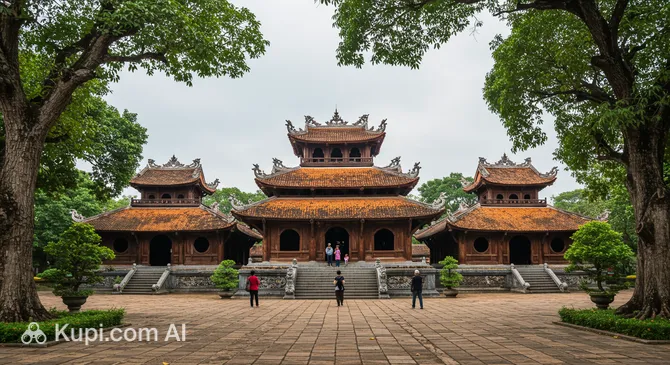
Tucked away among dense pine forests in Thuy Xuan commune, Tu Hieu Pagoda (Chùa Từ Hiếu) is one of the most atmospheric and revered Buddhist monasteries in Hue. Founded in 1843, this sanctuary in Vietnam is more than just a religious site; it is a living monument to filial love and devotion. Its name translates to "Filial Piety", a reminder of the touching legend of its founder.
Tu Hieu Pagoda. Illustration.
Source: Kupi.com AI
Traveller photos:
The architectural ensemble of the pagoda is designed in the classic style of the ancient capital and harmoniously integrated into the surrounding landscape. The territory of about 8 acres includes manicured gardens, quiet ponds, and traditional buildings with characteristic wings and tiled roofs. The main hall is dedicated to the worship of Buddha, while other parts of the complex house altars dedicated to protectors of the faith and historical figures.
Special significance is given to this place by its close connection with the name of the great Zen master Thich Nhat Hanh. The pagoda serves as a center for spiritual enlightenment and meditation, where pilgrims from all over the world come in search of inner peace. An atmosphere of profound tranquility prevails here, emphasized by the rustle of pine needles and the melodic singing of birds.
Contacts
For those planning to visit this spiritual center, it's useful to have the exact coordinates and address. The pagoda is located in a scenic suburb and is easy to find using navigation.
A walk through the grounds of Tu Hieu Pagoda is primarily an experience of deep relaxation and contemplation. You can wander for hours along winding paths through the pines, breathing in the fresh air and enjoying the silence, broken only by the sounds of nature and the occasional chime of temple bells. Be sure to linger by the picturesque ponds filled with lotuses and goldfish—it’s the perfect spot for reflection and rest.
History and architecture buffs should take a close look at the carvings on the temple walls and explore the unique shrines, including the Quan Am altar. A visit to the old cemetery of the Nguyen Dynasty eunuchs, located deep in the garden, leaves a lasting impression. Photographers will find endless subjects here, from the play of light in the pine forest to the graceful curves of the ancient roofs.
If you’re lucky, you can observe the daily life of the monks or even participate in a Zen meditation session. The pagoda remains an active training center, so followers of Thich Nhat Hanh's teachings are often seen here. Many visitors come specifically to practice mindful walking along the peaceful forest trails surrounding the monastery.
Getting There
Getting to this secluded corner is quite simple, as it is located just 5–7 kilometers from central Hue. The most convenient and fastest way is to use a taxi or rent a motorbike, which will allow you to enjoy the road leading to the Thuy Xuân hills.
If you prefer an active holiday, you can reach the pagoda by bicycle—the ride from the city center takes about 20–30 minutes. Public buses also run in this direction; however, tourists are more often advised to use mobile apps to book transport to get directly to the entrance of the pine forest.
A trip from the famous Citadel will take no more than 15–20 minutes. It is recommended to leave early to enjoy the morning coolness and the silence of the forest surrounding the monastery complex.
Nearest city: Hue
History & Facts
The monastery’s founding in 1843 is tied to the deeply personal story of the monk Nhat Dinh. He built a modest hut in the forest to care for his ailing mother. Despite strict Buddhist vows, the monk bought meat and fish for her when it was necessary for her recovery. This act of devotion so moved Emperor Tu Duc that he bestowed the name "Tu Hieu" upon the pagoda, which translates to "Filial Piety."
Over time, the humble hut grew into a majestic temple complex reflecting the finest architectural traditions of the ancient capital. Interestingly, the pagoda served as a refuge for the royal eunuchs of the Nguyen Dynasty for a long time. They found peace here in their old age, and the complex still houses a cemetery where 24 court officials are buried.
In recent history, Tu Hieu Pagoda gained global fame thanks to the Zen master Thich Nhat Hanh. It was here that he began his spiritual journey and where he returned in his final years. His teachings on meditation and mindfulness draw followers from all over the world to the pagoda, making it a vital center for Zen Buddhism.
Time Needed
To fully explore the grounds and immerse yourself in its serene atmosphere, visitors are recommended to set aside 2–3 hours. This is enough time to leisurely see the main buildings, walk by the lotus pond, and sit in the shade of the pines.
About an hour will be spent exploring the architecture and altars of the main halls, while the rest of the time should be dedicated to garden walks and meditation. If you plan to take artistic photographs or observe the life of the monks, it's best to allow a bit more time for your visit, especially in the morning hours.
Working Hours
The doors of the monastery complex are open to believers and travelers 24/7. Since the pagoda is an active religious site, access is possible at any time, allowing you to see it in the rays of the rising sun or in the mysterious twilight.
However, for the most comfortable visit and to see all the architectural details, it is recommended to come during daylight hours. Usually, pilgrims and tourists choose the interval from early morning until sunset to fully appreciate the beauty of the gardens and have the opportunity to enter the inner temple rooms.
Open 24/7
Nearby
A visit to the pagoda can easily be combined with exploring other historical masterpieces for which the surroundings of Hue are so famous. The temple's location in a hilly area makes it an excellent starting point for exploring imperial tombs and parks.
Many iconic sites are located within a radius of just a few kilometers, allowing for a packed full-day itinerary. Below is a list of nearby points of interest:
We use cookies and services to collect user information. This is essential for the functioning of the site and for marketing purposes. You can find out more in .
Other popular routes
Where travelers fly most — pick a route and check prices