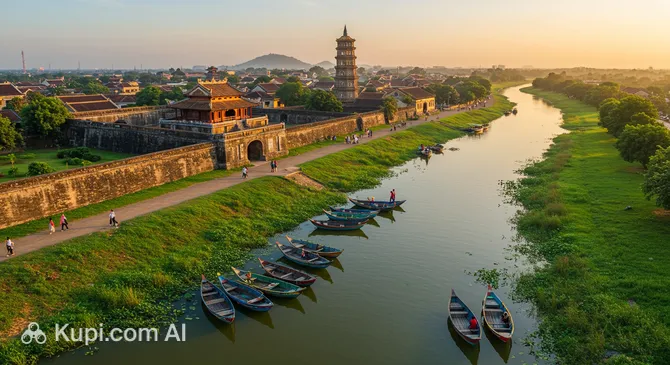
Hue is a captivating destination that serves as a poignant reminder of the imperial past of Vietnam. Situated along the banks of the enchanting Perfume River, this city is renowned for its poetic landscapes and deep cultural roots. As the capital of the Nguyen Dynasty for nearly 150 years, Hue retains a unique atmosphere of tranquility and regal grandeur that sets it apart from the bustling modern metropolises of the country.
Geographically located in the Thua Thien Hue province in the central region, the city is home to over 650,000 residents. Its position makes it a vital cultural crossroads, blending distinct architectural styles with lush natural surroundings. The climate here is tropical monsoon, often characterized by a misty ambiance in the cooler months that adds to the city's mysterious and romantic charm.
Hue. Illustration.
Source: Kupi.com AI
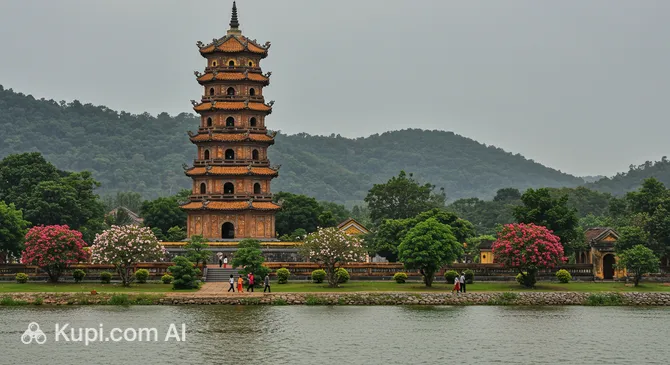
Visitors are deeply drawn to the rich history of Hue, which is visibly etched into its ancient walls and monuments. The city is most famous for the massive Imperial City (The Citadel), a UNESCO World Heritage site that offers a fascinating glimpse into the lives of former emperors. Another iconic landmark is the seven-story Thien Mu Pagoda, standing elegantly on a hill overlooking the river, serving as the unofficial symbol of the city.
Beyond its monumental architecture, Hue is celebrated for its sophisticated cuisine, originally developed to please imperial palates. Whether you are exploring the majestic royal tombs scattered across the countryside or enjoying a peaceful dragon boat ride at sunset, a visit to Hue promises an unforgettable journey into the heart of traditional heritage.
Weather Overview
Understanding the local climate patterns will help you pack appropriately for your visit to the Imperial City. The weather in Hue is generally warm and humid, typical of a tropical monsoon region. Temperatures fluctuate moderately throughout the year, with average monthly readings peaking around 30°C in the summer and cooling down to approximately 21°C during the winter months.
The hottest period usually occurs from May to August, where June sees average temperatures of 30.1°C and daily highs reaching up to 33.5°C. This is a popular time for travel, though the heat can be intense. Conversely, January is typically the coolest month, with an average temperature of 21.2°C, offering a milder atmosphere for exploring the extensive outdoor temple complexes.
Rainfall is a frequent occurrence, particularly in the second half of the year. According to the data, October is the wettest month in terms of frequency, experiencing rain on roughly 27 days. March stands out as one of the drier months, with precipitation occurring on about 12 days. Overall, you can expect hot summers with regular showers and mild, significantly wetter winters, so carrying rain gear is recommended for most of the year.
Average monthly temperature
Average monthly precipitation
Interesting Facts
Beyond the main attractions and historical grandeur, Hue holds many fascinating secrets and unique features that often surprise visitors. Here are some intriguing facts about this former imperial capital:
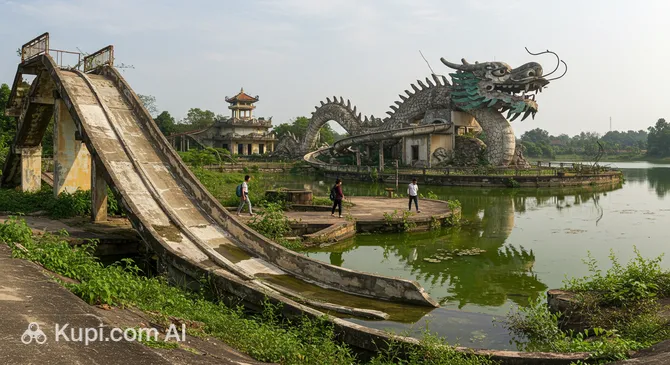
For those seeking something unconventional, Thuy Tien Lake offers a surreal experience. This abandoned water park, famous for its massive, rusting dragon statue that visitors can climb inside, has become a cult destination for urban explorers and photographers looking for eerie, post-apocalyptic scenery.
Hue is widely regarded as the culinary capital of the nation. It is estimated that more than half of all traditional Vietnamese dishes originated here, developed by royal chefs who were required to create different meals for the Nguyen emperors every single day without repetition.
The serene Thien Mu Pagoda houses a poignant relic of modern history: the blue Austin automobile that transported the monk Thich Quang Duc to Saigon in 1963. This is the car he used before his famous self-immolation to protest the treatment of Buddhists, an event that made headlines worldwide.
The Imperial City of Hue contains a "city within a city" known as the Purple Forbidden City. In the past, this innermost enclosure was exclusively reserved for the emperor and his concubines, and any unauthorized male who dared to enter faced the penalty of death.
Thuy Tien Lake. Illustration.
Source: Kupi.com AI
Traveler photos:
How to Get There
Reaching the former imperial capital is relatively straightforward, as the city is well-connected to the rest of the country by air and road. Whether you are planning a quick flight or a scenic drive from a neighboring province, there are several convenient options to suit your itinerary. You can find detailed information and more about how to get to Hue on our dedicated page.
For most travelers, the most direct entry point is Phu Bai International Airport (HUI), located approximately 14 km from the city center. This regional hub handles a steady flow of domestic traffic and offers a quick transfer to the downtown area, with a taxi ride taking about 40 minutes. If you are looking for more international flight connections, you might consider flying into Da Nang International Airport (DAD) in the city of Da Nang, which is about 80 km away. While it requires a longer transfer—approximately 2.5 hours by car or bus—it serves as a major gateway to Central Vietnam with significantly higher passenger volumes.
For clarity, here is a summary of the main airports:
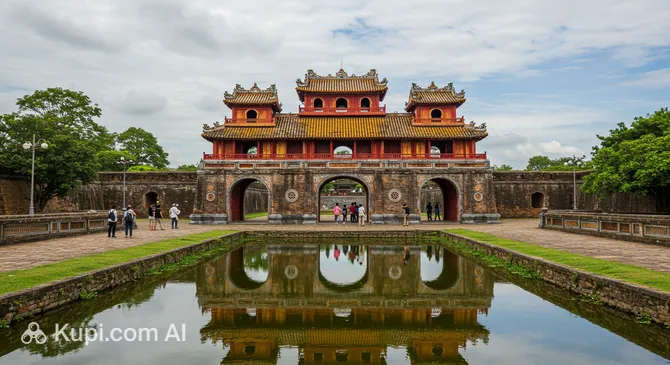
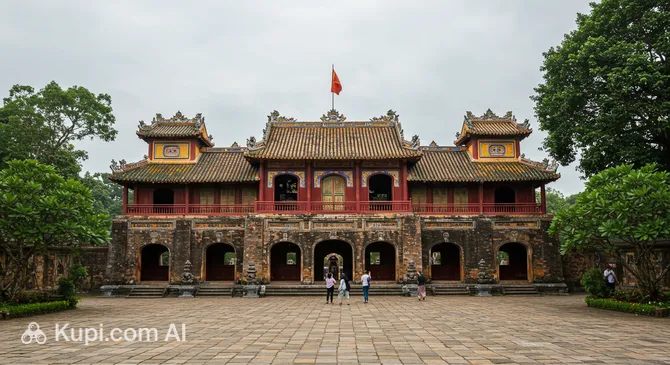
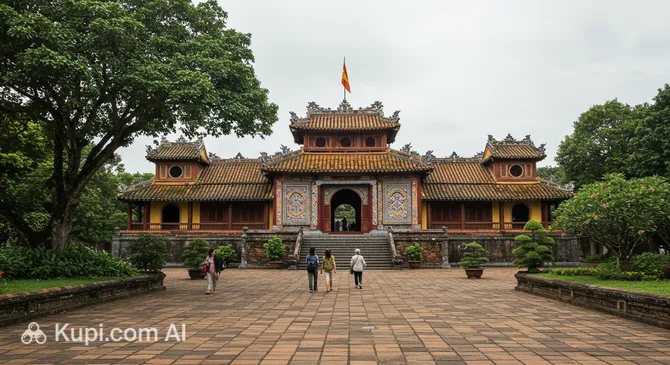
The Imperial City of Hue is undoubtedly the centerpiece of any visit to the region. As a vast complex of palaces, temples, walls, and gates, it served as the political and religious heart of the Nguyen Dynasty. Walking through the imposing Meridian Gate, visitors are transported back in time to an era of royal grandeur. The site is fascinating not only for its sheer scale but also for the resilience of its architecture, which is currently undergoing meticulous restoration to return it to its former glory.
Imperial City of Hue. Illustration.
Source: Kupi.com AI
Traveler photos:
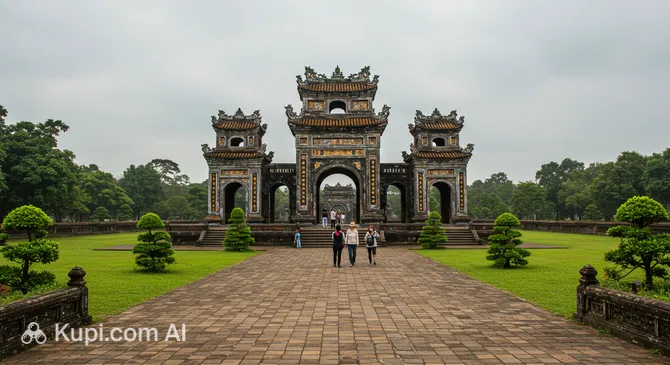
For a serene escape into history, the Tomb of Emperor Tu Duc offers one of the most poetic settings in Hue. Designed by the emperor himself before his death, this complex blends seamlessly with the surrounding pine forests and a tranquil lake. Tourists are often captivated by the harmony between the man-made structures and nature, making it feel more like a royal park than a mausoleum. It provides a unique insight into the romantic and philosophical side of the monarch who reigned longest during the dynasty.
Tomb of Emperor Tu Duc. Illustration.
Source: Kupi.com AI
Traveler photos:
Standing tall on the banks of the Perfume River, the Thien Mu Pagoda is an iconic symbol of the city. This seven-story octagonal tower is not just an architectural marvel but also a site of deep spiritual significance. Visitors flock here to enjoy the peaceful gardens, listen to the chanting of resident monks, and admire the panoramic river views. The pagoda's blend of folklore, history, and scenic beauty makes it a must-visit landmark.
Thien Mu Pagoda. Illustration.
Source: Kupi.com AI
Traveler photos:
Another architectural gem is An Dinh Palace, known for its distinctive fusion of traditional Vietnamese motifs and European neoclassical styles. Built as a private residence for Emperor Khai Dinh, the palace features intricate murals and lavish interiors that showcase the shifting tastes of the early 20th century. It is particularly interesting for art lovers and those curious about the modernization of the royal family's lifestyle during the colonial era.
An Dinh Palace. Illustration.
Source: Kupi.com AI
Traveler photos:
Local Cuisine
Hue is widely recognized as the gastronomic heart of Vietnam, where eating is considered an art form. The cuisine here is broadly divided into two distinct categories: the elaborate Imperial cuisine, originally prepared for the Nguyen emperors, and the hearty, spicy street food beloved by locals. This duality ensures that every meal offers a new discovery, from intricate presentation to bold, fiery flavors.
The most iconic dish is undoubtedly Bun Bo Hue. This spicy beef and pork noodle soup is famous for its rich broth infused with lemongrass and shrimp paste, setting it apart from the milder noodle soups found elsewhere. Another must-try is Com Hen, a bowl of rice topped with tiny basket clams, fresh herbs, peanuts, and crispy pork skin. For a lighter option, the city is famous for its "royal cakes" like Banh Beo and Banh Loc, which are delicate steamed rice cakes filled with shrimp and pork.
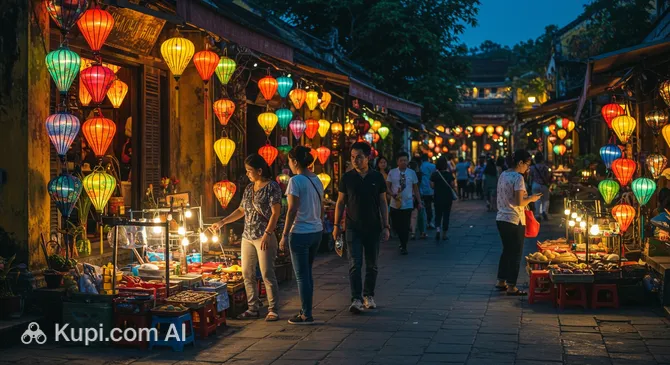
Travelers can explore these culinary delights at bustling markets or along the vibrant Hue Night Walking Street, which comes alive with food vendors in the evenings. For a sit-down experience featuring authentic local flavors, Maison Trang is a notable choice mentioned by many visitors.
Hue Night Walking Street. Illustration.
Source: Kupi.com AI
Traveler photos:
Beyond traditional dishes, the city has a welcoming modern dining scene. Nook Eatery provides a charming escape with a menu that blends Vietnamese ingredients with Western styles. The beverage scene is also thriving; beer enthusiasts should not miss the Imperial Craft Beer Brewpub or The Chàm Craft Beer and Whisky, both of which offer a refreshing break from the tropical heat.
Travel Tips
Visiting Hue offers a unique glimpse into the royal past of Vietnam, but the city's distinct climate and conservative culture require a bit of preparation. These practical pointers will ensure your stay in the Thua Thien Hue province is as smooth and enjoyable as possible.
Pack for the Weather and Culture: Hue is famous for its misty rain, so a lightweight raincoat or umbrella is a must-have, regardless of the season. Since you will likely visit sacred sites like the Imperial City and Thien Mu Pagoda, bring modest clothing that covers your shoulders and knees to respect the strict dress code.
Getting Around: Ride-hailing apps like Grab are the most convenient and transparent way to book cars or motorbikes. For a more traditional experience, you can take a cyclo (pedicab), but always negotiate and agree on a fixed price before starting the ride to avoid misunderstandings.
Managing Your Money: The currency is the Vietnamese Dong (VND). While hotels and upscale restaurants accept cards, cash is essential for enjoying Hue's famous street food and shopping at local markets. ATMs are widely available, and tipping is not mandatory but is a kind gesture for good service.
Health and Safety: Hue is generally very safe, but standard precautions apply. Pharmacies (look for signs saying "Nha Thuoc") are common for basic needs. When crossing the street, walk at a steady, predictable pace so motorbike drivers can weave around you; never stop suddenly or run.
Staying Connected: English is spoken in tourism hubs, but less so in local neighborhoods. Downloading a translation app and purchasing a local SIM card (Viettel or Vinaphone) upon arrival will make communication much easier. Learning "Xin Chao" (Hello) and "Cam On" (Thank you) goes a long way.
Local Etiquette: The people of Hue are known for being polite and slightly more conservative than in other major cities. Always remove your shoes when entering a home or a temple shrine, and use both hands when giving or receiving money or business cards as a sign of respect.
What to Avoid: Avoid wearing revealing clothing such as tank tops or short shorts when visiting historical and religious monuments, as this is considered disrespectful. Also, refrain from public displays of affection, which are generally frowned upon in this traditional city.
Local Insight: Hue is famous for its "slow living" philosophy. To beat the intense midday heat and the tour groups, plan your visits to the Citadel or royal tombs early in the morning, around 7:00 or 8:00 AM.
By keeping these tips in mind, you will be well-equipped to embrace the serene rhythm of the former imperial capital. Enjoy the incredible food, the historic architecture, and the warm hospitality of this misty, magical city.
Entertainment & Nightlife
Entertainment and Nightlife:
While Hue is often associated with tranquility and ancient traditions, the city comes alive after sunset with a vibrant and charming nightlife scene. Unlike the high-energy party atmosphere of Ho Chi Minh City, the evening entertainment here is more laid-back, focusing on cultural experiences, riverside walks, and lively social gatherings. The heart of the action is concentrated around the "Western Quarter"—specifically Pham Ngu Lao, Chu Van An, and Vo Thi Sau streets—where you will find a bustling mix of bars, bistros, and live music venues catering to both locals and travelers.
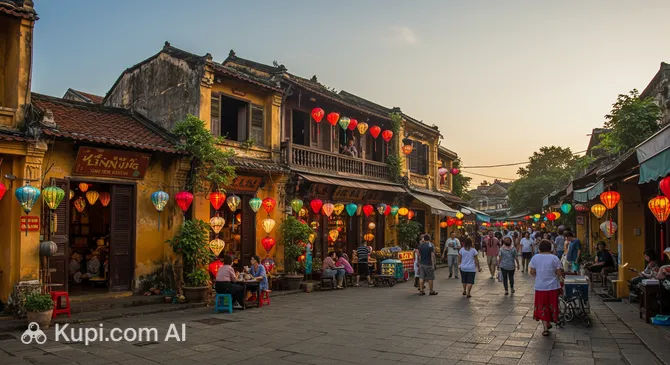
A highlight for any evening visitor is the Nguyen Dinh Chieu Walking Street. Located scenically along the banks of the Perfume River near the Truong Tien Bridge, this pedestrian zone offers a romantic atmosphere with stunning views of the illuminated bridge. It is a fantastic place to stroll, browse for traditional souvenirs like conical hats and calligraphy, or simply enjoy the street performances that often take place here. The cool river breeze makes it a perfect escape from the daytime heat.
Nguyen Dinh Chieu Walking Street. Illustration.
Source: Kupi.com AI
Traveler photos:
For those seeking a drink and a lively vibe, the dedicated Hue Night Walking Street area is the place to be. Here, the streets are closed to traffic on weekends, filling up with plastic stools, food vendors, and enthusiastic crowds. If you prefer a more sophisticated setting, The Chàm Craft Beer and Whisky offers an excellent selection of local craft brews and spirits in a stylish environment, making it a popular spot to unwind and meet fellow travelers.
Regarding daytime entertainment beyond the historical sites, Hue has a growing arts scene. History buffs should visit the Museum of Royal Antiquities to see exquisite artifacts from the Nguyen Dynasty. For a modern twist, the Sốnglab Digital Art Centre provides an immersive contemporary art experience, blending technology with local culture, which is a great indoor activity if you need a break from the sun.
Sốnglab Digital Art Centre. Illustration.
Source: Kupi.com AI
Traveler photos:
Practical Tips for Nightlife:
Timing: The nightlife in Hue starts early and ends relatively early compared to other major cities. Most bars are busiest between 8:00 PM and 11:00 PM, with many venues closing by midnight or 1:00 AM.
Safety: The city is very safe at night. The walking streets are well-lit and populated. However, always keep an eye on your belongings in crowded areas.
Transport: Getting home is easy; reliable taxi companies like Mai Linh are readily available, and ride-hailing apps work well late into the evening.
Dress Code: The vibe is casual. Shorts and t-shirts are perfectly acceptable at most bars and night markets.
Whether you are sipping a cold beer in the bustling backpacker district or enjoying a peaceful dragon boat ride with traditional folk music on the river, Hue offers a delightful variety of ways to spend your evenings.
Parks & Museums
Hue is often celebrated for its imperial architecture, but the city is also a sanctuary of greenery and deep cultural preservation. Beyond the massive stone walls of the citadel, visitors can find tranquil garden houses, scenic hills, and museums that safeguard the artistic and historical soul of the Nguyen Dynasty. Exploring these spaces offers a quieter, more intimate perspective on the former capital.
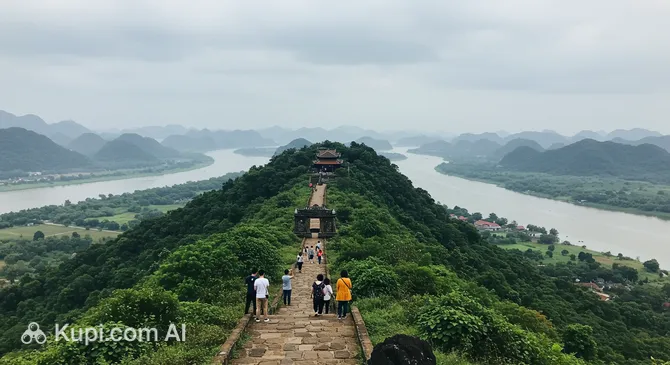
One of the most scenic natural spots is Vong Canh Hill. Located a few kilometers from the city center, this pine-covered hill offers arguably the best panoramic views of the Perfume River as it winds gracefully through the countryside. It was once a favored stop for emperors seeking leisure and inspiration. The peaceful atmosphere makes it an ideal spot for a sunset picnic or a quiet walk away from the tourist crowds.
Vong Canh Hill. Illustration.
Source: Kupi.com AI
Traveler photos:
For a glimpse into the traditional lifestyle of Hue's elite, the An Hien Garden House is a must-visit. This 19th-century residence is a perfect example of "nha ruong" architecture, surrounded by lush orchards of fruit trees like jackfruit, mangosteen, and lychee. The design follows strict geomancy principles, creating a harmonious balance between the wooden structure and the natural garden setting.
Another serene escape is the Thien An Monastery. Situated on a hill dense with pine trees, the climate here is cooler, often compared to a miniature Da Lat. It is a working monastery known for its gentle ambiance and a large statue of the Buddha, making it a spiritual and refreshing retreat for nature lovers.
To truly understand the opulence of the former capital, a visit to the Museum of Royal Antiquities is essential. Housed in the beautiful Long An Palace, the museum displays a vast collection of artifacts from the Nguyen Dynasty, including royal attire, porcelain, and personal items of the emperors. The building itself is a masterpiece of wooden architecture, featuring intricate carvings and poems inlaid with mother-of-pearl.
Museum of Royal Antiquities. Illustration.
Source: Kupi.com AI
Traveler photos:
For those interested in traditional craftsmanship, the Luc Bo Cultural Space offers an interactive experience. Located within the Citadel area, this venue focuses on the six traditional ministries of the royal court and their associated crafts. Visitors can learn about royal tea ceremonies, traditional brewing, and local handicrafts, providing a hands-on connection to the city's intangible heritage.
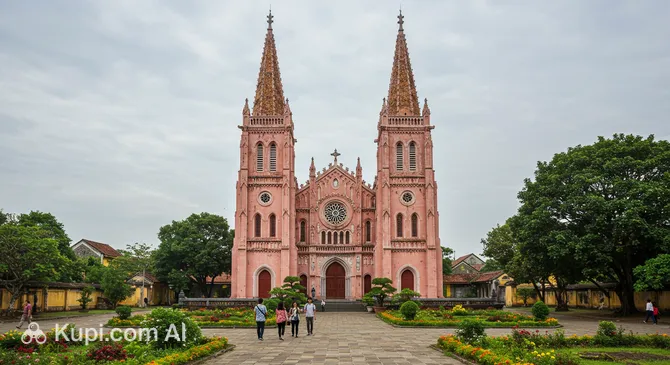
While pagodas dominate the skyline, the Phu Cam Cathedral stands out with its impressive modern design. Built on a hill, its architecture is a unique blend of classical Western cathedral styles and modern structural techniques. The soaring facade and the open interior space create a sense of grandeur that contrasts interestingly with the city's traditional wooden structures.
Phu Cam Cathedral. Illustration.
Source: Kupi.com AI
Traveler photos:
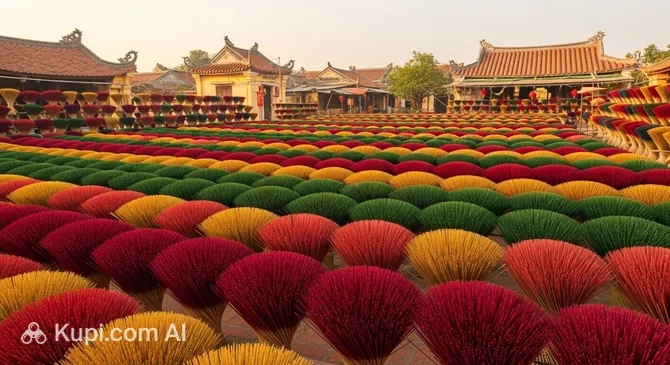
A short distance from the city center lies the colorful Thuy Xuan Incense Village. Famous for its vibrant displays of incense sticks arranged like blossoming flowers, this village offers a fantastic photo opportunity. Beyond the visuals, you can watch artisans hand-roll incense and even try making some yourself, offering a fragrant and authentic memory of Hue.
Thuy Xuan Incense Village. Illustration.
Source: Kupi.com AI
Traveler photos:
Getting Around
Navigating Hue is a refreshing experience compared to the chaotic traffic often found in larger metropolises. The city does not have a metro, tram, or train system for inner-city travel. Instead, the transport network relies heavily on road vehicles and the unique waterways of the Perfume River. The city center is relatively compact and flat, making it easy to explore, with traffic moving at a generally slower and more manageable pace.
For most tourists, the most convenient way to get around is by using ride-hailing apps or traditional taxis. Grab is widely available for both car and motorbike rides; it allows you to see the price upfront and pay via the app or cash, eliminating language barriers and bargaining. If you prefer traditional taxis, reputable companies like Mai Linh or Sun Taxi are ubiquitous. You can easily flag them down on the street or ask your hotel to call one for you. Drivers generally use meters, but it is always wise to ensure the meter is turned on when you start your journey.
A quintessential Hue experience is traveling by cyclo, a three-wheeled bicycle taxi. This mode of transport is less about efficiency and more about soaking in the atmosphere of the ancient streets at a leisurely pace. Cyclo drivers are often found near major hotels and tourist sites like the Citadel. However, a crucial piece of advice is to negotiate and agree on a firm price before getting in. It is helpful to have the exact fare ready to avoid confusion or disputes over change at the end of the ride.
Public buses are available, but they are primarily designed for locals and can be challenging for visitors to navigate due to limited English signage and complex routes. However, a modern double-decker sightseeing bus has recently been introduced specifically for tourists. This "City Tour" bus operates on a loop, stopping at major attractions such as the Imperial City and various royal tombs. Tickets for this service can be purchased at the designated kiosks near the departure points or sometimes through local travel agencies.
Given the city's relaxed rhythm and flat terrain, renting a bicycle or motorbike is a highly popular alternative. Many hotels and homestays offer bicycles for free or for a small daily fee. Riding a bike along the riverbanks in the early morning or evening is a delightful way to see the city. For those comfortable with riding a scooter, rentals are affordable and give you the freedom to explore the further-flung royal tombs in the countryside at your own pace.
A special feature of Hue's transport network is the dragon boat on the Perfume River. While often viewed as a tour activity, these boats serve as a practical and scenic way to travel between the city center and riverside landmarks like the Thien Mu Pagoda or the Tomb of Minh Mang. You can charter a boat at the Toa Kham Boat Wharf. Prices vary depending on the distance and duration, so bargaining is expected if you are hiring a private boat.
Regarding payment, cash (Vietnamese Dong) is the standard for almost all forms of local transport, including buses, cyclos, and independent rentals. While ride-hailing apps accept credit cards, most taxi drivers and rental shops prefer cash. It is advisable to carry smaller denominations, as drivers often do not have change for large bills. Operating hours for public transport and cyclos are generally from early morning until around 9:00 PM or 10:00 PM, though taxis and Grab services operate 24/7.
Accommodation
Finding the perfect place to stay in Hue is relatively easy, as the city offers a wide spectrum of accommodation options to suit every budget and preference. The selection ranges from inexpensive hostels and family-run guesthouses (homestays) to mid-range boutique hotels and high-end luxury resorts. Generally, the most convenient area for tourists is the southern bank of the Perfume River, particularly around Le Loi, Hung Vuong, and the "Western Quarter" streets (Pham Ngu Lao, Chu Van An). staying here puts you within walking distance of the night market, numerous restaurants, and the lively walking streets, while still being just a short bridge crossing away from the historical Citadel.
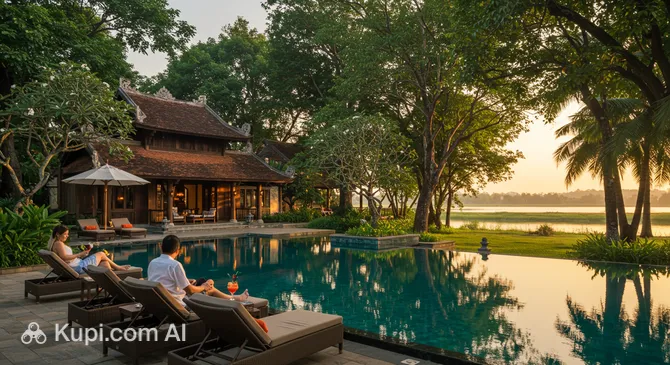
For travelers seeking a tranquil escape that blends luxury with traditional Vietnamese culture, the Pilgrimage Village Resort & Spa is a standout choice. Located in the quiet countryside just outside the city center, this resort is famous for its rustic yet elegant bungalows and its focus on wellness and relaxation.
Pilgrimage Village Resort & Spa. Illustration.
Source: Kupi.com AI
Traveler photos:
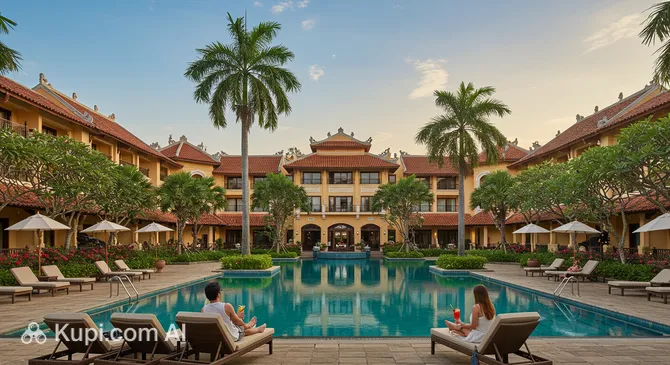
If you prefer to be closer to the heart of the action without sacrificing style, The Scarlett Boutique Hotel Hue offers a more intimate experience. Situated in the city center, this hotel is well-regarded for its sophisticated decor and personalized service, making it a comfortable base for exploring the nearby urban attractions.
The Scarlett Boutique Hotel Hue. Illustration.
Source: Kupi.com AI
Traveler photos:
In terms of pricing, accommodation in Hue is generally very competitive and often cheaper than in larger cities like Hanoi or Ho Chi Minh City. Budget travelers can find comfortable dorm beds or private rooms for very low rates, while even luxury options are often surprisingly affordable. While it is usually possible to find a room upon arrival, it is highly recommended to book in advance if you are traveling during the peak summer months or during the biennial Hue Festival, when the city fills up quickly. Most properties can be easily booked through major online travel platforms or by contacting them directly.
Nearby Cities
For those looking to explore the surroundings, Hue serves as an excellent base for day trips to several interesting nearby locations. The region offers a mix of pristine nature, coastal beauty, and modern urban life, all within a manageable distance for a return journey by evening.
The most popular destination for a day trip is undoubtedly Da Nang. Located just a short drive south, the journey itself is a highlight if you take the route over the spectacular Hai Van Pass, which offers breathtaking views of the coastline. Da Nang is a vibrant, modern city known for its sandy shores like My Khe Beach, the iconic Dragon Bridge that breathes fire on weekends, and the spiritual marble caves of the Marble Mountains. It provides a lively contrast to the quiet, historical atmosphere of Hue.
For nature enthusiasts, Bach Ma National Park is an ideal stop located roughly halfway between Hue and Da Nang. This protected area features lush rainforests, dramatic waterfalls, and trekking trails that lead to panoramic viewpoints. Another excellent option is the serene town of Lang Co, situated at the foot of the Hai Van Pass. Famous for its magnificent bay and fresh seafood, it is a perfect spot to relax by the turquoise water and enjoy a leisurely lunch before heading back.
These nearby destinations offer a glimpse into the diverse culture and landscapes of the region, allowing travelers to experience the broader beauty of Central Vietnam.
Shopping & Souvenirs
Shopping in Hue offers a delightful change of pace from the frantic commercial hubs of Vietnam. Rather than massive luxury complexes, the city is defined by its traditional craftsmanship, local markets, and boutique stores that reflect the region's royal heritage. Visitors will find that the shopping experience here is deeply connected to the culture, with a strong focus on handmade goods, traditional attire, and local specialties that make for meaningful keepsakes.
For general shopping, the streets surrounding the Citadel and the southern bank of the Perfume River are the best places to start. Le Loi Street and the surrounding "Western Quarter" (Chu Van An, Pham Ngu Lao) are lined with souvenir shops, art galleries, and clothing boutiques catering to tourists. If you are interested in textiles, Mai Thuc Loan Street is famous for its high concentration of tailors. This is the ideal place to get a custom-made Ao Dai, the traditional Vietnamese long dress, often completed within 24 hours at a very reasonable price.
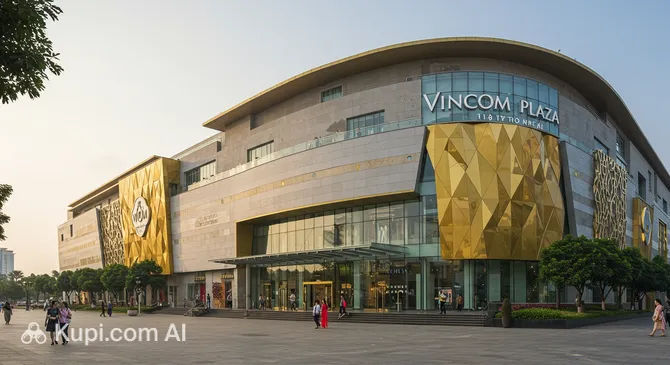
While traditional commerce dominates, those seeking a modern retail environment can visit Vincom Plaza. As the most prominent shopping mall in the city, it offers a cool, air-conditioned escape with a variety of international and domestic fashion brands, a supermarket, and a cinema. It is a convenient stop for travelers who need to purchase travel essentials, electronics, or simply want to enjoy a modern food court experience.
Vincom Plaza. Illustration.
Source: Kupi.com AI
Traveler photos:
The soul of Hue's commerce, however, lies in its markets. The most famous is Dong Ba Market, a sprawling complex on the riverbank that sells everything from fresh produce to jewelry. It can be chaotic and loud, but it offers an authentic glimpse into local life. For a more relaxed evening atmosphere, the Hue Night Walking Street transforms into a vibrant bazaar. Here, you can browse stalls selling handicrafts, accessories, and street food under the glow of lanterns, making it a perfect spot to hunt for small gifts.
When it comes to souvenirs, Hue has several signature items. The city is renowned for its "poem hats" (Non Bai Tho), special conical hats that reveal a poem or image when held up to the light. Food items are also popular, particularly Me Xung (sesame candy) and royal herbal teas. For high-quality incense and a great photo opportunity, many travelers head to the Thuy Xuan Incense Village to buy vibrantly colored sticks directly from the artisans.
Most shops in Hue open around 8:00 AM or 9:00 AM and stay open until 9:00 PM or 10:00 PM. Markets like Dong Ba start much earlier, often at sunrise, and wind down by late afternoon. Cash is the preferred payment method, especially in markets and smaller boutiques, so be sure to carry Vietnamese Dong (VND). While prices in malls are fixed, bargaining is expected and encouraged in markets and street stalls; starting at about 70% of the asking price is a good rule of thumb.
Regarding tax-free shopping, the VAT refund system for tourists is not as widely implemented in Hue as it is in major cities like Ho Chi Minh City or Hanoi. While some large chain stores might participate in the scheme, it is relatively rare to find "Tax Free" signage here. If you do make a qualifying purchase, you will generally need to process the refund at the international airport upon your departure from Vietnam.