Support

Minh Thanh Pagoda

About

In the heart of Gia Lai Province, in the city of Pleiku, stands Minh Thanh Pagoda—one of the most impressive Buddhist structures that modern Vietnam has to offer. This majestic complex, covering an area of about 20,000 m², is often compared to a fairytale palace shrouded in mountain mist, thanks to its unique architecture.
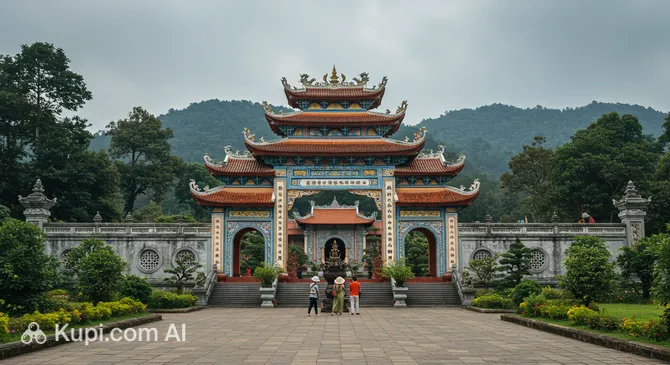
Minh Thanh Pagoda
Minh Thanh Pagoda. Иллюстрация. Источник: Kupi.com AI

The appearance of the pagoda is a harmonious blend of Vietnamese, Chinese, and Japanese architecture. The dominant feature of the ensemble is the 70-meter, nine-story Xa Loi tower, while the massive carved doors of the main temple, made of precious cypress, are considered among the largest in the country. Inside, visitors are greeted by a solemn space with altars to Sakyamuni and Avalokiteśvara, decorated with thousands of skillfully crafted statues.

Minh Thanh is not just a religious site, but a true landscape masterpiece. Well-tended gardens with lotus ponds, marble statues of Arhats, and a huge bronze incense burner create an atmosphere of peace and contemplation, making this place a must-visit for any traveler.

Contacts

To plan your visit and check the details, you can use the following contact information:

How to contactContact
Address348 Nguyễn Viết Xuân, P. Hội Phú, Pleiku, Gia Lai 600000, Vietnam

What to Do

The first thing to do upon arrival is to take a leisurely stroll through the blooming garden. Here, among decorative ponds and miniature mountains, stand Arhat statues carved from snow-white marble. The chime of ancient wind bells adds a special charm to the walk, their sound believed to purify both space and thoughts.

Be sure to visit the main hall to see over 3,000 statues and appreciate the scale of the 6-meter carved doors. Photographers will find endless subjects here: from the giant 8-meter statue of Quan Yin to the majestic Xa Loi tower. If you stay until evening, you will see the complex transform under artistic lighting, taking on a truly mystical appearance.

For those seeking spiritual solitude, the pagoda offers wonderful opportunities for meditation and reflection. Please remember the dress code: choosing modest and elegant clothing is recommended when visiting this sacred place as a sign of respect for local traditions.

Getting There

Reaching this architectural treasure is easy, as it is located just 3–5 kilometers from the city center. The most convenient and popular ways to get around this part of the country are by taxi or motorbike. The trip from the city's main hotels will take no more than 10–15 minutes.

If you prefer public transport, city buses stop near the entrance. For those who enjoy full freedom of movement, renting a scooter is an excellent option, allowing you to combine a visit to the pagoda with exploring other picturesque spots in Gia Lai Province. Parking for visitors is available on the temple grounds.

Travelers arriving in Pleiku by plane should note that the drive from the airport to the pagoda takes about 20 minutes. The exact GPS coordinates for navigation are: 13.9660713° N, 108.0061901° E.

Ближайший город: Pleiku

History & Facts

The history of this remarkable place began in 1964. The founder and first abbot of the temple was the Venerable monk Thich Giac Dao. From the very beginning, the pagoda was intended not just as a religious structure, but as a spiritual center for the local Buddhist community.

Although the complex has faced various challenges and partial damage over the decades, a large-scale restoration was carried out in 1997. It was then that the site acquired its current majestic appearance, while preserving the deep symbolism and authenticity inherent in the Mahayana and Vajrayana traditions.

The architectural design of the complex deserves special attention: it embodies the concept of a mandala—a sacred symbol of the Universe. Every detail, from the lotus-shaped ponds to the placement of the altars, carries a hidden philosophical meaning, making the pagoda a unique cultural heritage monument of the Central Highlands.

Time Needed

To explore all the hidden corners of the temple complex without rushing, we recommend setting aside 1.5 to 2 hours for your visit. This is enough time to not only study the interiors of the main hall and climb to the towers but also to enjoy a walk through the garden.

If you plan on taking photographs or wish to spend time meditating by the lotus pond, you should budget a bit more time. The peaceful atmosphere of the pagoda encourages a slow pace, so many guests choose to stay longer to rest from the city hustle and bustle.

Working Hours

The doors of the Buddhist complex are open to pilgrims and tourists daily, with no days off. You can visit the pagoda during the following hours:

Monday — Sunday: 7:00 AM to 5:00 PM.

When planning your visit, keep in mind that the morning hours are best for a quiet exploration without the crowds, while the time before closing offers soft light for photography.

7:00 – 17:00

Nearby

A visit to the spiritual center can be perfectly combined with exploring other interesting places in the vicinity. Exploring the surrounding areas will allow you to better feel the rhythm of the modern city and get acquainted with its natural and historical landmarks.

Near the temple complex, there are recreation areas as well as sites that preserve the memory of the region's complex history. Below is a list of nearby attractions that may interest travelers:

NameDistance
Dien Hong Lake Resort0.8 km
Chi Crab Noodle Soup1.5 km
Gia Lai Museum2.1 km
Com Lam Grilled Chicken H'Bla T'Rung2.1 km
Karaoke Paradise813.4 km

Reached the end of the page?

That means the route is fully explored