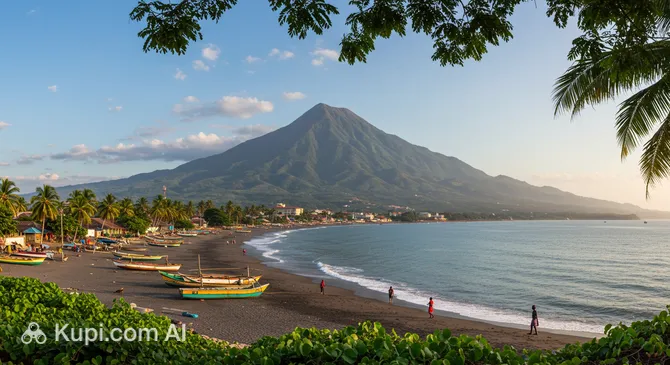
Located on the picturesque coast of the Gulf of Guinea, Limbe represents a unique combination of industrial rhythm and a relaxed resort atmosphere. This city in Cameroon, lying at the foot of the majestic Mount Cameroon, attracts travelers with its unusual landscapes and the hospitality of its residents. The city's population is approximately 212,000, making it lively enough while still retaining the charm of a coastal hub.
Limbe. Illustration.
Source: Kupi.com AI
The rich history of the city began in 1858 when British missionary Alfred Saker founded a settlement here named Victoria. It was only in 1982 that the city acquired its current name. Today, Limbe is known not only as an oil refining center but also as one of the few places in Africa where you can see unique beaches with black volcanic sand. The combination of colonial architecture, industrial facilities, and lush tropical greenery creates an inimitable visual experience.
For tourists, the city is primarily attractive for its natural riches: the famous botanical garden and the wildlife rescue center. Despite its status as an important port, Limbe maintains a reputation as one of the cleanest and most well-maintained cities in the country. Visiting this place is a wonderful opportunity to feel the true spirit of West Africa, enjoy the freshest seafood, and witness the power of the Atlantic Ocean against the backdrop of the region's highest mountain.
Weather Overview
The climate in Limbe is typically tropical, characterized by high humidity and consistently warm temperatures throughout the year. Average figures usually range between 23°C and 30°C. Due to its proximity to the Gulf of Guinea and the foot of Mount Cameroon, the city is in a high-rainfall zone. To plan your wardrobe in advance, it's worth studying the detailed climate of the city, which changes significantly depending on the season.
The rainy season here is very pronounced, especially from June to October, when downpours can be almost daily and extremely intense. July and August are considered the wettest months, with rainfall reaching its peak. In contrast, the period from November to March is considered the "dry" season, when rain occurs less frequently and the sky often remains clear, making this time ideal for beach holidays and excursions.
An important feature of the local climate is the influence of the sea breeze, which brings relief from the daytime heat, making walks along the embankments pleasant even on hot days. However, it's worth remembering that the nearby settlement of Debundscha is considered one of the rainiest places in the world, so tourists are always advised to carry an umbrella or a light raincoat, regardless of the forecast for the day.
Average monthly temperature
Average monthly precipitation
Interesting Facts
Volcanic Heritage: The city's beaches are covered with coal-black sand formed by centuries of activity from nearby Mount Cameroon — one of Africa's largest active volcanoes.
A City with Two Names: Until 1982, the city was officially named Victoria after the British Queen, after which it was renamed Limbe by presidential decree.
Acclimatization Center: The local botanical garden, founded by Germans in the late 19th century, was originally used as a scientific laboratory to test the cultivation of quinine, coffee, and cocoa in African conditions.
Oil Capital: Despite its tourist appeal, Limbe is a key industrial hub — it is home to SONARA, the country's only oil refinery.
Cosmopolitan Spirit: Due to its port status and proximity to plantations, the city is considered one of the most hospitable and culturally diverse places in the region, where European colonial heritage is closely intertwined with local traditions.
How to Get There
The city enjoys good transport accessibility, given its role as an important industrial and tourist center. Travelers planning their route should research in advance how to get to Limbe in the most convenient way. Most often, tourists arrive from Douala, which is only 70–80 kilometers away. A trip by car or regular bus usually takes between an hour and a half to two and a half hours, although travel time depends heavily on traffic intensity on the coastal highway.
For those who prefer air travel, the nearest major hub is the international airport in Douala, which receives flights from all over the world. Limbe itself has a small airport used mainly for local flights and industrial needs, but it is rarely used for regular tourist travel. The second most significant mode of communication is sea transport: the city port accepts not only cargo but also passenger vessels, connecting the city with other coastal points in the region.
Direct rail connections to the city are poorly developed, so buses and taxis remain the primary ground transportation. Comfortable intercity buses regularly run between Limbe and Yaoundé, as well as neighboring towns on the slopes of Mount Cameroon. A journey from the capital can take up to 8–10 hours, so many prefer combined routes through Douala to save time and increase comfort during the trip.
Station
Passenger traffic
Distance
Bessengue train station
2
57 km
Port Harcourt Railway station
1
258 km
Yaoundé train station
3
259 km
Main Attractions
One of the city's most visited attractions is the Limbe Wildlife Centre. This primate sanctuary was founded in 1993 and has become a home for gorillas, chimpanzees, mandrills, and other rare species rescued from poaching. Visitors can not only see these amazing animals in conditions close to their natural habitat but also learn about programs to preserve the region's ecosystem, making a visit here both educational and emotionally rewarding.
Equally impressive is the Limbe Botanical Garden, created by German colonists back in 1892. This vast 200-hectare area hosts rare species of tropical plants that were originally grown for acclimatization in African colonies. Today, it is an ideal place for leisurely walks in the shade of exotic trees, where you can enjoy the silence and admire the diversity of Cameroon's flora.
The black sand beaches, such as Down Beach, draw particular attention from tourists. The sand owes its unusual color to the volcanic activity of Mount Cameroon. These beaches serve not only as spots for relaxation and surfing but also as centers of social life: here you can watch fishermen returning with their catch or taste freshly grilled fish right by the water. It is also worth visiting the Bimbia historical site, which serves as a reminder of the somber but important chapters of the slave trade era.
Local Cuisine
The gastronomic scene in Limbe is a true feast for seafood lovers. Thanks to its location in the Gulf of Guinea, the foundation of local cuisine is freshly caught fish and seafood. The most popular dish, found everywhere from street stalls to restaurants, is grilled fish, heavily seasoned with local spices and served with fried plantains or cassava. The aromas of smoke and spices on the city's waterfront have become its distinctive hallmark.
In addition to seafood, it's worth trying traditional Cameroonian specialties such as ndolé — a stew of meat or fish with bitterleaf, nuts, and aromatic oils. The dish eru, prepared with local vegetables and greens, is also popular. A characteristic feature of the local cuisine is the use of palm oil and fresh ingredients from nearby plantations, which gives the food a rich and unique flavor.
The food culture in the city is diverse, ranging from affordable market eateries to cozy establishments. One well-known spot is Big Bite, where you can appreciate the skill of local chefs. It is common to wash down a meal with a chilled local beer like Castel or traditional palm wine. Most tourists prefer dining on open terraces by the water, where the fresh sea air perfectly complements the taste of exotic dishes.
Travel Tips
Preparing for your trip to Limbe will help you fully enjoy the beauty of this coastal city and avoid unpleasant surprises. Here are some proven tips to make your journey comfortable and safe.
Clothing and Accessories: Choose clothes made from light, natural fabrics, as the city experiences tropical heat and high humidity. Be sure to bring comfortable shoes for walking on volcanic beaches and a raincoat if you plan to visit during the rainy season. Don't forget a power adapter (usually types C and E).
Transport: For getting around the city, it is best to use official yellow taxis. If you decide to use a motorcycle taxi, always wear a helmet and agree on the fare in advance.
Finances: The main currency is the Central African CFA franc (XAF). Cards are only accepted in large hotels and some restaurants, so always carry a sufficient supply of cash in small denominations.
Health: Vaccination against yellow fever is mandatory before the trip. Use insect repellents and drink only bottled water. Pharmacies can be found in the city center, but it's better to bring specific medications with you.
Communication: The official languages are English and French. English is widely spoken in Limbe. You can buy a local SIM card (e.g., MTN or Orange) at any mobile shop by presenting your passport.
Etiquette: The city's residents are very hospitable. Greetings are an important part of communication; a simple "Hello" or "Good morning" will open many doors. Always ask for permission before taking photos of local residents.
What to Avoid: It is not recommended to walk alone in remote industrial zones and ports after dark. Avoid discussing political topics and do not photograph government or military facilities.
Best Time to Visit: Plan your trip for the dry season (from November to March), when the weather is most favorable for beach holidays and visiting nature reserves.
By following these simple rules, you can focus on the main thing — the amazing nature and unique atmosphere of this African port.
Entertainment & Nightlife
Entertainment in Limbe is predominantly quiet and nature-oriented, making it ideal for eco-tourism enthusiasts and those seeking a relaxed beach holiday. The main daytime attractions are the coastlines, where you can go surfing or simply stroll along the unique volcanic sand. The Limbe Wildlife Centre is also very popular, offering a wealth of impressions from interacting with rare primates in an educational environment.
The city's nightlife is not as large-scale as in major metropolises like Douala, but it possesses its own special coastal flavor. Most activity after sunset is concentrated around the Down Beach area and in bars at major hotels. Live music is often played here, and the atmosphere encourages casual conversation. For those looking for a place to enjoy a delicious meal and spend an evening in pleasant company, Big Bite is an excellent choice, popular with both locals and visitors.
Each year, the city is transformed during the international festival of arts and culture, which brings together representatives of various ethnic groups from the region. During this time, the streets are filled with traditional dances, songs, and craft fairs. At other times, leisure for locals and tourists alike consists of relaxing in cozy cafes by the port or walking along the illuminated embankments, where the sea breeze helps to escape the tropical heat.
Parks & Museums
The city's primary "green" treasure is the Limbe Botanical Garden. Occupying an impressive 200 hectares, this garden serves not only as a place for relaxation but also as an important scientific and educational center. Hundreds of species of tropical plants, trees, and flowers are gathered here, many of which have significant economic and medicinal value. Strolling through its alleys, tourists can get acquainted with the natural diversity of the region and enjoy the silence away from the busy port areas.
The Limbe Wildlife Centre is of particular importance for nature conservation. Although it is not formally a park in the traditional sense, its territory is a protected zone where primates live in conditions close to the wild. This is one of the best places in Africa to see gorillas and chimpanzees, with an emphasis on ethical animal treatment and visitor education. The center's educational programs make it a must-visit for families with children.
Regarding museums, Limbe is represented mainly by small exhibits and open-air historical monuments. An important site is the memorial at the old slave market in Bimbia, which serves as a living reminder of the history of the slave trade. Additionally, colonial-era buildings from the late 19th century have been preserved throughout the city, serving as architectural exhibits themselves and reflecting the changing eras — from British to German and French influence.
Getting Around
The public transport system in Limbe is simple and practical. The primary means of transportation for locals and tourists within the city are yellow taxis and motorcycle taxis. Motorcycle taxis are the fastest way to get to the beach or market, maneuvering through heavy traffic, especially during peak hours near the port. Taxi fares are fixed for specific routes within neighborhoods, but it's better to agree on a price for an individual trip in advance.
For travel between cities, minibuses and comfortable coaches from private companies are used. The main transport hub connects Limbe with Douala and Buea. It's important to note that traffic jams often occur at the entrances to the city from the Douala side due to the heavy volume of trucks serving the port and the oil refinery. Travelers are advised to allow extra time for their journey if they have an airport departure or an important meeting.
The payment system is exclusively cash-based; cards or mobile transport apps are not yet widespread here. Intercity bus tickets can be purchased at ticket offices at the bus stations. In the central part of the city and near the waterfront, many tourists prefer to get around on foot, as the main attractions and cafes are located quite compactly. Bicycle rental is not well-developed in the city, so walking remains the best alternative for a leisurely exploration of the coastal beauty.
Accommodation
Limbe offers a decent selection of accommodation to suit the needs of both budget travelers and those seeking enhanced comfort. The majority of hotels and guesthouses are concentrated along the coast near the famous Down Beach. Staying in this area allows guests to enjoy the sea breeze and picturesque views of the Gulf of Guinea and Mount Cameroon around the clock.
For tourists who prefer to be at the heart of the action, mid-range hotels and apartments are available within the city limits. Many of these cater to specialists working in the oil industry or on plantations, so these establishments often offer good service and modern amenities. Despite the lack of luxury five-star resorts from global chains, local hotels are famous for their hospitality and authentic atmosphere.
During the peak tourist season, which falls in the dry winter months, it is recommended to book accommodation in advance, as the city is very popular with Douala residents coming for the weekend. The price range in Limbe is quite affordable, and payment is most often made in cash in the local currency, although large hotels are starting to accept international cards. For those who value proximity to nature, staying near sites like the Limbe Wildlife Centre is an excellent option.
Nearby Cities
Due to its coastal location and proximity to major transport arteries, Limbe serves as an excellent starting point for exploring the Southwest region. The city's surroundings are rich in both natural monuments and colorful settlements, each offering a unique experience for the traveler.
Just 16 kilometers away is the city of Buea, located on the slopes of Mount Cameroon. A trip there takes no more than 30 minutes and allows you to enjoy the cool mountain air. It is a university center with rich colonial architecture and the starting point for many hiking trails to the volcano's summit. Another interesting destination is Tiko, known for its extensive plantations and golf course, making it a popular spot for a peaceful day trip.
For those ready for longer trips, the region offers visits to some of the wettest places on the planet, such as Debundscha, or a chance to visit the capital of Equatorial Guinea — the city of Malabo, located on an island not far from the coast. Exploring these places allows for a deeper understanding of the natural and cultural diversity of Central Africa.
Shopping & Souvenirs
Shopping in Limbe is primarily about immersing yourself in the atmosphere of local markets, where life teems from early morning. The city doesn't have massive modern shopping malls, but it offers plenty of colorful trading zones near the port and beaches. Here, tourists can purchase the freshest products: from recently caught fish and shrimp to exotic fruits, cocoa, and aromatic coffee grown on the volcanic soils of Mount Cameroon.
For unique souvenirs, look for items made by local artisans. Decorative pieces woven from palm fibers and handcrafted wooden masks are very popular. Special gifts include small souvenirs made with the famous black volcanic sand or bright African fabrics with traditional prints found at the central market.
Shops and stalls usually operate from early morning until sunset, and bargaining is expected at the markets — it's an important part of the local social culture. Payment at most outlets is made in cash in Central African CFA francs (XAF), so it's wise to arrange currency exchange in advance. If you get hungry while shopping, you can always stop by Big Bite for a quick snack or a refreshing drink.