Support

Hall Beach

About

Welcome to Hall Beach, traditionally known as Sanirajak, a unique community that offers an authentic glimpse into life in the High Arctic. Located in the Qikiqtaaluk Region of Nunavut, this settlement sits on the eastern side of the Melville Peninsula. It is widely recognized as one of the oldest known permanently inhabited villages north of the Arctic Circle in Canada, making it a fascinating destination for adventurous travelers seeking remote beauty and rich cultural heritage.

With a modest population of approximately 800 residents, Hall Beach maintains a close-knit atmosphere where traditional Inuit culture remains vibrant. The geography here is defined by flat, gravel terrain and sweeping views of the Foxe Basin. The climate is distinctly Arctic, featuring long, cold winters perfect for viewing the Northern Lights, and short, cool summers where the sun barely sets, allowing for endless exploration of the tundra.
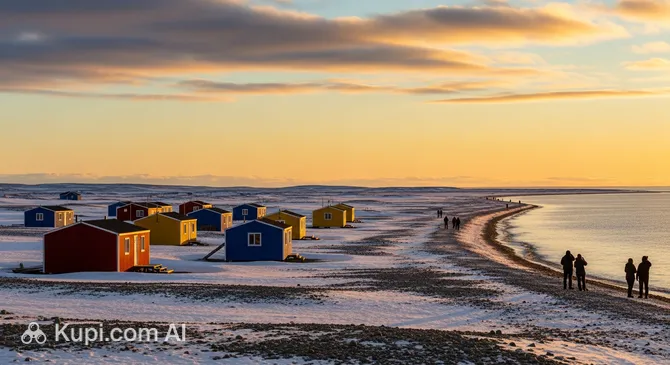
Hall Beach. Source: Kupi.Binoculars

The community has a significant place in modern development due to its strategic location. It was established in 1957 as a site for the Distant Early Warning (DEW) Line system, a radar network that played a crucial role in the history of Hall Beach and the shaping of the modern settlement. Today, visitors can still see remnants of this era alongside the traditional lifestyle that has thrived here for centuries.

Tourists are often drawn to the area's incredible wildlife and archaeological features. The name Sanirajak translates to "the shoreline," which is fitting given the village's layout along the beach. A walk along the coast reveals numerous ancient walrus skulls, evidence of the area's long-standing history as a prime hunting ground. Wildlife enthusiasts may also spot walruses, seals, and occasionally polar bears in their natural habitat.

If you are looking for a destination that combines raw natural beauty with deep cultural roots, Hall Beach is an unforgettable choice. Whether you are interested in the Midnight Sun, Arctic history, or simply experiencing the warm hospitality of the North, this community welcomes you to explore its unique corner of the world.

Weather Overview

The climate in Hall Beach is distinctively Arctic, defined by long, harsh winters and a brief, cool summer season. The coldest period occurs early in the year, particularly in February, when average temperatures drop to a frigid -31.2°C. Conversely, July is usually the warmest month, offering average temperatures of 8.2°C, which provides a much milder environment for exploring the settlement.

Precipitation remains exceptionally low throughout the year, generally staying between 0mm and 2mm per month. Expect extremely cold, dry winters and cool summers with scarce rainfall. For comprehensive forecasts and seasonal averages to help plan your visit, check the latest information on the weather in Hall Beach.

Interesting Facts

Beyond the main attractions and its reputation as a historic radar site, Hall Beach holds fascinating stories that reveal the depth of its heritage. From space age experiments to the legacy of Arctic exploration, there is much more to this community than meets the eye.

  • A History of Rocket Science: It is a little-known fact that Hall Beach played a role in space research. In early 1971, the area served as a launch site for several Nike Tomahawk sounding rockets. These were fired into the upper atmosphere to conduct plasma studies and barium releases, marking a unique moment where high-tech science met the High Arctic.

  • The Explorer’s Legacy: The community's English name honors Charles Francis Hall, an American explorer who traveled the region in the 1860s. Unlike many of his contemporaries, Hall lived closely with the Inuit, adopting their clothing and survival methods, which allowed him to map the area more accurately than previous expeditions searching for the lost Franklin party.

  • A Millennium of Occupation: While the modern hamlet was formally established in 1957 to support the Distant Early Warning (DEW) Line, the area has been a continuous gathering place for much longer. Archaeological evidence suggests that the Thule people, ancestors of the modern Inuit, have inhabited this coastline for nearly 1,000 years, drawn by the abundant marine resources.

How to Get There

Reaching the remote Arctic community of Hall Beach (Sanirajak) is an adventure in itself. Since there are no roads connecting Nunavut to the rest of Canada, air travel is the primary and most practical method of arrival. Visitors typically fly from southern hubs such as Ottawa or Montreal to Iqaluit, and then connect to a regional flight heading north. For detailed logistics and route planning, you can read more about how to get to Hall Beach.

The community is served directly by Hall Beach Airport (YUX), which is conveniently located just 1.8 km from the center of the settlement. As the main gateway for residents and visitors alike, this small regional airport handles approximately 3,000 passengers annually. Upon arrival, the town is easily accessible; a transfer to the center takes just a few minutes by vehicle, though the distance is short enough that many locals simply travel by ATV or snowmobile depending on the season. You can find more information about Hall Beach Airport to help prepare for your landing.

Another significant transport hub in the vicinity is Igloolik Airport (YGT), located in the neighboring city of Igloolik, approximately 68 km from Hall Beach. While it is close geographically, it is situated on a different island, and there are no year-round roads connecting the two communities. Travelers often stop here on the same flight route that serves Hall Beach. This airport is busier, serving around 12,000 passengers per year, and acts as a key link for the region. You can learn more about Igloolik Airport here.

For clarity, here is a summary of the main airports in the region:

Airport Name City Passenger Traffic Km from City
Igloolik Airport Igloolik Medium 68.0
Hall Beach Hall Beach Small 1.8

Main Attractions

Visiting Hall Beach is less about ticking off famous monuments and more about immersing yourself in the raw history and environment of the Arctic. The attractions here are woven into the landscape and the community's unique past, offering a stark contrast between ancient traditions and Cold War-era technology. Travelers who make the journey are rewarded with sights that can be found nowhere else in the world.

The most iconic feature of the village is undoubtedly the Shoreline of Walrus Skulls. The Inuktitut name for the community, Sanirajak, translates to "the shoreline," and a walk along the beach quickly reveals why. The gravel coast is scattered with countless bleached walrus skulls and bones, the accumulation of centuries of hunting by the Thule people and modern Inuit. It serves as an open-air archaeological site, offering a tangible connection to the ancestors who have thrived in this region for nearly a millennium.

For history enthusiasts, the DEW Line Site (FOX-MAIN) is a fascinating attraction. Hall Beach was originally established in 1957 to support this Distant Early Warning radar system. Today, the massive radar domes and aging infrastructure still stand against the flat tundra horizon. These structures provide a surreal visual mix of high-tech military history and the timeless Arctic landscape, reminding visitors of the strategic role this remote outpost played during the Cold War.

Nature lovers will find the Foxe Basin to be a world-class destination for wildlife viewing. The nutrient-rich waters surrounding Hall Beach attract an abundance of marine life, most notably large herds of walrus. In the summer and early fall, visitors can often spot these massive creatures basking on ice floes or swimming near the coast. Seals are also common, and polar bears are frequently sighted in the area, making it a prime spot for photographers seeking authentic Arctic wildlife encounters.

Finally, simply exploring the Tundra Landscape offers its own allure. In the summer, the flat terrain bursts with tiny, resilient wildflowers and lichen, perfect for hiking under the Midnight Sun. In the winter, the unobstructed horizon makes Hall Beach one of the best places on Earth to view the Northern Lights (Aurora Borealis), which dance across the sky with incredible clarity due to the lack of light pollution.

Local Cuisine

The culinary landscape of Hall Beach is deeply rooted in the traditions of the Inuit people and the harsh, yet bountiful, Arctic environment. Known locally as "Country Food," the diet here relies heavily on hunting and fishing, offering visitors a rare opportunity to taste ingredients that are completely organic and sourced directly from the land and sea. In this remote community, food is not just sustenance; it is a vital part of cultural identity and social connection.

One of the most common and celebrated staples is Arctic Char. This cold-water fish is abundant in the region and is prepared in various ways: smoked, dried into jerky known as pipsi, or eaten raw and frozen, which is a local favorite known as quak. Another delicacy to look out for is maktaaq, the skin and blubber of whales (often narwhal or beluga), which is prized for its high vitamin C content and unique texture. Since Hall Beach is famous for its walrus population, fermented walrus meat, called igunaq, is a traditional specialty, though its strong flavor is often an acquired taste for visitors.

Complementing these protein-rich traditional foods is bannock, a type of fried or baked flatbread that has become a ubiquitous comfort food across the North. It is dense, filling, and often served warm with butter or jam, making it the perfect side dish for stews or a standalone snack. For beverages, hot tea is the undisputed king of social gatherings. In a climate where staying warm is essential, a steaming cup of strong tea is the standard gesture of hospitality when visiting a local home or resting after a day out on the land.

Travelers should be aware that Hall Beach does not have a conventional restaurant scene with cafes or street food stalls. Dining options are generally limited to the local hotel kitchen or prepared foods from the community Co-op store. There are no bars or liquor stores in the hamlet, as it operates under strict alcohol regulations. The best way to experience the local gastronomy is not through a menu, but by being invited to a community feast or a local kitchen, where the spirit of sharing food is as important as the meal itself.

Travel Tips

Traveling to Hall Beach requires careful planning due to its remote location and extreme environment in northern Canada. These practical tips will help you navigate the community safely and respectfully while ensuring you make the most of your Arctic adventure.

  1. Clothing and Gear: Dress for the Extremes. The weather can change rapidly, so dressing in layers is essential. In summer, bring a windproof and waterproof jacket, warm sweaters, and sturdy, waterproof hiking boots. If visiting in winter, professional-grade cold-weather gear, including a heavy parka, insulated pants, and thermal boots, is mandatory to withstand sub-zero temperatures.

  2. Transportation: Walk or Arrange a Ride. There is no public transportation, metro, or car rental agency in the hamlet. The community is small enough to navigate on foot, but for excursions onto the land or ice, you will need to travel by ATV or snowmobile. These must be arranged through local outfitters or guides.

  3. Finances: Cash is King. The currency is the Canadian Dollar (CAD). While the local Co-op store and hotel generally accept credit and debit cards, satellite connections can be unreliable. It is highly recommended to bring enough cash for your entire stay, as ATMs are limited and may run out of funds. Be prepared for significantly higher prices for groceries and supplies due to freight costs.

  4. Health and Safety: Be Bear Aware. The most critical safety rule is to be vigilant about wildlife. Polar bears are frequently seen near the town; never walk outside the settlement limits without a local guide or proper safety precautions. A nursing station handles basic medical needs, but serious emergencies require a medical evacuation flight.

  5. Communication: Language and Connectivity. English is widely spoken and understood, but the primary language of many residents is Inuktitut. Learning a simple greeting like "Ullaakkut" (Good morning) is a great way to show respect. Wi-Fi is available at the hotel but can be slow, and mobile coverage is often limited to specific carriers, so check with your provider beforehand.

  6. Local Etiquette: Respect Community Norms. It is customary to remove your boots immediately upon entering a home, the hotel, or sometimes even offices to keep the interiors clean. When interacting with locals, a friendly smile goes a long way, but always ask for explicit permission before taking photographs of people or their property.

  7. What to Avoid: Do Not Disturb Historical Sites. The beach is lined with ancient walrus skulls and bones. These are not souvenirs but protected archaeological remains that tell the history of the region. Do not move, stack, or remove them, as this is considered disrespectful and damages the site.

  8. Additional Tip: Check Alcohol Regulations. Hall Beach is often a "restricted" community regarding alcohol, meaning possession may be prohibited or require a special permit. There are no liquor stores in town. To avoid legal issues or offending locals, verify the current bylaws before packing any alcoholic beverages.

By keeping these practical considerations in mind, you can focus on the incredible experience of visiting one of the Arctic's most fascinating communities. A little preparation ensures a safe journey and a warm welcome from the residents of Sanirajak.

Entertainment & Nightlife

Entertainment and nightlife in Hall Beach offer a stark and fascinating contrast to the typical urban experience. Travelers expecting bustling nightclubs, neon-lit bars, or crowded dance floors will find something entirely different here: a peaceful, community-oriented atmosphere where the "nightlife" is dictated by nature and local traditions. In this remote Arctic hamlet, the evenings are less about partying and more about connecting with the land, the culture, and the people who call this extreme environment home.

It is important to understand that Hall Beach does not have a designated entertainment district or a strip of bars. In fact, the community is generally "dry" or restricted regarding alcohol, meaning there are no public pubs, cocktail lounges, or liquor stores. The social scene is concentrated in specific community hubs rather than commercial venues. The atmosphere is warm, informal, and incredibly welcoming, provided visitors respect the local customs and the quiet pace of life in the North.

The primary gathering place for visitors is often the dining room of the Hall Beach Hotel (often part of the local Co-op system). While it is not a nightclub, it serves as the social center for travelers, contractors, and locals meeting for a meal. In the evenings, this is where you can exchange stories with other adventurers, enjoy a hearty meal, and relax in a warm environment after a day in the cold. It is the closest equivalent to a lounge you will find in the settlement.

For a truly authentic glimpse into local entertainment, keep an ear out for events at the Community Hall. This venue is the heartbeat of the hamlet's social life. Evenings here are frequently filled with community feasts, traditional drum dancing, or the incredibly popular high-stakes Bingo games that draw nearly everyone in town. If you are lucky enough to be invited to a square dance or a game night here, you will experience the genuine "bustle" of Hall Beach, characterized by laughter, family, and shared tradition rather than loud music and drinks.

Nature itself provides the most spectacular night show. During the winter months, the lack of light pollution makes the hamlet a world-class theater for viewing the Northern Lights (Aurora Borealis). Simply stepping outside your accommodation offers a front-row seat to dancing ribbons of green and violet light. Conversely, in the summer, the "nightlife" takes place under the Midnight Sun, allowing for surreal late-night hikes or wildlife watching along the coast when the sun refuses to set.

Safety is a critical consideration for any evening activity. The hamlet is small and walkable, but walking alone at night—especially near the outskirts or the shoreline—carries the risk of encountering polar bears. It is strictly advised to stay within the well-lit central area of the village or travel by vehicle. There are no standard taxi services; locals typically get around by ATV or snowmobile. If you need to move between the airport and the hotel or visit a local guide, arrangements should be made in advance with your host.

While the nights are for auroras and community gatherings, daytime entertainment complements the experience with opportunities to explore the region's history. Visitors can spend their days examining the historic DEW Line sites, hiking the flat tundra to spot snowy owls, or visiting the local store to see local carvings and crafts. The blend of quiet days and culturally rich evenings makes a trip to Hall Beach a unique adventure for the soul.

Parks & Museums

In Hall Beach, the distinction between a park and a museum blurs into the vast Arctic landscape. There are no velvet ropes or manicured lawns here; instead, the entire region serves as an open-air gallery of natural history and human resilience. The tundra itself is the park, and the cultural heritage is embedded directly into the land, offering visitors an unfiltered connection to the past found in Canada's High Arctic.

The Living Shoreline and Wildlife

The village's traditional name, Sanirajak, translates to "the shoreline," which effectively describes the community's most significant natural attraction. This stretch of coast along the Foxe Basin acts as both a promenade and a biological exhibit. Walking the beach reveals a landscape scattered with bleached walrus skulls and bones, a testament to centuries of subsistence hunting. The area is renowned for its marine wildlife; the nutrient-rich waters support massive herds of walrus, bearded seals, and bowhead whales. In the summer, the shoreline transforms into a vibrant viewing platform where these animals can often be spotted basking on the sea ice or swimming near the coast.

Thule Archaeological Heritage

History enthusiasts will find the area's archaeological significance profound. Hall Beach is surrounded by numerous Thule archaeological sites, the remains of winter camps built by the ancestors of the modern Inuit. These ancient semi-subterranean sod houses (qarmat) date back nearly a millennium. Visitors can explore these undisturbed ruins to understand how people thrived in this harsh environment long before modern technology, utilizing whale bone and stone to construct warm dwellings. It is a rare opportunity to stand amidst history where it happened, rather than viewing it through a glass case.

The DEW Line Legacy

While the Thule sites represent the ancient past, the DEW Line (FOX-MAIN) site marks the beginning of the modern settlement. Hall Beach was established in 1957 specifically to support this Distant Early Warning radar system during the Cold War. The massive radar domes and aging military infrastructure remain prominent landmarks on the flat horizon. These structures serve as a stark, industrial monument to a pivotal era in global geopolitics, offering a tangible look at the strategic importance of the High Arctic in the mid-20th century.

Art and the Tundra

For a touch of living culture, the "galleries" of Hall Beach are found in the homes of local artisans. The community is home to talented carvers and seamstresses known for their intricate work with soapstone and marine ivory, often depicting the very wildlife seen along the coast. Beyond the village, the Arctic Tundra offers a seasonal spectacle. During the brief summer, the gravel terrain blooms with purple saxifrage and Arctic poppies, turning the "barren" land into a colorful garden ideal for hiking and berry picking.

Insider Tip

When exploring the land, particularly near archaeological sites or the DEW Line facilities, always proceed with respect. Many areas are on Inuit Owned Lands, and the bone sites are protected cultural resources, not souvenir shops. It is strictly forbidden to remove any artifacts, bones, or stones. Additionally, always check with the Hamlet office or locals before wandering far, as polar bears are a real and present danger in this region.

Getting Around

Travelers planning a visit to Hall Beach should be aware that the concept of public transport here differs significantly from typical urban environments. Due to the small size of the community and its remote Arctic location, there are no buses, metros, trams, or trolleybuses. The infrastructure is designed for a population of approximately 800 people, meaning there is no scheduled public transit network or complex route maps to navigate.

The primary mode of "transport" for locals and visitors alike changes with the seasons. In the winter, snowmobiles are the undisputed kings of the road, while ATVs (All-Terrain Vehicles) take over during the summer months when the snow melts. For a tourist, these are not usually available for rent like city bikes; instead, they are typically accessed through guided tours or arrangements with local outfitters. If you need to travel a distance that is too far to walk, you are essentially looking for a ride on one of these vehicles rather than catching a bus.

Regarding taxi services, Hall Beach does not have a formal taxi fleet with metered cabs or ride-hailing apps like Uber. However, informal "taxi" services often exist within the community, where local residents offer rides for a flat fee. These are generally unadvertised, so the best advice is to ask at your hotel or the local Co-op store for the phone number of someone currently offering rides. Do not expect to hail a vehicle on the street; all rides must be arranged by phone or word of mouth.

The payment system for any transport services you manage to arrange is strictly cash-based. There are no travel cards, validators, or mobile payment apps. Prices for informal rides are usually a fixed flat rate per person (often around $5 to $10 CAD for a trip within the hamlet), regardless of the distance. It is crucial to carry small bills (Canadian Dollars), as drivers will rarely have change for large denominations, and electronic payment is virtually non-existent for these transactions.

For most visitors, the most practical way to get around the settlement itself is simply walking. The community is compact, and most key locations—such as the hotel, the store, and the shoreline—are within a reasonable walking distance of one another. When walking, always remain weather-aware; distances that seem short can become dangerous in a blizzard or extreme cold. Additionally, always stay within the lit areas of the community to ensure safety from local wildlife, particularly polar bears.

A special mention must be made for airport transfers. This is often the only "scheduled" transport a visitor will encounter. The local hotel typically provides a shuttle service to and from the airport for guests. It is highly recommended to confirm this service when booking your accommodation, as there are no taxi stands at the airstrip. This shuttle is usually included in your stay or available for a nominal fee, ensuring you don't have to haul luggage across the gravel or snow.

Accommodation

Accommodation in Hall Beach is extremely limited, reflecting the remote and small-scale nature of the community. Unlike larger tourist destinations, you will not find a variety of hostels, luxury resorts, or vacation rentals here. Options are generally restricted to one or two functional establishments primarily designed to serve government workers, contractors, and the occasional adventurer. Visitors should expect basic but comfortable lodging that prioritizes warmth and utility over opulence.

The settlement is compact, so "location" is rarely a deciding factor; any accommodation will be centrally located and within walking distance of the airport, the shoreline, and the community store. The primary and most well-known place to stay is the Hall Beach Hotel (often associated with the Inns North network). This facility typically serves as the hub for visitors, offering standard rooms with private or shared bathrooms, laundry facilities, and a dining room that acts as the community's main "restaurant" for guests.

Booking Tips and Prices

Securing a room in Hall Beach requires planning well in advance. Because the number of rooms is very low, the hotel can be fully booked for weeks by construction crews or government officials. Do not rely on last-minute arrivals. It is highly recommended to book your stay as soon as your flights are confirmed. Unlike in southern cities, you often cannot book these rooms through major global travel apps; calling the hotel directly or emailing them is usually the most reliable method.

Travelers should also be prepared for the cost. Accommodation prices in the High Arctic are significantly higher than in the south, often categorized as expensive (high-range) due to the immense cost of operating and shipping supplies to such an isolated location. Rates typically include meals, as there are no other dining options in town, but you should confirm this when making your reservation.

Nearby Cities

For those looking to explore the surroundings, Hall Beach serves as an excellent base for day trips to several interesting nearby locations:

City Population Distance (km)
Iqaluit 7740 799
Rankin Inlet 2800 829
Baker Lake 2069 821
Igloolik 1700 69
Pond Inlet 1600 452

Igloolik is the closest and most accessible neighbor to Hall Beach, located just across the strait on a small island. Known as a cultural hub of Nunavut, it is world-renowned for its artistic community, including filmmakers, circus performers, and carvers. A short flight or a guided overland journey in winter allows visitors to experience its vibrant traditions and visit the distinctive sod house ruins that dot the area.

Further north lies Pond Inlet, often described as one of the most picturesque communities in the Arctic. While it requires a flight to reach, the breathtaking views of Eclipse Sound and the jagged peaks of Bylot Island make it a spectacular destination for a short visit. It serves as the gateway to Sirmilik National Park and offers incredible opportunities for viewing icebergs and narwhals.

Although significantly farther away, Iqaluit is the capital of the territory and the primary transit hub for travelers in the region. Since most flights connect through here, it is worth spending time exploring the Unikkaarvik Visitor Centre and the Nunatta Sunakkutaangit Museum to gain a broader understanding of Inuit art and history before or after your stay in the smaller communities.

These nearby destinations offer a glimpse into the diverse culture and landscapes of the region.

Shopping & Souvenirs

Shopping in Hall Beach is a distinct experience that reflects the remote and practical lifestyle of the High Arctic. Travelers should not expect bustling shopping districts, luxury boutiques, or sprawling malls. Instead, commerce here is centralized and utilitarian, focused on providing the community with essential goods ranging from groceries and hardware to snowmobile parts. However, for those seeking cultural treasures, the hamlet offers a rare opportunity to purchase authentic Inuit art directly from the source.

There are no designated shopping streets in the village. The retail scene is dominated by the local general store, typically the Sanirajak Co-op or a Northern Store. These establishments function as the community's lifeline, selling absolutely everything a resident might need under one roof. You will find fresh produce (flown in at a premium), clothing, household items, and outdoor gear side-by-side. For a visitor, a trip to the local store is an interesting cultural insight into the logistics of Arctic living.

Due to the small population of approximately 800 people, there are no shopping malls in Hall Beach. The retail infrastructure is strictly limited to the essential general stores mentioned above. Visitors looking for brand-name fashion or electronics should make their purchases in larger southern hubs like Ottawa or Montreal before traveling north.

While there are no formal marketplaces, the "market" for local goods often comes to you. Local artisans and carvers frequently visit the hotel dining room or the Co-op to sell their work directly to visitors. This informal system allows tourists to meet the artists personally. Additionally, community events at the hamlet hall sometimes feature tables where locals sell homemade crafts and baked goods, offering a warm and personal shopping atmosphere.

The most prized items to bring back from Hall Beach are undoubtedly pieces of Inuit art. The region is famous for its skilled carvers who work with soapstone, bone, and marine ivory. Popular souvenirs include intricate sculptures of polar bears, walruses, and hunters, as well as traditional wall hangings and hand-sewn clothing like mitts or kamiks (boots). When purchasing items made from marine mammals (such as walrus ivory or seal skin), be sure to ask for documentation and check the customs regulations of your home country, as export restrictions may apply.

Store hours are generally standard, typically opening from around 10:00 AM to 5:00 PM or 6:00 PM, though they may close for a lunch break and have reduced hours on weekends. Payment methods such as credit and debit cards are widely accepted at the main stores. However, telecommunication signals in the Arctic can be unreliable, leading to system outages. It is highly recommended to carry sufficient cash (CAD) to cover your purchases just in case the electronic terminals are down.

One financial advantage for tourists in Canada's north is the tax structure. Nunavut does not have a Provincial Sales Tax (PST). Shoppers only pay the federal Goods and Services Tax (5% GST), making it one of the lowest tax jurisdictions in the country for purchasing goods. While there is no specific "tax-free" refund system for tourists at the counter, the lower upfront cost is a welcome benefit given the generally high price of goods in the region.

Nearby cities

Reached the end of the page?

That means the route is fully explored