Support

Inuvik

About

Welcome to Inuvik, a captivating town situated in the Northwest Territories, roughly 200 kilometers north of the Arctic Circle. Known as the "Place of Man" in the local Inuvialuktun language, this community serves as the vibrant hub of the Western Arctic region in Canada. Perched on the East Channel of the vast Mackenzie Delta, it offers visitors a rare glimpse into life at the edge of the continent, surrounded by the transition zone between the boreal forest and the tundra.

Despite its remote geographical location, the town is a bustling center with a population of over 3,200 people, making it the largest Canadian community north of the Arctic Circle. The climate here is defined by dramatic seasonal shifts, featuring the phenomenon of the Midnight Sun—where daylight persists for 56 continuous days in summer—and the Polar Night, which brings about 30 days of darkness in winter. These unique atmospheric conditions create a surreal and magical environment that draws adventurers from around the globe.

Unlike many older indigenous settlements in the region, this town was a planned community established in the 1950s. You can learn more about the fascinating origins of the settlement, which was built to replace the flood-prone hamlet of Aklavik, by exploring the history of Inuvik. Today, it stands as a testament to resilience and engineering in the far north, serving as the northern terminus of the legendary Dempster Highway.
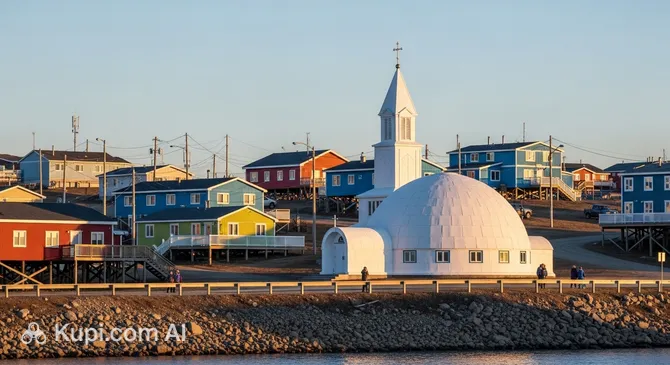
Inuvik. Source: Kupi.Binoculars

Visitors are often struck by the town's distinctive architecture and cultural landmarks. The most iconic structure is undoubtedly Our Lady of Victory Church, affectionately known as the "Igloo Church" for its unique dome shape designed to withstand the shifting permafrost without deep foundations. Another remarkable sight is the Midnight Sun Mosque, often cited as the northernmost mosque in the Western Hemisphere. Beyond architecture, the town is a gateway for cultural festivals and outdoor activities, from dog sledding to navigating the maze-like waterways of the delta.

Whether you arrive to witness the dancing Aurora Borealis or to experience the energy of endless summer days, Inuvik promises a warm welcome in a cold climate. It is a destination that defies expectations, offering a perfect blend of modern amenities and raw, natural beauty for those willing to make the journey north.

Weather Overview

The climate in this Arctic community is characterized by extreme seasonal contrasts, typical of its subarctic location. Winters are long and intensely cold, with January often seeing average temperatures around -25.5°C and lows dropping to -28.1°C. Despite the deep freeze, this season is relatively dry, with February and March recording minimal precipitation and only about 4 wet days each.

Summer brings a dramatic shift, offering surprisingly mild and pleasant conditions. July is generally the warmest month, with an average temperature of 16.0°C and highs that can reach 20.9°C. This period also sees more moisture; August, for example, typically experiences around 12 wet days. Travelers planning a visit should consult the detailed guide to the weather in Inuvik to prepare adequately for these shifting conditions.

Overall, visitors can expect mild summers with occasional rain and extremely cold, dry winters. The transition periods are rapid, with average temperatures swinging from 1.9°C in May down to -4.0°C by October.

Interesting Facts

Beyond its famous landmarks and polar climate, Inuvik holds a variety of fascinating secrets related to its unique engineering and community spirit. From repurposed buildings to infrastructure designed to survive the frozen ground, the town is full of surprises for the observant traveler.

  • The Utilidor System: Visitors will quickly notice large, metal-clad tunnels running above ground throughout the town. These are called "utilidors" and they house the water and sewage pipes. They must be kept above ground because burying heated pipes would melt the underlying permafrost, causing the ground to shift and the town's infrastructure to collapse.

  • A Greenhouse in a Rink: The Inuvik Community Greenhouse is one of the most northerly commercial greenhouses in North America, but its location is the real curiosity. It is housed inside a decommissioned hockey arena. The former ice surface has been replaced with raised garden beds, allowing locals to grow fresh vegetables like leafy greens and tomatoes during the continuous summer daylight.

  • The Mosque's Long Journey: While the Midnight Sun Mosque is a key landmark, its arrival was an epic feat of logistics. To manage construction costs, the building was prefabricated in Winnipeg and traveled over 4,000 kilometers by truck and barge to reach Inuvik, a journey that captivated people across the country.

  • Road to the Arctic Ocean: For decades, the only way to drive north from Inuvik to the coast in winter was via an ice road built on the frozen Mackenzie River. In 2017, the opening of the Inuvik-Tuktoyaktuk Highway changed history, creating Canada's first all-season road connecting the national highway system directly to the shores of the Arctic Ocean.

How to Get There

Reaching this remote Arctic destination is an adventure in itself, often serving as the highlight of a trip to the Northwest Territories. Most travelers choose to arrive by air, enjoying spectacular views of the Mackenzie Delta from above, though the legendary Dempster Highway offers an unforgettable overland route for the intrepid driver. For a complete guide on logistics and route planning, you can read more about how to get to Inuvik.

The primary gateway for visitors is Inuvik Mike Zubko Airport (YEV). Situated approximately 11.9 km from the center of town, it serves as a vital regional hub connecting the Western Arctic to southern cities like Yellowknife, Edmonton, and Whitehorse. The airport handles around 52,000 passengers annually, making it a busy spot relative to its remote location. Upon arrival, the journey to downtown takes approximately 15-20 minutes by taxi or shuttle, offering your first ground-level glimpse of the unique northern landscape.

For clarity, here is a summary of the main airports in the vicinity:

Airport Name City Passenger Traffic Km from City
Inuvik Mike Zubko Airport Inuvik Medium 11.9
Old Crow Old Crow Small 270.5

There are no railway services connecting Inuvik to the rest of Canada. The town is, however, famous for being the northern terminus of the Dempster Highway, a scenic all-weather gravel road that connects to the Klondike Highway in the Yukon. This route is open year-round, though travelers should always check road conditions before departing, especially during winter.

Main Attractions

Exploring this unique Arctic community offers a chance to see landmarks that are true feats of engineering and cultural symbols of the North. The town's attractions reflect the ingenuity required to live in such a remote environment, blending practical necessity with artistic expression.

Our Lady of Victory Church is perhaps the most photographed building in the region. Often referred to as the "Igloo Church," its distinctive white dome was designed to reflect the local culture and to aerodynamically withstand the Arctic winds. Inside, visitors are treated to beautiful Stations of the Cross painted by renowned Inuit artist Mona Thrasher. The church is not just a place of worship but a monument to the community's resilience and history.

Another architectural marvel is the Midnight Sun Mosque. As the northernmost mosque in the Western Hemisphere, it serves as a spiritual home for the town's Muslim community. It is famously known as "The Little Mosque on the Tundra" and is celebrated for the incredible logistical journey it took to get here—traveling over 4,000 kilometers by road and water from Winnipeg. Its presence highlights the diverse and welcoming nature of the town.

For those interested in local sustainability, the Inuvik Community Greenhouse is a must-visit. Located in a converted hockey arena, it is the largest community greenhouse of its kind in North America. Walking through the rows of raised beds, tourists can see everything from vibrant flowers to fresh vegetables thriving under the 24-hour summer daylight. It is a vibrant green oasis that demonstrates how locals have adapted to the short but intense growing season.

Finally, a trip to the Western Arctic Regional Visitor Centre provides essential context for any traveler. This facility offers fascinating exhibits on the flora, fauna, and indigenous cultures of the Mackenzie Delta. It is an excellent starting point for understanding the delicate ecosystem of the region and obtaining information on local tours, making it an invaluable resource for planning further adventures in the area.

Local Cuisine

The culinary scene in Inuvik is a unique reflection of its Arctic environment, blending standard Canadian comfort food with traditional "country food" harvested from the land and water. Due to the high cost of importing ingredients to this remote location, locals rely heavily on hunting, fishing, and gathering. For visitors, this offers a rare opportunity to taste ingredients that are virtually impossible to find further south, prepared with a deep respect for the indigenous culture of the region.

The star of the local table is undoubtedly Arctic Char. This cold-water fish, similar to salmon but with a more delicate flavor, is a staple of the diet. You might find it pan-fried, baked, or prepared traditionally as pipsi—dried fish that is chewed as a hearty snack. Another must-try protein is muskox, a lean and flavorful meat often compared to beef but with a slightly sweeter, gamey taste. It is frequently served as a burger or in a rich stew, providing the warmth and energy needed to withstand the polar climate.

No meal in the North is complete without bannock. This simple, fried quick bread is a universal comfort food across the territory. Whether served warm with jam and butter or used as a side for soup, it is a delicious example of how simple ingredients can become a cultural icon. For the truly adventurous, community feasts often feature muktuk—cubes of whale skin and blubber. While it is an acquired taste for many visitors, trying it is a sign of respect and a genuine way to connect with Inuvialuit traditions.

Dining out in Inuvik is a cozy and community-focused affair. The most iconic spot is arguably Alestine’s, a seasonal restaurant housed in a converted school bus. Famous for its fish tacos and reindeer chili, it offers a quirky, welcoming atmosphere that perfectly captures the town's spirit. For year-round dining, locals often head to The Roost for hearty burgers and pizza. Since restaurant options are limited, the social hub for drinks is often the legendary Mad Trapper Pub, where locals and travelers mingle over cold beers and live music.

If you visit during the summer, do not miss the Arctic Market at Chief Jim Koe Park. Here, you can find fresh vegetables grown locally at the famous community greenhouse, as well as homemade baked goods and preserves made from cloudberries and cranberries picked on the tundra. However, the best place to experience authentic traditional cuisine is often at a community festival, such as the Sunrise Festival, where large feasts are held to share the bounty of the land with everyone.

Travel Tips

Planning a trip to Inuvik requires a bit more preparation than your average vacation due to its remote Arctic location and unique environmental conditions. To ensure your visit to this spectacular corner of the Northwest Territories is safe and enjoyable, here are some practical guidelines to keep in mind.

  1. Clothing and Gear: The weather dictates your wardrobe here. In winter, you need serious gear: a heavy down parka, insulated snow pants, boots rated for -40°C, and mittens, which keep hands warmer than gloves. In summer, bring layers as temperatures fluctuate, and do not forget high-strength insect repellent and a head net, as the mosquitoes can be relentless. An eye mask is essential for sleeping during the summer's 24-hour daylight.

  2. Transportation: The town itself is compact and walkable, especially in milder weather. For longer distances or airport transfers, local taxi services are reliable and easy to call. If you plan to drive the Dempster Highway or visit Tuktoyaktuk, renting a car is necessary; agencies are located at the airport, but book well in advance as the fleet is limited. There is no public metro or city bus system.

  3. Finances: The currency is the Canadian Dollar (CAD). Credit and debit cards are widely accepted at hotels, restaurants, and the main grocery store, Northmart. However, carrying some cash is wise for purchasing arts and crafts from local carvers or in case of temporary network outages. ATMs are available at the local banks and the grocery store, but be prepared for prices that are significantly higher than in southern Canada due to shipping costs.

  4. Health and Safety: The Inuvik Regional Hospital provides comprehensive medical care and emergency services for the region. Pharmacies are available within the town, but check their operating hours as they are not open 24/7. In winter, frostbite is a genuine danger; cover all exposed skin. In summer, be "bear aware" if you venture outside the town limits, and always let someone know your travel plans if going onto the land.

  5. Communication: English is universally spoken and is the primary language for commerce and tourism, though you may hear local Indigenous languages like Inuvialuktun and Gwich'in. Cell service is reliable within town limits (primarily on the Bell and Telus networks), but coverage disappears quickly once you leave town. Wi-Fi is standard in hotels and some cafes, though speeds may be slower than you are used to.

  6. Local Etiquette: The community is warm and welcoming, so a friendly greeting goes a long way. It is customary to remove your shoes when entering a home or certain lodgings to avoid tracking in mud or snow. Always ask for permission before taking photographs of local residents, their children, or their private property, as privacy is highly valued.

  7. What to Avoid: Do not walk on the groomed ski trails in winter without skis, as footprints ruin the tracks for skiers. Additionally, avoid making negative comments about the high cost of food and goods; locals are well aware of the prices, which are an unavoidable reality of life in the remote North.

  8. Additional Tip: Be mindful of the "midnight sun" fatigue. In summer, the sun never sets, which can energize you but also disrupt your body's natural rhythm. Set a strict bedtime and use blackout curtains to ensure you get enough rest to fully enjoy your adventures.

By packing the right gear and respecting local customs, you will be well-equipped to embrace the magic of the Western Arctic. Enjoy the unparalleled hospitality of this northern community and the breathtaking natural beauty that surrounds it.

Entertainment & Nightlife

Nightlife in Inuvik is a unique experience that reflects the town's warm, community-centered spirit rather than the bustling club scenes found in major cities. In this remote Arctic setting, a night out is less about neon lights and dress codes, and more about storytelling, live music, and mingling with a diverse mix of locals, seasonal workers, and adventurous travelers. The atmosphere is incredibly casual and welcoming, where the person sitting next to you at the bar is just as likely to be a government official as a trapper or a visiting scientist.

The undisputed heartbeat of the town's evening entertainment is The Mad Trapper Pub. Located downtown, this iconic venue is famous across the North for its rustic charm and lively character. It is the go-to spot for live music, often featuring local bands playing everything from country and rock to traditional fiddling. The walls are adorned with memorabilia, creating a historic atmosphere where visitors can enjoy a cold beer and arguably the best social scene in town. It is the perfect place to experience the "frontier" vibe that defines the region.

For a slightly different pace, the Royal Canadian Legion (McInnes Branch) is another key social hub. While it is a private club, guests are often welcome, especially during their frequent community events, dances, and burger nights. It offers a friendly, laid-back environment where you can play pool or darts and chat with long-time residents. Additionally, Shivers Lounge, located within the Mackenzie Hotel, provides a comfortable setting for a quiet cocktail or a nightcap, offering a more modern and relaxed ambiance compared to the rowdier pubs.

When planning a night out, keep in mind that "formal wear" in the Arctic usually means clean jeans and a warm sweater. Practicality always trumps fashion here; in winter, you will see patrons checking their heavy parkas and snow pants at the door. Prices for alcohol can be higher than in southern Canada due to shipping costs, so budget accordingly. The busiest nights are typically Fridays and Saturdays, though the endless daylight of the Midnight Sun in summer can blur the lines between day and night, keeping the energy high well into the early morning hours.

Safety in Inuvik is largely a matter of managing the environment. The town is generally safe for walking, but during the dark and freezing winter months, it is dangerous to walk long distances due to the risk of frostbite and hypothermia. It is highly recommended to use a taxi service to get between venues or back to your accommodation. Local companies like United Taxi or Delta Cabs are reliable and accustomed to the conditions.

For daytime entertainment, the Midnight Sun Complex is the premier recreation facility. It houses a swimming pool, a curling rink, and an arena, serving as a venue for many of the town's concerts and cultural festivals. If you prefer a quieter afternoon, the Centennial Library offers a cozy retreat, and the town's various seasonal festivals often feature daytime games, drumming, and dancing that provide a deep dive into the local culture before the evening festivities begin.

Parks & Museums

Inuvik offers a fascinating blend of accessible wilderness and deep-rooted cultural heritage, where the boreal forest meets the Arctic tundra. The town's green spaces are not manicured gardens but rather gateways to the raw beauty of the Mackenzie Delta, while its cultural venues provide an intimate look into the lives of the Inuvialuit and Gwich'in peoples.

For those looking to immerse themselves in the local landscape, Jak Territorial Park is a standout destination located just a short drive from the town center. Famous for its 10-meter observation tower, this park offers spectacular 360-degree views of the surrounding delta and the Richardson Mountains in the distance. It is a favorite spot for birdwatchers and hikers, and in late summer, the grounds are abundant with cranberries and cloudberries, which visitors are often welcome to pick.

Another key outdoor area is Happy Valley Territorial Park, conveniently situated within the town limits along the East Channel of the Mackenzie River. It serves as a scenic spot for a riverside stroll or a picnic with a view of the water traffic and the distant treeline. The park provides easy access to the river, allowing visitors to dip their toes in the Arctic waters or simply watch the midnight sun reflect off the channel during the endless summer days.

On the cultural front, the Aurora Research Institute offers a unique educational experience different from a traditional museum. As a hub for scientific research in the Western Arctic, it provides visitors with insights into the region's ecology, permafrost, and atmospheric sciences. The facility often hosts lectures and maintains a specialized library, making it an excellent stop for those curious about the science behind the extreme Arctic environment.

While Inuvik does not have many large formal museums, the town itself acts as a living gallery of Indigenous art and history. The Great Northern Arts Festival office and various local craft shops serve as year-round cultural venues where visitors can view and purchase intricate carvings, beadwork, and textiles. These spaces offer a direct connection to the region's artistic heritage, showcasing the skills passed down through generations of Inuvialuit and Gwich'in artisans.

For an authentic local experience, take a walk along the Boot Lake Trail. This 3-kilometer loop is part of the Trans Canada Trail and offers a peaceful escape into the wetlands right on the edge of town, where you might spot muskrats, beavers, and nesting waterfowl in their natural habitat.

Getting Around

Travelers arriving in Inuvik should be aware that the city does not possess a conventional public transport network. Due to its small population and compact size, there are no subways, trams, trolleybuses, or scheduled city bus services operating within the town limits. The infrastructure is designed primarily for personal vehicle use and pedestrian movement, reflecting the community's remote nature and modest scale.

The primary alternative to a personal car is the local taxi service, which effectively functions as the town's public transportation system. Taxis are plentiful, reliable, and accustomed to operating in extreme weather conditions. Unlike in major metropolitan areas where meters are standard, cabs here typically charge a flat rate for trips within the town boundaries. This makes budgeting for transport simple and predictable, with a single trip usually costing a modest fixed fee per passenger.

Regarding payment, cash is the most widely accepted and preferred method for taxi fares. While digital payments are becoming more common across the region, not all vehicles may be equipped with card terminals, so it is highly advisable to carry small bills and coins. There are no travel passes, transit cards, or mobile ticketing apps required, as the system operates entirely on a pay-per-ride basis.

For those who prefer independence, renting a car is a popular option, especially for visitors planning to drive the Dempster Highway or explore the surrounding area. Rental agencies are available, largely based at the airport, but the fleet size is limited. Tourists are strongly encouraged to book vehicles weeks or even months in advance, particularly during the peak summer season. Keep in mind that winter driving requires experience with icy roads and extremely low temperatures.

Walking is a viable and enjoyable way to get around downtown Inuvik, particularly during the summer months when the Midnight Sun provides 24-hour daylight. Most hotels, restaurants, and shops are located within a short distance of one another. However, during the winter, walking requires caution; extreme cold means you must dress appropriately with thermal layers, and you should avoid walking long distances if temperatures drop significantly, as frostbite can occur in minutes.

While there are no historic trains or cable cars to ride, the town does offer a seasonal shuttle service specifically for getting to and from the airport, which coordinates with flight arrivals. Outside of this, the "special feature" of local transport is simply the resilience of the system: seeing taxis and personal trucks running smoothly at -40°C is a testament to the engineering and adaptation of this Arctic community.

Accommodation

Accommodation in Inuvik is designed to be functional and comfortable, catering to the needs of adventurers, workers, and government officials who frequent the region. Unlike major tourist destinations filled with sprawling luxury resorts, the options here are more modest, consisting primarily of standard full-service hotels, cozy bed and breakfasts, and a few rental suites. While the selection is limited, the hospitality is warm, offering a welcome refuge from the Arctic elements.

The town is compact, so location is rarely an issue regardless of where you choose to stay. Most accommodation providers are clustered around the central downtown area, particularly along or near Mackenzie Road. Staying in this vicinity places you within easy walking distance of the main grocery store, the post office, souvenir shops, and local dining spots. This convenience is especially valuable during the winter months when you want to minimize time spent outdoors between destinations.

For travelers seeking traditional amenities, the town's main hotels—such as the Mackenzie Hotel, Nova Inn, and Capital Suites—are the most popular choices. These establishments typically offer essential services like on-site dining, airport shuttles, and reliable Wi-Fi. They serve as the social hubs of the community and are well-equipped to handle the logistics of northern travel. For a more intimate experience, several local bed and breakfasts provide a "home away from home" atmosphere, often giving guests the chance to chat with local hosts about life in the North.

Booking Tip: It is critically important to book your accommodation well in advance. Despite the town's small size, hotels can fill up quickly due to the influx of seasonal workers, government business, and festivals like the Great Northern Arts Festival in summer or the Sunrise Festival in January. Do not count on finding a room upon arrival.

Travelers should also be prepared for the cost of lodging. Due to the high operational costs in the Arctic—including heating, electricity, and shipping supplies—room rates are generally higher than what you might expect for similar standards in southern Canada. Prices typically fall into the mid-to-high range. Booking is best done directly through the hotel's website or by phone to ensure your reservation is secure in this remote location.

Nearby Cities

Nearby Cities:

For those looking to explore the surroundings, Inuvik serves as an excellent base for day trips to several interesting nearby locations. While the vast distances of the Canadian Arctic mean that "nearby" is a relative term, there are unique communities within reach that offer incredible cultural and natural experiences.

The most iconic day trip is undoubtedly the journey to Tuktoyaktuk. Located on the shores of the Arctic Ocean, this Inuvialuit hamlet is accessible via the spectacular Inuvik-Tuktoyaktuk Highway. It is the only place in Canada where you can drive on a public road directly to the Arctic coast. Visitors here can dip their toes in the frigid ocean, explore the massive majestic pingos (ice-cored hills), and experience the warm hospitality of the local people. It is a must-do excursion for anyone visiting the region.

For a different experience, travelers often look south to Dawson City. Although it requires a longer journey down the Dempster Highway or a short flight, it is frequently paired with Inuvik as part of a broader northern adventure. Known for its Klondike Gold Rush history, wooden boardwalks, and eclectic atmosphere, it offers a colorful contrast to the quiet tundra. Similarly, Norman Wells, situated further up the Mackenzie River, serves as a hub for history buffs and outdoor enthusiasts interested in the Canol Trail and the region's oil heritage.

City Population Distance (km)
Whitehorse 25085 854
Dawson City 1800 543
Kugluktuk 1500 775
Tuktoyaktuk 850 124
Norman Wells 800 458

These nearby destinations offer a glimpse into the diverse culture and landscapes of the region, ranging from the boreal forest to the barren beauty of the Arctic coast.

Shopping & Souvenirs

Shopping Overview:

Shopping in Inuvik offers an experience defined by necessity, community, and artistry rather than high-end fashion or sprawling commercial complexes. While you will not find international chain boutiques or massive department stores here, the town provides a unique opportunity to discover authentic Northern goods. The retail scene is primarily focused on practical outdoor gear essential for the Arctic climate and, most notably, exquisite Indigenous arts and crafts that reflect the deep cultural heritage of the Inuvialuit and Gwich'in peoples.

Main Shopping Areas:

The retail heartbeat of the community is concentrated along Mackenzie Road, the town's main thoroughfare. This downtown strip serves as the primary commercial district, where most gift shops, pharmacies, and service centers are located. It is a compact and pedestrian-friendly area, allowing visitors to easily walk between stores to browse local offerings without the need for transportation.

Shopping Centers:

In the Arctic, the concept of a shopping mall is often replaced by the "Northern store," a vital hub for community life. The most prominent example here is Northmart. Far more than a standard grocery store, this large retailer functions as a one-stop shop for the entire region, selling everything from fresh produce and winter clothing to electronics and snowmobiles. For tourists, a visit here is a fascinating cultural experience, offering a glimpse into the logistics of supply chains in the North and the true cost of living in a remote settlement.

Markets:

During the summer months, the Arctic Market becomes a central feature of the town's social and shopping scene. Held weekly at Chief Jim Koe Park, this vibrant open-air market brings together locals and visitors under the midnight sun. Vendors offer a variety of goods, including fresh vegetables grown in the community greenhouse, homemade jams made from local cloudberries and cranberries, and handcrafted items. It is the perfect place to buy directly from local growers and artisans.

Souvenirs:

Inuvik is a premier destination for purchasing authentic Indigenous art. Visitors should look for distinct Inuvialuit and Gwich'in crafts, such as intricate beadwork, moose hair tufting, and masterful soapstone carvings. Another highly prized item is Qiviut (muskox wool), which is renowned for being warmer and softer than cashmere. Traditional apparel like mukluks (soft boots) and fur-lined mittens are also popular purchases, serving as both beautiful keepsakes and practical gear for the cold.

Opening Hours and Payment:

Standard store hours are generally from 9:00 AM or 10:00 AM to 6:00 PM, Monday through Saturday. While the main grocery store and some larger retailers may offer extended evening hours and Sunday openings, many smaller independent shops and boutiques are closed on Sundays. Major credit and debit cards are widely accepted, but carrying cash is highly recommended if you plan to purchase art directly from local carvers or vendors at the outdoor market.

Tax Information:

Travelers will be pleased to know that shopping in the Northwest Territories offers a tax advantage. Unlike many southern provinces in Canada, the territory does not charge a Provincial Sales Tax (PST). Purchases are subject only to the 5% federal Goods and Services Tax (GST). This lower tax rate makes buying higher-value items, such as local artwork or winter gear, slightly more economical compared to other parts of the country.

Nearby cities

Reached the end of the page?

That means the route is fully explored