Support

Kangiqsualujjuaq Airport

About the Airport

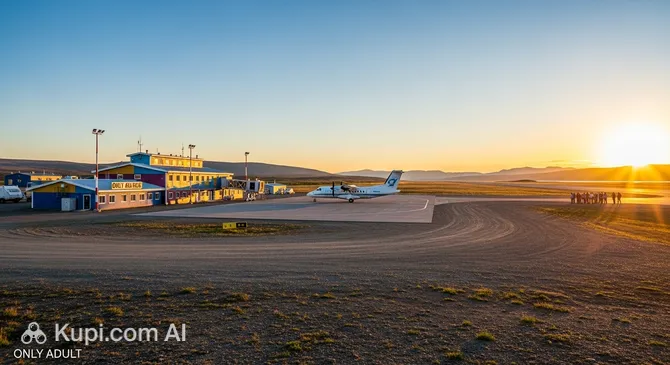
Kangiqsualujjuaq Airport. Source: Kupi.com Binoculars

Welcome to the gateway of one of Quebec's most northerly and picturesque corners! Kangiqsualujjuaq Airport (formerly known as George River Airport) is not merely a transport hub, but a true "lifeline" connecting this remote Inuit settlement with the wider world. Situated amidst the rugged beauty of the tundra, rocky mountains, and the waters of Ungava Bay, this small airfield serves as the starting point for unforgettable Arctic adventures and an introduction to the unique culture of the Nunavik region.

AirportKangiqsualujjuaq Airport
IATAXGR
ICAOCYLU
CityKangiqsualujjuaq
TimezoneAmerica/Toronto
ScheduleOnline board

Airport Features and Benefits

Kangiqsualujjuaq Airport plays a critically important role in sustaining the local community. Since there are no roads connecting the village to the south of the province, it is here that food, medicine, and mail arrive. The airport terminal is compact and functional, designed to service small turboprop aircraft capable of landing in harsh weather conditions.

For travellers, this airport is the gateway to stunning natural attractions, including the Kuururjuaq and Torngat Mountains National Parks. Expeditions for caribou watching, Arctic fishing, and trekking through the pristine expanses of the Canadian North often start here. The service here is distinguished by a special northern hospitality characteristic of the small communities of Nunavik.

Contact Information

  • Official Airport Website: There is no separate website. The airport is managed by the Kativik Regional Government (krg.ca), and flight information is provided by the airline Air Inuit (airinuit.com).
  • Inquiry Service Phone: +1 819-337-5277 (local terminal and Air Inuit representative).
  • Airport Address: Kangiqsualujjuaq Airport, Kangiqsualujjuaq, Quebec J0M 1N0, Canada.
  • Email: There is no direct public address for the terminal. For inquiries, it is recommended to use the general form on the Air Inuit carrier's website.
  • Airport Social Media: No official accounts are maintained.
  • Lost Luggage Information: Tracking is handled by the carrier airline. Please contact the Air Inuit counter at the airport or the central number +1 800-361-2965.
  • Passenger Support Contacts: Support is provided by airline staff directly in the terminal during check-in and flight operations.

How to Get to the Airport

Transport Accessibility and Logistics

When planning a trip to Kangiqsualujjuaq, it is important to understand the specific nature of this remote region. There is no familiar urban infrastructure, metro, or railway stations here. The airport is located just 2 kilometres from the village centre, making the journey short, but requiring prior planning due to harsh climate conditions.

Public Transport

Classic public transport (buses or fixed-route taxis) is absent in the village. Given the small size of the settlement, locals often move around on foot, on ATVs (in summer), or snowmobiles (in winter).

Transfers and Taxis

The most reliable way to get to or from the airport is to arrange a transfer.

  • Hotel Transfer: Most tourists stay at the cooperative hotel (Inuit Co-op Hotel). When booking a room, it is highly recommended to book an airport pick-up in advance. Hotel staff will meet you with a car or minibus.
  • Private Transport: There are no official taxi services with meters here. However, you can arrange a ride with locals for a small cash fee. This is a common practice in northern communities.

Car Rental

Chain car rental agencies (such as Hertz or Avis) do not exist in Kangiqsualujjuaq. The road network is isolated and limited to the territory of the village and its immediate surroundings. For long-distance trips into the tundra, all-terrain vehicles or boats provided as part of organised guided tours are used.

Parking

Near the small terminal building, there is an open area serving as parking. It is free of charge and used mainly by locals seeing off or meeting passengers. There are no guarded covered parking lots.

Travel Time and Cost

A trip from any point in the village to the airport takes 5 to 10 minutes by car. If you are travelling light in good weather, the distance can be covered on foot in 20–30 minutes, enjoying views of the bay, but this option is not recommended in winter due to strong winds and frost. The transfer cost is usually included in the accommodation or tour price, or constitutes a nominal amount by agreement.

Nearest Airports and Connections

Kangiqsualujjuaq Airport is the final destination for many routes, but your journey will likely pass through other northern hubs. The main hub of the region is Kuujjuaq Airport (located 158 km away), from where main flights to the "south" operate.

Other regional airfields serving neighbouring communities of Nunavik and Labrador are located within a wider radius. Among them are Kangirsuk Airport (271 km) and the airfield of Nain settlement (352 km). Significantly further, but within the regional network, are Schefferville Airport (438 km) and Kimmirut (507 km). Direct connections between these points and Kangiqsualujjuaq may be unavailable, so always check airline schedules.

Terminals and Layout

Structure and Terminals

Unlike major international hubs, Kangiqsualujjuaq Airport (XGR) is distinguished by extreme compactness and simplicity. There is only one passenger terminal in operation here. It is a small single-storey building that combines all necessary services for arriving and departing passengers, as well as cargo processing zones.

The terminal structure is intuitive and does not require maps or complex navigation schemes. Everything is within direct line of sight: it is only a few steps from the entrance door to the check-in counter. Such a layout eliminates the possibility of getting lost and creates a cosy, almost homely atmosphere typical of small northern airports.

Departure and Arrival Zones

The internal space of the terminal is functionally zoned, but without the rigid partitions characteristic of large airport terminals:

  • Check-in Zone: Located immediately at the entrance. Here you will find the Air Inuit counters where passenger processing and baggage acceptance take place.
  • Waiting Hall: A single space for all passengers. After check-in, you wait for boarding in a common warm hall with seating. The windows often offer views of the runway and surrounding mountains.
  • Arrival Zone: There is no separate closed arrival hall. Passengers disembarking from a flight enter the general terminal room or go directly outside to be met.
  • Baggage Claim: There are no conveyor belts at the airport. Luggage is unloaded manually by staff and delivered to a designated area inside the building or directly to the exit, where passengers collect their belongings themselves.

Features and Service in the Terminal

The terminal is designed primarily to protect passengers from the harsh Arctic climate. The main feature of the building is reliable heating and wind protection. The infrastructure is minimalist:

  • Restrooms for visitors.
  • A small rest area.
  • Information boards with announcements.

Please note: there are no Duty Free shops, cafes, ATMs, or currency exchange points in the terminal. Travellers are strongly advised to carry a supply of water, light snacks, necessary medication, and cash before arriving at the airport.

Transfers and Boarding

Boarding and disembarking are carried out on foot across the apron. There are no jet bridges or buses here. The distance from the terminal door to the aircraft steps is minimal, but one should be prepared for outdoor weather conditions. Since there are no transfers between terminals (due to there being only one building), transit passengers, if any, simply wait for the next departure in the general hall.

Check-in and Procedure Times

Thanks to the small size of the airport, all formalities take minimum time. Queues here are a rare phenomenon.

  • Check-in: It is recommended to arrive at the airport 45–60 minutes before departure. Counters close strictly according to schedule (usually 30 minutes before departure), and latecomers may not be allowed on the flight, as flight documentation preparation begins in advance.
  • Security Screening: The pre-flight screening procedure is quick but complies with aviation security standards.

Navigation Recommendations

The main advice for passengers in Kangiqsualujjuaq is to dress for the weather. Even if you plan to stay inside the building, the path from the taxi to the entrance and from the exit to the plane is in the open air, where strong gusts of icy wind are possible. Keep boarding passes and documents handy, but in a place protected from moisture.

Airport History

The history of Kangiqsualujjuaq Airport is inextricably linked with the exploration of the Canadian North and the transition from the isolated life of Inuit communities to a modern lifestyle. Unlike capital city hubs, every stage of development here was dictated by the harsh necessity of survival and maintaining a connection with the outside world.

From Seaplanes to a Permanent Runway

Before the appearance of a proper airfield, air connection with the settlement (then known as George River) was carried out using seaplanes in summer and ski-equipped planes in winter, landing on the ice of the river or bay. The construction of a permanent runway began only in the second half of the 20th century, when the governments of Canada and Quebec initiated programmes to improve the infrastructure of northern villages. The official opening of a gravel strip capable of receiving wheeled aircraft year-round was a turning point in the region's history, ensuring the stable delivery of cargo and passengers.

Change of Management and Modernisation

An important milestone in the airport's history was 1996. Under the James Bay and Northern Quebec Agreement, management of the airport (along with other Nunavik airfields) was transferred from the Quebec Ministry of Transport to the Kativik Regional Government (KRG). This event marked the beginning of a new era: local authorities, with a better understanding of the region's specifics, took over the maintenance and modernisation of the infrastructure.

Since then, the airport has undergone a number of renovations:

  • Lengthening and strengthening the gravel runway to accommodate heavier turboprop aircraft like the Dash-8.
  • Upgrading navigational lighting equipment to ensure landings during the polar night.
  • Construction of a modern (by regional standards) terminal building, ensuring warmth and safety for passengers.

Role in the Tragic Events of 1999

Kangiqsualujjuaq Airport played a key, heroic role during the avalanche on the night of January 1, 1999, when the disaster struck the local school building during celebrations. Under conditions where ground assistance was impossible, the airport became the main logistical centre for the rescue operation. Urgent evacuation of the injured to hospitals in Kuujjuaq and Montreal, as well as the delivery of rescuers and medical supplies, was carried out through it. The work of the airport services in those critical hours saved many lives.

Interesting Facts

  • The Mystery of Code XGR: The airport's IATA code — XGR — is a historical legacy. It stands for George River (the settlement's former name in English), although the town has long officially borne the Inuit name Kangiqsualujjuaq.
  • Runway Surface: The airport's runway remains gravel to this day. This is because permafrost makes asphalt surfacing short-lived and difficult to repair. Pilots flying here undergo special training for landing on unpaved surfaces.
  • Park Gateway: Historically, the airport served as a base for geologists and researchers, and today it is the official entry point for visitors to the Kuururjuaq National Park, created in 2009.

Services and Facilities

The infrastructure of Kangiqsualujjuaq Airport (XGR) fully corresponds to its status as a remote northern outpost. You will not find luxury boutiques or food courts familiar in metropolises here. All services are focused on the essentials: ensuring flight safety and basic comfort for passengers waiting for their flight in harsh Arctic weather conditions. Travellers should be prepared for minimalism and self-sufficiency.

Dining and Shops

Inside the single terminal, there are no cafes, restaurants, vending machines, or retail shops. You cannot buy water, snacks, or hot coffee here before departure.

  • Tip for Tourists: Be sure to arrange provisions in advance. Purchase food and drinks at the local cooperative store (Co-op) in the village before heading to the airport.
  • Souvenirs: If you wish to take home items of Inuit art or handicrafts, buy them directly from artisans in the village, as there are no souvenir stalls at the airport.

Waiting Halls and Business Services

The terminal is a single open space. There is no division into economy and business classes, nor are there separate VIP lounges. Conference rooms and business centres are also absent. If you need to work or hold important negotiations, it is better to do so at the village hotel before departure.

Connectivity and Electronics

Public Wi-Fi in the airport building is generally absent or works unstably. Mobile coverage may be available depending on your operator (Bell and its partners work best in the region), but the signal inside the metal hangar of the terminal may weaken.

There are no specialised charging stations. However, a few standard wall outlets can be found in the waiting hall. It is recommended to carry a fully charged power bank, as access to outlets may be limited by the number of people wanting to use them.

Financial Services

There are no ATMs or currency exchange points at Kangiqsualujjuaq Airport. Payment for excess baggage at the check-in counter is most often accepted by bank cards, but the system may depend on the stability of the internet connection.

Important: Always have a sufficient supply of cash in Canadian dollars. The nearest opportunity to withdraw money is at the Co-op store in the village centre (cash back at the till or ATM), which is located 2 km from the airport.

Medical Assistance

There is no medical post or pharmacy in the terminal. Airline staff possess first aid skills and have basic kits for emergencies. In case of serious health problems, it is necessary to contact the local health centre (CLSC) in the village or call emergency services before arriving at the airport.

Passengers with Children

There are no special mother-and-child rooms or play areas in the building. However, the atmosphere at the airport is very friendly and family-oriented, which is typical for Inuit communities. Staff are always ready to help parents with strollers or luggage. Given possible flight waits, parents are strongly advised to bring books, toys, and food for the child, as there will be nowhere to buy them on site.

Accessibility

The airport is equipped to serve passengers with reduced mobility, taking into account the specifics of small aviation:

  • The terminal building is single-storey, with no stairs or thresholds, facilitating movement in a wheelchair.
  • Toilets are generally adapted for passengers with limited mobility.
  • Boarding the aircraft takes place from the apron. Since there are no jet bridges and the planes are small, a special ramp or assistance from ground staff is used for boarding.

Recommendation: When purchasing a ticket, be sure to notify the airline (usually Air Inuit) of your needs so that the crew can prepare the necessary equipment for boarding.

Hotels and Accommodation

There are no hotels or sleeping pods on the airport territory itself. The nearest and only place for tourist accommodation is in the village:

  • Inuit Co-op Hotel: A small but cosy hotel located about 5-10 minutes' drive from the terminal. It offers basic amenities, including a shared kitchen and Wi-Fi. Transfers to the airport are usually organised by hotel staff upon request.

In the event of non-flying weather and flight cancellation (which happens often in the North), passengers will have to return to the village for an overnight stay.
Where to Eat

Given the remoteness and intimate scale of Kangiqsualujjuaq Airport (XGR), the issue of dining here is resolved quite differently than in major international hubs. Passengers need to know in advance that familiar catering infrastructure in the terminal is completely absent. There are no restaurants, cosy cafes, bars, or even snack machines here.

To ensure your wait for the flight and the journey itself are comfortable, we have prepared recommendations on how to organise a snack, relying on the resources of the village itself.

Restaurants and Cafes in the Terminal

In the single airport building, there are no designated dining zones (neither in the secure nor the public area). The terminal performs a purely transport function. This means you will not be able to have a cup of hot coffee or order lunch immediately before departure.

Where to Get Food: The "Bring Your Own" Strategy

The only reliable option for a traveller is to take care of provisions before arriving at the airport. All purchases must be made in the village of Kangiqsualujjuaq.

  • Local Shop (Co-op Store): This is the main and practically the only supermarket in the village. Here you can purchase bottled water, juices, pastries, fruits (subject to delivery availability), canned goods, and snacks. The shop is located in the village centre.
  • Hotel Kitchen: If you stayed at the Inuit Co-op Hotel, it makes sense to have a hearty breakfast or lunch there before leaving. You can also ask the staff to prepare a packed lunch for the road (sandwiches), but this should be arranged in advance, preferably the evening before.

Local Cuisine Dishes

Although you cannot buy them at the airport, you can take unique northern delicacies with you as a snack if you manage to find them in the village:

  • Nikku: Traditional Inuit dried meat (most often caribou). This is an excellent nutritious snack that keeps long and does not require special transport conditions.
  • Pipsi: Dried or cured fish (Arctic char).
  • Bannock: Traditional fried bread or flatbread. It is filling, tasty, and perfect for a snack in the waiting hall.

Dietary Catering (Vegetarian, Halal, Gluten-Free)

In the absence of public catering, dietary control rests entirely on your shoulders. In the local store, the selection of specialised products (gluten-free or for vegans) may be limited and depends on recent deliveries by plane or barge.
Tip: If you have a strict diet (including Halal requirements), it is recommended to bring the necessary supply of specialised products (e.g., gluten-free bars or nuts) with you from the "south" or major cities before starting your journey to the North.

Prices

Be prepared for food prices in Nunavik stores to be significantly higher than in southern Canada due to complex delivery logistics.
Average Cost: A simple set of a bottle of water, a bag of chips, and a chocolate bar may cost 15–25 CAD.

Recommendations Before Departure

  • For a Quick Snack: Buy nuts, crackers, or chocolate in the village. They do not take up much space in hand luggage and will help satisfy hunger if the flight is delayed due to weather conditions.
  • For a Full Meal: We strongly recommend eating a substantial meal in the village before leaving for the airport. On small aircraft for short flights, meals are often not provided or are limited to light snacks.
  • Drinks: There are no drinking fountains in the terminal. Be sure to carry a supply of water, especially if you are travelling with children.

Travel Tips

Travelling through Kangiqsualujjuaq Airport is a unique experience that differs greatly from flying through major international hubs. To ensure your trip to this remote corner of Nunavik goes smoothly, it is important to consider the specifics of small polar aviation and the harsh conditions of the region.

Optimal Arrival Time

Despite the miniature size of the terminal, punctuality plays a decisive role here. It is recommended to arrive at the airport 60 minutes before departure. Air Inuit check-in counters close strictly 30–45 minutes prior to departure. Since passenger lists and weight calculations (aircraft balancing) are often performed manually or require extra time, latecomers may simply not be allowed on board, even if the plane is still on the apron.

Check-in and Screening

The check-in procedure takes place in a friendly, almost family-like atmosphere, but security requirements are strictly observed.

  • Documents: Keep your identification (passport or Canadian ID) in an easily accessible place.
  • Weighing: Be prepared to be asked to step on the scales together with your hand luggage. For small aircraft, precise weight is critically important.
  • Screening: The screening process is standard for Canada (CATSA) but is faster due to the low flow of people. You will likely have to remove shoes and outerwear, so wear comfortable clothing.

Seat Selection on the Plane

On flights operated by Dash-8 or Twin Otter turboprop aircraft, open seating or seat allocation directly at the check-in counter is often practised.

  • For Best Views: Try to get a window seat. On approach to Kangiqsualujjuaq, breathtaking views of the George River, rocky hills, and Ungava Bay open up.
  • Noise and Comfort: Seats in the front of the cabin (on the Dash-8) are usually quieter. In the Twin Otter, conversely, it can be noisy everywhere, so having noise-cancelling headphones will be a big plus.

Hand Luggage: What is Allowed and What is Not

Overhead bins in local aircraft are very narrow. A standard "cabin size" suitcase simply won't fit.

  • Size: Take only soft backpacks or small bags into the cabin. Large hand luggage will be taken from you at the steps (SkyCheck service) and returned immediately after landing.
  • Specific Prohibitions: Tourists often carry hiking gear. Remember: bear spray, fuel for stoves, and any flammable liquids are strictly prohibited in both hand luggage and checked baggage (unless shipped as dangerous cargo via the cargo terminal in advance). Knives and multi-tools must be packed strictly in checked luggage.

Tips for Transit Passengers

Most flights from Kangiqsualujjuaq connect in Kuujjuaq (YVP) or Montreal (YUL).

  • Allow Extra Time: Weather in the North is unpredictable. If you have separate tickets (different airlines), allow at least 3–4 hours for a transfer in Montreal, or better yet, plan an overnight stay.
  • Baggage: Clarify at the check-in counter whether your baggage will be checked through to your final destination. Often when transferring from Air Inuit to Air Canada or other airlines, baggage needs to be collected and re-checked.

Customs Control

The airport serves only domestic flights. Customs and border control are absent here. If you are flying from abroad, you will complete all formalities at your first point of entry into Canada (usually Montreal) before heading North.

Saving Time and Money

  • Avoid Excess Weight: Excess baggage rates in northern aviation are very high (can reach 5–10 CAD per kg and higher). Weigh your bags in advance at the hotel.
  • Food to Go: As mentioned, there is no food at the airport. Save your nerves and money by buying a snack at the Co-op store in the village. Prices there are high, but food might not be offered on board at all.
  • Cash: Carry some cash in case the card payment terminal is not working due to connection failures.

Actions in Case of Flight Delay

Delays and cancellations due to fog, blizzards, or strong winds are common in Kangiqsualujjuaq.

  • Don't Leave the Hotel Immediately: If the weather is bad, call the airline or ask hotel staff to check the flight status before going to the airport. Waiting in the warm hotel lobby is more comfortable than in the small terminal.
  • Communication: Keep your phone charged (outlets in the terminal are in short supply).
  • Patience: This is the main advice. Do not pressure the staff — the decision to fly is made by the pilot based on safety. Have a book, downloaded movies, or music with you, as Wi-Fi at the airport may not support content streaming.

Reached the end of the page?

That means the route is fully explored