Support

Tasiujuaq Airport

About the Airport

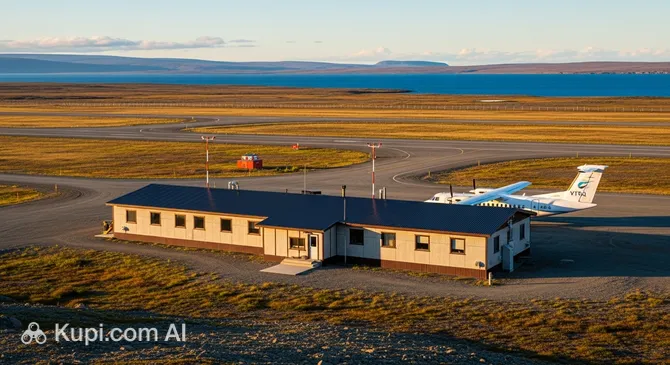
Tasiujuaq Airport. Source: Kupi.com Binoculars
Tasiujuaq Airport (YTQ) is not merely a transport hub, but a true "lifeline" for the residents of this remote Inuit settlement in Nunavik. Located on the shores of the Leaf Basin, which witnesses some of the highest tides in the world, this modest airfield serves as the only reliable bridge connecting the local community with the outside world amidst the boundless tundra. Here, you will not find massive terminals or duty-free shops: only the rugged beauty of the Canadian North, pristine air, and the atmosphere of a true polar adventure.
IATA CodeYTQ
ICAO Code CYTQ
City Tasiujaq
Distance to Centre ~3 km
Status Domestic (Regional)
Annual Passengers Data pending (low traffic)
ScheduleOnline board

Airport Features and Advantages:

Tasiujuaq Airport plays a critically important role in the life of the region, as reaching the village by land is practically impossible. Key features include:

  • Vital Necessity: The airport ensures the delivery of food, medicine, and mail, and is the only method for rapid evacuation in emergencies.
  • Extreme Conditions: The runway here is gravel, requiring special skill from pilots, especially in changeable Arctic weather conditions.
  • Gateway to the Wild: For rare tourists, this airport becomes the starting point for expeditions to the Leaf Basin and for observing the migration of muskoxen and caribou.

Contact Information

  • Official Airport Website: The airport does not have its own website. Information regarding facility management is available on the Kativik Regional Government (KRG) portal, and flight schedules are on the Air Inuit website.
  • Inquiry Service Phone: +1 819 633-5062 (Air Inuit terminal).
  • Airport Address: Tasiujaq Airport, Tasiujaq, Quebec, J0M 1T0, Canada.
  • Email: info@krg.ca (general administration inquiries).
  • Airport Social Media: Official accounts are absent.
  • Lost Luggage Information: For lost items, please contact Air Inuit staff at the airport or the airline's central support service.
  • Passenger Support Contacts: Assistance is provided by airline personnel at the check-in counter within the terminal building.

How to Get to the Airport

Transport logistics in Tasiujaq differ significantly from the familiar urban environment. Since the village is isolated from the road network of the rest of Canada, and the settlement itself is very compact, there are no standard forms of public transport such as buses or trains. The road to the airport is a short but sometimes extreme journey across the tundra.

Transfers and Taxis

There are no official taxi services with meters in Tasiujaq. The main way to get from the village to the terminal (a distance of about 3 km) is:

  • Hotel Transfer: If you are staying at the local Inuit Co-op Hotel, the administration usually organizes pick-up and drop-off for guests. The transfer cost is often included in the accommodation price or amounts to a nominal fee (about 10–20 CAD). It is recommended to arrange this in advance when booking your room.
  • Private Rides: Local residents are very helpful and often give visitors a lift in their pickup trucks. This is done by arrangement; there are no fixed tariffs.

Transport Specifics: ATVs and Snowmobiles

Given the harsh climate and lack of paved roads, the most popular means of transport here are:

  • In Winter: Snowmobiles. This is the primary transport for reaching the runway when the road is covered in snow.
  • In Summer: All-Terrain Vehicles (ATVs/Quads). They easily navigate the gravel road connecting the village to the airfield.

Public Transport and Car Rental

Classic public transport is completely absent in the village. Renting a car in the traditional sense (via international services like Hertz or Avis) is impossible here. The only option to obtain transport is to negotiate the rental of an ATV or snowmobile with one of the locals, but this requires personal contacts and discussing terms on the spot.

Parking

Near the terminal building, there is a small open area serving as parking. It is unguarded and free of charge. Local residents leave their vehicles here during short trips.

Travel Time

The trip from the village centre to the airport by car or all-terrain vehicle takes approximately 5–10 minutes. Walking is possible in good weather and takes about 30–40 minutes; however, in winter or during strong wind seasons, walking with luggage is strongly discouraged due to the risk of frostbite and encounters with wild animals.

Connections with Other Regions

The airport is part of a vital regional network. Most flights arrive here via Nunavik's main transport hub — Kuujjuaq Airport, which is located approximately 110 km away. "Circular" flights are also frequently operated, linking Tasiujaq with neighbouring settlements such as Kangirsuk Airport and remote points, for example, Schefferville Airport. These flights allow tourists and locals to travel along the coast of Ungava Bay.

Terminals and Map

The infrastructure of Tasiujuaq Airport is maximally adapted to the harsh conditions of the Far North and the needs of a small community. There are no complex walkways or multi-level interchanges: everything is arranged simply, functionally, and compactly.

Number of Terminals and Their Purpose

The airport features one passenger terminal. It is a small single-story building that serves as a shelter from the wind and frost for all travellers. The terminal exclusively services domestic regional flights operated by Air Inuit. The building combines the functions of the departure zone, arrival zone, and administrative block.

Airport Layout and Navigation

Navigating inside the terminal is incredibly simple — everything is within direct line of sight. Upon entering through the main entrance, you immediately find yourself in the general hall. The building layout includes:

  • Check-in Counter: Located directly in the main hall. Passenger processing and baggage drop-off take place here.
  • Waiting Area: A small space with seats where passengers await boarding.
  • Sanitary Zone: Toilets are available for general use.

There are no transfers between terminals, as the entire airport complex is concentrated in one structure.

Departure and Arrival Zones

At Tasiujuaq Airport, there is no strict separation into "sterile" zones with long corridors as seen in large international hubs.

  • Departure: After check-in, passengers wait in the general hall. The boarding gate is a standard door leading directly onto the apron to the aircraft. Boarding is done on foot.
  • Arrival: Arriving passengers enter the same building from the airfield. Luggage is usually unloaded manually by staff and handed out either in a designated corner of the terminal or (in good weather) directly beside the aircraft or on a cart near the entrance. There are no baggage claim belts here.

Terminal Features

The main feature of the terminal is its intimacy and utility. There are no shops, cafes, or ATMs. The building's primary task is to provide warmth and communication (Wi-Fi is sometimes available, but the signal can be unstable). Travellers should arrange for food and drinks in advance if a long wait is expected, as there may be nowhere to buy them on-site.

Procedure Times

Despite the airport's miniature size, strict aviation rules apply here.

  • Check-in: It is recommended to arrive at the airport 45–60 minutes before departure. Check-in counters usually close 30 minutes before the flight leaves.
  • Security Screening: The screening procedure is quick, and queues rarely form; however, staff thoroughly check luggage for prohibited items, which is standard for all of Canada.

Navigation Recommendations

It is impossible to get lost in Tasiujuaq Airport. The main advice for tourists: upon arrival, follow the locals or the instructions of the ground staff. When walking onto the airfield, be extremely careful: in winter, it can be very slippery, and strong wind gusts require attentiveness when moving towards the plane. Always keep your boarding pass handy, as checks occur immediately before stepping outside.

Airport History

The history of Tasiujuaq Airport (YTQ) is inextricably linked to the founding and development of the settlement itself, which is one of the "youngest" in the Nunavik region. Unlike ancient trading posts, the history of aviation here is a chronicle of human struggle against harsh nature to create a reliable connection with the outside world.

Inception and Opening

Although the village of Tasiujaq was officially founded in 1966, when Inuit families moved here due to rich hunting grounds, full-fledged aviation infrastructure did not appear immediately. In the early years, supplies were delivered by seaplanes landing on water in summer and ski-equipped aircraft in winter. The construction of a stationary gravel runway became a vital necessity to ensure regular supplies of food and medicine regardless of the season. The airport in its modern sense began functioning in the 1970s, becoming part of the program to develop transport accessibility in Northern Quebec.

Key Stages of Development and Management

A significant milestone in the history of the air harbour was 1996. It was then that the management of the airport (like other airports in the region) was transferred to the Kativik Regional Government (KRG). This event marked a new era: management began to be carried out at the local level with the support of the Quebec Ministry of Transport, allowing for better consideration of the community's specific needs.

Modernization and Reconstruction

Over the past decades, the airport has gone through several stages of modernization aimed at increasing flight safety in extreme conditions:

  • Runway Reinforcement: Due to permafrost thawing and harsh winters, the runway requires regular and complex maintenance. In the 2000s and 2010s, large-scale work was carried out to compact the gravel surface (grading) to accommodate modern turboprop aircraft like the Dash-8.
  • Navigation Equipment: Modern navigation systems and lighting equipment were installed, allowing pilots to land during the polar night and low cloud conditions.
  • Terminal Renovation: The terminal building has been repaired repeatedly to improve thermal insulation, which is critically important when temperatures drop below -40°C.

Interesting Facts and Features

  • The Tide Factor: The airport is located in close proximity to the Leaf Basin, where some of the highest tides in the world are recorded (up to 15-16 metres). Historically, this made marine navigation extremely dangerous and unstable, turning the airport into the only alternative "lifeline" for the region.
  • "Gravel" Pilots: Tasiujuaq Airport is on the list of airfields requiring pilots to have special certification for landing on short unpaved strips. Aviation history here is full of examples of the highest skill of Air Inuit pilots landing machines in strong crosswinds from the tundra.
  • Social Role: The village's history records instances where the airport building was used as a temporary shelter for residents during severe blizzards that blocked roads to homes, highlighting its role not only as a transport facility but also as a social one.

Services and Amenities

Passengers travelling to Tasiujaq must adjust their expectations in advance: Tasiujuaq Airport (YTQ) is a remote northern airfield with a minimal set of services. There is no commercial zone familiar to city dwellers, and the main service the terminal provides is a warm shelter from the harsh Arctic weather before departure.

Restaurants, Cafes, and Shops

Food service points and shops are completely absent in the airport building.

  • Food and Drink: There are no cafeterias or even vending machines with snacks here. Travellers are strongly advised to eat a full meal before leaving or take sandwiches and a thermos of tea with them. Food can only be bought in the village, at the local Co-op store.
  • Shops: Souvenir shops and Duty-Free are absent. If you wish to purchase items from local artisans (bone or stone carvings), this must be done directly in the village by arrangement with local residents.

Lounges and VIP Services

The terminal consists of a single small space, so there is no business lounge or VIP zone here. The waiting hall is shared by all passengers. It is equipped with standard seats. Thanks to the low passenger flow, it is usually quiet, and seats are always available. The atmosphere is more home-like than official.

Wi-Fi and Charging Stations

  • Internet: Public Wi-Fi may be unavailable or work intermittently, as internet connection in Nunavik is provided via satellite and depends on weather conditions. It is recommended to download necessary maps and tickets to your phone in advance.
  • Electricity: There are no specialized charging stations for gadgets, but several standard power outlets can be found in the waiting hall. We advise carrying a fully charged power bank.

Banks and Currency Exchange

There are no ATMs or currency exchange points at the airport. Banking services in the village itself are also extremely limited. It is critically important for tourists to carry a sufficient supply of cash Canadian dollars, especially in small bills, to pay for taxis or buy souvenirs, as card terminals may not work due to connection issues.

Medical Services

There is no medical centre or pharmacy in the terminal. Airline staff have a standard first aid kit. In case of serious health problems, one must contact the local health centre (CLSC) located in the village. In emergency situations, the airport serves as a point for medical evacuation (medevac) to larger centres.

Services for Passengers with Children

No special mother-and-child room or play areas are provided. However, Inuit culture is very child-friendly, and staff usually treat the needs of young travellers with understanding. The toilets in the terminal are spacious enough to change a child, but changing tables may not be available.

Services for Passengers with Reduced Mobility

Despite its simplicity, Tasiujuaq Airport is accessible for passengers with limited mobility:

  • Barrier-Free Environment: The terminal is single-story, eliminating the need for elevators or escalators. The entrance is equipped with a ramp.
  • Boarding the Plane: There are no jet bridges. Boarding is done from the ground via the aircraft stairs. Air Inuit staff always provide physical assistance during boarding and disembarking for passengers in wheelchairs or with mobility difficulties. It is recommended to notify the airline of your needs when booking a ticket.

Hotels at the Airport and Nearby

Overnight stays are not provided on airport territory; the terminal closes at night. The nearest and only place for accommodation is located in the village itself (about 3 km from the airport):

  • Inuit Co-op Hotel: A small hotel managed by the local cooperative. It offers basic amenities, a shared kitchen, and warm rooms. Accommodation must be booked in advance by phone, as the number of places is limited (fewer than 10 rooms), and they may be occupied by visiting specialists.

Conference Rooms and Business Centres

Business services (printing, photocopying, meeting rooms) are absent at the airport. Urgent work issues can be resolved by contacting the village administration or using the hotel services, but one should not count on full office service in this part of the tundra.
Where to Eat

When planning a trip through Tasiujuaq Airport (YTQ), travellers must consider an extremely important feature: this is a remote northern airfield with minimal infrastructure. There is no familiar food court zone, cafeterias, or restaurants characteristic of large international hubs.

Restaurants, Cafes, and Bars

There are absolutely no food service points in the airport's single passenger terminal. Here you will not find:

  • Cafes and coffee shops;
  • Bars;
  • Fast food restaurants;
  • Vending machines with snacks or drinks.

The waiting area (landside/airside is virtually a single space here) is equipped only with seats. The possibility to buy a bottle of water or a chocolate bar immediately before departure is absent.

Dining Recommendations: Where to Eat?

Since it is impossible to buy food at the airport itself, passengers should arrange for meals in advance while still in the village of Tasiujaq. Main strategies for travellers:

  • For a Full Meal: The only place where you can eat in comfort is the kitchen at the Inuit Co-op Hotel in the village. It is recommended to have a substantial lunch there before transferring to the airport.
  • For a Quick Snack: Visit the local Co-op Store in the centre of the settlement. This is the only supermarket in the area. There you can purchase pastries, canned goods, fruit, drinks, and ready-made snacks to take with you on the road.

Local Cuisine

Although there are no gastronomic shops at the airport, the Nunavik region is famous for its unique products, which can be found in the village or offered by locals:

  • Arctic Char: Local fish, often prepared dried or smoked (pikkiuk).
  • Bannock: Traditional Inuit unleavened bread, which is ideal for snacking on the road as it does not go stale for a long time.
  • Herbal Tea: Blends of tundra herbs and berries, popular among local residents.

Dietary Needs (Vegetarian, Halal, Gluten-Free)

Due to the lack of catering at the airport, specialized menus are unavailable. For travellers with strict dietary restrictions (vegans, those with allergies, or those observing Halal), it is critically important to bring necessary products with you or carefully select them at the Co-op store before departure. Finding specialized gluten-free or vegan products on-site can be difficult due to the limited assortment of northern supplies.

Average Price Range

When buying food in the village, remember "northern prices". The cost of products in Nunavik is significantly higher than in southern Canada due to complex aviation logistics for delivery. Expect prices to be 2–3 times higher than average. A simple snack (a bottle of water and a sandwich/chocolate bar) may cost 15–25 CAD.

In-Flight Meals

Do not despair: flights departing from Tasiujaq (operated by Air Inuit) usually offer in-flight catering. Depending on the time of day and flight duration, passengers may be offered light snacks (cookies, cheese, crackers) and drinks (tea, coffee, juices), and on longer segments — sandwiches. However, one should not rely solely on this, especially if you have a healthy appetite.

Summary for the Passenger

Your main rule at Tasiujuaq Airport: "Bring everything with you". Be sure to take a thermos with hot tea and a hearty snack from the village to make waiting for your flight in the harsh tundra conditions comfortable.

Travel Tips

A journey to the Canadian Arctic is a unique experience that differs significantly from flights between major metropolises. Tasiujuaq Airport operates according to its own "northern" laws, where safety and respect for nature are paramount. To ensure your trip goes smoothly, we have collected the most important practical tips.

Optimal Arrival Time

Despite the airport being very small, do not arrive at the very last minute. The recommended arrival time is 60 minutes before departure. This is enough time to calmly check luggage and pass through security. Keep in mind that check-in counters close strictly 30–45 minutes before departure, and unlike in big cities, the plane will not wait for latecomers here, as the schedule is rigidly tied to daylight hours and weather windows.

Check-in and Screening: Northern Specifics

The check-in procedure here is more "home-like" but strict in technical aspects.

  • Weighing: Be prepared for Air Inuit staff to weigh not only your luggage but also your carry-on baggage. Aircraft flying to Tasiujaq (usually Dash-8 or Twin Otter) are sensitive to load weight.
  • Documents: Keep your identification handy. Although staff often know locals by face, document checks are mandatory for everyone.
  • Security: Screening is conducted quickly but thoroughly. You may be asked to remove bulky outerwear and footwear.

Choosing a Seat on the Plane

On regional Air Inuit flights, a "free seating" system often applies, or seats are assigned directly at the check-in counter. Electronic online check-in with seat selection is usually not available.

  • Tip: Try to take a window seat. The approach to Tasiujaq is incredibly picturesque: you will see the jagged coastline of the Leaf Basin and, if lucky with the time of day, the famous giant tides exposing the seabed for kilometres.
  • Noise: If you are sensitive to noise, try not to sit in the very first rows on turboprop planes, as the sound of the propellers is loudest there.

Carry-on Luggage: What to Take and What to Leave

Overhead bins in northern aircraft are significantly smaller than standard ones.

  • Dimensions: Use soft bags or backpacks instead of rigid "cabin size" suitcases — they are easier to place under the seat or in the bin.
  • Warm Clothing: Definitely take a jacket or parka with you into the cabin, even in summer. It can be cool on the plane, and you will have to walk from the terminal to the stairs outdoors, where strong winds blow.
  • Prohibitions: It is strictly forbidden to carry fuel for stoves, bear spray, and any flammable substances in carry-on (and often in checked luggage). These items will be confiscated.

For Passengers with Connections

Most often, the route to Tasiujaq lies through the hub in Kuujjuaq or Montreal.

  • Luggage: Usually, luggage is checked through to the final destination, but always confirm this when departing from your first airport. Keep luggage tags until the very end of the trip.
  • Connections: When planning a return flight to Montreal or further, allow a minimum of 3–4 hours for the transfer, or better yet — a full day. Weather in Nunavik is unpredictable, and a delay of a flight from Tasiujaq for several hours is a common occurrence.

Customs Control

Tasiujuaq Airport services only domestic flights. There is no customs or passport control for crossing borders here. If you are arriving from abroad, you will pass all formalities at your first point of entry into Canada (usually Montreal).

How to Save Time and Money

  • Avoid Excess Weight: Tariffs for excess baggage in northern aviation are very high. Weigh your bags in advance. If you are transporting food or equipment, consider sending them via cargo flight; this may be cheaper but will take more time.
  • Cash: Have cash with you to pay for the transfer to the village. Private drivers do not accept cards, and there is no ATM at the airport. This will save you time and nerves upon arrival.

What to Do in Case of Flight Delay

Delays due to fog, blizzards, or strong winds are part of the reality of travelling in Nunavik.

  • Communication: If the flight is postponed, do not go far from the terminal until you receive exact information. Announcements may be made by voice, without display screens.
  • Accommodation: If the flight is rescheduled for the next day (which happens), contact the hotel in the village immediately. Places are few and are quickly taken by other passengers. Keep the hotel phone number handy.
  • Patience: The main advice is to relax. In the North, no one controls the weather. Use this time to chat with locals or read a book.

Reached the end of the page?

That means the route is fully explored