Support

Aupaluk Airport

About the Airport

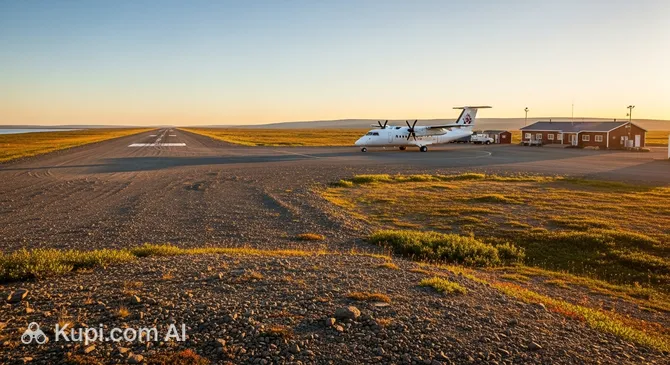
Aupaluk Airport. Source: Kupi.com Binoculars

Aupaluk Airport is not merely a transport hub, but a true "lifeline" for the smallest and perhaps the most picturesque settlement in the Nunavik region. Located amidst the tundra, where the soil possesses a unique reddish hue due to high iron content, this airfield welcomes travelers with the stark yet mesmerizing beauty of the Canadian North. There is no typical city bustle or massive terminals here: the landing of an aircraft on the gravel strip becomes an event that connects local residents with the "outside world" and opens access to the pristine nature of Ungava Bay for tourists.

AirportAupaluk Airport
IATAYPJ
ICAOCYLA
CityAupaluk
TimezoneAmerica/Toronto
ScheduleOnline board

Airport Features and Highlights:

Aupaluk Airport plays a critically important role in the life of the community, as reaching this location by land is practically impossible. The terminal is characterized by maximum simplicity and compactness, which reduces pre-flight procedures to a minimum. The main advantage of this air harbour is the views revealed during takeoff and landing: the boundless expanses of the tundra, the reddish earth that gave the village its name ("Aupaluk" means "where the earth is red"), and the cold waters of Ungava Bay. For wildlife enthusiasts, the airport serves as a gateway to the migration grounds of the caribou herds.

Contact Information

Since Aupaluk Airport (YPJ) is a small regional airfield serviced primarily by Air Inuit and managed by the Kativik Regional Government, it does not have a separate website. The primary source of information and point of contact is the air carrier and the local station.

  • Official Airport Website: www.airinuit.com (main carrier's page) or www.krg.ca (airport operator's site)
  • Inquiry Service Phone: +1 819-491-7010 (direct number for the airport terminal)
  • Airport Address: Aupaluk Airport, Aupaluk, Quebec J0M 1X0, Canada (located approximately 0.4 km east of the village)
  • Email: airinuit.info@airinuit.com (general airline support service)
  • Social Media: Facebook, Instagram (Air Inuit news)
  • Lost Luggage Information: +1 819-491-7010 (contact station staff) or the central Air Inuit baggage tracing service
  • Passenger Support Contacts: +1 800 361-2965 (toll-free Air Inuit reservation and information line)

How to Get to the Airport

Given the diminutive size of the settlement and the specific nature of the Nunavik region, the question of transport is resolved quite differently here than in metropolises. Aupaluk is the smallest Inuit community in Quebec, and the airport is literally within walking distance of residential homes. The distance from the runway to the village centre is only about 400–600 metres, so many locals and guests reach the terminal on foot, weather and luggage permitting.

Public Transport

Conventional urban public transport (buses, trains, or metro) does not exist in Aupaluk. There are no routes or schedules. Due to the lack of a road network connecting the village to the rest of the world, there is also no railway service.

Transfers and Taxis

There are no official taxi services or apps like Uber here. However, transport connections are organized by the local community:

  • Hotel or Administration Transport: If you are arriving for work or staying at the local cooperative hotel, you will likely be met by a service pickup truck or SUV. It is worth arranging this in advance when booking your accommodation.
  • Local Experience: The main means of transport for local residents are quad bikes (ATVs) in the summer and snowmobiles in the winter. Tourists with light luggage are often given a lift on such vehicles.
  • Cost: There are no fixed tariffs. The ride is often free (as a gesture of hospitality) or for a nominal fee agreed upon on the spot.

Car Rental and Parking

It is impossible to rent a car in Aupaluk — there are no rental agencies here. The road network is limited to a few gravel streets within the village. Regarding parking, there is a small unguarded area near the airport building where one can leave a snowmobile or quad bike. No parking fee is charged.

Travel Time:

  • On foot: 5–10 minutes.
  • By transport: 1–2 minutes.

If your route involves transfers or you are planning a complex journey across the Canadian North, it is useful to know about other aviation hubs in the region. The nearest major hub is Kuujjuaq Airport, through which most flights to Montreal pass. Also relatively close (by Northern standards) are Kangirsuk Airport and Schefferville Airport. For travel to the neighbouring territory of Nunavut, an important node would be Iqaluit Airport or the small airfield of Kimmirut.

Terminals and Map

The infrastructure of Aupaluk Airport fully corresponds to the size and needs of this tiny settlement. You will not find confusing corridors, jet bridges, or multi-level car parks here. The single passenger terminal is a small one-story building that serves simultaneously as a waiting room, check-in area, and administrative centre for the air harbour.

Terminal Layout and Navigation

Navigation within the terminal building is intuitive, as all functional zones are within direct line of sight. It is simply impossible to get lost here. The internal space is organized efficiently:

  • Check-in Zone: Located immediately at the entrance. The Air Inuit check-in counter serves all departing flights.
  • Waiting Area: A small space with seats where passengers await boarding. Given the harsh climate, the room is well-heated.
  • Restroom: Basic amenities are provided for passengers within the terminal.

Departure and Arrival Zones

In airports of this type, the concepts of "departure zone" and "arrival zone" are quite nominal. Passenger flows are not separated by complex barriers.

Departure: After a quick check-in and baggage drop, passengers remain in the general hall until boarding is announced. Boarding takes place directly from the building onto the apron. Travelers face a short walk to the aircraft (usually turboprop Twin Otters or Dash 8s). Important: since there are no jet bridges, one must be prepared for a sharp temperature drop and wind when exiting the warm terminal.

Arrival: Arriving passengers descend the aircraft stairs onto the gravel strip and walk to the terminal entrance. Baggage claim in Aupaluk follows a simplified scheme: luggage is often unloaded onto a special area or cart next to the building, or brought into a public area inside the terminal where passengers collect their belongings themselves.

Processing Times

The absence of long queues is a major advantage of flying to such remote corners. Nevertheless, the airline recommends adhering to standard rules:

  • Check-in: Usually opens 45–60 minutes before departure. Since station staff perform multiple functions (from check-in to baggage loading), the counter closes strictly 30 minutes before departure.
  • Security Screening: Screening procedures here are less formal than in major hubs, but safety requirements are observed. The process takes mere minutes.

Recommendations for Passengers

Considering the terminal's features, the main recommendation is warm clothing. Even if you are flying in summer, the wind on the open runway can be piercing. Keep a hat and gloves handy when exiting the aircraft or heading towards it. Also, listen carefully to station staff announcements: there are no electronic display boards here, and all boarding information is conveyed verbally.

Airport History

The history of Aupaluk Airport (YPJ) is inextricably linked with the history of the settlement itself, which is considered unique for the Nunavik region. Unlike many other villages that grew spontaneously around trading posts, Aupaluk was carefully designed and planned by the Inuit themselves even before construction began. The airport became a key element of this plan, symbolizing a reliable connection for the new community with the outside world.

The Era of Exploration and "Bush Pilots"

Before the appearance of a modern runway, aviation in this area relied on the skill of polar aviators — "bush pilots". In winter, planes equipped with skis landed on the frozen surface of lakes or the coastal ice of Ungava Bay. Seaplanes were used in summer. Constant dependence on the whims of the weather and ice conditions made supplying the village extremely unstable, which served as the impetus for creating stationary infrastructure.

Official Opening and Development

The establishment of the airport as an official transport unit occurred in the late 1970s and early 1980s, when Aupaluk received official municipal status. Construction was carried out in difficult permafrost conditions. An important milestone was the signing of the James Bay and Northern Quebec Agreement, which guaranteed the development of the transport network in Inuit settlements. It was thanks to this programme that the airport received funding for maintaining the gravel strip and building the terminal.

Modernization Stages

Over the past decades, the airport has undergone several stages of modernization, aimed primarily at improving flight safety in harsh Arctic conditions:

  • Navigation Equipment: The implementation of modern instrument approach systems (GPS) allowed aircraft to land even with low cloud cover, which was previously impossible.
  • Lighting Equipment: The installation of powerful runway lights became critically important for operating the airfield during the polar night and winter twilight.
  • Infrastructure: The terminal building has been repeatedly updated to ensure basic passenger comfort and protection from extremely low temperatures.

Interesting Historical Facts:

  • Unique Soil: Local soil with a high iron oxide content was used in the construction of the strip. This makes the Aupaluk runway one of the most recognizable in Canada — from the air, it looks like a bright red strip against the tundra background.
  • Generational Change in Aviation: Old-timers remember the days when legendary piston-engine DC-3s flew here. Today, they have been completely replaced by reliable turboprop De Havilland Dash 8s and Twin Otters, capable of taking off from short distances.
  • Vital Artery: In the airport's history, there have been many cases where, thanks to the prompt work of ground services and pilots, it was possible to evacuate patients to hospitals in Kuujjuaq or Montreal in time, saving lives in conditions of isolation.

Services and Facilities

Services and amenities at Aupaluk Airport (YPJ) correspond to the status of a small remote airfield in the Arctic zone. Travelers must understand that there is no infrastructure typical of international hubs here: no Duty Free shops, food courts, or business lounges. The terminal provides only basic needs for a short wait before a flight.

Restaurants, Cafes, and Shops

There are no catering outlets or shops in the airport building. It is not possible to buy hot coffee, sandwiches, or souvenirs here.

  • Tip for Tourists: It is strongly recommended to arrange a snack and a supply of drinking water in advance, especially if you are flying with connections. When departing from Aupaluk, food can be bought at the local cooperative store (Co-op) in the village, but this must be done before arriving at the airport.

Waiting Halls and VIP Services

The terminal consists of a single small room. There are no separate VIP lounges or areas for business class passengers. The waiting hall is common for everyone, equipped with benches and well-heated, which is the most important convenience in the harsh climate of Nunavik.

Communication and Electronics

  • Wi-Fi: Public Wi-Fi in the terminal is generally absent or works unstably. We recommend downloading necessary maps, tickets, and entertainment content to your devices in advance.
  • Mobile Coverage: Cellular service from major Canadian operators working in the north (e.g., Bell or local providers) usually works in the airport area, but the signal may depend on weather conditions.
  • Charging Devices: There are no specialized stands for charging gadgets. A couple of spare sockets might be found in the waiting hall, but one should not rely on them — it is better to carry a fully charged power bank.

Financial Services

There are no ATMs or currency exchange points at the airport. Bank branches are also absent.

  • Important: In the village of Aupaluk itself, card payment options may be limited, and the ATM may only be located in the Co-op store and operate intermittently. Tourists are strongly advised to carry a sufficient supply of cash Canadian dollars, especially small bills, to pay for taxis (if required) or purchases from local artisans.

Medical Services

There is no medical post or pharmacy in the terminal. A first aid kit is kept by the station staff. In case of serious health issues, assistance can be provided at the clinic (CLSC) in the village of Aupaluk, which is a few minutes' drive away. The airport is often used for medical evacuation (MEDEVAC).

Services for Passengers with Children

Specialized mother-and-child rooms or play areas are not provided. Given the compactness of the hall, children are always within sight of their parents. We recommend taking toys, books, and food for the child in your carry-on luggage, as there will be nowhere to buy them on site.

Passengers with Reduced Mobility

Despite the modest infrastructure, airport staff and Air Inuit provide comprehensive support to passengers with reduced mobility.

  • The terminal building is single-story, which facilitates movement.
  • Boarding the aircraft takes place from the apron via built-in stairs. Staff are always ready to help with boarding.
  • If you require a wheelchair or special assistance during boarding, you must notify the airline when booking your ticket (at least 48 hours in advance).

Hotels and Accommodation

There is no hotel in the airport building itself, and sleeping in the terminal is not permitted as it closes for the night. The nearest and effectively the only accommodation option is located directly in the village, within walking distance (about 500 metres):

  • Aupaluk Cooperative Hotel: A small hotel managed by the local cooperative. It offers basic amenities, a shared kitchen, and a warm atmosphere. Rooms must be booked well in advance, as the number of places is limited and they are often occupied by visiting specialists.

Business Centre

Business services (conference rooms, printers, fax) are absent at the airport. If you need to print documents or hold a meeting, it is best to do this at the village administration or the hotel by prior arrangement.
Where to Eat

The issue of dining at Aupaluk Airport (YPJ) requires special attention and advance planning from travelers. Since the air terminal is a small station serving a tiny community, there is no gastronomic infrastructure here familiar to city dwellers.

Restaurants and Cafes in the Terminal

In the airport's single passenger terminal, restaurants, cafes, bars, and even vending machines are completely absent. There are no food or beverage outlets in either the departure or arrival zones (neither in the general nor the "sterile" areas).

  • Recommendation: Do not count on having a snack or drinking coffee directly before departure inside the airport building.

Where to Find Food: Alternatives in the Village

The only opportunity to purchase groceries or ready-made snacks is to visit the local store in the village of Aupaluk itself before arriving at the airport. Considering that the distance from the village centre to the runway is only about 500 metres, this will not take much time.

The Local Store (The Co-op Store):

This is the heart of the community's commerce. Here you can buy:

  • Fresh pastries (sometimes available in the mornings).
  • Sandwiches, canned goods, snacks (crisps, chocolate, nuts).
  • Beverages (water, juices, sodas).
  • Hot coffee (a self-service station with a coffee machine is often available).

Opening Hours: The store operates on a standard schedule (usually from 9:00 to 17:00 or 18:00), but may close for a lunch break. On Sundays, opening hours may be reduced.

Local Cuisine and Delicacies

Although there are no haute cuisine restaurants at the airport, a trip to Nunavik is a chance to experience Inuit traditions. If you have time in the village, you might try to find:

  • Bannock: Traditional Inuit unleavened bread, fried in a pan or baked. It is often prepared by locals, and sometimes sold in the store or hotel.
  • Arctic Char or Smoked Fish: Local delicacies that can be purchased frozen or dried as an edible souvenir, though they are more convenient to consume upon arrival at your destination.

Dining for Vegetarians, Vegans, and Special Diets

In the conditions of the Far North, the choice of products is limited by logistical complexities.

  • Challenges: Finding specialized vegan, gluten-free, or halal dishes in the Aupaluk store is extremely difficult. The assortment consists of basic long-life products.
  • Advice: If you follow a strict diet, be sure to bring a supply of food with you from Montreal or Kuujjuaq. This is the only way to guarantee the availability of suitable nutrition.

Average Price Range

Be prepared for "Northern prices". The cost of groceries in Nunavik is significantly higher than in southern Canada due to expensive air cargo delivery.

  • A simple snack (a bottle of water and a chocolate bar) may cost around 5–8 CAD.
  • A more substantial set of products for lunch — 20–30 CAD.

In-Flight Catering

An important source of nutrition for passengers is the service provided by Air Inuit. Depending on the time of day and duration of the flight, onboard service may include:

  • Light snacks (biscuits, crackers) and beverages (tea, coffee, juices) on short flights.
  • A complete light lunch (sandwich or hot meal) on longer flights connecting Aupaluk with Montreal (via Kuujjuaq).

Check the type of meal when booking your ticket, as food may not be served on a short "hop" to a neighbouring village.

Summary: Dining Strategy for the Tourist

  1. For a quick snack: Buy snacks at the Co-op store in the village an hour before departure.
  2. For a full meal: Eat a substantial meal at the hotel or guest house before leaving.
  3. Water: Be sure to carry a bottle of water, as there are no drinking fountains in the terminal.

Travel Tips

Traveling to the Canadian Arctic is a unique experience that requires special preparation. Aupaluk Airport, despite its miniature dimensions, operates according to strict rules of northern aviation. To ensure your flight goes smoothly, we have compiled the most important practical recommendations.

Optimal Arrival Time

Unlike major international hubs, you do not need to arrive here 3 hours before departure. However, one should not be too relaxed:

  • Golden Standard: Arrive at the airport 45–60 minutes before the departure time indicated on your ticket.
  • Critical Mark: Check-in counters close strictly 30 minutes before departure. This rule is observed rigorously, as the check-in agent is often the same person who loads your luggage into the aircraft. If you are late, there will simply be no one to process you.

Check-in and Security Screening

Procedures here take place in a more informal atmosphere, but safety requirements remain federal.

  • Documents: Internet in the tundra may work intermittently. Be sure to have printed itinerary receipts or save them to your phone in offline mode. Photo identification is required for boarding.
  • Screening Specifics: Although there are no long queues or full-body scanners here, carry-on luggage is inspected manually. Be prepared to show the contents of your bags upon request by staff.

Seat Selection: Hunting for Views

Flights to Aupaluk are usually operated on small aircraft like the De Havilland Dash 8 or Twin Otter. Often, open seating is practiced on such flights — whoever boards first chooses their seat.

  • Best View: Try to take a window seat. Approaching Aupaluk, you will see a unique contrast between the blue waters of Ungava Bay and the characteristic iron-rich red soil that gave the settlement its name.
  • Mind the Wings: In aircraft with high-mounted wings (like the Dash 8), the downward view is excellent from any row.

Carry-on Luggage: Do's and Don'ts

Overhead bin sizes in regional aircraft are very modest. A standard "cabin size" suitcase simply will not fit.

  • Skycheck Service: Large carry-on items will be taken from you right at the aircraft stairs and placed in the baggage hold (this is free), and upon arrival, you will receive them immediately upon exiting the plane.
  • What to take in the cabin: Valuables, documents, photography equipment, and medicines should always be kept with you in a small bag that fits under the seat.
  • Prohibited: As elsewhere, sharp objects and liquids over 100 ml are not allowed. Pay special attention to lithium batteries (for cameras and phones) — they can only be carried in hand luggage; checking them in is prohibited due to fire risk.

Tips for Transit Passengers

Most travelers reach Aupaluk via a connection in Kuujjuaq.

  • Allow Extra Time: Weather in the North changes instantly. If you are booking connections on separate tickets, leave at least 3–4 hours between flights, or better yet — a full day.
  • Luggage: If both flight segments are operated by Air Inuit, your luggage is usually checked through to the final destination. However, always verify this at the check-in counter for your first flight so that your belongings do not remain at the intermediate airport.

Customs Control and Alcohol

The airport serves only domestic flights, so there is no customs control upon arrival. However, it is worth remembering the rules regarding bringing alcohol into Nunavik. Although Aupaluk is not a "dry" settlement, strict regulations apply to the quantity of alcohol brought into the region. Please check current municipal regulations before traveling to avoid confiscation.

How to Save Time and Money

  • Avoid Excess Weight: Excess baggage fees in northern aviation are very high, as every kilogram counts. Weigh your bags at home.
  • Your Own Food: Grocery prices in the village can be 2-3 times higher than in Montreal. Bring a supply of snacks, nuts, and tea with you — this will significantly save your trip budget.
  • Walk Instead of Taxi: If you have a backpack rather than a heavy suitcase, walk to the village (about 10 minutes). It is free and allows you to stretch your legs immediately after the flight.

Strategy for Flight Delays

In the Arctic, the phrase "due to weather conditions" is heard often. If your flight is delayed or cancelled:

  1. Remain Patient: Staff cannot influence the weather. Aggression will not help you fly out faster.
  2. Accommodation: Places in the village's only hotel can run out instantly. If the flight is cancelled, contact the hotel administration immediately or ask airport staff to assist with accommodation.
  3. Entertainment: Carry a book, a charged power bank, and downloaded movies. There is nothing to do in the small terminal, and Wi-Fi may be absent.

Reached the end of the page?

That means the route is fully explored