Support

Aupaluk

About

Aupaluk is a truly distinctive destination located in the far north of Quebec, offering an intimate and authentic glimpse into life in the Arctic. As the smallest Inuit community in Nunavik, with a population of approximately 200 residents, it provides a peaceful atmosphere that stands in stark contrast to bustling urban centers. The village is famous for its unique landscape, characterized by iron-rich, reddish soil, which gives the place its name—Aupaluk means "where the earth is red" in Inuktitut.

Located on the southern shore of Hopes Advance Bay, an inlet of the vast Ungava Bay, this remote settlement is a fascinating part of Canada to explore for those seeking solitude and raw natural beauty. The terrain is relatively flat and ideal for hiking, allowing visitors to fully appreciate the striking contrast between the crimson earth and the deep blue waters of the bay.
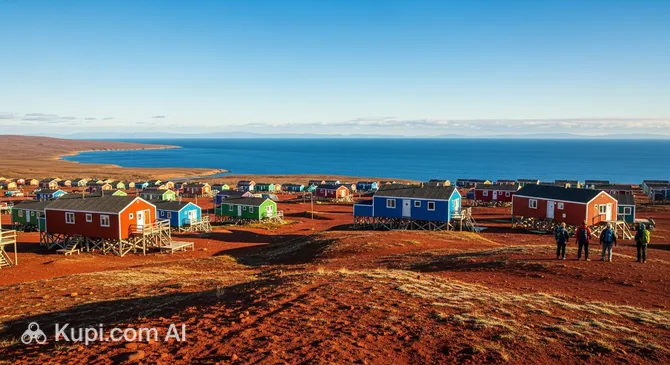
Aupaluk. Source: Kupi.Binoculars

Although it is a small community, it holds significant cultural value. Visitors can learn about the history of Aupaluk and discover how this area has served as a vital traditional hunting and fishing ground for generations. The local lifestyle remains deeply connected to the land and sea, offering a unique perspective on Inuit traditions and resilience in the northern environment.

Nature enthusiasts are particularly drawn here for the spectacular wildlife opportunities. Aupaluk is situated near the migration path of the renowned Leaf River caribou herd, one of the largest in the world, offering unparalleled chances for observation during migration seasons. Additionally, the waters of Ungava Bay are home to diverse marine life, including seals and belugas, making it a prime spot for wildlife photography and observation.

If you are looking for an off-the-beaten-path adventure, Aupaluk awaits with its stunning red landscapes, shimmering northern lights, and warm hospitality. It is a perfect destination for travelers wishing to experience the serenity of the Arctic tundra.

Weather Overview

The climate in this northern region is distinctly Arctic, featuring long, freezing winters and short, cool summers. January and February are the coldest months, with average temperatures plunging to -24.1°C and lows reaching -27.2°C. Travelers visiting during this time must be well-prepared for extreme cold, as the region remains well below freezing well into spring.

Summer brings a significant shift, offering much milder conditions for exploration. July is typically the warmest month, with average temperatures around 10.4°C and highs reaching 14.1°C. For a more detailed forecast and historical data to help plan your packing, you can consult the guide to the weather in Aupaluk.

Precipitation volume remains quite low year-round, usually around 1mm to 2mm per month, though the frequency of wet days increases in late summer and autumn. Expect cool summers with occasional light rain and extremely cold, relatively dry winters.

Interesting Facts

Beyond the stunning red landscapes, Aupaluk holds many fascinating secrets that reveal the deep connection between the land and its people. This remote corner of Canada is not just a scenic spot but a place with a unique origin story and geographical wonders.
  • A Community by Design: Unlike many other Arctic settlements that grew around trading posts or religious missions, Aupaluk is distinct for being the first village in Nunavik to be specifically planned by its Inuit residents. The location was chosen in the late 1970s for its abundance of caribou and fish, prioritizing traditional lifestyle needs over external commercial interests.

  • World-Class Tides: Sitting on the shores of Ungava Bay, the village experiences some of the highest tides on the planet, rivaling those of the famous Bay of Fundy. The water levels fluctuate dramatically, reshaping the coastline twice a day and exposing vast intertidal zones that locals use for harvesting shellfish.

  • Geological Rarity: The vivid red soil is more than just a beautiful backdrop; it signals the presence of substantial iron formations. This high iron content makes the terrain geologically unique within the region, creating a "rusty" landscape that stands out sharply against the snow and the typical grey gneiss rock of the Canadian Shield.

How to Get There

Reaching the remote community of Aupaluk requires careful planning, as it is located in the vast Nunavik region of Northern Quebec, far from the province's road networks. Travel here is an adventure in itself, relying exclusively on air transport to connect with this unique Arctic destination. For a detailed overview of your logistics and flight options, be sure to check our guide on how to get to Aupaluk.

The primary gateway for travelers is Kuujjuaq Airport (YVP), situated approximately 151.2 km away in the regional administrative center. Since there are no roads connecting Aupaluk to the south or neighboring villages, visitors typically fly from major cities like Montreal or Quebec City to Kuujjuaq, then transfer to a smaller regional flight. As the main transportation hub for Nunavik, this airport handles the majority of passenger traffic and offers essential connections to the northern coast.

Another key stop in the region is Kangirsuk Airport (YKG), located about 83.3 km from Aupaluk. Flights along the Ungava Bay coast often operate as "milk runs," stopping at multiple villages, including Kangirsuk, before reaching their final destination. While it is a smaller facility, it serves as an integral part of the local air network that links these isolated communities.

For clarity, here is a summary of the main airports in the vicinity:

Airport Name City Passenger Traffic Distance (km)
Kuujjuaq Airport Kuujjuaq Medium 151.2
Kangirsuk Airport Kangirsuk Small 83.3

Main Attractions

While Aupaluk is the smallest community in Nunavik, its natural surroundings offer some of the most striking and exclusive sights in the Arctic. Without the crowds of larger tourist hubs, the attractions here are deeply rooted in the raw beauty of the tundra and the rhythms of wildlife, making it a destination for true explorers.

The Red Earth Landscape
The village’s most famous feature is the very ground it stands on. Unlike the grey rocky terrain typical of the Canadian Shield, the soil here is rich in iron, creating a vibrant rust-red colour that contrasts beautifully with the blue waters of the bay and the white winter snow. Visitors can hike along the natural terraces and low hills to photograph this unique geological phenomenon, which gave the settlement its name.

Leaf River Caribou Migration
For wildlife enthusiasts, Aupaluk is a prime location to witness one of nature’s greatest spectacles. The community lies near the migration path of the massive Leaf River caribou herd. During the migration months, thousands of these majestic animals can often be seen thundering across the tundra and crossing nearby rivers, a breathtaking sight that draws photographers and nature lovers to the region.

Ungava Bay Coastline
The shores of Hopes Advance Bay offer exceptional opportunities for marine wildlife observation. In the summer months, the waters teem with life, including beluga whales and seals that come close to the coast. The bay is also known for its incredible tides, which are among the highest in the world; watching the water levels dramatically rise and fall reveals a constantly changing landscape of mudflats and rocky outcrops.

Inuit Cultural Architecture
Aupaluk is unique historically as the first village in the region to be entirely planned and designed by its Inuit residents, rather than developing around a trading post or mission. A walk through the settlement offers a rare insight into a community built specifically to support traditional lifestyles, with easy access to hunting and fishing grounds integrated into its layout.

Local Cuisine

Dining in Aupaluk is a unique experience that revolves around traditional Inuit "country food," known locally as Niqipiaq. Travelers should not expect standard restaurants or cafes; instead, the culinary culture here is deeply tied to the land and the seasons. The diet is primarily protein-based, relying on the rich natural resources harvested from the tundra and the icy waters of Ungava Bay.

One of the most common staples is Arctic char, a delicious salmonid fish that is prepared in various ways. Locals often enjoy it raw and frozen (known as quaq), dried (*pipsi*), or boiled in hearty soups. Given the village's proximity to the massive Leaf River herd, caribou meat is also a dietary cornerstone, often served in stews, roasted, or dried for preservation. To accompany these meals, you will almost always find bannock, a dense and filling pan-fried bread that is a beloved comfort food across the North.

When it comes to beverages, hot tea is the drink of choice and plays a central role in social interactions. It is typically brewed strong and sweet, serving as a vital way to warm up after a day out in the cold. In late summer, the landscape is dotted with berries, particularly cloudberries (known as aqpik), which are eaten fresh or made into jams and desserts, providing a rare and sweet seasonal treat.

Visitors should be aware that there is no commercial restaurant scene in Aupaluk. Food is largely acquired through hunting and fishing or purchased at the local cooperative store, which supplies imported groceries and dry goods. For tourists, this means meals are usually arranged through their accommodation providers or local hosts. Experiencing a meal here is often a communal affair, offering a rare chance to taste ingredients that are organic, wild, and harvested with deep respect for nature.

Travel Tips

Visiting a remote northern community like Aupaluk is a unique adventure that requires a different mindset and level of preparation compared to standard tourist destinations. Because of its isolation and small size, planning ahead is essential to ensure your stay is comfortable, safe, and respectful of the local way of life.

  1. Clothing and Gear: The Arctic weather is unpredictable and unforgiving. In winter, you need professional-grade cold-weather gear, including a heavy parka, insulated trousers, and thermal boots rated for temperatures well below -30°C. Even in summer, the wind off Ungava Bay can be biting, so dress in layers and bring a waterproof windbreaker. Crucial tip: If visiting in July or August, a high-quality bug jacket or head net is mandatory, as the mosquitoes and black flies on the tundra can be intense.

  2. Transportation: Forget about car rentals, taxis, or public buses; Aupaluk is a compact village of about 200 people, and everything is within walking distance. In winter, locals travel primarily by snowmobile, and in summer, by ATV (all-terrain vehicle). If you need to travel further afield or transport heavy gear, you will need to arrange a ride with a local guide or your host, as there is no commercial transport service.

  3. Finances: The Canadian Dollar (CAD) is the only currency used. The local Cooperative store generally accepts credit and debit cards, but systems can occasionally go offline due to connectivity issues. It is highly recommended to bring sufficient cash from the south for the duration of your trip, especially if you plan to buy handmade crafts or pay for informal guiding services. There are no banks, and ATM access is limited to the store.

  4. Health and Safety: There is a local nursing station (CLSC) staffed by nurses who provide basic care and handle emergencies, but there is no hospital or pharmacy. You must bring a full supply of any prescription medications and a basic first-aid kit. Comprehensive travel insurance that covers emergency medical evacuation (medevac) is absolutely vital, as serious cases require an airlift to a southern hospital.

  5. Communication: The primary language is Inuktitut, but English is widely spoken and understood by most residents. Learning a few local words, such as "Ai" (Hello) or "Nakurmiik" (Thank you), is a great way to show respect. Mobile coverage can be sporadic and is often limited to specific providers (like Bell or local networks), so check with your carrier beforehand. Wi-Fi is available in some public buildings, but speeds may be slower than what you are used to.

  6. Local Etiquette: The community is tight-knit and friendly, but privacy is valued. Always ask for permission before taking photographs of people, their children, or their homes. It is customary to remove your boots immediately upon entering any building, whether it is a private home, the school, or the lodge, to keep the interiors clean from the red soil and snow.

  7. What to Avoid: Do not wander out onto the tundra or away from the village limits alone without informing someone of your plans. The landscape is vast, weather can shift in minutes, and wildlife—including polar bears and wolves—poses a real risk. Always prioritize safety and consider hiring a local guide for excursions.

  8. Alcohol Regulations: Be aware that alcohol laws in Nunavik communities can be strict and differ significantly from the rest of Canada. Some villages are "dry" (alcohol is prohibited) or "damp" (quantities are restricted). Before packing any alcoholic beverages, you must verify the specific current regulations for Aupaluk to avoid legal issues or offending local norms.

By packing the right gear and approaching your visit with an open heart and respect for local traditions, you will find Aupaluk to be a welcoming and unforgettable destination. The challenges of the remote location are far outweighed by the warmth of the community and the sheer magnificence of the Arctic landscape.

Entertainment & Nightlife

Entertainment and nightlife in Aupaluk are defined by the rhythm of the Arctic rather than the bustling energy of urban centers. Travelers expecting neon lights, nightclubs, or late-night bars will find a completely different kind of evening experience here. In this small, tight-knit community of approximately 200 residents, "nightlife" is about tranquility, connection with nature, and the warmth of indoor gatherings. The village does not have commercial bars, pubs, or discos; instead, evenings are typically spent relaxing after a day of outdoor adventure or enjoying the company of fellow travelers and locals in a quiet setting.

The primary hub for visitors in the evening is the Hôtel de la Coopérative d'Aupaluk. Since there are no standalone restaurants or lounges in the village, the hotel’s common areas and shared kitchen often become the de facto social center. Here, guests gather to prepare meals, share stories of their day on the tundra, and enjoy a hot cup of tea. It offers a cozy, informal atmosphere where the dress code is always practical and comfortable—think wool socks and fleece sweaters rather than evening wear.

Another focal point for community life, which dictates the flow of the evening, is the local Aupaluk Co-op Store. While it is a retail store rather than an entertainment venue, it serves as the village's lifeline and meeting place. Visitors typically stop here in the late afternoon to purchase groceries and supplies for their evening meals. It is also a good place to chat with residents and learn about any community events, such as bingo nights or traditional games, which occasionally take place at the local community centre and welcome respectful visitors.

The most spectacular "nightclub" in Aupaluk is the sky itself. During the darker months, the lack of light pollution makes the village a world-class destination for viewing the Northern Lights (Aurora Borealis). The best "district" for this is simply the edge of the village, away from the streetlights, where the green and purple bands dance across the vast darkness. In summer, the concept of "night" disappears entirely under the Midnight Sun, allowing for surreal late-night hikes or wildlife watching under a bright sky at 2:00 AM.

Practical advice for evenings in Canada's northern villages centers on preparation and respect. Since Aupaluk may have strict regulations regarding alcohol (often being a "dry" or restricted community), you should check current local laws before arriving; do not expect to buy alcohol at the store or order a drink at dinner. The best time to head out for aurora viewing is often between 10:00 PM and 2:00 AM. Safety is paramount: never walk far beyond the village perimeter at night without a guide or a firearm, as polar bears can be a real danger, even close to town.

During the day, entertainment shifts to exploring the unique red-earth landscape that gives Aupaluk its name. Visitors can hike the low hills for panoramic views of Ungava Bay, visit the local school or community centre to admire the architecture, or simply walk along the shore to watch the dramatic tides. For those seeking a cultural experience, asking locals about opportunities to see traditional carving or sewing can provide a fascinating daytime activity before the quiet peace of the Arctic evening settles in.

Parks & Museums

In Aupaluk, the concept of a "park" or "museum" differs significantly from what you might find in a southern metropolis. Here, the entire landscape serves as a vast, open-air natural park, and the culture is preserved not in glass cases, but in the daily lives, stories, and artistry of the residents. While there are no manicured botanical gardens or formal galleries, the village offers an immersive experience where the red-hued earth and the traditions of the Inuit people take center stage.

The Red Earth Hills and Tundra
The most striking natural area in Aupaluk is the surrounding terrain itself, often referred to by locals as the "Red Earth." Because the village is situated on soil rich in ferruginous rock, the landscape glows with a distinct rusty-red colour that contrasts vividly with the blue sky and winter snow. Hiking these low hills and ridges offers visitors a unique geological experience that feels like walking on another planet. It is a photographer’s dream and the perfect place for a solitary trek to appreciate the silence and vastness of the Arctic tundra.

Hopes Advance Bay Shoreline
For a walk by the water, the shoreline of Hopes Advance Bay acts as the community's primary "beach" and promenade. This natural area is dictated by some of the highest tides in the world. At low tide, the water recedes to reveal a massive intertidal zone of mudflats and rocky pools, which locals explore to harvest mussels and clams. Walking here provides a front-row seat to the power of the ocean and the chance to spot seals basking on the rocks or beluga whales swimming near the coast during the summer months.

Cultural Hubs and Local Art
There are no dedicated museum buildings in Aupaluk, but the Tarsakallak School often serves as an informal cultural heart of the village. In small northern communities, schools are frequently the venues where local history, language, and artistic achievements are celebrated. Visitors may find displays of student artwork, traditional sewing, or projects documenting the elders' oral histories. It is respectful to ask for permission before visiting, but it is often the best place to see the continuity of Inuit culture in the modern day.

The Planned Village Architecture
From a historical and architectural perspective, the village layout itself is a significant landmark. Aupaluk is unique in Nunavik for being the first community specifically planned and designed by its Inuit residents in the late 1970s, rather than growing around a trading post or mission. The arrangement of homes and buildings reflects a desire to maintain traditional access to the land and sea. Walking through the streets offers insight into how modern infrastructure has been adapted to fit the harsh climate and the cultural values of the people who call this red earth home.

For a truly authentic experience, keep an eye out for informal carving workshops. Many residents are skilled artisans who carve soapstone or antler in their sheds or outdoors during good weather. While not a formal gallery, observing a carver at work is a privilege that offers a direct connection to the region's artistic heritage. If you visit in late summer, ask a local to point out the best patches for picking cloudberries (aqpik); joining the berry harvest is a cherished local tradition that connects you to the land just as a park visit would elsewhere.

Getting Around

Travelers planning a visit to Aupaluk should be aware that the concept of a public transport system here differs entirely from that of a standard city. Due to the village's extremely small population of approximately 200 residents and its compact layout, there are no public buses, metros, trams, or trains. The infrastructure is minimal, designed to serve a remote Arctic community rather than mass transit needs. Consequently, you will not find ticket machines, travel cards, or transport apps operating in this region.

The primary mode of getting around the village is simply walking. Aupaluk is small enough that you can traverse the entire settlement on foot in a matter of minutes. Key facilities, such as the Co-op store, the school, and the community centre, are all located within close proximity to one another. For tourists, this means that comfortable, durable walking shoes are essential in summer, while heavy-duty insulated boots are mandatory in winter to navigate the snow-covered paths.

While there is no official taxi service or car-sharing platforms like Uber, locals rely heavily on personal all-terrain vehicles suited to the rugged landscape. In the summer months, ATVs (quad bikes) are the standard form of motorized transport, replacing cars on the unpaved gravel roads. During the long winter, the village switches to snowmobiles. Visitors generally do not rent these vehicles themselves due to the challenging terrain and safety risks; instead, if you need to travel a longer distance or transport heavy gear, you will likely ride as a passenger with a local guide or host.

For arrival and departure, transport from the airstrip is typically arranged in advance. The local hotel (operated by the Co-op) or your host usually provides a pickup service using a truck or van to shuttle guests and luggage from the airport to their accommodation. There is no fixed schedule or ticket price for this; it is often included in your stay or arranged informally. If you do need to pay a local for a ride or a favor, cash is the only accepted method, so it is wise to carry small bills.

Since there are no commercial rental agencies, tourists cannot rent cars. The road network does not extend beyond the village and immediate vicinity, connecting only to local hunting and fishing spots rather than other towns. Your "transport pass" in Aupaluk is essentially your own two feet and a spirit of adventure, allowing you to experience the silence and beauty of the tundra without the noise and schedule of a busy transit system.

Accommodation

Accommodation options in Aupaluk are extremely limited, reflecting the remote and intimate nature of this small Arctic community. Visitors should not expect a variety of choices such as luxury resorts, budget hostels, or international hotel chains. Instead, the village typically relies on a single main lodging facility that caters to all travelers, including government workers, contractors, and the few tourists who venture this far north in Canada.

Because the village is so compact, location is rarely an issue; any accommodation will be centrally located and within walking distance of the airport, the general store, and the shores of Hopes Advance Bay. Staying here offers a functional and communal experience rather than a luxurious one, often providing a unique opportunity to meet other travelers and engage with locals in shared spaces.

The primary place to stay is the Hôtel de la Coopérative d'Aupaluk (Aupaluk Co-op Hotel). Like many villages in Nunavik, the local cooperative manages the hotel services. These facilities are generally modest but comfortable, offering standard rooms with essential amenities. It is common for such hotels to feature shared bathrooms and a communal kitchen where guests prepare their own meals, as there are no standalone restaurants in the settlement. This setup fosters a friendly atmosphere where the kitchen becomes the social heart of the evening.

Booking Tip: Due to the very low number of rooms available, it is absolutely critical to book your accommodation well in advance. Capacity can fill up quickly with visiting workers or medical staff, leaving no alternative options. You cannot rely on last-minute walk-ins.

Regarding costs, travelers should be prepared for prices that are higher than what one might expect for the level of luxury provided. The cost of operating in the North—heating, electricity, and transporting supplies—drives up the price of lodging. Expect rates to fall into the mid-to-high range. Booking is rarely available through major global travel aggregators; instead, you will likely need to contact the Aupaluk Cooperative directly by phone to secure your reservation.

Nearby Cities

Aupaluk is situated in the vast and sparsely populated region of Nunavik, Northern Quebec. Given the immense scale of the Canadian Arctic, "nearby" is a relative term; neighboring communities are often separated by dozens or hundreds of kilometers of tundra and water, with no connecting roads. Travel between these settlements is almost exclusively by air, making each village a distinct and isolated destination.

The following table lists the closest cities and settlements, providing a sense of the regional geography and population distribution:

City Population Distance (km)
Tasiujaq 2,000 70
Kuujjuaq 2,754 150
Salluit 1,400 461
Iqaluit 7,740 498
Kinngait 1,441 659

Tasiujaq
Located just 70 km southwest of Aupaluk, Tasiujaq is the nearest neighbor and shares a similar environment on the shores of Leaf Lake (Baie aux Feuilles). Like Aupaluk, it is known for experiencing some of the highest tides in the world. The community is deeply connected to the land, with a lifestyle centered around hunting, fishing, and the seasonal migration of the Leaf River caribou herd.

Kuujjuaq
Approximately 150 km to the southeast lies Kuujjuaq, the administrative capital and largest settlement of Nunavik. It serves as the primary transportation hub for the region, meaning most travelers visiting Aupaluk will pass through here. Kuujjuaq offers more amenities than the smaller villages, including hotels, restaurants, and stores, blending traditional Inuit culture with modern administrative services.

Iqaluit
Although it is about 498 km away across the Hudson Strait, Iqaluit is a significant northern center as the capital of the neighboring territory of Nunavut. It is the largest city in the eastern Arctic and serves as a major gateway for polar expeditions and Inuit art. While not directly connected to Aupaluk by a short hop, it represents the nearest urban environment in this remote part of the world.

Shopping & Souvenirs

Shopping in Aupaluk is a unique experience defined by the remote nature of the Arctic. Unlike in southern cities, you will not find boutiques, department stores, or souvenir shops lining the streets. Instead, commerce here is centralized and purely functional, designed to supply the community with essential goods. For visitors to this part of Canada, shopping is less of a leisure activity and more of a practical necessity, offering a glimpse into how logistics work in the Far North.

The heart of all commercial activity is the Aupaluk Co-operative Store. This single facility acts as the village’s grocery store, hardware outlet, clothing shop, and bank all rolled into one. It is the only place to purchase food, toiletries, outdoor gear, and fuel. Travelers should treat this as their primary resource for any supplies they might have forgotten, though the selection can be limited depending on when the last cargo flight or sealift ship arrived.

There are no shopping malls or large commercial centers in this small settlement of roughly 200 people. The infrastructure is built for survival and community support rather than consumerism. Similarly, you will not find formal street markets. The supply chain is strictly managed through the Co-op, and the "shopping district" is effectively limited to this one building.

Despite the lack of gift shops, Aupaluk is home to talented artisans who create beautiful Inuit art, which serves as the region's most precious commodity. The best souvenirs to bring back are authentic soapstone carvings, intricate beadwork, or traditional clothing items like handmade mittens and kamiks (boots). These are rarely sold on store shelves; instead, you will likely need to ask around or speak with your host to connect directly with an artist. Purchasing these items supports the local economy and provides you with a truly one-of-a-kind keepsake.

Opening hours for the Co-op are generally limited compared to urban convenience stores, often closing by 5:00 PM or 6:00 PM and operating on reduced schedules during weekends. Regarding payment, the Canadian Dollar (CAD) is the standard currency. While the store typically accepts credit and debit cards, telecommunications in the Arctic can be unreliable, leading to system outages. It is highly recommended to carry sufficient cash as a backup, especially if you plan to buy art directly from locals, as they will not have card terminals.

Travelers should be aware that the standard Goods and Services Tax (GST) and Quebec Sales Tax (QST) apply to purchases made in the village. There is no specific tax-free shopping refund program available for general goods for tourists in this region.

Reached the end of the page?

That means the route is fully explored