Support

Kangirsuk

About

Kangirsuk is a captivating destination located in the vast Nunavik region of northern Quebec. Known for its stunning landscapes and deep connection to Inuit culture, this small village offers an authentic Arctic experience for travelers seeking to explore the remote beauty of the North. The name Kangirsuk translates to "the bay" in Inuktitut, perfectly describing its sheltered setting surrounded by rocky hills and cliffs.

Geographically, the village sits on the north shore of the Arnaud River (Payne River), about 13 kilometers inland from the expansive Ungava Bay. With a population of approximately 567 residents, it is a tight-knit community surrounded by the pristine wilderness of Canada. The climate here is typical of the Arctic tundra, featuring long, cold winters and short, vibrant summers where the flora comes to life under the midnight sun.
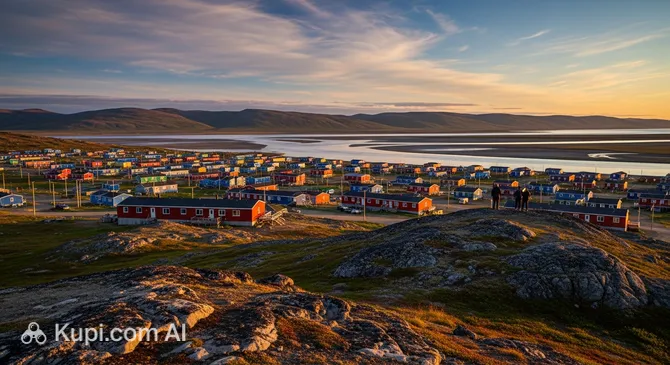
Kangirsuk. Source: Kupi.Binoculars

The area is rich in cultural heritage and archaeological intrigue. Visitors interested in the past can delve into the history of Kangirsuk, which includes mysterious stone cairns on Pamiok Island that have sparked debates among archaeologists about potential Viking visits, although they are generally attributed to Indigenous origins.

One of the most unique activities in Kangirsuk is mussel harvesting. The exceptional tides of the Arnaud River recede to reveal mussel beds under the ice in winter or along the rocky shores in summer, a favorite local pastime. Additionally, the region is a haven for wildlife enthusiasts, offering excellent opportunities to spot caribou, muskox, and various seabirds, as well as world-class fishing for Arctic char.

If you are looking for an off-the-beaten-path adventure that combines rugged nature with warm local hospitality, Kangirsuk awaits your visit.

Weather Overview

The climate in Kangirsuk is distinctively Arctic, shaped by its northern latitude and proximity to Ungava Bay. Winters are long and intensely cold, with February often being the coldest month, featuring average temperatures around -25.5°C and lows dipping near -28.7°C. In contrast, the summer season is brief but pleasant, with July bringing the warmest weather, where daily highs average 14.5°C.

Precipitation is generally light in terms of volume, though the frequency of precipitation events varies throughout the year. August typically sees the highest number of wet days, averaging about 13 days, while mid-winter is significantly drier. Visitors should expect cool summers with occasional rain and very cold, dry winters that require heavy thermal clothing.

Because conditions in this remote region can be extreme and change rapidly, proper planning is essential. You can find more detailed information about the weather in Kangirsuk to help you pack the right gear for your trip.

Interesting Facts

Beyond the scenic vistas and cultural richness, Kangirsuk holds several intriguing secrets that surprise many visitors. From geological wonders to archaeological mysteries in this remote corner of Canada, here are some lesser-known facts about the village.
  • The "Hammer of Thor" Mystery: Nearby Pamiok Island is home to a peculiar stone structure that has baffled experts for decades. While widely considered an Indigenous creation, the vertical formation—often called the "Hammer of Thor"—led archaeologist Thomas Lee to controversially theorize that it was built by Vikings, sparking enduring legends about ancient Norse exploration in the area.

  • Walking Beneath the Ice: The village is one of the few places where you can experience the surreal activity of under-ice mussel harvesting. In winter, the massive tides of Ungava Bay drop so significantly that they leave a hollow cavern between the riverbed and the thick surface ice, allowing locals to climb down and gather shellfish from the exposed bottom.

  • World-Class Tides: While the Bay of Fundy often claims the title for the world's highest tides, the tides in Ungava Bay are a close rival and are among the most powerful on the planet. The water levels in the Arnaud River can rise and fall drastically, creating strong currents that have shaped the coastline and local way of life for centuries.

How to Get There

Reaching the remote northern village of Kangirsuk is an adventure in itself, primarily requiring air travel due to its location in the Nunavik region. For a complete overview of travel options and routes, you can read more about how to get to Kangirsuk on our detailed page.

The most direct entry point is the local Kangirsuk Airport (YKG), which is conveniently located just 0.8 km from the village center. Given the short distance, the transfer to the main settlement takes only a few minutes. As a small regional facility, it serves as the vital link for residents and visitors alike, connecting the community to the wider network of northern aviation.

Most travelers will connect through Kuujjuaq Airport (YVP), situated in the town of Kuujjuaq, approximately 233 km south of Kangirsuk. This is the primary transportation hub for Nunavik, handling a significant portion of the region's air traffic. From here, scheduled flights transport passengers to the smaller coastal communities. While it is not close enough for ground transport to Kangirsuk, it is an essential stopover for almost all itineraries heading north.

For clarity, here is a summary of the main airports:

Airport Name City Passenger Traffic Km from City
Kuujjuaq Airport Kuujjuaq Medium 233.3
Kangirsuk Airport Kangirsuk Small 0.8

Main Attractions

Arnaud River (Payne River)

The mighty Arnaud River is the lifeblood of the community and a primary draw for visitors. Known for having some of the strongest tides in the world, the river offers a truly unique phenomenon: when the tide recedes, it exposes the riverbed, allowing locals and adventurous tourists to venture under the sea ice in winter to harvest fresh mussels. In summer, the river becomes a premier destination for fishing, teeming with Arctic char and lake trout that attract anglers from around the globe.

Pamiok Island

For history buffs and mystery lovers, Pamiok Island is a fascinating site located just a short distance from the village. It is home to enigmatic stone foundations that have puzzled archaeologists for decades. While some experts attribute these structures to the Dorset culture, others have controversially suggested they could be the remains of a Viking longhouse, sparking legends of ancient Norse exploration in the region. Exploring these ruins offers a tangible connection to the deep and often mysterious history of the North.

Virgin Lake and Kyak Bay

Nature enthusiasts should not miss the chance to visit the areas surrounding Virgin Lake and Kyak Bay. These locations are renowned for hosting large colonies of eider ducks, which nest on the islands every year. The local Inuit tradition of collecting the precious eider down to create incredibly warm parkas is a testament to the sustainable relationship between the people and the land. The sight of thousands of birds against the rugged backdrop makes for spectacular wildlife photography.

Ungava Bay Wildlife Viewing

Situated near the coast of Ungava Bay, Kangirsuk is an exceptional base for observing Arctic wildlife in its natural habitat. The region is a migration corridor for the Leaf River caribou herd, one of the largest in Canada. Lucky visitors may also spot muskoxen grazing on the tundra, or see beluga whales and seals navigating the chilly waters of the estuary, offering an unforgettable safari experience in the High Arctic.

Local Cuisine

The culinary landscape of Kangirsuk is deeply rooted in the traditions of the Inuit people and the abundance of the surrounding land and waters. Known locally as "country food" or niqituinnak, the diet here is based on subsistence hunting and fishing. For visitors, this offers a rare opportunity to taste organic, wild-harvested ingredients that are incredibly fresh and free from the processing typical of modern diets.

One of the absolute highlights of the local gastronomy is the Arctic char. This fish is a staple in Nunavik and is enjoyed in various ways: raw (frozen or fresh), dried (pitsi), or cooked. Its flavor is delicate yet rich, often compared to a cross between salmon and trout. Another unique delicacy specific to Kangirsuk is the blue mussel. Harvested directly from the riverbed of the Arnaud River—often from under the sea ice in winter—these mussels are renowned for their exceptional size and sweet, briny taste.

No meal in the North is complete without bannock (palauga), a type of flatbread that is fried or baked. It is the ultimate comfort food, dense and filling, and serves as the perfect accompaniment to stews or fresh fish. In terms of beverages, hot tea is the undisputed king. It is consumed throughout the day to stay warm and is central to social interactions. While you can find standard soft drinks and juices at the local store, sharing a pot of tea is the true local custom.

Travelers should be aware that Kangirsuk does not have a conventional restaurant scene. You will not find cafes or fine dining establishments lining the streets. Instead, visitors typically rely on the kitchen facilities at the local hotel or purchase supplies from the Co-op store, which stocks imported groceries alongside some local products. The most authentic dining experiences often occur if you are lucky enough to be invited to a community feast or a local home, where the spirit of sharing food is the heart of the culture.

Travel Tips

Visiting Kangirsuk offers a rare glimpse into the authentic lifestyle of the Canadian North, but traveling to such a remote destination requires careful preparation. To help you make the most of your adventure in this tight-knit Inuit community, here are some essential practical tips to keep in mind.

  1. Clothing and Gear: The weather in the Arctic is unforgiving, so layering is non-negotiable. In winter, you will need a heavy expedition-weight parka, insulated windproof pants, and rated boots. Even in summer, the wind can be chilly, so bring a fleece and a waterproof shell. Crucially, if you visit between June and August, bring a high-quality bug jacket or head net and strong insect repellent; the mosquitoes and black flies on the tundra can be intense.

  2. Transportation: Forget about subways, buses, or ride-hailing apps like Uber. Kangirsuk is a small village where everything is within walking distance. For excursions outside the settlement, locals use ATVs in the summer and snowmobiles in the winter. If you plan to explore the surrounding land, you will need to hire a local guide with a vehicle, as there are no standard car rental agencies.

  3. Finances: The currency is the Canadian Dollar (CAD). While the local Northern Store (Co-op) accepts credit and debit cards, it is highly recommended to bring cash with you. ATMs may be unreliable or out of service due to connectivity issues. Cash is also preferred if you wish to buy soapstone carvings or handmade mittens directly from local artisans. Be prepared for "northern prices"—groceries and supplies are significantly more expensive than in the south due to shipping costs.

  4. Health and Safety: There is no full-service hospital in the village, only a local nursing station (CLSC) that handles basic care and emergencies. For serious medical issues, patients must be airlifted to a hospital in the south. Therefore, comprehensive travel insurance that covers medical evacuation is essential. regarding safety, never wander far from the village alone; the wilderness is home to polar bears and wolves, and weather conditions can change in minutes.

  5. Communication: The primary language is Inuktitut, though English is widely spoken, especially by younger residents and in service roles. Learning a simple greeting like "Ai!" (Hello) goes a long way. Mobile coverage is generally limited to major providers (often Bell) and data speeds can be slow. Wi-Fi is available in some public buildings but do not rely on high-speed connections for streaming or video calls.

  6. Local Etiquette: The community is small, and people often greet each other on the street with a smile or a nod. It is polite to remove your boots when entering a home or certain public buildings to keep the dust and mud out. If you see locals processing "country food" (like caribou or fish) outside their homes, show respect and ask for permission before taking close-up photographs.

  7. What to Avoid: Do not photograph people, especially elders or children, without their explicit consent. Also, avoid complaining openly about the cost of goods in the store; locals are well aware of the high cost of living, and it is a sensitive topic related to the logistics of remote life.

  8. Alcohol Regulations: Be aware that many communities in Nunavik have specific bylaws regarding the possession and consumption of alcohol to promote community wellness. Kangirsuk may have restrictions on the quantity you can bring or require a permit. It is best to check the current rules with your accommodation or the local municipal office before packing any alcoholic beverages.

By packing the right gear and respecting the local customs of this unique corner of Canada, you will be welcomed warmly. Embrace the slower pace of life, listen to the stories of the elders, and enjoy the breathtaking tranquility of the Arctic.

Entertainment & Nightlife

Travelers planning a trip to Kangirsuk should be aware that the concept of nightlife here is vastly different from that of a typical city. There are no nightclubs, cocktail bars, or bustling entertainment districts in this remote Inuit community. The evenings are quiet and peaceful, reflecting the traditional lifestyle of the North. Instead of neon lights and loud music, the "nightlife" is defined by the natural world and community-focused gatherings.

The most spectacular evening entertainment in Kangirsuk is undoubtedly provided by nature itself. During the darker months, the sky often comes alive with the Aurora Borealis (Northern Lights). Visitors can step outside their accommodation to witness dancing ribbons of green and violet light, a mesmerizing experience that rivals any man-made show. In the summer, the phenomenon of the midnight sun means the "night" remains bright, allowing for hiking and socializing well into the early morning hours without the need for artificial lighting.

Social life in the village revolves around community facilities rather than commercial pubs. The Kangirsuk Community Centre is often the hub of activity, hosting local events, games, and feasts that visitors might be lucky enough to observe or participate in. Another key spot is the Kangirsuk Co-op Hotel (operated by Inns North), which serves as the primary place for dining and accommodation. While it is not a bar, the dining area is where travelers and locals often cross paths to share stories over a warm meal.

For those interested in daytime entertainment, the options are equally centered on culture and nature. There are no amusement parks or large theaters, but the landscape itself serves as a museum of geology and history. Visitors can explore the nearby archaeological sites on Pamiok Island or watch local artisans carving soapstone and sewing traditional clothing, offering a deep dive into the artistic heritage of Nunavik.

Practical advice for evenings in Kangirsuk focuses on preparation and respect. Alcohol is heavily regulated in many Nunavik communities; you cannot simply walk into a store and buy liquor, and there are no bars serving drinks. It is essential to check current local bylaws regarding alcohol possession before you arrive. When walking at night, safety is paramount—not from crime, but from the elements and wildlife. Always dress in thermal layers and be vigilant for polar bears, which can venture near the settlement. It is best to stay within the lit areas of the village or travel with a local guide.

Parks & Museums

In Kangirsuk, the concept of public spaces is redefined by the vastness of the Arctic landscape; here, the "parks" are boundless stretches of tundra, and the "museums" are archaeological sites left open to the elements. Visitors will not find manicured gardens or ticketed exhibition halls, but rather a profound connection to nature and history woven directly into the land surrounding the village.

The Wilderness as a Park

The most significant natural area is the shoreline and estuary of the Arnaud River (Payne River). Unlike a traditional city park, this area offers raw, unpolished beauty where the dramatic tides of Ungava Bay reshape the scenery twice a day. It is an ideal location for hiking along the rocky cliffs, observing the shifting ice in winter, or watching for beluga whales in the summer. The river is the community's playground, offering a space for fishing, berry picking, and connecting with the land.

Another key natural site is Virgin Lake, located a short distance from the settlement. This area serves as a critical habitat for wildlife, particularly eider ducks. For nature lovers, it acts as a living sanctuary where one can observe nesting birds and the delicate flora of the tundra. The silence here is absolute, broken only by the call of seabirds and the wind, providing a meditative experience that far surpasses any urban green space.

Cultural Heritage and "Open-Air Museums"

Kangirsuk does not possess a conventional indoor museum; instead, its history is preserved on Pamiok Island. Situated near the village, this island is effectively an open-air archaeological museum. It is famous for its mysterious stone cairns and the "Hammer of Thor" formation. These structures, the subject of debate between those who believe they are of Inuit origin and those who suspect Norse influence, offer a tangible link to the ancient past without the barrier of glass display cases.

While there is no formal art gallery, the entire village serves as a showcase for Inuit Art. The culture is alive in the hands of local artisans who create exquisite soapstone carvings, traditional clothing, and jewelry. Visitors interested in seeing these works often find them displayed at the local Co-op or can arrange to meet artists directly. This direct interaction provides a deeper cultural understanding than a static museum exhibit ever could.

Historical Landmarks

Beyond Pamiok Island, the landscape around Kangirsuk is dotted with inuksuit (stone landmarks). These iconic structures have stood for generations, acting as navigational aids and messages for hunters. Seeing a massive inukshuk silhouetted against the Arctic sky is a powerful reminder of the ingenuity and resilience of the Inuit people who have thrived in this region for millennia.

Insider Tips

For a truly authentic experience, ask a local guide to take you to the best spots for berry picking in late summer. The tundra bursts with cloudberries (aqpik), blueberries, and blackberries, and gathering them is a beloved local tradition. Additionally, hiking to the highest ridge overlooking the village offers a panoramic view of the river meeting the bay—a perfect spot for photography that few tourists manage to find.

Getting Around

Travelers arriving in Kangirsuk must immediately adjust their expectations regarding urban mobility. As a small, remote community with a population of fewer than 600 residents, the village does not have a public transport system in the traditional sense. There are no subways, trams, public buses, or fixed-route trolleybuses here. The infrastructure is designed for a compact settlement where almost every destination is accessible within a short timeframe.

The primary mode of "transport" for visitors is walking. The village is small enough that you can traverse it on foot, which is the best way to soak in the local atmosphere and views. However, the mode of transport changes with the seasons. In the summer, all-terrain vehicles (ATVs) and pickup trucks are the standard for locals moving heavier loads or traveling further afield. In the winter, the snowmobile becomes the essential king of the road, allowing residents to travel over the snow-covered tundra and frozen waterways.

Regarding payment systems, tickets, or passes, none of these concepts apply in Kangirsuk. There are no transit cards, validation machines, or mobile transport apps like Uber or Lyft. Any transportation arrangement you make will likely be informal. If you need a ride—for example, to transport luggage from the airstrip or to visit a site further out on the land—you will typically need to arrange this through your accommodation provider or by hiring a local guide. In these cases, transactions are almost exclusively in cash (Canadian Dollars), and prices are agreed upon verbally in advance.

For tourists, the most practical advice is to coordinate your arrival transport with your hotel or lodge before you land. Most accommodations provide a shuttle service from the airport, which is often a truck or van. If you require a vehicle to explore the surrounding wilderness, you cannot simply rent a car from a standard agency. Instead, you would need to hire a local outfitter who can provide a driver and a vehicle (boat, ATV, or snowmobile) suitable for the rugged terrain.

While there are no official taxi companies with metered cabs, the community is tight-knit and helpful. If you are stuck or have a heavy load, it is not uncommon for a local resident to offer a lift. In such instances, offering a small cash tip is a polite gesture, though not always expected. Ultimately, getting around Kangirsuk is less about navigating a system and more about being prepared for the elements and engaging with the local community.

Accommodation

Finding a place to stay in Kangirsuk is a straightforward affair, primarily because the options are quite limited. As a small, remote community, the village does not feature the wide array of hotels, hostels, or vacation rentals found in larger tourist destinations. Accommodation is generally functional, comfortable, and designed to serve the needs of workers, government officials, and the adventurous travelers who make the journey north.

Given the compact size of the settlement, location is rarely an issue. Any accommodation you secure will be centrally located, placing you within easy walking distance of the airport, the general store, and the river. The village layout ensures that you are never far from the community's essential services or the surrounding wilderness.

The primary establishment for visitors is the Kangirsuk Co-op Hotel. Operated under the Inns North banner, this facility is the heart of hospitality in the village. It typically offers standard hotel rooms with private or shared bathrooms, laundry facilities, and a communal dining area where guests are served three meals a day. This all-inclusive approach to dining is common in Nunavik, as there are no standalone restaurants in town. Staying here offers a warm, community-oriented atmosphere where you might meet researchers, pilots, or fellow travelers.

Travelers should expect mid-to-high range prices. Accommodation costs in the Arctic are significantly higher than in southern Canada due to the high cost of operations, heating, and shipping supplies. Rates often include meals, which adds value but raises the upfront price. Payment is usually accepted via credit card, but carrying some cash is always a wise backup plan in remote regions.

Essential Booking Tip: Booking in advance is not just a recommendation; it is a necessity. With only one main hotel and a limited number of rooms, the facility can be fully booked weeks or months ahead, particularly during the summer construction season or when government delegations are visiting. Reservations are typically made via phone or email directly with the manager. Do not rely on third-party booking apps; contact the hotel directly to confirm your stay before purchasing your flights.

Nearby Cities

Due to the vast distances and lack of connecting roads in Northern Quebec, exploring the communities surrounding Kangirsuk typically requires air travel. The village is part of a coastal air network that links it to key administrative hubs and smaller settlements, each offering unique landscapes and a distinct perspective on life in the Arctic.

Kuujjuaq

Located approximately 232 km to the south, Kuujjuaq is the largest village in Nunavik and serves as the region's administrative and transportation capital. Situated on the banks of the Koksoak River, it is the primary gateway for travelers entering the region. Visitors often stop here to experience a blend of modern amenities and traditional Inuit culture, with opportunities to explore the boreal forest which contrasts sharply with the tundra found further north.

Tasiujaq

The closest neighboring community is Tasiujaq, situated about 147 km away on the shores of Leaf Lake. This village is famous for the Leaf Basin, which experiences some of the highest tides in the world. It is a destination known for its raw natural beauty and is a prime location for spotting the Leaf River caribou herd as well as seals and arctic char in the local waters.

Iqaluit

Although located in the neighboring territory of Nunavut across the Hudson Strait, Iqaluit is a major cultural and logistical hub for the Canadian Arctic. As the capital of Nunavut, it offers a wealth of attractions, including the Nunatta Sunakkutaangit Museum and the Unikkaarvik Visitor Centre. It is a vibrant city where visitors can immerse themselves in Inuit art, festivals, and the breathtaking scenery of Frobisher Bay.

City Population Distance (km)
Iqaluit 7740 423
Kuujjuaq 2754 232
Tasiujaq 2000 147
Pangnirtung 1600 716
Kinngait 1441 579

These destinations highlight the diverse geography and rich cultural tapestry of the broader region, accessible via the northern aviation network.

Shopping & Souvenirs

General Overview

Shopping in Kangirsuk is a unique experience defined by its remote Arctic location. Unlike in southern cities, retail here is not a leisure activity but a necessity for survival in the North. The options are limited to essential goods, groceries, and outdoor gear required for the rugged terrain. Visitors should be aware that prices for all items are significantly higher than in the rest of Canada due to the high cost of air freight and shipping. Despite the lack of variety, the opportunity to purchase authentic, locally made items directly from the source makes shopping here memorable.

Main Shopping Areas

There are no shopping districts or high streets in the village. The commercial heart of the community is the Kangirsuk Co-op Store. This general store serves as the lifeline for the residents, stocking everything from fresh produce and canned goods to snowmobile parts, winter clothing, and household supplies. It is the only major retailer in town and acts as a central meeting point where you can observe daily life in the settlement.

Shopping Malls

Travelers should manage their expectations: there are absolutely no shopping malls, department stores, or chain boutiques in Kangirsuk. The retail infrastructure is strictly functional, designed to support a population of fewer than 600 people.

Markets

Kangirsuk does not have formal flea markets or food markets. The distribution of "country food" (such as fresh fish or caribou) is typically done through sharing networks within the community rather than commercial stalls. However, you may occasionally find pop-up sales at the Community Centre where locals sell baked goods or second-hand items, though these are irregular and not targeted at tourists.

Souvenirs

The most valuable items to bring back are authentic pieces of Inuit art. Kangirsuk is home to talented artisans known for their exquisite soapstone carvings, which often depict Arctic wildlife like bears, seals, and walruses. Additionally, you can find beautiful handmade clothing, such as sealskin mittens, kamiks (boots), and embroidered parkas. These items are not usually mass-produced; to buy them, you may need to ask at the Co-op or the hotel if they can connect you with local artists who sell from their homes.

Opening Hours and Payment

The local Co-op store typically operates during standard business hours, generally from 9:00 AM to 5:00 PM or 6:00 PM, though hours may be reduced on weekends. In terms of payment, the store accepts major credit and debit cards. However, if you plan to purchase artwork or crafts directly from local artisans, cash is essential. It is highly recommended to bring sufficient Canadian currency with you, as banking facilities are limited and ATMs may be unreliable.

Reached the end of the page?

That means the route is fully explored