Support

Kuujjuaq

About

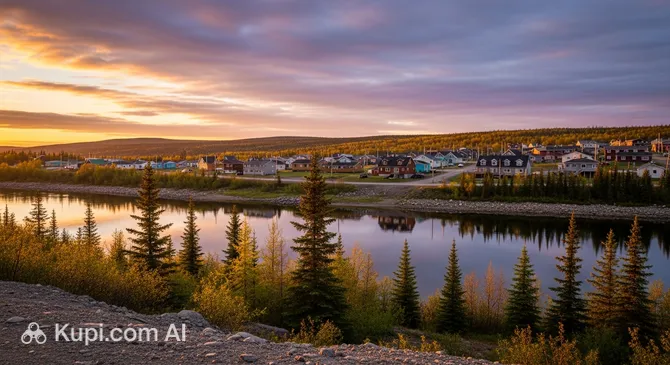
Nestled along the banks of the majestic Koksoak River, Kuujjuaq is the largest northern village in the Nunavik region of Quebec, Canada. As the administrative capital of this vast territory, it serves as a vital hub where modern life meets traditional Inuit culture. With a population of approximately 2,754 residents, this community offers a warm and vibrant atmosphere amidst the rugged beauty of the north, situated roughly 50 kilometers upstream from Ungava Bay.

Kuujjuaq. Source: Kupi.Binoculars

The unique location of the village places it on the borderline between the boreal forest and the tundra, creating a stunning and diverse landscape. The history of Kuujjuaq is deeply rooted in this environment; formerly known as Fort Chimo, it began as a trading post and has since evolved into a modern center that honors its heritage. Today, it is a place where visitors can immerse themselves in the local way of life and explore the pristine wilderness that surrounds the settlement.

Travelers are often drawn to Kuujjuaq for its exceptional outdoor opportunities. The Koksoak River is renowned for world-class fishing, particularly for Atlantic salmon and Arctic char, while the surrounding lands are excellent for observing wildlife, including the majestic caribou. Additionally, the lack of light pollution makes it a prime destination for witnessing the mesmerizing Aurora Borealis, or Northern Lights, which frequently illuminate the night sky with vibrant colors.

Whether you are an avid angler, a nature photographer, or a culture enthusiast looking to experience the hospitality of the North, Kuujjuaq offers an unforgettable adventure. It is a destination that invites exploration and provides a rare glimpse into the beauty and resilience of the Arctic region.

Weather Overview

Kuujjuaq experiences a subarctic climate characterized by long, frigid winters and short, mild summers. The weather in Kuujjuaq varies significantly across the seasons, heavily influenced by its northern latitude and proximity to Ungava Bay.

Winter is the dominant season, with January and February being the coldest months. Average temperatures during this period hover around -22°C, with minimums often plunging to -26.5°C. In contrast, the summer offers a brief but pleasant warming trend. July is typically the warmest month, featuring average temperatures of 13.2°C and daily highs that can reach up to 17.5°C.

While the recorded precipitation volume is generally low, the region experiences a significant number of damp days, particularly from July through September when there are often 14 to 15 wet days per month. Expect cool, mild summers with occasional rain and extremely cold, dry winters.

Interesting Facts

Beyond the main attractions, Kuujjuaq holds many fascinating secrets that reveal its unique role in the history and culture of the North. Here are some surprising facts about this resilient community:

  • The "Handshake" Misunderstanding: The village was formerly known as Fort Chimo, a name derived from a friendly misunderstanding. The word "Chimo" is an anglicized version of the Inuktitut phrase saimuk, which means "Let's shake hands." Early fur traders mistook this warm greeting for the name of the place, and it stuck for over a century.

  • A WWII Secret Base: Before it became a modern municipality, the site was established as a U.S. Air Force base in 1941 with the code name Crystal 1. It was part of the Crimson East Route intended to ferry planes to Europe, but today, that military infrastructure has evolved into the region's most important civilian airport.

  • Birthplace of a National Icon: The famous handcrafted seal-fur doll known as the Ookpik (Snowy Owl) was created in Kuujjuaq during the 1960s. Designed by local artisan Jeannie Snowball, this charming figure became an international symbol of Canada and a popular souvenir worldwide.

  • Tides of Giants: The nearby Ungava Bay boasts some of the highest tides in the world, rivaling those of the famous Bay of Fundy. The water levels can rise and fall by as much as 16 meters (52 feet), dramatically transforming the landscape and river currents twice a day.

  • Quirky Street Names: While many streets honor local figures, one carries a humorous reminder of the past. Dustville Street was named after the thick clouds of dust that used to plague the neighborhood in summer before the community's roads were paved.

How to Get There

Reaching this northern destination is an adventure in itself, as the village is located far beyond the reach of Quebec's provincial highway and railway networks. Air travel is the primary and most practical means of transportation for visitors. For a comprehensive guide on logistics and planning your journey, you can read more about how to get to Kuujjuaq.

The community is served directly by Kuujjuaq Airport (YVP), which acts as the central transportation hub for the entire Nunavik region. It is conveniently located within the village, just 1.2 km from the center. The transfer is incredibly short; a taxi or shuttle ride typically takes about 20 minutes or less depending on your specific destination in town. This facility handles a significant volume of travelers, with an annual passenger traffic of approximately 75,000, connecting the north to major southern cities like Montreal. You can find more details about the facility on the Kuujjuaq Airport page.

Another facility in the wider region is Kangirsuk Airport (YKG), located in the neighboring village of Kangirsuk. It is situated approximately 232 km away from Kuujjuaq. Since there are no roads connecting these distinct northern communities, this airport serves as a regional link rather than a ground entry point for Kuujjuaq. Travelers might pass through or stop here on regional flights, but direct ground transport between the two is not possible. More information is available on the Kangirsuk Airport page.

For clarity, here is a summary of the main airports:

Airport Name City Passenger Traffic Km from City
Kuujjuaq Airport Kuujjuaq Medium 1.2
Kangirsuk Airport Kangirsuk Small 232.4

It is important to note that Kuujjuaq is not accessible by train, as there are no railway lines extending into this part of Northern Quebec. Similarly, no roads connect the village to the south of the province. Visitors must rely on scheduled flights or maritime transport during the shipping season for cargo.

Main Attractions

The main draw of this northern village is undoubtedly the magnificent Koksoak River. As the lifeblood of the community, it offers visitors a chance to experience the raw beauty of the Arctic landscape. The river is a paradise for anglers, renowned for its abundant Atlantic salmon, Arctic char, and speckled trout. Watching the tides here is also a spectacle in itself; the water levels fluctuate dramatically, reshaping the shoreline and currents twice a day, a phenomenon that showcases the powerful forces of nature at play in Ungava Bay.

For those interested in the region's heritage, a visit to Old Chimo is a fascinating journey back in time. Located across the river from the modern village, this site marks the original settlement established by the Hudson’s Bay Company in the 19th century. Although the community moved to its current location in the mid-20th century to be closer to the airstrip, remnants of the old trading post remain. It serves as a quiet, historical landmark where travelers can reflect on the early days of fur trading and the resilience of the people who lived there.

The Katittavik Cultural Centre stands as the modern heart of Kuujjuaq, hosting a variety of community events, performances, and gatherings. This facility is central to preserving and celebrating Inuit culture, often serving as the venue for the renowned Aqpik Jam Music Festival. Its architecture and atmosphere provide tourists with insight into the vibrant social life of Nunavik, making it a key stop for anyone wishing to connect with the local community and understand their contemporary lifestyle.

Art enthusiasts will find Kuujjuaq to be an excellent place to discover authentic Inuit Art. The village is home to talented artisans who create exquisite carvings from stone, caribou antler, and ivory, as well as handmade clothing and jewelry. Local shops and the co-op often feature these unique works, allowing visitors to admire the craftsmanship and perhaps take home a piece of the North that carries deep cultural significance.

Local Cuisine

The culinary landscape of Kuujjuaq offers a unique blend of modern Canadian staples and traditional Inuit cuisine, often referred to as "country food." For gastronomic travelers, the true highlight is the opportunity to taste wild, organic ingredients harvested directly from the surrounding land and waters. The local diet is deeply connected to the seasons, relying on hunting, fishing, and gathering to provide fresh, high-quality sustenance that you rarely find in southern cities.

The undisputed star of the local table is Arctic Char. This cold-water fish, known for its vibrant pink flesh and delicate flavor, is prepared in numerous ways. You might find it smoked, grilled, or pan-fried in local kitchens. However, for a truly authentic experience, adventurous eaters should try it served quaq—raw and frozen—which is a traditional method enjoyed by locals for its texture and warming properties. Caribou is another primary staple, often served as hearty stews to combat the cold, or as dried meat, which makes for a protein-rich snack during outdoor treks.

Accompaniments often feature bannock, a dense and satisfying quick bread that is a fixture in almost every household. It is delicious when fried or baked and served warm with butter. To satisfy a sweet tooth, look for dishes featuring the aqpik, or cloudberry. These tart, amber-colored berries are iconic to the region—so much so that a major festival is named after them. They are typically made into jams, desserts, or eaten fresh during the short summer harvest.

The dining scene in Kuujjuaq is intimate and community-focused rather than commercial. You will not find fast-food chains or sprawling food markets here. Instead, tourists and locals alike usually dine at the restaurants located within the village's main hotels and inns. These establishments offer a warm atmosphere where you can enjoy both standard North American comfort foods and local specialties. When it comes to beverages, hot tea is the social drink of choice, essential for warming up after a day on the tundra. Alcohol is available at specific hotel lounges and bars, offering a place to relax and chat with residents about life in the North.

Travel Tips

Visiting Kuujjuaq is a unique adventure that differs significantly from a typical trip to southern cities, requiring a bit more preparation and awareness of the local environment. To ensure your journey to the heart of Nunavik is as smooth and enjoyable as possible, here are some essential practical tips to help you navigate the village and its stunning surroundings.

  1. Clothing and Gear: The golden rule here is to dress in layers, regardless of the season. In winter, you will need professional-grade cold-weather gear, including a heavy parka, insulated windproof pants, and boots rated for at least -40°C. In summer, while days can be mild, evenings are cool, so bring a fleece and a rain jacket. Crucially, if visiting in July or August, a bug jacket or high-quality insect repellent is mandatory to protect against the intense swarms of black flies and mosquitoes.

  2. Transportation: There is no public transit system like a metro or bus network, and ride-hailing apps do not operate here. The village is spread out, so walking can be long. The most reliable way to get around is by local taxi services, which charge a flat rate per person within town limits. Car rentals are generally not available for tourists, so plan to rely on cabs or arranged transport from your lodge.

  3. Finances: The currency is the Canadian Dollar (CAD). Major credit and debit cards are widely accepted at the Northern Store, the Co-op, and hotels. However, it is wise to carry some cash, as local artisans selling soapstone carvings or handmade jewelry often prefer or strictly require cash payments. Be prepared for higher prices than in the south, as most goods are flown in.

  4. Health and Safety: The Tulattavik Health Centre provides medical care for the region, but for any specific medications, bring a sufficient supply with you. In terms of safety, the biggest risks are environmental. Never wander outside the village limits alone without notifying someone, as the weather can change rapidly. While polar bears are rare in town, black bears and wolves can be present in the vicinity; always heed local warnings.

  5. Communication: The primary languages are Inuktitut and English. While Kuujjuaq is in Quebec, English is much more commonly spoken than French in daily interactions within the village. Cell phone service is available (mainly on the Bell network), but data speeds may be slower than you are used to. Wi-Fi is available in hotels but can be limited.

  6. Local Etiquette: The community is warm and welcoming. A smile and a handshake go a long way; many locals still use the greeting "Chimo" (from saimuk) or simply "Hello." It is customary to remove your shoes immediately upon entering a home or certain lodgings to keep the dust and mud out. Respect for elders is paramount in Inuit culture.

  7. What to Avoid: Do not take photographs of local residents, especially children, without explicitly asking for permission first; this is considered very rude. Also, avoid complaining openly about the cost of food or goods in stores. Locals are well aware of the high cost of living due to air freight, and it is a sensitive topic.

  8. Shopping Tip: Be mindful of store hours. The two main grocery and general stores, the Newviq'vi (Co-op) and the Northern Store, may close earlier than urban supermarkets and often have reduced hours on Sundays. If you arrive on a weekend flight, buy your essential snacks or toiletries immediately rather than waiting.

By keeping these practicalities in mind, you will be well-equipped to embrace the rugged charm of Kuujjuaq and the hospitality of its people. A little preparation allows you to focus less on logistics and more on the breathtaking northern lights, the flowing Koksoak River, and the rich cultural tapestry of the North.

Entertainment & Nightlife

Entertainment and nightlife in Kuujjuaq reflect the close-knit and welcoming nature of the community. Unlike the bustling club districts found in southern cities, the evening scene here is intimate, relaxed, and centered around the village's main hospitality venues. The social life after dark is primarily concentrated within the lounges and bars of the local hotels, which serve as the gathering points for residents, visiting workers, and tourists alike.

The most popular spot for an evening out is the lounge at the Kuujjuaq Inn. This venue acts as the hub of local social activity, offering a warm place to enjoy a drink, play a game of pool, and mingle with a diverse crowd. It is common to find pilots, government workers, and locals sharing stories here. Another key venue is the dining and lounge area at the Auberge Kuujjuaq, which offers a slightly quieter atmosphere suitable for a relaxing evening conversation. On weekends, these spots can become quite lively, occasionally featuring local musicians or impromptu celebrations.

The atmosphere in these venues is decidedly casual. There is no need for fancy attire; jeans, flannel, and warm sweaters are the standard dress code. Opening hours can vary, but bars typically close around 1:00 AM or 2:00 AM on weekends. Visitors should be prepared for higher prices than in southern Quebec, reflecting the cost of shipping goods to the north. A beer or a cocktail is a luxury here, meant to be savored while enjoying the company of others.

When it comes to safety and logistics, Kuujjuaq is generally very safe for visitors. However, the primary concern at night is the environment. Walking long distances in the dark is not recommended, particularly in winter due to extreme cold and the potential presence of wildlife such as loose dogs or, more rarely, wild animals on the outskirts. The best way to get around at night is by using the local taxi service. Taxis are readily available by phone and charge a flat rate per person for trips within the village.

For daytime entertainment, the Katittavik Cultural Centre is the architectural and cultural crown jewel of the village. This impressive facility is not only a venue for major events like the Aqpik Jam Music Festival but also serves as the community's theater, often screening movies and hosting performances. While there are no amusement parks or large museums, the center provides a vital link to the artistic and social pulse of Nunavik, offering travelers a chance to experience the region's vibrant storytelling and performance traditions.

Parks & Museums

In Kuujjuaq, the concept of a "park" expands beyond fenced green spaces to encompass the boundless wilderness that surrounds the village. The community does not rely on traditional city museums to showcase its heritage; instead, its culture is alive in the daily activities of its residents, the art displayed in local galleries, and the historical sites scattered along the river. Visitors here are invited to step directly into the tundra and experience the living history of Nunavik.

Koksoak River and Sandy Beach
The banks of the massive Koksoak River serve as the community's primary natural playground. Unlike urban riverside parks, this area offers raw, unmanicured beauty where the boreal forest meets the Arctic tundra. A favorite spot for locals, particularly during the surprisingly warm days of July and August, is Sandy Beach. Located a short distance from the village center, this natural stretch of sand becomes a social hub for picnicking, relaxation, and watching the river's impressive tides. It is an accessible slice of nature where tourists can mingle with residents and enjoy the serenity of the water.

Gateway to Kuururjuaq National Park
While not located within the municipal borders, Kuujjuaq serves as the essential gateway to Kuururjuaq National Park. This spectacular protected area protects the Koroc River valley and the Torngat Mountains. Visitors typically charter flights from Kuujjuaq to reach this remote wilderness, making the village the base camp for expeditions into one of Quebec's most dramatic landscapes. For those staying in town, the surrounding hills offer a similar, albeit smaller-scale, experience of the tundra, perfect for hiking and observing the transition between treed valleys and rocky outcrops.

Katittavik Cultural Centre
As the social and artistic heart of the village, the Katittavik Cultural Centre is more than just a venue; it is a focal point for the preservation of Inuit culture. While it functions primarily as a community hall and theater, it frequently hosts exhibitions, concerts, and festivals that showcase local talent. The architecture itself is notable, designed to resemble an iceberg or a snowy owl, reflecting the region's environment. For tourists, checking the center's schedule is a must, as it offers the best chance to witness traditional throat singing, drum dancing, or contemporary Inuit performances.

Tivi Galleries
For a deeper look at the region's artistic heritage, Tivi Galleries offers an impressive collection of Inuit art. This gallery and shop features high-quality sculptures carved from soapstone, serpentine, and caribou antler, created by master carvers from Kuujjuaq and across Nunavik. Unlike a static museum display, this space allows visitors to engage with the living tradition of Inuit carving. The gallery often provides background on the artists and the mythological or natural subjects depicted in their work, making it an educational stop as well as a place to find unique souvenirs.

Old Chimo (Vieux-Chimo)
History enthusiasts should arrange a boat trip across the river to Old Chimo, the original site of the settlement. Established by the Hudson's Bay Company in the 19th century, this area functioned as a trading post before the community relocated to its current site in the 1950s. Today, it stands as an open-air historical site where weathered remnants of the past remain. Walking among the foundations and old structures provides a poignant connection to the era of fur traders and the resilience of the families who lived there before modernization.

For a truly authentic local experience, head to the berry patches on the outskirts of town in late summer. The hills come alive with locals picking cloudberries (aqpik), blueberries, and blackberries. It is a peaceful, communal activity that offers a delicious taste of the land and a chance to see how the tundra provides for its people.

Getting Around

Travelers arriving in Kuujjuaq should be aware that the village does not possess a conventional public transport system such as a metro, tram, or municipal bus network. Due to the community's small population and compact layout, there is no need for high-capacity transit infrastructure. Instead, the local transportation landscape is informal and relies heavily on specific services tailored to the northern environment.

The primary method of motorized transport for visitors who do not have their own vehicle is the local taxi service. Unlike in major cities where meters determine the fare, taxis in Kuujjuaq typically operate on a flat-rate system. You pay a fixed fee per person for a one-way trip anywhere within the village limits. It is common practice for drivers to pick up multiple passengers heading in the same general direction, so be prepared to share your ride with locals during busy times.

Payment for transport is almost exclusively cash-based. While credit card terminals are becoming more common in shops and hotels, taxi drivers generally expect cash payment upon reaching your destination. It is highly advisable to carry small bills and coins in Canadian currency to cover these fares. There are no travel passes, transit cards, or mobile ticketing apps available, so keeping a supply of cash on hand is the most practical strategy for getting around.

For tourists staying at one of the main hotels or inns, complimentary shuttle services are often available for airport transfers. It is recommended to confirm this with your accommodation in advance, as they can arrange for a driver to meet your flight. Apart from taxis and shuttles, walking is a viable option for exploring the village center, especially during the milder summer months. However, distances between the airport, the river, and the commercial sector can be longer than they appear, and weather conditions can change rapidly, making walking less feasible in winter.

Visitors will notice that locals predominantly get around using personal vehicles suited to the season, such as pickup trucks, all-terrain vehicles (ATVs) in the summer, and snowmobiles in the winter. While there are no public rental stations for bikes or scooters, and car rental options for tourists are extremely limited or non-existent, the taxi system is reliable and runs throughout the day and late into the evening. Always have the phone number of a local taxi dispatch saved, as you cannot simply flag them down on the street.

Accommodation

Accommodation in Kuujjuaq is limited and distinct from what travelers might expect in southern tourist destinations. You will not find international hotel chains, backpacker hostels, or sprawling luxury resorts here. Instead, the village offers a small selection of functional, comfortable inns and hotels. These establishments are primarily designed to cater to government workers, regional professionals, and adventure tourists, providing a warm and practical base in the heart of the tundra.

Given the compact size of the village, the location of your stay is convenient regardless of where you book. Most lodging options are situated near the center of town, offering easy access to the airport, the general stores, and the administrative offices. Staying in this central area places you within a short distance of the Koksoak River and local cultural sites, making it easy to get around by walking or taking a quick taxi ride.

The hospitality scene is anchored by a few key establishments, most notably the Kuujjuaq Inn and the Auberge Kuujjuaq (often associated with the local Co-op). These hotels serve as the social hubs of the community, featuring on-site restaurants and lounges where visitors and locals mingle. While they provide all the necessary modern amenities, including Wi-Fi and private bathrooms, the style is modest and homey rather than opulent, reflecting the resilient and practical spirit of Nunavik.

Booking Tip: Because there are few hotels and a steady stream of business travelers, rooms can fill up quickly. It is essential to book your accommodation well in advance, particularly if you are visiting during the busy summer months, the fishing season, or during major events like the Aqpik Jam Music Festival.

Travelers should be prepared for a price range that is generally higher than in southern cities. Due to the logistical challenges and costs of operating in the North, rates typically fall into the mid-to-high category for standard rooms. Budget options are virtually non-existent. While some properties may appear on major booking platforms, it is often more reliable to book directly by phone or email to confirm availability and discuss any specific needs for your northern adventure.

Nearby Cities

Nearby Cities:

Kuujjuaq serves as the administrative center of Nunavik, but in this vast northern region, "nearby" is a relative term. The neighboring communities are scattered across hundreds of kilometers of tundra and boreal forest, separated by rugged terrain that is impassable by road. Travel between these settlements is almost exclusively by air, transforming even a short visit into a planned journey. Below is a list of the closest cities and villages, along with their distances and population estimates.

City Name Population Distance (km)
Tasiujaq 2000 111
Wabush 2000 587
Salluit 1400 607
Iqaluit 7740 629
Kuujjuarapik 1300 653

Tasiujaq is the closest neighbor to Kuujjuaq, located approximately 111 km to the northwest. Situated on the shores of Leaf Basin, this community is famous for witnessing some of the highest tides in the world. It offers a glimpse into the traditional lifestyle of Nunavik, where hunting and fishing remain central to daily life, and the surrounding landscape is rich in Arctic wildlife.

Further to the north lies Iqaluit, the capital of Nunavut, which is about 629 km away across the Hudson Strait. As the largest city in the eastern Arctic, it is a bustling hub of culture, government, and commerce. Visitors here can explore a more urbanized version of the North, complete with museums, visitor centers, and a diverse population drawn to the opportunities of the territorial capital.

To the south-east, roughly 587 km from Kuujjuaq, is the town of Wabush in Newfoundland and Labrador. Distinct from the Inuit communities of Northern Quebec, Wabush is an industrial town deeply rooted in the mining sector. Nestled within the boreal forest, it offers a different perspective on northern living, focused on resource development and outdoor recreation in a wooded subarctic environment.

Shopping & Souvenirs

Shopping in Kuujjuaq is a unique experience that differs vastly from the commercial retail therapy found in southern cities. As a remote northern village, the shopping scene here is primarily utilitarian, focused on providing the community with essential goods ranging from groceries to snowmobiles. However, for the visitor, the true treasure lies in the incredible craftsmanship of local artisans. While you won't find sprawling fashion boutiques or chain stores, you will discover a distinct market for authentic Inuit art and cold-weather gear that is perfectly adapted to the Arctic environment.

The village does not have designated shopping districts or pedestrian boulevards. Instead, commercial activity is concentrated in a few key locations near the center of town. The "shopping area" is essentially the central cluster of buildings where the main general stores and hotels are located. Because the community is compact, these stores are easily accessible by a short taxi ride or a walk, depending on the weather. This centralization makes it easy for visitors to find what they need without navigating complex neighborhoods.

In terms of shopping malls, Kuujjuaq does not have traditional enclosed malls with multiple independent retailers. Instead, the retail landscape is dominated by two large general stores that function as one-stop shops for almost everything: the Northern Store and the Newviq'vi Co-op. These establishments are the lifelines of the community, selling a vast array of products under one roof, including fresh food, hardware, electronics, furniture, and clothing. For a tourist, browsing these aisles offers a fascinating glimpse into northern logistics, where you might see a high-end parka sold next to a bag of flour or a spare part for an ATV.

While there are no permanent daily markets like flea or farmers' markets, the spirit of a marketplace comes alive during special community events. The Katittavik Cultural Centre occasionally hosts craft fairs and bazaars, particularly during festivals like the Aqpik Jam or the Christmas season. At these gatherings, local creators set up tables to sell handmade goods directly to the public. It is an excellent opportunity to meet the artists, hear the stories behind their work, and purchase items that are not available in the standard stores.

When it comes to souvenirs, Kuujjuaq offers some of the finest Inuit art in the world. The most sought-after items are soapstone and serpentine carvings, which depict Arctic wildlife like polar bears, seals, and owls, or scenes from traditional life. Tivi Galleries is a premier destination for high-quality sculptures and prints. Additionally, visitors should look for traditional clothing items such as handmade mitts, moccasins, or kamiks (boots), which are renowned for their warmth and durability. Another unique local product to bring home is a jar of cloudberry (aqpik) jam, a sweet taste of the tundra.

Opening hours in Kuujjuaq are generally standard, with the main stores opening around 9:00 AM or 10:00 AM and closing by 6:00 PM or 7:00 PM on weekdays. Weekend hours are often reduced, and Sunday openings can be limited, so it is wise to check schedules upon arrival. Payment methods are modern; major credit and debit cards are widely accepted at the Co-op, Northern Store, and hotels. However, if you plan to buy art directly from an artisan's home or at a community craft sale, cash is king. It is highly recommended to withdraw sufficient cash from the ATMs located in the main stores or the bank before heading out to shop for crafts.

Regarding taxes, purchases in Kuujjuaq are subject to the same sales taxes as the rest of the province: the federal Goods and Services Tax (GST) and the Quebec Sales Tax (QST). Visitors should be aware that Canada no longer operates a tax refund program for international tourists on goods bought for export. The price you see at the register, including the tax, is the final price. Keep in mind that prices for general goods are significantly higher than in the south due to the high cost of air freight shipping to the region.
Reached the end of the page?

That means the route is fully explored