Support

Kangirsuk Airport

About the Airport

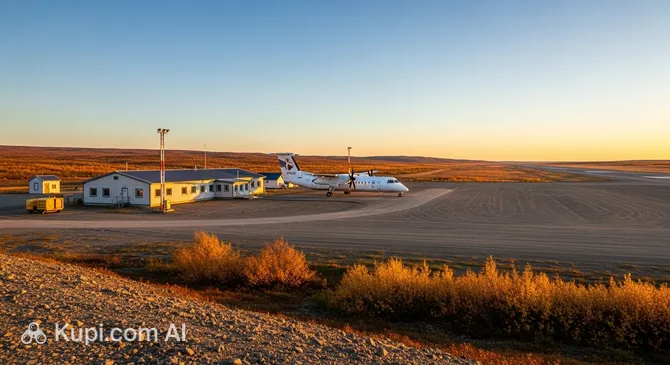
Kangirsuk Airport. Source: Kupi.com Binoculars

Kangirsuk Airport is not merely a transport hub, but a true "lifeline" for the Inuit village of the same name located on the shores of Ungava Bay. Here, where permafrost meets the harsh winds of Nunavik, the gravel runway serves as the primary link to the "mainland". Travellers arrive here to witness the famous tides of the Arnaud River and to experience the authentic culture of the Canadian North, while the terminal building itself, though modest, is filled with the spirit of Arctic adventure.

AirportKangirsuk Airport
IATAYKG
ICAOCYAS
CityKangirsuk
TimezoneAmerica/Toronto
ScheduleOnline board

Features and Advantages of the Airport:

Despite its modest size, the airport plays a critically important role in the life of the region. It is located in immediate proximity to the settlement, allowing one to reach the centre in just a few minutes on foot or by snowmobile in winter. The terminal provides the basic comfort necessary in the harsh climatic conditions of the north and serves as a starting point for hunters, anglers, and eco-tourism enthusiasts.

The main advantage is the picturesque approach for landing: the window view offers stunning vistas of the tundra and the rocky shores of the Arnaud River (Payne River). The airport services regular flights, delivering not only passengers but also vital cargo, provisions, and mail, remaining a reliable outpost of civilisation in this remote corner of Quebec.

Contact Information

  • Official Airport Website: The airport does not have its own separate website. Up-to-date information is available on the web resources of the managing organisation, Kativik Regional Government (www.krg.ca), or the primary air carrier, Air Inuit (www.airinuit.com).
  • Information Desk Phone: +1 819-935-4260 (local number for the terminal and check-in counter).
  • Airport Address: Kangirsuk Airport, Kangirsuk, Quebec, J0M 1A0, Canada.
  • Email: Direct contact for terminal administration is not published. General enquiries can be directed to info@krg.ca, and flight-related questions to airinuit.info@airinuit.com.
  • Airport Social Media: News and updates are published on the official Facebook and Instagram pages of the Kativik Regional Government and Air Inuit.
  • Lost Luggage Information: It is recommended to contact the Air Inuit baggage tracing service by phone at +1 800 361-5933 (ext. 6286) or write to perdu.lost@airinuit.com.
  • Customer Support Contacts: +1 800 361-2965 (Air Inuit Reservations and Customer Service Centre).

How to Get to the Airport

Transport logistics in Kangirsuk have unique characteristics dictated by the geographical location and the harsh climate of Nunavik. Since Kangirsuk Airport is located just 1 kilometre from the settlement centre, getting to it is much easier than in many major cities, though one should not expect standard transfer options here.

Walking is the most accessible and popular way to reach the airport, especially in good weather. The walk from most houses in the village will take 15–20 minutes. The path follows a gravel road with picturesque views of rocky hills and the river. This is a completely free option that allows you to enjoy fresh Arctic air before your flight.

Taxis and Transfers in the conventional sense are absent here. There are no Uber services or city taxi fleets in Kangirsuk. The primary means of transport for tourists staying at the local hotel (usually the cooperative hotel) is a hotel transfer. It is recommended to arrange a pick-up in advance when booking your room. Locals often give each other lifts in a neighbourly fashion, and a polite request may help you find a ride.

Public Transport (buses, trains, or metro) is not developed and does not operate in the region. The village infrastructure is designed for individual means of transport.

Vehicle Rental and Driving Specifics:

  • Instead of renting a standard car, renting quad bikes (ATVs) in summer and snowmobiles in winter is relevant here. This is the main transport for locals, perfectly suited for gravel roads and the tundra.
  • There are no classic rental desks (Avis, Hertz) in the terminal. You need to arrange equipment rental through the hotel or local guides.
  • Rental costs are negotiable and can be high due to the expense of delivering fuel and spare parts to the north.

Airport Parking consists of an open area next to the single terminal building. It is free and unguarded, but the crime rate in the village is extremely low, so leaving transport here is safe. There are usually enough spaces for everyone, as the passenger flow is small.

Neighbouring Transport Hubs:

When planning a complex journey across the Canadian North, it is useful to know about other airports in the region. The main hub for connections often serves as Kuujjuaq Airport, located approximately 233 km to the south; it is through here that the main flow of cargo and passengers passes (about 75,000 people per year).

If you are heading further north or east, the route may pass through the territory of Nunavut, where Kimmirut (315 km) and the major regional centre Iqaluit Airport (423 km) are located, receiving over 120,000 tourists annually. Also within a 600 km radius are Cape Dorset, famous for its Inuit art, and Schefferville Airport, connecting remote mining settlements.

Terminals and Map

The structure of Kangirsuk Airport is extremely concise, which fully corresponds to the format of a small northern aviation hub. There is a single passenger terminal operating here, located in a one-storey building. This compact structure services both departing and arriving flights, uniting all necessary services under one roof.

Layout and Navigation inside the terminal are intuitive even for those flying for the first time. Upon entering through the main entrance, passengers immediately find themselves in the general hall. There are no confusing corridors or multi-level crossings. The space is zoned logically: the airline check-in counter (usually Air Inuit) is in direct line of sight from the entrance, and the waiting area is located next to the boarding gate.

Departure and Arrival Zones have their own specifics:

  • Departure: After quick check-in and baggage drop-off, passengers wait in the general hall. There are no jet bridges ("sleeves") at the airport; boarding is always carried out on foot. You exit the terminal building and walk to the aircraft across the apron, which in good weather allows for excellent photos against the backdrop of the tundra.
  • Arrival: Arriving passengers also walk from the aircraft steps to the building. The baggage claim procedure is maximally simplified here: it is unloaded from the aircraft and moved to the collection area inside the terminal manually. There are no automatic baggage belts here.

Terminal Features are dictated by the harsh climate of Nunavik. The building's main task is to provide warmth and protection from the wind. A comfortable temperature is maintained inside. The interior is modest but functional: there are seats for waiting, restrooms, and sometimes a vending machine with drinks. However, it is worth noting that there are no Duty Free shops, ATMs, currency exchange points, or business lounges here. Travellers are recommended to ensure they have everything they need in advance.

Procedure Times differ significantly from major international hubs. Queues here are a rarity.

  • Recommended arrival time at the airport: 45–60 minutes before departure. This is quite sufficient to pass all formalities without rushing.
  • Check-in and baggage acceptance usually close strictly 30 minutes before the flight departs.
  • Pre-flight security screening is quick, but safety requirements remain standard for Canadian civil aviation.

Navigation Recommendations: Since there are no transitions between terminals, the risk of getting lost is zero. If your flight involves an intermediate stop in Kangirsuk (so-called "milk run" flights along the coast), and you need to fly further, follow the flight attendants' instructions. Often transit passengers remain on board or step into the terminal for a short time while refuelling or loading takes place.

Airport History

The history of Kangirsuk Airport (YKG) is inextricably linked with the development of the Canadian North and the transition of indigenous peoples from a traditional lifestyle to modern living. Unlike major capital hubs, whose history is written by architects and engineers, the chronicle of this airfield was created by the dire necessity to overcome the isolation of the icy expanses of Nunavik.

The Pre-Aviation Era and First Flights

Until the mid-20th century, Kangirsuk (formerly known as Payne Bay) remained a difficult-to-reach place. Communication with the outside world was maintained exclusively by sea during the short summer navigation period or by dog sleds in winter. The first aircraft that began appearing in the skies over Ungava Bay in the 1950s–1960s were seaplanes landing directly on the water, or light aircraft using the ice of the frozen river as a natural runway. These were risky expeditions dependent on the whims of the weather.

Official Establishment and the 1970s

A key moment in the history of the region's transport infrastructure development was the signing of the James Bay and Northern Quebec Agreement in 1975. This historic document guaranteed infrastructure development for Inuit communities. It was during this period that the design and construction of permanent gravel runways began in Nunavik settlements, including Kangirsuk. The airport transformed from a temporary site into an official civil aviation facility capable of receiving regular flights all year round.

Development under KRG Management

In the 1980s and 1990s, airport management passed to the Kativik Regional Government (KRG). This marked a new stage of modernisation:

  • A terminal building was constructed to keep passengers warm.
  • Navigation equipment was installed, allowing pilots to land in conditions of low cloud cover and polar night.
  • A system for regular maintenance of the gravel surface, which suffers from permafrost, was implemented.

Interesting Facts and Historical Highlights:

  • Runway on the Rocks: Constructing the runway in Kangirsuk was a true engineering challenge. The strip is located on a rocky plateau rising above the settlement. Engineers had to account not only for the complex terrain but also for the extreme winds blowing from Ungava Bay.
  • "Milk Run": Historically, flights to Kangirsuk are often part of the so-called "Milk Run" — a route where the aircraft makes landings in several coastal villages in succession, delivering mail, groceries, and passengers, much like a milkman delivering milk to homes.
  • Vital Artery: Throughout its history, the airport has repeatedly been the scene of dramatic events related to medical evacuation. Before the advent of reliable air connections, any serious illness in winter could be fatal. Today, the airport ensures emergency links to the hospital in Kuujjuaq.

In recent years, the airport continues to be modernised within the framework of the Northern Quebec transport network improvement programme. Despite the fact that a gravel runway is still used here, the level of flight safety and the reliability of navigation systems comply with strict Canadian federal standards, making YKG a reliable bridge between the ancient tundra and civilisation.

Services and Amenities

Given the secluded nature and modest size of Kangirsuk Airport, passengers should adjust their expectations regarding available services in advance. You will not find the infrastructure typical of metropolises with boutiques and food courts here. The terminal is designed exclusively as a functional transit point, providing protection from bad weather and basic conditions for waiting for a flight.

Restaurants, Cafés, and Shops

Inside the terminal building, there are no full-service dining outlets, cafeterias, or shops. There is no Duty Free zone or newsstands. Sometimes a vending machine with drinks and snacks may operate in the waiting hall, but its presence and assortment are not guaranteed. Travellers are strongly recommended to:

  • Arrange for a snack and a supply of drinking water in advance, before arriving at the airport.
  • If you have just arrived, necessary groceries can be purchased at the local cooperative store (Co-op store) in the village centre.

Lounges, VIP Services, and Business Centres

The airport has one general waiting hall for all categories of passengers. There is no separation into economy and business class, nor are there separate VIP lounges or private meeting rooms. Conference halls are also absent in the terminal. The atmosphere in the hall is usually calm and almost home-like, allowing for a comfortable time before departure in the company of locals and other tourists.

Connectivity, Wi-Fi, and Electronics

The availability of digital services is limited by the region's technical capabilities:

  • Wi-Fi: Public wireless networks may be absent or work intermittently. It is recommended to download necessary maps, tickets, and entertainment content to your devices in advance.
  • Charging Stations: There are no specialised stands for charging gadgets, but several standard electrical outlets can be found in the waiting hall. Considering they may be occupied, having your own fully charged power bank is a significant advantage.

Banks and Currency Exchange

There are no ATMs or currency exchange points in the terminal. Payment for airline services (e.g., for excess baggage) is often possible only by bank card, but for purchases in the village itself, it is better to carry Canadian dollars in cash. Withdrawing cash at the airport is impossible.

Medical Services

There is no specialised medical centre or pharmacy in the terminal building. Staff are trained in providing first aid and have standard first aid kits. In case of serious health issues, one must contact the local health centre (CLSC) in the settlement of Kangirsuk, where nurses are on duty.

Services for Passengers with Children and Reduced Mobility

Thanks to the single-storey design of the terminal, the airport ensures a barrier-free environment. There are no stairs or lifts, which facilitates movement in wheelchairs. However, there is no specialised equipment (ambulifts) for boarding the aircraft — assistance with boarding is usually provided by airline staff.

There is no separate room for mothers and children. Restrooms are shared but maintained in cleanliness. When travelling with children, it is worth considering the lack of play areas and bringing entertainment for the journey.

Hotels and Accommodation

There are no hotels or sleeping pods on the airport territory itself. The nearest and, essentially, only accommodation option is located in the settlement centre, approximately 1 km from the terminal. This is the Kangirsuk Co-op Hotel — a small hotel managed by the local cooperative. It has a shared kitchen, laundry, and basic amenities. Due to the limited number of rooms, accommodation should be booked well in advance.
Dining

The gastronomic landscape of Kangirsuk Airport (YKG) fully reflects the specifics of a small remote aviation hub in the Arctic. Travellers accustomed to a variety of cafés and chain restaurants in major international hubs should revise their expectations here. In the terminal building, there are no permanent dining outlets, restaurants, or coffee shops. All infrastructure is focused on basic flight support, so passengers need to think about nutrition in advance.

Snack Options in the Terminal

The only source of food directly in the airport building may be a vending machine located in the general waiting hall. However, its operation and stock are not guaranteed. If the machine is working, one can usually find:

  • Carbonated drinks and bottled water.
  • Chocolate bars, crisps, and crackers.
  • Price Range: Prices in vending machines in the North are usually higher than on the "mainland" (approximately 2–4 CAD per item).
  • Important: The machine accepts only Canadian coins or small notes. Card payment is most often unavailable.

Pre-Departure Recommendations: "Northern Picnic"

Since it is impossible to have a full lunch at the airport, experienced travellers and locals use the strategy of "bringing everything with you". The best option is to eat in the village before heading to the airport or take food with you in a container. In the waiting hall, this is treated with full understanding, and no one will forbid you from snacking on homemade sandwiches.

Where to Buy Food Before the Flight:

  • FCNQ Store (Co-op Store): Located in the centre of Kangirsuk. Here you can buy pastries, fruits, cheese, cold cuts, and ready-made snacks. This is the only place where you can assemble a packed lunch for the road. Store opening hours should be checked on-site, but it usually closes around 18:00.
  • Hotel Canteen (Co-op Hotel): If you are staying at the local hotel, it makes sense to have a hearty breakfast or lunch there before transferring to the airport.

Local Cuisine and Delicacies

Although there is no restaurant with a local menu at the airport, passengers often carry gastronomic souvenirs or traditional-style snacks. If locals have treated you, your lunch box might contain:

  • Bannock: Traditional Inuit unleavened bread, which satisfies hunger excellently and keeps for a long time.
  • Arctic Char: Smoked or dried fish (pisi), which is the main delicacy of the region.

In-Flight Catering

It is important to note that Air Inuit, operating flights to Kangirsuk, is renowned for its hospitality. Depending on the flight duration and time of day, passengers are often offered on board:

  • Light snacks (biscuits, cheese, crackers).
  • On longer flights — a full hot meal or sandwiches.
  • Hot drinks (tea, coffee) and juices.
  • For vegetarians and passengers with special dietary requirements (gluten-free, Halal), special meals must be ordered at least 48 hours before departure via the airline's call centre.

Tip Regarding Water: There are no drinking fountains in the departure zone. It is recommended to carry an empty reusable bottle (water can be filled in the village) or buy water at the store before arriving at the terminal, as after passing security, there may be nowhere to buy drinks if the vending machine is empty.

Travel Tips

A journey to Nunavik is always a true adventure requiring special preparation. To make your experience using Kangirsuk Airport as comfortable and predictable as possible, we have compiled a number of practical tips considering the specifics of northern aviation.

Arrival Time Recommendations

Although the airport is small and there are no long queues, one should not arrive at the last minute. The optimal arrival time is 60 minutes before departure. Check-in counters close strictly 30–45 minutes before departure. If you are late, the aircraft will not wait: the schedule is strictly adhered to here in order to complete the chain of flights before the weather deteriorates.

Check-in and Security Specifics

The processing procedure here is more "homely" than in major cities, but safety rules are observed strictly.

  • Documents: Keep your identification (passport or Canadian driving licence) to hand.
  • Screening: Security checks (CATSA) are standard. Be prepared to remove heavy winter boots and outerwear (parkas).
  • Luggage: Due to the use of small aircraft (most often Dash-8), luggage weighing is conducted very strictly. Excess weight is charged at high rates, so weigh your bags in advance if possible (e.g., at the hotel).

Tips for Choosing a Seat on the Plane

Flying over the tundra is an excursion in itself. Air Inuit aircraft usually have a 2+2 layout.

  • Where to Sit: Be sure to choose a window seat. The wings on Dash-8 aircraft are located on top, so the view of the ground is not obstructed, wherever you sit.
  • Views: Upon approaching Kangirsuk, stunning views open up of the winding Arnaud River and the rocky coast of Ungava Bay. In winter, the boundless snowy expanses look mesmerising, and in summer, one can spot the migration of caribou.

Hand Luggage: Do's and Don'ts

The main limitation is size. The overhead bins in regional aircraft cabins are very narrow. A standard "cabin size" suitcase may not fit.

  • SkyCheck: Most likely, you will be asked to hand over your large carry-on luggage at the steps into a special compartment (Valet service). You will receive it immediately upon exiting the aircraft.
  • Valuables: Documents, medication, electronics, and lithium batteries (power banks) must be kept in a small bag with you, as it may be cold in the cargo hold.
  • Prohibitions: Sharp objects (knives, multi-tools) and liquids over 100 ml are prohibited in hand luggage. This federal rule applies even in the smallest airports.

Recommendations for Transit Passengers

Many flights in this region operate on the "air bus" principle, making landings in several villages in succession.

  • Attentiveness: Listen carefully to crew announcements. If the plane makes an intermediate stop in Kangirsuk and your ticket is to the next point, check with the stewardess whether you need to disembark or can remain in the warmth on board.
  • Luggage: Usually, luggage is checked through to the final destination, but always check the baggage tag when handing over your suitcase.

Customs Control

Kangirsuk Airport services exclusively domestic flights. There is no border or customs control here. If you are flying from abroad, you will pass all formalities at the first point of entry into Canada (usually Montreal or Ottawa) before transferring to a flight to Nunavik.

Tips for Saving Time and Money

  • Food and Water: Take an empty bottle and a snack from the village with you. There is nowhere to buy food at the airport, and in-flight catering may be light. Food prices in the north are very high, so having your own supply will save your budget.
  • Transfer: If the weather is good and you have little luggage, walk to the airport. It is free and will take only 15–20 minutes, whereas a transfer by car or snowmobile will incur a cost.

What to Do in Case of Flight Delay

Weather in the Arctic is unpredictable, and delays (sometimes for a day or more) are common. This should be treated with patience and flexibility.

  • Contact with Hotel: Do not check out of the hotel until the last moment if you see the weather deteriorating. There are few places in the hotel, and in case of flight cancellation, it is better to have a booked room.
  • Entertainment: There is no Wi-Fi or entertainment at the airport. Download films, books, or music to your phone in advance to pass the waiting time.
  • Information: The best source of information about flight status is airline staff at the counter or locals, who often know about weather conditions in neighbouring villages better than online boards.

Reached the end of the page?

That means the route is fully explored