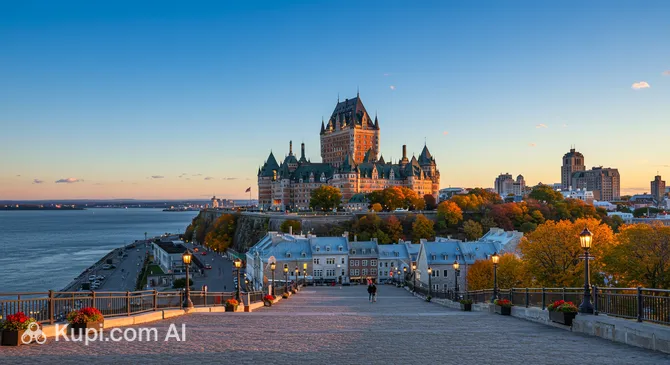
Stepping into Quebec City feels like being transported to a charming European town without leaving North America. As the capital of the province of Quebec, this vibrant metropolis is renowned for its well-preserved colonial architecture, cobblestone streets, and a romantic atmosphere that captivates visitors year-round. Located in eastern Canada, it sits majestically where the Saint Lawrence and Saint Charles rivers meet, offering stunning waterfront views and a dynamic urban landscape.
Quebec City. Illustration.
Source: Kupi.com AI
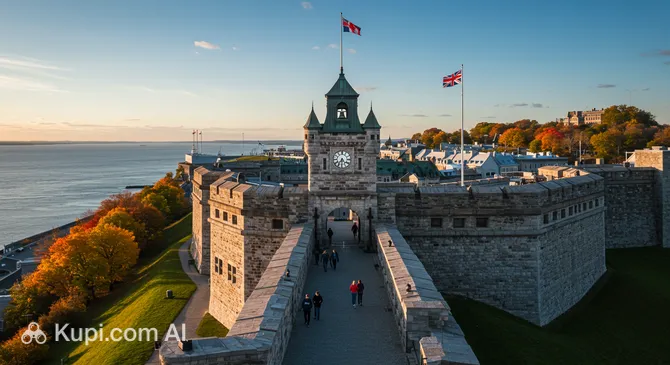
Home to approximately 705,000 residents, the city perfectly balances its role as a modern economic hub with its deep respect for tradition. The local climate brings distinct seasons, from lush, green summers to snowy, magical winters that turn the area into a wonderland. The history of Quebec City is woven into the very fabric of its streets; founded in the early 17th century, it remains the only fortified city north of Mexico, a distinction that has earned its historic district a place on the UNESCO World Heritage list.
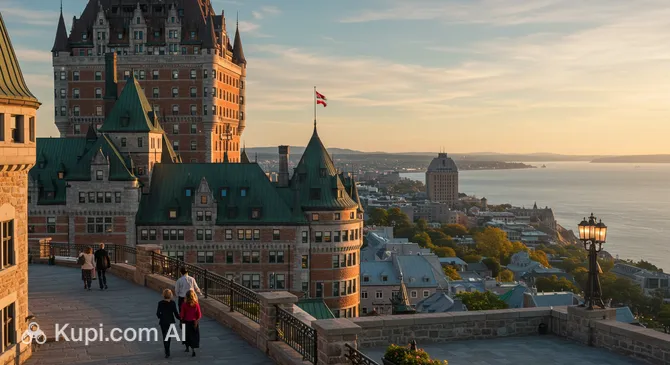
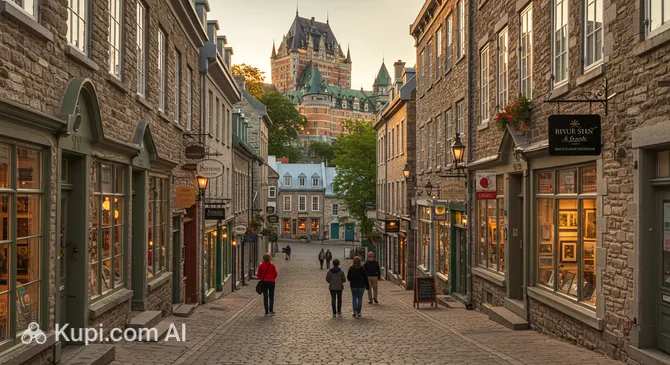
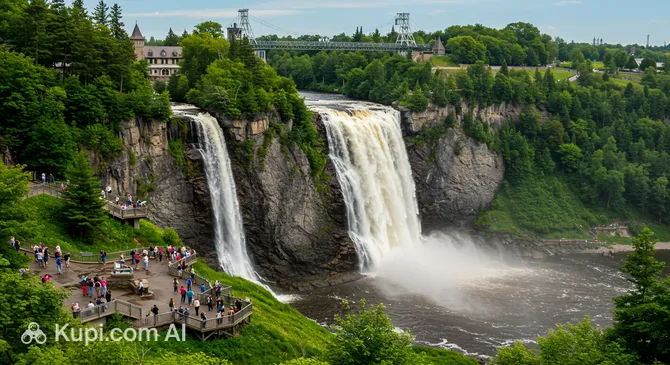
Travelers are often drawn to the iconic Château Frontenac, which dominates the skyline and is frequently cited as the most photographed hotel in the world. A stroll through the Quartier Petit-Champlain offers a delightful array of boutiques and bistros, while nature lovers can explore the spectacular Montmorency Falls, which are even higher than Niagara Falls. Whether you are walking along the ancient ramparts or enjoying distinct local cuisine, Quebec City promises an unforgettable journey into culture and beauty.
Weather Overview
Quebec City experiences a humid continental climate with four distinct seasons, each bringing its own unique atmosphere. To plan your trip effectively, it is helpful to check the detailed weather in Quebec City before you go, as conditions can vary greatly throughout the year. Generally, you can expect warm, pleasant summers and very cold, snowy winters.
The summer months of June, July, and August are the warmest, with July seeing average temperatures around 19.7°C and highs reaching up to 24.3°C. While these months are ideal for outdoor exploration, they are also quite damp, with approximately 16 to 17 wet days per month. Conversely, winter is a true freeze; January is the coldest month with an average temperature of -10.7°C and lows dipping to -14.9°C. Despite the freezing temperatures, precipitation remains frequent with about 13 to 14 wet days, often covering the city in a beautiful layer of snow.
Spring and autumn offer milder transitions but can be unpredictable. May warms up to a comfortable average of 11.6°C, making it a lovely time for blooming flowers, while September retains some summer warmth with averages around 14.5°C before the chill sets in. Whether you prefer the snowy charm of February or the mild days of late summer, the city offers a dynamic climate for every type of traveler.
Average monthly temperature
Average monthly precipitation
Interesting Facts
Beyond the main attractions, Quebec City holds many fascinating secrets and historical distinctions that often surprise visitors. Here are a few unique aspects that set this provincial capital apart.
North America's Walled City: It is the only fortified city in North America north of Mexico whose walls still exist. You can walk along nearly 4.6 kilometers of these historic ramparts which completely encircle the upper part of Old Quebec, offering a glimpse into its defensive past.
A Healing Legacy: The city is the site of the first hospital established on the continent north of Mexico. This profound history is preserved at The Monastery of the Augustines, a site that honors the nuns who arrived in 1639 and now functions as a unique wellness retreat and museum.
Century-Old Thrills: On the famous Dufferin Terrace, visitors can experience a toboggan slide that has been thrilling riders since 1884. This distinct attraction operates during the winter months, allowing adventurous souls to speed down the icy track at speeds of up to 70 km/h.
An Active Fortress: The impressive star-shaped Citadel of Quebec is not just a historical monument; it remains an active military installation. It serves as the home station of the Royal 22e Régiment and acts as the secondary official residence of the Governor General of Canada.
Citadel of Quebec. Illustration.
Source: Kupi.com AI
Traveler photos:
How to Get There
Reaching this historic destination is straightforward, with options ranging from convenient air travel to scenic train rides. Whether you are arriving from within Canada or from abroad, you can find all ways to reach the city and plan your journey with ease.
The most direct way to arrive by air is through the Quebec City Jean Lesage International Airport (IATA: YQB). Located just 13.7 km from the city center, it welcomes a significant number of travelers annually. Getting to the heart of Quebec City from here is quick; a taxi ride typically takes around 40 minutes depending on traffic. This airport handles a medium volume of passenger traffic, offering a comfortable and efficient entry point without the overwhelming crowds of larger hubs.
For many international travelers, the Montreal-Pierre Elliott Trudeau International Airport (IATA: YUL) serves as a major gateway. Please note that this airport is located in Montreal, approximately 247.3 km away from Quebec City. It is a large international hub with extensive flight connections. From here, visitors often rent a car, take a connecting flight, or board a bus or train to complete their journey to the capital.
For clarity, here is a summary of the main airports:
Traveling by train is another popular and picturesque option. The city is served centrally by the Quebec Railway Station (IATA: XLJ), also known as Gare du Palais. Situated only 0.7 km from the city center, it places you directly on the doorstep of the historic district. A transfer from here to your hotel is very short, often taking just a few minutes by taxi.
Another key stop is the Sainte-Foy Railway Station (IATA: XFY), located about 9.5 km from the downtown area. This station is convenient for those staying in the western part of the city or looking to avoid downtown traffic upon arrival. A taxi or bus ride from Sainte-Foy to the city center generally takes around 35 minutes.
Below is a list of relevant railway stations in the region:
Quebec City is a treasure trove of history, culture, and natural beauty, offering visitors a variety of sites that are unique in North America. From towering fortifications to cascading waterfalls, the city's landmarks tell the story of its rich past while providing breathtaking views.
Dominating the skyline is the majestic Château Frontenac. Often recognized as the most photographed hotel in the world, this architectural gem sits atop Cap Diamant, overlooking the Saint Lawrence River. Tourists are drawn to its fairytale turrets and grand interior, which evoke the elegance of a bygone era. Even if you are not staying as a guest, a walk through its lobby or a drink at the bar offers a glimpse into the city's luxurious heritage.
Château Frontenac. Illustration.
Source: Kupi.com AI
Traveler photos:
Just below the cliffs lies the enchanting Petit Champlain District. As one of the oldest commercial streets in North America, this pedestrian-only quarter is famous for its cobblestone paths, artisan boutiques, and inviting bistros. It is a particularly magical place to explore on foot, where the historic stone buildings and flower-lined windows create a romantic European atmosphere that captivates every visitor.
Petit Champlain District. Illustration.
Source: Kupi.com AI
Traveler photos:
For those seeking natural wonders, the Montmorency Falls are a spectacular sight located just minutes from the city center. Standing at 83 meters, they are notably higher than Niagara Falls. The park offers multiple ways to experience the power of the water, including a cable car, a suspension bridge that hangs directly over the crest, and a staircase for those who enjoy a scenic workout.
Montmorency Falls. Illustration.
Source: Kupi.com AI
Traveler photos:
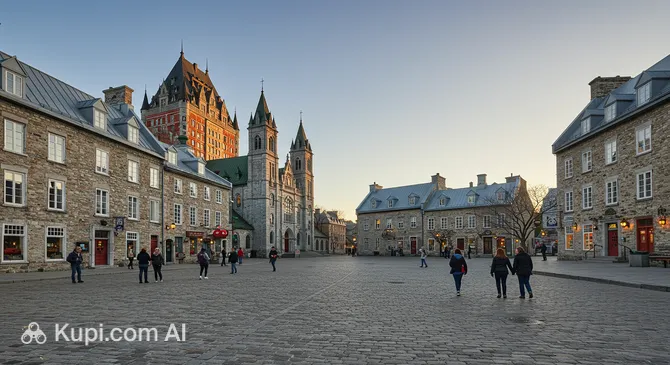
Stepping into Place Royale feels like travelling back to the founding of New France. This picturesque stone square is the precise location where Samuel de Champlain established the city in 1608. Surrounded by restored 17th and 18th-century buildings and the historic Notre-Dame-des-Victoires church, it serves as the symbolic heart of the city's French civilization and is a perfect spot for history enthusiasts.
Place Royale. Illustration.
Source: Kupi.com AI
Traveler photos:
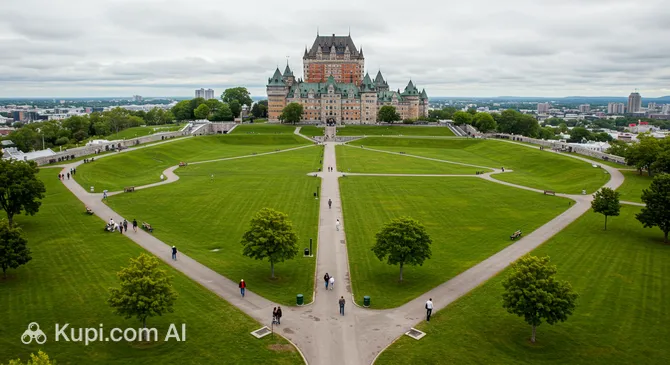
Finally, the Plains of Abraham offer a vast green sanctuary within the urban landscape. Known historically as the site of the pivotal 1759 battle, today it is a peaceful urban park that serves as the city's playground. Visitors flock here for picnics, jogging, and cross-country skiing, as well as to attend major cultural festivals and concerts that take place on its rolling hills.
Plains of Abraham. Illustration.
Source: Kupi.com AI
Traveler photos:
Local Cuisine
The culinary landscape of Quebec City is a delicious reflection of its French heritage blended with hardy North American roots. The local food scene is renowned for being hearty, comforting, and deeply satisfying, especially during the colder months. No visit is complete without trying poutine, the province's most famous culinary export. This indulgent dish consists of crispy french fries topped with fresh, squeaky cheese curds and smothered in a rich brown gravy. It can be found everywhere, from humble roadside shacks to upscale restaurants where chefs add gourmet toppings like duck confit or foie gras.
For a taste of traditional home cooking, look for tourtière. This savory meat pie is a staple of Quebecois culture, typically filled with minced pork, veal, or beef, and seasoned with a distinctive blend of spices such as cloves, cinnamon, and allspice. Another must-try is the region's famous maple products. Since Quebec is the world's leading producer of maple syrup, you will find it in everything from glazed ham to dessert. A particular favorite is tire d'érable (maple taffy), which is made by pouring boiling syrup onto clean snow and rolling it up with a popsicle stick—a sweet treat often enjoyed right on the street.
To wash down these rich meals, the region offers exceptional local beverages. Ice cider (cidre de glace) is a sophisticated dessert wine unique to Quebec, made from apples that have been naturally frozen on the tree to concentrate their sugars. In the winter, locals warm up with a glass of Caribou, a potent traditional drink made from red wine, strong liquor (often whisky), and maple syrup. The city also boasts a thriving craft beer scene, with numerous microbreweries offering excellent local ales and lagers.
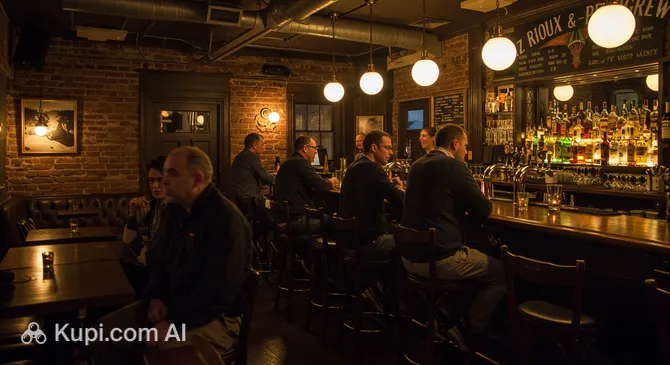
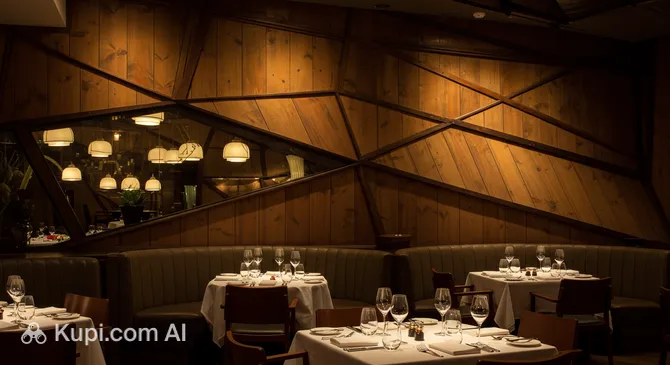
Dining in Quebec City is an experience that ranges from romantic fine dining in historic stone buildings to lively casual eateries. While the tourist-heavy areas of Old Quebec offer plenty of charm, venturing into neighborhoods like Saint-Roch or Limoilou can reveal the city's modern gastronomic pulse. For a memorable meal that highlights local market ingredients in a rustic-chic setting, you can visit Chez Rioux & Pettigrew. Alternatively, if you are seeking a cozy spot for a coffee and a pastry to fuel your exploration, La Maison Smith Limoilou provides a perfect example of the city's inviting café culture.
Chez Rioux & Pettigrew. Illustration.
Source: Kupi.com AI
Traveler photos:
Travel Tips
Visiting Quebec City is a delightful experience, blending European charm with North American comfort in a setting that feels unique on the continent. To help you navigate the hilly cobblestone streets and distinct local culture with ease, we have compiled a list of practical advice for your trip.
Clothing and Gear: The weather dictates your wardrobe here. In winter, heavy parkas, thermal layers, and waterproof, insulated boots are essential to survive the freezing temperatures. Summers are warm and humid, so light clothing works best, but always pack a raincoat. Most importantly, bring sturdy, flat walking shoes; the historic district is full of uneven cobblestones and steep hills that are unforgiving to high heels.
Transportation: The best way to explore Old Quebec is on foot, though be prepared for a workout. To move between the Upper Town (Haute-Ville) and Lower Town (Basse-Ville) without the climb, use the historic Funicular. For distances outside the walls, the RTC bus network is reliable and easy to use. Avoid renting a car if you plan to stay in the city center, as narrow streets and scarce, expensive parking make driving more of a hassle than a convenience.
Finances: The currency is the Canadian Dollar (CAD). Credit and debit cards are widely accepted even for small transactions, but carrying a little cash is useful for small artisan shops. Tipping is part of the culture; it is standard to leave 15% to 20% of the bill in restaurants, bars, and for taxi rides.
Health and Safety: Quebec City is one of the safest cities in North America. Pharmacies like Jean Coutu or Pharmaprix are easy to find for minor health needs. In winter, pay close attention to signs warning of falling ice from rooftops and watch your step on icy sidewalks, which can be slippery despite maintenance.
Communication: French is the official and dominant language. While English is widely spoken in tourist areas, hotels, and restaurants, it is not guaranteed everywhere. Locals appreciate it immensely if you start a conversation with a polite "Bonjour" (Hello) or "Parlez-vous anglais?" (Do you speak English?) rather than immediately speaking English.
Local Etiquette: Politeness is highly valued. It is customary to greet shopkeepers when entering a store and to say "Merci" (Thank you) when leaving. Quebecers are generally relaxed and friendly, but they adhere to orderly queuing in public places and at bus stops.
What to Avoid: Do not refer to locals simply as "Canadians" if you are discussing culture; many identify strongly as "Québécois." Also, avoid eating at "tourist trap" restaurants right next to major landmarks without checking reviews; walking just a few blocks away often leads to better quality and more authentic cuisine.
Local Insight: For the best panoramic view of the skyline and the Château Frontenac without paying for a tour, take the public ferry (traverse) across the river to Lévis. The round trip is affordable, frequent, and offers spectacular photo opportunities, especially at sunset.
Armed with these tips, you are ready to fully embrace the magic of this fortified city without the common travel hiccups. Enjoy the rich history, the delicious food, and the warm hospitality that make Quebec City a truly unforgettable destination.
Entertainment & Nightlife
When the sun sets over the Saint Lawrence River, Quebec City transforms from a historical monument into a vibrant hub of evening entertainment. The nightlife here is diverse, catering to those who seek high-energy dance floors as well as those who prefer a quiet pint in a centuries-old pub. The atmosphere is generally welcoming and safe, with a blend of European sophistication and North American friendliness.
The epicenter of the city's nightlife is undoubtedly the Grande Allée. Often compared to the Champs-Élysées, this wide avenue is lined with Victorian architecture that houses bustling restaurants, sprawling outdoor terraces, and energetic nightclubs. In the summer, the patios are packed with locals and tourists enjoying cocktails under the stars, while in winter, the heated terraces and cozy interiors offer a warm refuge. It is the place to see and be seen, with a crowd that tends to dress up a bit more—think smart casual to chic.
For a more alternative and local vibe, head to the Saint-Roch district, particularly along Rue Saint-Joseph. This revitalized neighborhood is the hipster heart of the city, teeming with microbreweries, trendy wine bars, and intimate concert venues. Here, the dress code is relaxed, and the focus is on craft beverages and artistic expression. It is an excellent area to mingle with students, artists, and young professionals.
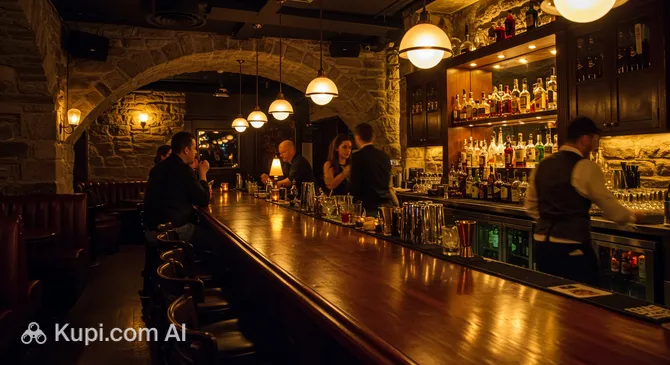
In the historic Upper Town, hidden gems offer a more traditional experience. Tucked away on a narrow street, Bar Ste-Angèle is a legendary spot known for its intimate atmosphere, live jazz music, and extensive cocktail menu. It is the perfect venue for those looking to escape the noise of larger clubs and enjoy a conversation over a quality drink in a setting that feels timeless.
Bar Ste-Angèle. Illustration.
Source: Kupi.com AI
Traveler photos:
Culture enthusiasts will find plenty to do after dark as well. The city hosts a vibrant performing arts scene, anchored by the Grand Théâtre de Québec. This major venue stages everything from classical music concerts and operas to contemporary theater and dance performances. Checking their schedule in advance is highly recommended, as it offers a sophisticated night out that contrasts beautifully with the bar scene.
Grand Théâtre de Québec. Illustration.
Source: Kupi.com AI
Traveler photos:
Practical Advice: Most bars and clubs are open until 3:00 AM, with the peak hours being between 11:00 PM and 1:00 AM. Prices are moderate; expect to pay around $8-$12 CAD for a cocktail and $7-$9 CAD for a pint of beer, though prices can be higher in exclusive clubs on Grande Allée. The city is very safe for night walks, especially within the walls of Old Quebec and on main streets. To get around late at night, taxis are the most reliable option. You can easily hail one or call a local service like Taxi Coop, as ride-sharing services are also available but can surge in price.
Before the night begins, the city offers a wealth of daytime entertainment. History buffs should not miss the Museum of Civilization, which offers immersive exhibits on the social and cultural history of Quebec. Art lovers can explore the National Museum of Fine Arts of Quebec located on the Plains of Abraham. For families or those seeking lighthearted fun, the Galeries de la Capitale is more than just a shopping mall; it houses the Méga Parc, one of the largest indoor amusement parks in eastern Canada, complete with a roller coaster and ice rink.
Galeries de la Capitale. Illustration.
Source: Kupi.com AI
Traveler photos:
Parks & Museums
Quebec City is not only defined by its stone walls and historic fortifications but also by its abundant green spaces and world-class cultural institutions. The city seamlessly integrates nature into its urban fabric, offering visitors lush retreats just moments from the bustling streets, while its museums provide a deep dive into the unique identity of French Canada.
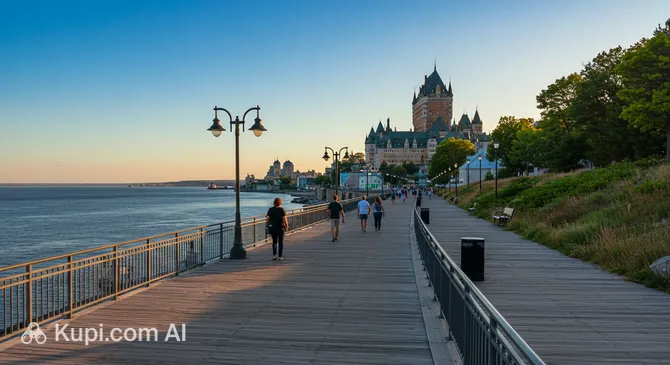
For a refreshing escape along the river, the Samuel De Champlain Promenade is a masterpiece of urban design. Stretching 2.5 kilometers along the Saint Lawrence River, this park was a gift to the city for its 400th anniversary. It features themed gardens, water stations, and distinct art installations, making it a favorite spot for walkers, cyclists, and anyone looking to enjoy a panoramic view of the river and the bridges. It is especially vibrant in the summer when the mist from the fountains cools the air.
Another green gem is the Domaine de Maizerets, a historic estate located in the Limoilou borough. This vast park covers 27 hectares and centers around a historic manor house dating back to the French regime. Visitors can explore its arboretum, intricate flower gardens, and a natural labyrinth. It is an ideal destination for families and nature lovers, offering a peaceful atmosphere that feels miles away from the city center, despite being easily accessible.
Samuel De Champlain Promenade. Illustration.
Source: Kupi.com AI
Traveler photos:
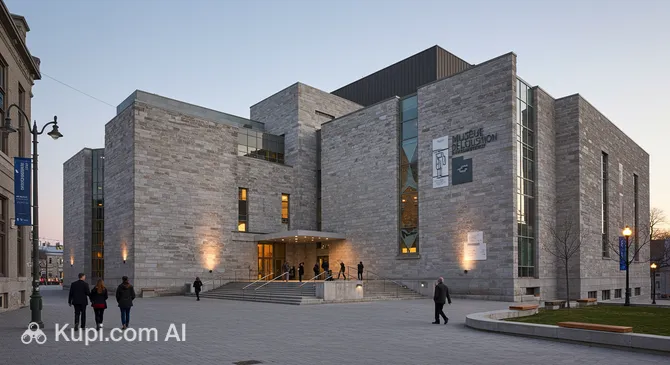
When it comes to culture, the Museum of Civilization is an essential stop for understanding the soul of Quebec. Located in the Lower Town near the river, its architecture is a striking blend of modern design and historic structures. The museum is renowned for its interactive and thought-provoking exhibitions that explore the history of Quebec society, Indigenous cultures, and global themes. It is a place where history is told through human stories, making it engaging for visitors of all ages.
Art enthusiasts should head to the National Museum of Fine Arts of Quebec, situated within the National Battlefields Park. This complex houses the world's most extensive collection of Quebec art, ranging from the 17th century to the present day. The museum also features a dedicated pavilion for Inuit art and hosts major international touring exhibitions. Its glass-encased Grand Hall offers stunning views of the surrounding parkland, merging art with the natural landscape.
Museum of Civilization. Illustration.
Source: Kupi.com AI
Traveler photos:
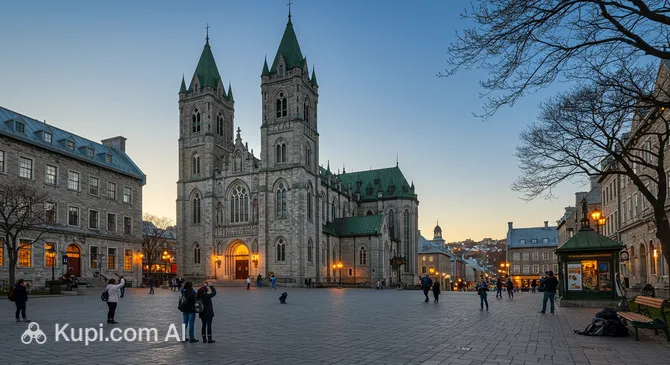
Beyond parks and museums, the city's religious heritage is monumental. The Notre-Dame de Québec Basilica-Cathedral stands as a testament to the city's spiritual roots. As the primate church of Canada and the seat of the Roman Catholic Archdiocese of Quebec, it is the oldest parish in North America north of Mexico. Its neoclassical facade and dazzling gold-leaf interior are breathtaking, and it houses the only Holy Door outside of Europe, a feature of significant religious importance.
For a different perspective on the city's layout and history, a visit to the Observatory of the Capital is highly recommended. Located on the 31st floor of the Marie-Guyart Building, it offers the highest panoramic view in the city. From here, you can see the walled city, the river, and the Laurentian Mountains in the distance, providing a perfect orientation point for your travels.
Notre-Dame de Québec Basilica-Cathedral. Illustration.
Source: Kupi.com AI
Traveler photos:
For an authentic local experience, venture a bit further to the Baie de Beauport. This sandy beach located just minutes from downtown offers a resort-like vibe with swimming areas, volleyball courts, and food trucks. It is a popular spot where locals go to relax, windsurf, or simply enjoy a sunny afternoon by the water, offering a side of Quebec City that many tourists miss.
Getting Around
The public transport system in Quebec City is reliable and primarily revolves around a comprehensive bus network managed by the Réseau de transport de la Capitale (RTC). Since the city does not have an underground metro, the high-frequency Métrobus lines serve as the main arteries, connecting major neighborhoods and tourist areas efficiently. These buses run frequently on dedicated lanes in many areas and are easily recognizable, making them the most convenient option for reaching destinations outside the historic center.
A unique and scenic component of the local transit experience is the ferry (traverse) that links the city with Lévis across the Saint Lawrence River. Not only is it a practical mode of transport, but it also offers some of the best photographic views of the skyline and the fortifications. Additionally, within the historic district, the famous Funicular connects the Lower Town (Basse-Ville) to the Upper Town (Haute-Ville) at a 45-degree angle. While it is independently operated and requires a separate fare, this historic cable railway saves you a steep climb and is a quintessential part of visiting the area.
Paying for your ride is straightforward, with several modern options available to travelers. The most convenient method for short-term visitors is the RTC Nomade Paiement mobile app, which allows you to purchase and activate tickets directly on your smartphone. Alternatively, you can buy an "L’Occasionnelle" smart card for occasional trips or pay with exact change in cash (coins only) when boarding the bus. Fares are affordable, with single tickets costing approximately $3.75 CAD, and day passes are available for those planning unlimited travel.
For tourists, the best advice is to combine walking with public transport. The historic walled city is best explored on foot, but distances to attractions like the Aquarium or larger shopping centers require a bus. Tickets and passes can be purchased at numerous authorized retailers, including pharmacies and convenience stores, often identified by the RTC logo. Buses typically operate from early morning, around 5:30 AM, until approximately 1:00 AM, though frequencies decrease late at night and on weekends.
If you prefer alternatives to the bus, taxis are readily available and can be hailed on the street or booked via apps like Uber. During the warmer months, the city becomes very bike-friendly, and the àVélo bike-sharing service offers a fun and active way to get around, with electric-assist bikes available at stations throughout the central districts. Whether you choose to ride the bus, take the ferry, or cycle, navigating the city is safe and user-friendly.
Accommodation
Where to Stay:
Finding the perfect place to stay in Quebec City is an integral part of the travel experience, with options that range from historic inns steeped in charm to modern luxury hotels and budget-friendly hostels. The accommodation landscape caters to all tastes, whether you are looking for a romantic suite with a view of the river, a family-friendly hotel with a pool, or a cozy bed and breakfast tucked away in a quiet neighborhood.
For most first-time visitors, the most desirable area is Old Quebec (Vieux-Québec). Staying here places you within walking distance of the main landmarks, surrounded by cobblestone streets and 17th-century architecture. This area is divided into the Upper Town (Haute-Ville), which offers grand views and easy access to the fortifications, and the Lower Town (Basse-Ville), known for its quaint, village-like atmosphere near the port. Due to the high demand and historic nature of the buildings, rooms here can be smaller and more expensive, but the ambiance is unmatched.
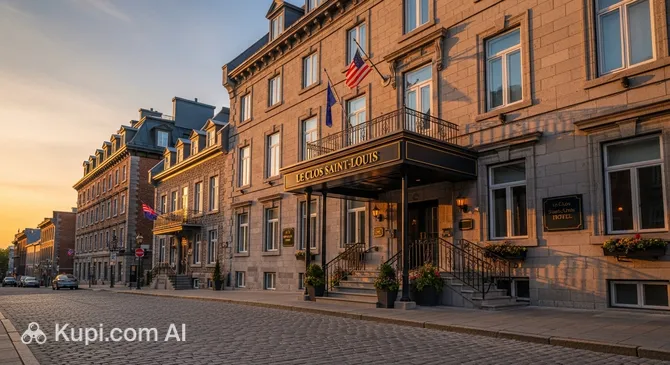
If you prefer a stay that immerses you in the city's Victorian elegance, Le Clos Saint-Louis Hotel is a wonderful example. Located in a historic building, it offers a romantic atmosphere that reflects the old-world charm of the district. Similarly, travelers seeking a boutique experience often appreciate Chateau des Tourelles, which provides a comfortable and authentic base for exploring the nearby Saint-Jean-Baptiste neighborhood, an area known for its bohemian vibe and excellent food scene.
Le Clos Saint-Louis Hotel. Illustration.
Source: Kupi.com AI
Traveler photos:
Beyond the historic walls, neighborhoods like Saint-Roch offer a trendier, more local experience with loft-style accommodations and proximity to cool bars and cafes. For those traveling by car or looking for more space at a lower price point, the Sainte-Foy district is a practical choice. Although it is a short drive or bus ride from the city center, it features many larger modern hotels with ample parking and easy access to the bridges and shopping centers.
Booking Tips: Quebec City is a very popular destination, especially during the summer months (June to August) and the Winter Carnival in February. It is highly recommended to book your accommodation several months in advance to secure the best rates and availability. Prices typically range from mid-range to luxury, with premiums charged for river views or historic properties. Online booking platforms are widely used and offer a convenient way to compare amenities, though booking directly with smaller inns can sometimes yield better personalized service.
Nearby Cities
For those looking to explore the surroundings, Quebec City serves as an excellent base for day trips to several interesting nearby locations. The region is dotted with charming towns that offer a mix of history, nature, and unique local culture, making them perfect for a short getaway.
Just across the Saint Lawrence River lies Lévis, which is easily accessible by ferry. It is famous for offering the most spectacular panoramic views of Old Quebec’s skyline, particularly at sunset, and features the historic Forts-de-Lévis National Historic Site. Further west, Trois-Rivières stands as the second-oldest French-speaking city in North America. Located halfway to Montreal, it boasts a vibrant downtown, a beautiful historic district, and fascinating museums like the Old Prison of Trois-Rivières. For nature lovers, the area around Shawinigan serves as a gateway to the magnificent landscapes of La Mauricie National Park.
City
Population
Distance
Lévis
143 414
7 km
L'Ancienne-Lorette
16 745
11 km
Saint-Augustin-de-Desmaures
18 141
21 km
Valcartier
20 000
24 km
Pont-Rouge
8 723
38 km
These nearby destinations offer a glimpse into the diverse culture and landscapes of the region, providing enriching experiences just a short drive or ride away.
Shopping & Souvenirs
Shopping in Quebec City
Shopping in Quebec City is a delightful experience that mirrors the city's unique blend of European charm and North American modernity. The retail landscape ranges from quaint, centuries-old boutiques tucked away in historic districts to vast, contemporary shopping centers. Whether you are looking for high-end fashion, unique local handicrafts, or delicious regional delicacies, the city offers a diverse array of options to satisfy every style and budget.
The most picturesque shopping destination is undoubtedly the Petit Champlain District. Located in the Lower Town, this pedestrian-only area is lined with stone buildings housing one-of-a-kind artisan shops. Here, you can find handmade jewelry, authentic leather moccasins, and locally crafted clothing. Just a short walk away, the Old Port area offers antique stores and art galleries perfect for collectors. In the Upper Town, Rue Saint-Jean is a vibrant street that stretches from the historic fortifications into the modern city, offering a mix of trendy clothing stores, bookshops, and souvenir outlets.
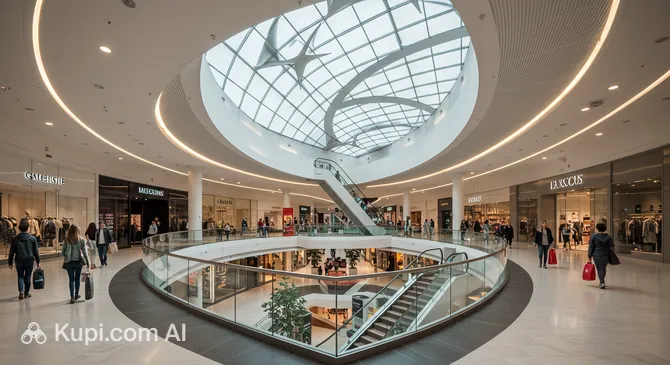
For those who prefer a comprehensive indoor shopping experience, the city boasts several impressive malls. Laurier Quebec is a major destination, standing as one of the largest shopping centers in eastern Canada. It features hundreds of retailers, ranging from popular international brands to Canadian department stores, making it a convenient one-stop spot for travelers.
Laurier Quebec. Illustration.
Source: Kupi.com AI
Traveler photos:
Another key location is the Galeries de la Capitale. While it is famous for its indoor amusement park, it is also a retail powerhouse with a wide selection of fashion, electronics, and home goods stores. Located slightly north of the city center, it provides ample parking and a family-friendly atmosphere.
To get a taste of the local lifestyle, a visit to Le Grand Marché de Québec is essential. This modern public market is the city's gastronomic heart, where visitors can buy fresh local produce, artisanal cheeses, and bakery items directly from the producers. It is the perfect place to assemble a picnic or pick up edible gifts that reflect the region's rich agricultural heritage.
When searching for the perfect souvenir, look for items that are distinctly Québécois. Maple syrup and its many derivatives—such as maple butter, candies, and cookies—are classic choices. Ice cider, a sweet dessert wine produced in the region, makes for an elegant gift. Additionally, Inuit art and traditional crafts, often found in specialized boutiques in Old Quebec, are beautiful and meaningful keepsakes.
Most shops in Quebec City are open from 9:30 AM or 10:00 AM until 5:30 PM or 6:00 PM on Mondays, Tuesdays, and Wednesdays. On Thursdays and Fridays, hours are typically extended until 9:00 PM, while weekends usually see closing times around 5:00 PM. Major credit and debit cards are widely accepted everywhere, from large malls to small market stalls.
Tourists should be aware that the listed price on items does not include sales tax. A federal Goods and Services Tax (GST) of 5% and a provincial Quebec Sales Tax (QST) of 9.975% are added at the register. Unlike in some European countries, there is generally no tax refund system available for individual international tourists upon departure, so it is best to budget accordingly.