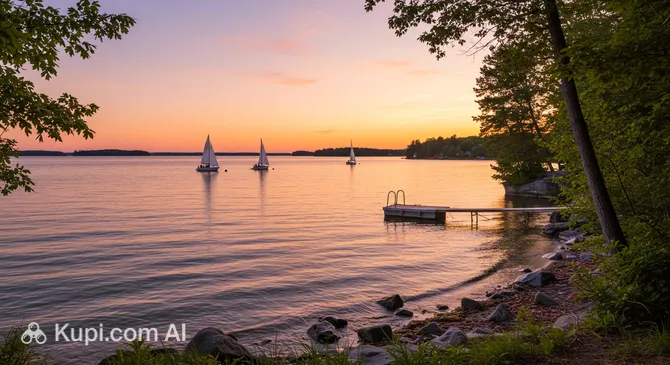
Ramara's green zones and cultural heritage are a harmonious blend of untouched Canadian nature and deep historical roots going back thousands of years. For tourists, this region reveals itself not through grandiose exhibition halls, but through scenic landscapes and unique open-air monuments that tell the story of the land and its indigenous peoples.
Parks and Natural Areas
The main natural gem of the region is rightfully considered Mara Provincial Park. This park is widely known for its magnificent sandy beach on Lake Simcoe, often called one of the best in southern Ontario. It is an ideal spot for family vacations: the shallow waters warm up quickly, and the wide shoreline allows for comfortable seating even on weekends. In addition to beach activities, the park offers a network of walking trails passing through deciduous forests where you can spot local birds and small animals.
Equally interesting for nature lovers is McRae Point Provincial Park. It is located on a peninsula jutting into Lake Simcoe and features a more quiet and secluded atmosphere. The park is famous for its Water’s Edge Trail, which leads travelers along scenic boardwalks through wetlands and forests right to the shore. This spot is particularly popular among birdwatchers and photographers aiming to capture the breathtaking sunsets over the lake.
For those who prefer active recreation on the move, the Ramara Trail is a real find. This route, several kilometers long, is laid out on a former railway bed. The flat surface of packed gravel makes it accessible for cyclists of all skill levels, runners, and walkers. The trail not only allows you to enjoy views of the countryside but also serves as a kind of historical corridor, reminding visitors of a time when trains were the region's main artery.
Cultural Heritage and Historical Sites
While Ramara lacks large traditional museums, the role of primary history keeper is played by the Mnjikaning Fish Weirs National Historic Site. Located in the narrows between Lakes Simcoe and Couchiching, this site features an ancient system of fishing weirs created by indigenous peoples over 5,000 years ago. It is one of the oldest surviving human-made structures in North America. Visitors can see the remains of wooden stakes underwater and learn about the spiritual and practical significance of this place for indigenous peoples, who gathered here for fishing, trade, and ceremonies for millennia.
The region's cultural landscape is also inextricably linked with the heritage of the Chippewas of Rama First Nation. Elements of their rich culture can be seen in the design and events held at the Casino Rama complex, which often serves as a venue for contemporary indigenous art exhibitions and cultural festivals. The architecture and design of public spaces here frequently include traditional motifs symbolizing the connection between humans, nature, and ancestral spirits.
Architecture enthusiasts should look for the old churches and buildings in the small settlements scattered throughout the municipality, such as Brechin and Atherley. For instance, St. Andrew's Church and other surviving 19th-century structures convey the spirit of the early European settlers who came to develop these lands. These modest but expressive monuments of architecture create the unique atmosphere of the Canadian backwoods.
Insider Tip
If you want to see a "different" Ramara, head to Lake Dalrymple. This lesser-known lake is located in the eastern part of the municipality and is surrounded by quiet rural roads. Here you will find the Carden Alvar, a unique natural area with rare species of plants and birds. This spot rarely makes it into standard guidebooks, but it is precisely here where you can feel true solitude and hear the songs of rare bird species, such as the loggerhead shrike.