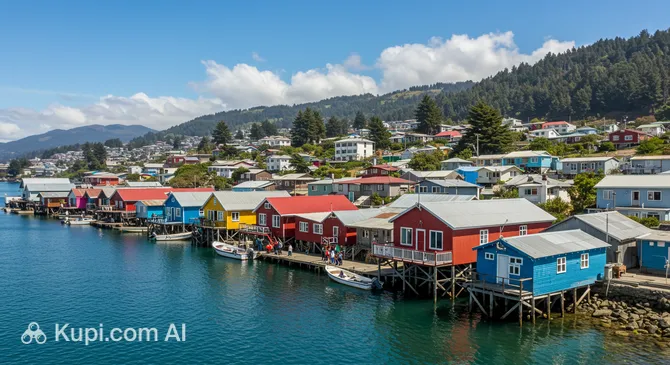
Chonchi is one of those places where time seems to slow down, allowing guests to fully immerse themselves in the authentic atmosphere of Chiloé Island. Located in the heart of Chile, this small coastal town charms with its tranquility, bright wooden buildings, and deep connection to maritime traditions. Thanks to its hillside location, the town has earned the nickname "The Three-Tiered City," offering travelers breathtaking views of the bay.
Chonchi. Illustration.
Source: Kupi.com AI
Geographically, Chonchi is located in the Los Lagos region, covering an area of over 1,300 square kilometers, although the population of the village itself is just over 5,600 people. It is an ideal destination for those seeking solitude amidst the green Patagonian nature and wanting to get acquainted with the rural way of life preserved by more than 60% of the local residents. The climate here is temperate marine, which gives the surrounding landscapes a rich emerald color throughout the year.
The rich historical heritage of Chonchi dates back to pre-Hispanic times when these lands were inhabited by the Huilliche people. Officially founded by Spanish colonizers in 1767, the town became an important cultural center. Be sure to visit the local wooden church and stroll along the waterfront to feel the true rhythm of life in southern Chile. A visit to this town will be a real discovery for you and an invitation to a peaceful, contemplative holiday.
Weather Overview
The weather in Chonchi is determined by its location in a temperate marine climate zone, characteristic of the entire Chiloé archipelago. Coolness and high humidity prevail throughout the year, and frequent mists give the townscapes a special mystical atmosphere. The proximity of the Pacific Ocean softens seasonal temperature changes but brings heavy precipitation.
The summer period, lasting from December to February, is considered the most favorable for visiting: during this time, the air warms up to +15–20°C, and rains are less frequent. Winter, from June to August, is quite cool, with temperatures ranging from +5–10°C. Strong winds blow at this time of year and the maximum amount of precipitation falls, so it's worth studying the detailed city climate before your trip.
When packing for your journey, expect a mild summer with occasional rain and cool, humid winters. Regardless of the season, the weather here is extremely changeable: bright sun can turn into thick cloud cover and heavy rain in minutes. It is recommended to always carry reliable waterproof clothing, especially if you plan long walks in nature from May to September.
Average monthly temperature
Average monthly precipitation
Interesting Facts
The town of Chonchi, nestled on the east coast of Chiloé Island, holds many amazing stories and unique cultural traits. Getting to know this place allows a glimpse into the very soul of the country's southern region.
Ancient Roots: Before the arrival of Spanish colonizers in the 16th century, the town's territory was inhabited by the Huilliche indigenous people, whose traditions are still traceable in the local culture.
The Three-Tiered City: Due to its terrain, Chonchi is often called the "city on terraces," where the lower level is occupied by the port, the middle by residential buildings, and the upper by the main square and the church.
Unique Demonym: Local residents are called by a very melodic word — Chonchino, and they are extremely proud of their origin.
Wooden Architecture: The first wooden church in the town was erected by the Jesuits between 1754 and 1769, making it one of the oldest in the region.
Rural Soul: Chonchi is one of the few communes in Chile where the majority of the population (over 62%) lives in rural areas, preserving a traditional way of life.
How to Get There
Transport accessibility to Chonchi is closely linked to the infrastructure of Chiloé Island. The main link with the mainland is the city of Castro, located just 17 kilometers to the north. Most tourists prefer to get here through this administrative center, using a combination of air travel and ground transport.
The main air gateway to the region is Mocopulli Airport (Mocopulli), located near Castro. Regular domestic flights operate here from the country's capital, Santiago. After landing, it is most convenient to use local buses or minibuses that run to Chonchi every 20–30 minutes, with the trip taking no more than half an hour. You can also rent a car to independently explore the island's picturesque roads.
There is currently no direct railway connection to Chonchi. Travelers who prefer ground transport are advised to look for intercity buses going to Puerto Montt, from where you can take a ferry to Chiloé Island. Detailed information on routes and schedules can be found on the how to get to the city page.
Station
Passenger traffic
Distance
Alerce Station
3
153 km
Esquel train station
2
203 km
2
234 km
San Carlos de Bariloche train station
3
266 km
Main Attractions
The main architectural and spiritual landmark of the town is the famous Church of Chonchi. Built by the Jesuits in the 18th century, it is a UNESCO World Heritage site. This monumental wooden structure is striking for its durability and bright facade, reflecting the unique craftsmanship of Chilean carpenters who used local timber to create true masterpieces without a single nail.
For those who appreciate unusual cultural discoveries, the town is home to the unique Accordion Museum. It houses an impressive collection of instruments that played a key role in the folk music of Chiloé Island. The exhibition allows you to trace the history of this instrument and its influence on local folklore, and sometimes you can even hear live performances of traditional melodies.
The Chonchi Waterfront (Costanera) remains a favorite place for walks among tourists and locals alike. It offers magnificent panoramic views of the ocean and coastal islands. Walking along the shore, you can watch the fishing boats and enjoy the fresh sea breeze, which makes the town's atmosphere even more alluring. Additionally, it is worth visiting the nearby authentic villages of the commune, such as Rauco or Vilupulli, to see the untouched beauty of provincial Chile.
Local Cuisine
The gastronomy of Chonchi is a true hymn to the gifts of the Pacific Ocean and the fruits of Chiloé's fertile land. The main feature of the local cuisine is the use of the freshest seafood. Be sure to try the mussels, oysters, and crabs, which are prepared here according to simple but incredibly delicious recipes. Many dishes are served in cozy family establishments located near the Chonchi Waterfront.
The king of the local table is undoubtedly curanto—a traditional Chiloé dish consisting of seafood, meat, potatoes, and vegetables. In Chonchi, it is often prepared at home, but simplified versions can also be found in restaurants. Potatoes are represented here by dozens of varieties and are added to almost all dishes, including the famous "milkao" potato pancakes.
As for drinks, meals are usually accompanied by Chilean wines or local craft beer. Fans of non-alcoholic options will appreciate the aromatic herbal teas made from local wild plants. To get to know the region's culinary traditions more deeply, stop by the Museum of Chonchi Traditions, where they often talk about the history and food culture of the local residents.
Travel Tips
Preparing for a trip to Chonchi is the first step to an unforgettable adventure in southern Chile. These practical tips will help you feel confident and enjoy every moment of your stay on the island.
Clothing and Essentials: Chiloé's climate is unpredictable, so dress according to the "layering" principle. Be sure to bring a quality waterproof windbreaker and comfortable shoes with non-slip soles. There is no special dress code for visiting churches, but you should remain quiet and behave with restraint.
Transport: It is most convenient to move between towns by bus from Castro. In Chonchi itself, it is best to walk. If you plan to explore remote beaches, it's better to rent a 4x4 vehicle.
Finance: Be sure to carry cash Chilean pesos with you. Cards are not accepted in small shops and on buses. ATMs are available in the center, but they may occasionally not work with foreign cards.
Health and Safety: The town is very safe, but always keep an eye on the weather to avoid getting caught in heavy fog or a storm on the coast. Drink bottled water, although the local water is considered suitable for technical needs.
Communication: The main language is Spanish. Knowing basic phrases like "Hola" and "Gracias" will be very helpful, as few people speak English. Wi-Fi is available in most hotels, but connection may be lost in rural areas.
Local Etiquette: The residents of Chonchi (Chonchinos) are very friendly and welcoming. Always say hello when entering a shop or cafe. Politeness and a leisurely style of communication are valued here.
What to Avoid: You should not photograph local residents or their private property without permission. Also, avoid making noise near religious sites during services.
Additional Tip: Try the local golden berry liqueur (murta)—it's a unique flavor produced only in this region.
May your journey to this amazing corner of Chile be filled with only pleasant discoveries and the warmth of meeting the locals!
Entertainment & Nightlife
Entertainment in Chonchi is of a calm and contemplative nature, which perfectly matches the general rhythm of life on the island. The main focus here is on unity with nature: walks along the Pacific coastline, fishing, and birdwatching attract eco-tourism enthusiasts. During the day, guests enjoy visiting the Museum of Chonchi Traditions, where they can learn about the daily life and crafts of the locals.
Nightlife in the traditional sense, with noisy clubs and bars, is practically non-existent here. Evenings in the town are quiet, often spent with family or over a leisurely dinner in cozy home-style establishments. However, on summer evenings, the Chonchi Waterfront can be quite lively, and during the high season (December–March), local festivals dedicated to traditional Chiloé music and dance may take place here.
Safety in the town is very high, so evening walks through the lit streets of the center are perfectly peaceful. If you want more active nighttime entertainment, locals recommend heading to neighboring Castro, which can be quickly reached by taxi. For getting around the village itself at night, it is better to arrange transport with local drivers in advance, as public transport stops running quite early.
Parks & Museums
The cultural heart of the town beats in the halls of the Museo de las Tradiciones Chonchinas, known as the Museum of Chonchi Traditions. This establishment, located in an old wooden house, carefully preserves household items, tools, and photographs that tell the story of the lives of the first settlers and indigenous inhabitants. Visiting the museum is the best way to understand how the region's unique character was formed and why the locals are so protective of their heritage.
Another must-see is the Accordion Museum. This is not just an exhibition of instruments, but a living space dedicated to the musical soul of the island. The collection includes rare examples brought from different parts of the world, but the emphasis is on the instruments that for decades accompanied rural festivals in Chonchi and the surrounding villages.
The natural "parks" of Chonchi are primarily its coastline and the surrounding hills. Although there are no huge landscaped gardens in the center itself, the entire commune represents one large natural park. Sandy beaches and forest trails in the outskirts are ideal for leisurely walks and picnics in the fresh air. The Chonchi Waterfront itself serves as a wonderful place for relaxation, where sea air and panoramic views replace traditional urban squares.
Getting Around
The public transport system in Chonchi is simple and oriented towards connecting with neighboring settlements. The main types of transport are buses and minibuses (colectivos), which regularly link the village with the city of Castro. This is the most affordable and popular way to travel for both locals and tourists. The trip is very inexpensive, and payment is made in cash to the driver upon boarding.
Within the town itself, a transport network is practically unnecessary, as Chonchi is quite compact and all its main attractions can be easily reached on foot. However, for trips to remote villages in the commune or to nature parks, it is better to use taxi services. Taxis can be called by phone or found at the stand by the main square; rates are fixed, but it's best to agree on the price for trips to distant points in advance.
For those who prefer complete freedom of movement, renting a car at the airport or in Castro is recommended. This will allow you not to depend on bus schedules, which can be quite infrequent, especially in winter or on weekends. Bicycle rental is also gaining popularity, offering a great alternative for active travelers ready for the hilly terrain.
Accommodation
The accommodation options in Chonchi mainly consist of small family hotels, cozy guest houses, and apartments that allow guests to feel like part of the local community. You won't find huge hotel chains here, but you will find an abundance of charming wooden buildings with views of the ocean or green hills. Most accommodation options fall into the budget and mid-range price segments, making a stay here accessible to a wide range of travelers.
The most convenient area to stay is the center of the village near the main square or the waterfront. Life here centers around the Church of Chonchi, and all the main cafes and souvenir shops are within walking distance. Apartments in the coastal zone are also popular, where windows offer a calming view of the channel and fishing boats.
During the peak tourist season, which falls during the southern summer (December to March), the number of available rooms decreases sharply, so it is recommended to book accommodation in advance through popular international services. Consider small guesthouses in the surrounding villages of the commune if you are looking for maximum privacy and want to wake up every morning to the sounds of Patagonian nature.
Nearby Cities
The town of Chonchi serves as an excellent starting point for exploring the picturesque surroundings of Chiloé Island, offering travelers convenient routes for day trips. Neighboring cities and communes allow you to see the full diversity of this unique region in a short time—from bustling markets to secluded nature reserves.
Just 16 kilometers to the north is Castro, the administrative center of the province. This city is famous for its "palafitos"—colorful houses on stilts right over the water. Here it is worth visiting the central market, where you can buy the island's best crafts, and the grand San Francisco Cathedral. For those who want to travel further south, Quellón is of interest—the endpoint of the Pan-American Highway, known for its rugged and beautiful landscapes.
If you have time for a longer trip, head to Ancud, located on the northern tip of the island. It is famous for its colonial-era fortress and proximity to penguin habitats. All these destinations are easily accessible by regular buses or a rental car, allowing you to enjoy views of hills and forests along the way.
Exploring the nearby towns will allow you to form a complete picture of life on Chiloé, as each commune has its own unique character and history. Don't miss the chance to peek into the most remote corners, where local hospitality and pristine nature create an atmosphere of true adventure.
Shopping & Souvenirs
Shopping in Chonchi is primarily an introduction to the folk crafts and artisanal traditions of Chiloé Island. There are no large shopping malls with chain brands in the town, but there are many small shops and workshops where you can find truly unique items. Local residents have honed the craft of wood and wool processing for centuries, so handmade goods here are of the highest quality and authenticity.
The main shopping areas are the stalls near the Chonchi Waterfront and the central square. Here, tourists can purchase famous woolen products: sweaters, ponchos, and socks made from coarse but warm yarn, perfect for the Patagonian climate. Wooden crafts copying the famous churches of Chiloé or mythological characters from local legends are also popular.
Don't forget to stop by the gourmet shops to buy "tasty" souvenirs. Products made from local potatoes, dried seafood, and homemade liqueurs make excellent gifts. Shops are usually open from morning until 19:00–20:00 with a mandatory lunch break (siesta). Cash Chilean pesos are mainly accepted, as card terminals in small shops may be unavailable, so it's worth taking care of small change in advance.