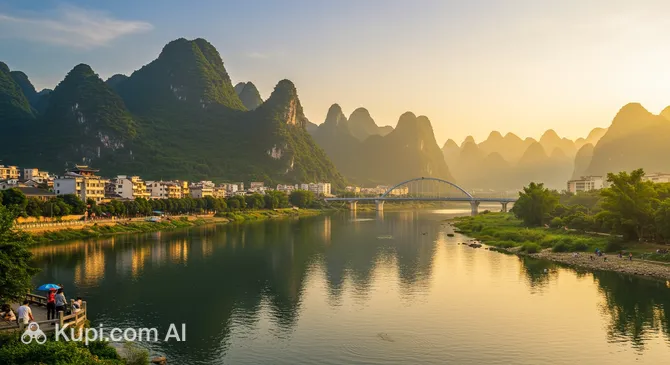
Located in the picturesque Guangxi Zhuang Autonomous Region, the city of Baise (also known as Ximei) offers a unique blend of a heroic past and breathtaking natural beauty. This region in China is famous for its hospitality and its status as an important cultural and economic hub in the south of the country. With a population of about 1.5 million people, Baise maintains the atmosphere of a cozy yet dynamically developing city, surrounded by majestic mountains and clear rivers.
The geographical location of Baise makes it a gateway to Vietnam and a key transport hub. The city is known for its mild subtropical climate and rich cultural heritage, closely linked to the revolutionary events of the early 20th century. Modern neighborhoods and historical monuments coexist harmoniously here, serving as reminders of the important milestones in the formation of the modern state.
Baise. Illustration.
Source: Kupi.com AI
For tourists, Baise is primarily attractive for its nature parks, such as the scenic Chengbi Lake, and its famous karst sinkholes. Additionally, the city is officially recognized as the "mango capital" — this is where some of the most delicious fruits in the world are grown. Visiting Baise is a chance to see authentic, non-touristy Southern China and enjoy tranquility away from the major metropolises.
Weather Overview
The climate in Baise is classified as subtropical monsoon, which means mild winters and hot, humid summers. According to meteorological data, the most comfortable time to visit the city is from October to April. During this period, pleasant dry weather sets in with temperatures ranging from +12°C to +23°C, which is ideal for sightseeing and walking.
Summer months are characterized by heavy rainfall and high humidity. In June and July, the maximum rainfall occurs (over 200–300 mm per month), and daytime temperatures can rise to +28...+30°C. If your trip is planned for the summer, be prepared for frequent downpours and keep in mind that the weather in the city can change quite quickly.
In winter, during January and December, Baise is quite cool, with an average temperature of around +11°C. Precipitation is minimal during this period, and the sky often remains clear. This is a good time for those who prefer to avoid the heat and crowds of tourists; however, it is worth bringing warm clothes for evening walks when the temperature can drop to +8°C.
Average monthly temperature
Average monthly precipitation
Interesting Facts
Mango Capital: Baise is officially recognized as China's leading mango-growing region. Hundreds of thousands of tons of this fruit are harvested here annually, and colorful festivals and fairs are held during the harvest season.
Revolutionary Past: The city entered history as the site of the 1929 "Baise Uprising," led by Deng Xiaoping. This event has made the city an important stop on the map of so-called "red tourism."
Natural World Records: Near Baise lies the Leye-Fengshan group of giant karst sinkholes, which are among the largest such formations in the world and are included in the UNESCO World Heritage list.
Ethnic Diversity: About 80% of the city's population consists of the Zhuang people, which leaves a unique mark on the local architecture, festivals, and everyday traditions of the city.
How to Get There
Baise is an important transport hub in southern China, providing convenient connections to Vietnam and the country's major provinces. You can get here by air or via a modern railway network, making the journey comfortable and fast. To plan your trip, we recommend checking the section on how to get to Baise, which contains up-to-date information on routes.
The city is served by Baise Youjiang Airport (AEB), located approximately 40 kilometers from the city center. The airport accepts regular flights from Beijing, Shanghai, Guangzhou, and other key Chinese cities. From the airport to the center, you can get there by special shuttle buses or by taxi, which takes about 45-60 minutes.
For many travelers, the railway is the preferred option thanks to the development of high-speed trains. Baise Railway Station receives trains from Nanning (the regional capital), Guangzhou, and Kunming. Traveling by high-speed train saves significant time and allows you to enjoy the picturesque views of the karst mountains outside the window.
Station
Passenger traffic
Distance
Baise Railway Station
3
90 km
Đồng Đăng railway station
7
155 km
Kép railway station
6
202 km
Bắc Giang railway station
6
217 km
Nanning railway station
9
228 km
Main Attractions
One of the city's most revered attractions is the Baise Uprising Memorial Hall. This monumental structure is dedicated to the events of 1929 and is considered an important historical site. Visitors can not only explore the museum's exhibition but also stroll through the park surrounding the building, which offers a view of the city blocks.
For nature lovers, Chengbi Lake is a must-see. This massive man-made reservoir, surrounded by emerald hills, is often called the "pearl of western Guangxi." Here, you can take a boat trip to enjoy the silence and admire the whimsical shapes of the karst mountains reflecting in the mirror-like water.
Equally impressive is the Youjiang River, which flows through the city center. The river embankments are a favorite spot for locals to walk. In the evening, beautiful illumination is switched on, and numerous bridges turn into bright light-art objects, creating a romantic atmosphere for an evening promenade.
If you are ready to venture outside the center, be sure to visit the karst sinkholes (tiankeng) in Leye County. These are some of the deepest and most mysterious natural pits on the planet, containing unique ecosystems and ancient forests. This sight is striking in its scale and emphasizes the majesty of the region's wilderness.
Local Cuisine
The cuisine of Baise is a vivid reflection of the culinary traditions of the Zhuang people and Guangxi Province. The flavor palette here is built on a combination of sour, spicy, and fresh notes. One of the city's main symbols is the mango. Here, it is used not only in desserts and juices but is also added to hot dishes, creating unusual flavor combinations that every gourmet should try.
Be sure to order Baise-style rice noodles. Unlike the famous noodles from Guilin, the local version is often served with a special broth and plenty of herbs and local spices. Another signature dish is "five-color" glutinous rice, traditionally prepared using natural dyes from herb and berry juices. This dish is not only delicious but also looks very aesthetically pleasing.
The food culture in the city centers around small family restaurants and lively food courts. Locals value the freshness of products, so you can always find an abundance of river fish, bamboo shoots, and wild herbs at the markets. For a drink, try the local oil tea with salt — a traditional beverage of the southern peoples of China that perfectly quenches thirst and provides energy.
Travel Tips
Preparing for a trip to Baise will help you fully enjoy the atmosphere of this unusual city. Use our tips to ensure your journey goes smoothly and leaves only pleasant memories.
Clothing and Seasonality: Baise is in a subtropical zone, so it is often humid and hot. In summer, bring light clothing made of natural fabrics, and for visiting caves and mountains — comfortable closed shoes and a light windbreaker. Don't forget an umbrella, as sudden downpours are common.
Getting Around Town: Install the Didi app for calling taxis — it will save time and eliminate the need to explain things to the driver. For bus trips, it's useful to have small coins or 1-yuan bills with you.
Finance and Payment: The main currency is the Chinese yuan. Although mobile payments (Alipay, WeChat) dominate, tourists should always have spare cash, as international cards are not accepted everywhere. ATMs of major banks (Bank of China, ICBC) are available in the center.
Language Barrier: English is not widely spoken in Baise. Download an offline translator in advance and save screenshots of the hotel and attraction names in Chinese characters.
Connectivity: For stable internet, it is best to buy a local SIM card at the airport or an official China Unicom/China Mobile office. Wi-Fi is usually available in hotels, but a VPN may be required to access familiar Western services.
Local Etiquette: Residents of Baise are very friendly. A slight nod of the head is sufficient for a greeting. Be prepared for increased attention if you look like a foreigner — people may ask to take a photo with you.
What to Avoid: Do not discuss sensitive political topics and try not to photograph military objects or people in uniform without permission. It is also not recommended to drink tap water — use only bottled water.
Mango Season: If your trip falls in July, be sure to visit the local mango market. It is an unforgettable experience both in terms of aromas and the opportunity to see the true commercial bustle of southern China.
Baise is a city that opens up to those who are ready for small adventures and a sincere interest in Chinese culture. Have a nice trip!
Entertainment & Nightlife
In the evening, Baise offers a peaceful but charming form of relaxation. The epicenter of nightlife is the Youjiang River embankment, where numerous street cafes and bars open after sunset. Here, you can try local snacks, listen to live music, or simply watch the city lights reflect in the water. The atmosphere is very friendly and safe, perfect for long walks.
For lovers of culinary entertainment, there are night markets where life buzzes until late in the evening. This is a great opportunity to immerse yourself in the local flavor, try exotic fruits, and authentic street food. There is practically no dress code in these establishments; the crowd prefers a comfortable casual style. Prices in bars and cafes remain quite affordable for most tourists.
Daytime leisure in Baise can be varied by visiting modern cinemas in shopping centers or walking in city parks, where impromptu performances by folk groups are often held. Despite the absence of loud mega-clubs, the city offers quality relaxation for those who value sincerity, coziness, and the opportunity to get to know the real lifestyle of the residents of Guangxi Province.
Parks & Museums
The city's main cultural site is the Baise Uprising Memorial Museum. Its exhibition tells in detail the history of the region, the life of local peoples, and revolutionary events. The museum features a modern approach to exhibition design and will be interesting even to those who are not fans of military history, thanks to its rich collection of artifacts and ethnographic materials.
Among the natural areas, Ganhua Mountain Park deserves special attention. It is a great place for light trekking and walking in the fresh air. From the hilltops, panoramic views of the city buildings and the bends of the Youjiang River open up. The park is well-maintained, equipped with convenient paths and national-style gazebos where you can rest and enjoy the silence.
For a peaceful family vacation, Baise People's Park is ideal. Here you can see how locals spend their leisure time: from Tai Chi in the mornings to folk dancing in the evening. Picturesque lotus ponds, bridges, and an abundance of tropical greenery make this park a true oasis of coolness on hot summer days.
Getting Around
The public transport system in Baise is primarily represented by an extensive network of bus routes. Buses connect all major areas of the city, including the railway station and administrative centers. Fares are inexpensive and can be paid either in cash (it's best to have small change) or via mobile apps popular in China.
Taxis are the most convenient way for tourists to get around, especially if you do not speak Chinese. Cars can be stopped right on the street or called through the Didi app. Taxi prices in Baise are significantly lower than in metropolises like Beijing. It is recommended to have a card with the address of your hotel or the desired attraction in Chinese to show the driver.
For short trips around the city center, electric scooters and bicycles are popular and can be rented through city sharing services. This is a great way to avoid traffic jams and get a better look at the city streets. Walking is also very pleasant, especially along the well-appointed Youjiang River embankments, where vehicular traffic is limited.
Accommodation
Baise's hotel infrastructure is actively developing, offering options for every taste and budget. For those who value a high level of service, modern four- and five-star hotels are located in the central Youjiang district. These establishments often offer rooms with panoramic views of the river and mountains, as well as their own fitness centers and international restaurants.
Budget-conscious travelers will find many guesthouses and mid-range chain hotels. Staying in such places allows for significant savings while providing a clean and functional room. Most of these hotels are concentrated near the railway station and the main shopping streets, which is convenient for transit tourists.
It is recommended to book accommodation in advance, especially during the Mango Festival (usually in July) or during China's public holidays, when the flow of domestic tourists increases sharply. When choosing a hotel, pay attention to the availability of English-speaking staff, as this can be a rarity in provincial cities.
Nearby Cities
Baise is an ideal base for exploring the border regions of China and Vietnam. Convenient transport links allow for exciting trips to neighboring cities and unique natural sites that will reveal the full diversity of Southeast Asia.
Just a few dozen kilometers away is the Vietnamese city of Cao Bang, known for its fantastic mountain landscapes and historical caves. It is also worth visiting Daxin, home to one of the world's most beautiful waterfalls — Detian, which straddles the border between the two countries. These destinations will provide unforgettable impressions for lovers of photography and active recreation.
Exploring the surroundings of Baise will allow you to see the authentic life of small towns, get acquainted with the traditions of different ethnic groups, and enjoy untouched nature. Each such trip is a small journey that will complete your image of mysterious southern China.
Shopping & Souvenirs
Shopping in Baise is primarily a hunt for unique local goods and organic products. The city is not overloaded with massive boutiques but offers the soulful atmosphere of traditional markets and modern shopping centers where you can find everything you need for your trip and great gifts for loved ones.
If you are looking for souvenirs, pay attention to products made by the Zhuang people: embroidered fabrics, brocade, and traditional jewelry. These handmade items feature intricate patterns and bright colors. Baise is also famous for its tea, grown on high-mountain plantations, and, of course, dried mango fruits, which are presented here in a huge variety.
The main shopping areas are concentrated in the Zhongshan Street district and around large shopping complexes. Shops usually operate from 9:00 to 21:00 or 22:00. Large centers accept Chinese payment system cards and mobile payments (Alipay, WeChat Pay), but it is better to have cash yuan at markets and in small shops. The Tax-Free system is not well-developed in the city, so you should not count on tax refunds.