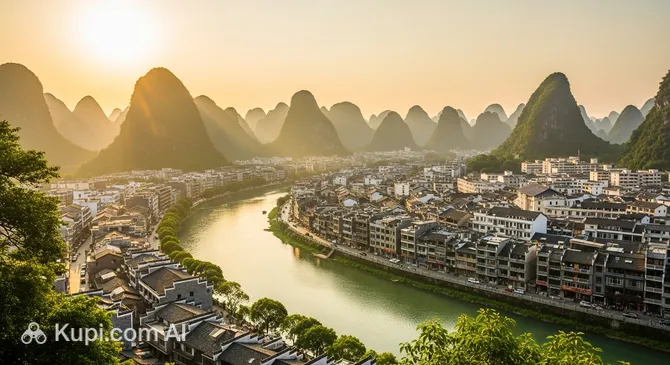
Longzhou is a picturesque county-level city located in the southern part of the Guangxi Zhuang Autonomous Region in China. Situated in close proximity to the border with Vietnam, the city is steeped in a unique atmosphere of cross-border cultural exchange. Longzhou stretches along the banks of the winding Zuojiang River, which gifts the region with stunning karst landscapes reminiscent of the famous Yangshuo, but in a much more secluded and peaceful setting.
The city's geographic location determines its mild subtropical climate and rich vegetation. The county's population is approximately 520,000 people. Although it is a typical administrative center, Longzhou possesses a special charm thanks to a combination of traditional Chinese architecture and surviving traces of colonial influence from the era of active trade with neighboring Indochina.
Longzhou. Illustration.
Source: Kupi.com AI
Tourists are drawn here not only by the natural beauty of the river valleys but also by the city's multifaceted history. Longzhou is known as the site of important historical events of the early 20th century and as one of the first ports in Guangxi opened for foreign trade. Here, you can experience the authentic rhythm of Chinese provincial life, free from crowds of tourists, making a visit to this place a truly exclusive experience.
Weather Overview
The climate in Longzhou is typical of the subtropical regions of southern China. Warm weather prevails here year-round, and seasonality is not as pronounced as in the north. Winters in the county are short and mild: even in January, the average temperature is about +12.6°C, and during the daytime, the air can warm up to +17°C, making walks very comfortable.
Summer in Longzhou is long, hot, and humid. Between June and August, the thermometer often rises above +30°C. This period also sees the peak of precipitation—tropical downpours can be intense but are usually short-lived. The weather in Longzhou in spring and autumn is considered most favorable for tourists, as moderate temperatures set in and humidity decreases during these periods.
When planning your trip, it's worth noting that due to the high humidity, even a slight cooling in winter can feel colder than the forecast suggests. In the summer months, be sure to bring sunscreen and light clothing, and be prepared for frequent rain in May and June, when rainfall reaches its maximum.
Average monthly temperature
Average monthly precipitation
Interesting Facts
Window to Indochina: Longzhou was one of the first cities in Guangxi province officially opened for international trade in the late 19th century, making it an important diplomatic and economic outpost.
Revolutionary Heritage: In 1930, the famous "Longzhou Uprising" took place here, led by the future leader of China, Deng Xiaoping.
Karst Splendor: The landscapes around the city are considered some of the most beautiful in China, yet they remain less known among foreign tourists than the scenery of Guilin.
Proximity to the Border: From the city center to the Vietnamese border is less than 20 kilometers in a straight line, which influences the local dialect and culinary traditions.
How to Get There
Longzhou is an important transportation hub in the Guangxi border region, reachable in several ways. The city is connected by a network of high-quality roads to the prefecture's administrative center and the regional capital, Nanning. The majority of tourists arrive here by road, enjoying the views of karst mountains along the way.
The city does not have its own airport, so travelers typically use the air hubs of neighboring major centers. The most convenient option is to fly to Nanning, from where regular buses and private transfers run to the county. Also, planning a trip to Longzhou often involves using high-speed trains to the nearest hub stations.
Railway connections in this region are actively developing. The nearest major station is in the city of Chongzuo, from where you can reach the county by taxi or suburban bus in just one hour. Rail transport is the most reliable and comfortable way to travel across southern China, especially if you are traveling from other provinces.
Station
Passenger traffic
Distance
Đồng Đăng railway station
7
47 km
Kép railway station
6
118 km
Bắc Giang railway station
6
136 km
Ha Long Railway Station
5
152 km
Nanning railway station
9
159 km
Main Attractions
Despite its status as a small county center, Longzhou offers travelers several unique attractions. One of the main gems is the Zuojiang River, where a boat trip is a must. The riverbanks are framed by majestic karst hills, and in some places, you can see the ancient Huashan rock paintings, a UNESCO World Heritage site, which testify to the culture of the Zhuang people who inhabited these lands thousands of years ago.
In the city itself, the Longzhou Uprising Memorial Hall is well worth a visit. This important historical site is connected to the revolutionary activities of Deng Xiaoping in the late 1920s. The museum is located in an old building and houses artifacts, photographs, and documents telling the story of the local residents' struggle for their rights and the establishment of the modern state system in the region.
Another curious feature of the city is the old French Consulate building. It serves as a reminder of the time when Longzhou was an important trading hub on the border with French Indochina. The building's architecture contrasts sharply with the surrounding structures, creating an unusual cultural landscape. A stroll through the central streets will also allow you to see traditional markets where daily life hums and exotic goods from neighboring Vietnam are traded.
Local Cuisine
The local cuisine of Longzhou is a vibrant blend of Guangxi traditions with a noticeable influence from neighboring Vietnam. The staple of the diet is rice noodles, served here in many variations: from fragrant soups in rich broth to stir-fried dishes with added spicy seasonings. A signature of the region is dishes featuring fermented bamboo shoots, which give the food a distinctive pungent aroma and flavor.
Be sure to try "Longzhou dumplings" and various types of street food prepared right at the night markets. Popular choices include roasted chestnuts, exotic fruits, and freshwater fish dishes caught in the Zuojiang River. Due to the proximity of the border, you can often find authentic Vietnamese rolls (spring rolls) and the famous Vietnamese coffee with condensed milk.
The dining culture in the city is very casual. Locals prefer to have breakfast and dinner at small street eateries or markets, where the food is always fresh and affordable. Longzhou restaurants have a homey atmosphere, and portions are usually very generous. Light green tea or local rice beer is often served as a beverage with lunch.
Travel Tips
Visiting Longzhou is an opportunity to see the real China off the beaten path, and these tips will help make your trip more comfortable.
Clothing and Essentials: Choose light clothing made of natural fabrics, as a humid subtropical climate prevails in Guangxi. Be sure to bring comfortable shoes for walking in the hills and an umbrella to protect you from both the sun and sudden rain.
Transport: It is most convenient to move around the city by taxi. For planning intercity trips, use the Trip.com app or similar services to purchase bus and train tickets.
Finances: The main currency is the Chinese Yuan (RMB). International cards are only accepted at ATMs of large banks, so be sure to install Alipay or WeChat Pay and link your card to pay for purchases everywhere, from hotels to street markets.
Health and Safety: Longzhou is a very safe city. Pharmacies can be found in the center, but it is better to bring specific medications with you. Drink only bottled water.
Communication: English is practically not spoken here. Download an offline translator and maps (such as Baidu Maps or Amap) in advance, and save your hotel's name in Chinese characters.
Local Etiquette: Be polite and patient. Locals rarely see foreigners and may show curiosity. When visiting temples, remain quiet and cover your shoulders and knees.
What to Avoid: Do not attempt to photograph military installations or the border line itself without permission—this can cause problems with the police.
Specific Tip: Try to visit in the spring, when the greenery in the karst mountains is especially vibrant and the river is at its highest.
May your journey to this hidden corner of China be filled with discoveries and pleasant encounters!
Entertainment & Nightlife
Entertainment in Longzhou is of a quiet and authentic nature, typical of small towns in Guangxi. Most evening activity is concentrated in the central squares and along the Zuojiang River embankment. Here, locals gather for evening strolls, and impromptu dance groups perform traditional Chinese dances in the open air, which anyone is welcome to join.
Nightlife in the conventional Western sense—with loud clubs and bars—is virtually non-existent here. The city goes to sleep quite early, usually by 22:00. However, several cozy karaoke bars (KTV) can be found in the center, which are the most popular format for evening leisure in China. This is a great place to meet local youth and experience the region's modern everyday culture.
Daytime leisure is best spent relaxing in nature or visiting local markets. On weekends, picnics by the river and small amusement rides in city parks are popular. If you are looking for larger-scale entertainment, such as modern cinemas or large entertainment centers, it is worth heading to neighboring Chongzuo, located about an hour's drive away.
Parks & Museums
The main place for walking and relaxation in Longzhou is the Zuojiang River Embankment. This is a well-maintained green area that stretches along the water and offers beautiful views of the surrounding cliffs. In the evening, the embankment is illuminated, creating a romantic atmosphere. There are also several small parks within the city limits, such as Longzhou Park, where you can see traditional Chinese-style pagodas and pavilions.
From a cultural enrichment perspective, the key site is the Longzhou Museum. Although it is small compared to capital museums, its collection allows you to trace the county's development from ancient times to the present day. Particular attention is paid to the city's role in trade relations and events that took place on the border during the Qing Dynasty and the early Republican period.
For history buffs, the Old Port Historic District is a must-visit. This is a kind of open-air museum where customs buildings and merchant houses have been preserved. Walking here, one can imagine what Longzhou looked like a century ago when it was a key point on the route for goods from China to Southeast Asia.
Getting Around
The public transport system in Longzhou is fairly simple and geared toward the needs of the local population. The main mode of transport within the city is buses, which connect the center with the outskirts and nearby villages. The fare is minimal, but it can be difficult for tourists to navigate due to the lack of English signage.
The most convenient and popular way for guests to get around the city is by taxi. Cars can easily be found on central streets or hailed via a mobile app. Taxis in Longzhou are inexpensive, and a trip to any point in the city usually takes no more than 10-15 minutes. Motor rickshaws and scooters are also popular and are ideal for short trips through the narrow streets of the old center.
For trips to neighboring cities and natural attractions, it is best to use intercity buses, which depart from the main bus station. If you plan to explore the surroundings and waterfalls in detail, it makes sense to consider renting a car with a driver for the whole day—this will save time and allow you to reach the most remote corners of the region at a comfortable pace.
Accommodation
Accommodation choices in Longzhou are primarily represented by mid-range hotels (2-3 stars) and cozy guesthouses. Most hotels are concentrated in the central part of the city, which is convenient for accessing local markets and the waterfront. Lodging usually includes basic comforts: air conditioning, a shower, and Wi-Fi, which is quite sufficient for a traveler staying for a couple of days.
For those seeking a more authentic experience, small eco-hotels and farmhouses (nongjiale) located in picturesque spots by the river can be found in the county's outskirts. This type of accommodation allows you to fully immerse yourself in Guangxi's rural life and enjoy the silence surrounded by mountains. Prices for accommodation in Longzhou are significantly lower than in China's popular tourist centers.
It is recommended to book accommodation in advance, especially during China's national holidays (such as "Golden Week" in October), as many domestic tourists visit the city at this time. When choosing a hotel, pay attention to the availability of registration for foreign nationals, as not all budget hotels in small counties have the necessary license.
Nearby Cities
Thanks to its location in southern Guangxi, Longzhou serves as an excellent starting point for exploring the border regions of China and northern Vietnam. The region is rich in natural beauty and historical monuments, many of which are just a couple of hours' drive away.
Just 53 kilometers from here is the city of Chongzuo, known for its stunning national parks and forests. It is also worth considering a trip to Daxin, home to one of the world's most beautiful waterfalls—Detian, which straddles the border between the two countries. For those with a visa or visa-free entry rights, the path is open to Lang Son—a Vietnamese city with colorful markets and an interesting culture.
Exploring the surroundings of Longzhou will allow you to see the real, non-touristic Asia. Whether it's a trip to Cao Bang or a walk through the protected forests of Bac Kan province, each destination will offer unforgettable impressions of the beauty of tropical nature and the hospitality of local peoples.
Shopping & Souvenirs
Shopping in Longzhou is primarily about visiting local markets and small shops where you can find goods not found in major metropolises. The main shopping venue is the Central Market, where absolutely everything is sold: from the freshest tropical fruits and local spices to textiles and household items. Here, you should look for bamboo products and traditional embroidery from local ethnic groups.
Of particular interest to tourists are goods from Vietnam. Due to its status as a border city, high-quality Vietnamese coffee, rubber products, perfumes, and sweets can be purchased in Longzhou at affordable prices. Along the central streets are small shops specializing in such imported goods, which are in high demand among visitors from other regions of China.
Shops in the city usually operate from 9:00 to 21:00, and markets open early in the morning. Payment is most often accepted via popular Chinese apps (WeChat Pay or Alipay), but it is always useful to have some cash yuan on hand in small shops and markets. There are no large shopping centers with international brands here, but it is precisely this lack of globalization that makes shopping in Longzhou more interesting and authentic.