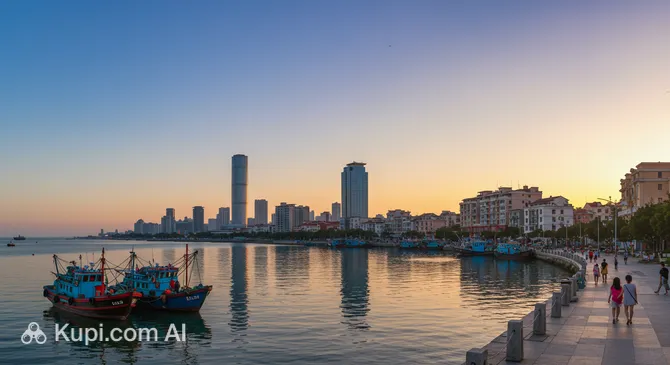
Dongxing is a colorful border city located in southeastern China, in the Guangxi Zhuang Autonomous Region. The city stretches along the coast and is separated from Vietnam only by a narrow river, which leaves a distinct mark on its atmosphere: two cultures meet here, and the rhythm of life is dictated by busy border trade and proximity to the sea. With a population of about 216,000, Dongxing retains the charm of a provincial county where modern functional architecture harmoniously coexists with historical elements.
Dongxing. Illustration.
Source: Kupi.com AI
Dongxing's geographical position makes it unique: it is the place where the Beilun River flows into the Gulf of Tonkin. The city is oriented toward transit and commerce, but at the same time offers tourists a peaceful coastal holiday away from the noise of major metropolises. Exploring the rich city's history, one can notice the influence of the Ming and Qing eras, traces of which are still discernible in the appearance of old streets and local temples.
Among the main features of Dongxing, Wanwei Beach and the picturesque Dongxing Jing Island area stand out. These places attract those looking for seclusion amidst tropical nature and wanting to get acquainted with the culture of the Jing people. We invite you to visit Dongxing to see for yourself how this unusual border hub lives, combining the practicality of a trade center with the serenity of a seaside resort.
Weather Overview
The climate in Dongxing is classified as tropical monsoon, which means warmth throughout the year and pronounced seasonality of precipitation. The city is characterized by hot and humid summers, when the thermometer consistently stays in the 26–30°C range, and sometimes rises even higher. Winters here are mild and comfortable: the average temperature in January is about 14°C, which makes Dongxing an excellent place to take a break from harsh frosts.
The period from May to September is the rainiest—at this time, heavy precipitation falls, often accompanied by thunderstorms. A feature of the coastal zone of Dongxing is the fogs that shroud the city in April and May, creating a mysterious atmosphere but somewhat reducing visibility. Before the trip, it is recommended to study the detailed city's climate to choose the right wardrobe and prepare for the high humidity of the Gulf of Tonkin.
Average monthly temperature
Average monthly precipitation
Interesting Facts
Dongxing holds the unique status of a "gateway" between China and Southeast Asia, being the only city in the PRC connected to Vietnam by both land and sea borders.
The city is home to the Jing Ethnic Ancestral Temple, which is an important cultural site for the Jing people—ethnic Vietnamese living within China.
The architectural appearance of some old quarters in Dongxing still preserves elements of Ming and Qing dynasty styles, creating a sharp contrast with the modern administrative buildings of the center.
The border here is so culturally transparent that the Vietnamese dong is accepted for payment as often as the Chinese yuan at local markets, and cafe menus are frequently duplicated in two languages.
The city's population is a colorful mixture of Han and Zhuang ethnic groups, which is reflected in the unique local dialects and festive traditions of the region.
How to Get There
Dongxing is an important transport hub on the border of China and Vietnam, making it easily accessible for travelers following transit routes. The main flow of tourists arrives here from neighboring large cities, as Dongxing is primarily oriented toward road and bus connections. Detailed information on how to get to the city will help you plan your route in advance, taking into account the zone's border status.
The nearest major air hubs are in neighboring metropolises. You can fly into Nanning airport or use air links via Beihai, and then continue your journey by bus or taxi. There are no direct flights to Dongxing itself, but the transfer from the nearest airports usually takes from 2 to 4 hours via high-quality highways.
Railway service connects Dongxing with key cities in the region via the station in Fangchenggang. From there, buses and taxis regularly run to Dongxing (about 100 km), with the journey taking about 1.5–2 hours. The city is also extremely popular with those crossing the border from the Vietnamese city of Mong Cai—walking across the border takes no more than an hour and is common for locals and tourists alike.
Despite its status as a transit center, Dongxing offers travelers several picturesque locations. One of the most popular areas is considered Wanwei Beach. This is an ideal spot for those who want to enjoy the sea breeze and golden sand. The beach is famous for its cleanliness and is a center of attraction for seafood lovers and quiet evening walks by the water's edge.
Another important point on the city map is the picturesque Dongxing Jing Island Scenic Spot. There are convenient walking trails here, allowing visitors to enjoy tropical greenery and panoramic views. This place is especially valuable for the opportunity to get acquainted with the heritage of the small Jing ethnic group, whose traditions and life are inextricably linked with the sea.
For those interested in history and architecture, the Jing National Ancestral Temple is a must-visit. This structure clearly demonstrates the close intertwining of the cultures of two neighboring states. In addition to historical sites, it is worth looking into the local border markets—although commercial in nature, they have long turned into a kind of attraction thanks to their color and incredible variety of goods.
Local Cuisine
Dongxing's gastronomic scene is a true paradise for seafood lovers. Thanks to its coastal location, the basis of local cuisine is the freshest fish, crabs, and shrimp, prepared using traditional Guangxi spices. The general character of the local food can be described as a combination of Chinese culinary techniques with a slight influence of Vietnamese flavor accents.
Be sure to try seafood fried rice and local rice noodles, which are served here in fragrant broths with the addition of herbs. A popular dish is also fried fish with spicy sauces. The food culture in Dongxing is closely connected to the street: the best gastronomic discoveries await you at night markets and in small family establishments near Wanwei Beach, where you can choose live fish right from the aquarium.
Among drinks, the favorites are various types of green tea and refreshing juices from tropical fruits. For those who want to try something stronger, locals offer home-made rice wine. Affordable cafes predominate in the city, and there are very few elite restaurants, which creates a simple and friendly atmosphere for every guest.
Travel Tips
Planning a trip to the border town of Dongxing requires attention to detail, so we have prepared a few tips to help make your visit comfortable and safe.
Documents and Visa: Since Dongxing is a border city, be sure to take your passport with you. If you are planning a brief visit to Vietnam, check the border crossing rules and the necessity of visas or permits in advance.
Clothing and Accessories: The climate here is humid and hot, so choose clothing made from natural fabrics. Don't forget sunscreen and comfortable shoes for walking on the beaches. For visiting temples, the dress code is loose, but you should avoid too revealing outfits.
Transport: To move around the city, it is best to use the Didi app to call a taxi. This is more convenient and reliable than catching a car on the street, especially in the evening.
Finances: The main currency is the Chinese yuan. Although many places accept payment through WeChat and Alipay, always have some cash with you for small purchases at markets near the border.
Communication: You can buy a local SIM card at the operators' offices in the city center. Wi-Fi is available in most hotels and major cafes, but a VPN may be required for your usual messengers to work.
Health: Drink only bottled water and be careful with street food if you have a sensitive stomach. Pharmacies in the center are easy to find, but serious medical help is only available in neighboring Fangchenggang.
Safety: Dongxing is generally safe, but at night it is better to avoid walking in remote industrial zones near the border due to the risk of petty theft. Stick to the lit central streets.
Etiquette: When interacting with locals, be polite; a simple greeting "Nihao" always elicits sympathy. You can bargain in the markets, but do so with a smile and without aggression.
Following these simple rules will allow you to fully enjoy the atmosphere of Dongxing and bring back only pleasant memories from your trip. Have a nice journey!
Entertainment & Nightlife
Nightlife in Dongxing is characterized by calmness and a relaxed pace, typical of small border counties. Here you won't find noisy mega-clubs or huge concert venues—after 10:00 PM, city activity decreases noticeably. The main center for evening leisure becomes the coastal areas, in particular Wanwei Beach, where cozy street cafes and small bars with sea views open up.
The atmosphere of Dongxing's establishments is as informal as possible: the crowd consists mainly of local residents and transit travelers. In the evening, it is pleasant to stroll through the night markets near the border, where you can not only buy souvenirs but also try a variety of street food. If you are looking for more active entertainment, it is worth considering that local residents often travel to neighboring Fangchenggang for discos and large-scale shows.
Daytime entertainment in Dongxing is centered around park areas and beach holidays. Families with children will enjoy walks on Jing Island, where they can enjoy natural landscapes. Overall, a holiday in the city is ideal for those who appreciate peace, sea air, and the opportunity to leisurely observe daily life at the junction of two countries. To move around in the evening, it is better to call a taxi through the app in advance, as the number of free cars on the streets decreases by nightfall.
Parks & Museums
The park architecture of Dongxing is inextricably linked with its natural landscape. One of the main areas for walking is the coastal territory near Wanwei Beach. This is not just a place for swimming, but an extensive recreational area with alleys where the sea air mixes with the aromas of tropical greenery. Residents and guests of the city often come here for leisurely sunset promenades.
Another notable natural location is the Jing Island Scenic Spot. This park on the island offers picturesque trails passing through small forested areas and opening up views of the bay. Here, the landscaping has a wilder, more natural character, which creates excellent conditions for picnics and secluded relaxation in the bosom of nature.
There are practically no classical museums with extensive exhibitions in Dongxing; their role is played by cultural and historical sites. The Jing Temple serves as a kind of open-air museum, telling about the traditions and beliefs of the local Jing people. Historical monuments in scenic areas allow tourists to touch the region's past without entering stuffy halls, but by enjoying the atmosphere of an old border town.
Getting Around
Dongxing's transport system is simple and functional, fully meeting the needs of a small county town. The backbone of public transport consists of buses that connect the central districts with remote villages and popular beach areas. Intervals can range from 20 to 40 minutes, so tourists should check the schedule at stops or at the hotel in advance.
For quick trips within the city, taxis and motorcycle taxis are most convenient. The cost of a trip is usually low and varies from 5 to 20 yuan depending on the distance. This is a popular way to move around among local residents, especially when you need to get to the markets or the border crossing. During peak hours, from 7 to 9 AM and from 5 to 7 PM, small traffic jams may occur on the main streets, which should be taken into account when planning your time.
There is no metro or tram in Dongxing, so electric scooters and bicycles, which can be rented in the Wanwei Beach area, serve as an alternative to public transport. This is a great way to explore the coastline at your own pace. Remember that after 9:00 PM the number of bus routes is sharply reduced, and taxis remain the main means of transport, which are better called through specialized apps.
Accommodation
Accommodation options in Dongxing are primarily oriented toward transit travelers, traders, and beach holiday enthusiasts. Budget and mid-range hotels predominate here, offering a decent level of comfort for a moderate price. There are practically no luxury five-star resorts from world chains in the city; however, local hotels please with hospitality and cleanliness.
The most popular areas for staying are the city center (near the border crossing) and the coastal zone. Hotels near the border are convenient for those planning a short stop before a trip to Vietnam. If your goal is the sea, it is worth looking at guesthouses and hotels in the Wanwei Beach area, where pleasant views of the Gulf of Tonkin open from the windows.
Housing prices in Dongxing are very democratic and usually range between 100–300 yuan per night. During the peak tourist season or during Chinese national holidays, rooms in the best hotels by the sea can run out quickly, so it is recommended to book accommodation in advance. Most accommodation facilities can be found on popular Chinese booking services, and some family guesthouses offer apartment rentals for long-term stays.
Nearby Cities
Dongxing serves as an excellent starting point for exploring the border territories and the coast of the Gulf of Tonkin. Thanks to its unique position, the city allows you to literally make a trip to another country or get to know the large industrial and cultural centers of the region in a single day.
The most popular destination is the Vietnamese city of Mong Cai, located just a couple of kilometers across the border. This is an ideal place for a day trip: here you can stroll through Vietnamese markets, appreciate the local architecture, and try classic pho soup. It is also worth visiting Fangchenggang—a large port city offering more developed urban infrastructure and extensive shopping opportunities.
For those ready for longer trips, Qinzhou with its historical monuments or even the capital of the autonomous region, Nanning, will be of interest. Exploring the surroundings of Dongxing will give you a fuller picture of the diversity of life in this part of Asia, where borders between states and cultures become barely noticeable.
Shopping & Souvenirs
Shopping in Dongxing is, above all, an exciting adventure through local markets where goods from China and Vietnam mix. The city is not famous for luxury boutiques but attracts tourists with low prices and an unusual assortment. The main center of attraction is the shopping rows near the border crossing, where you can find everything from exotic fruits to Vietnamese coffee and sweets.
If you are looking for a more familiar store format, look into the Dongxing Commercial Building or Puyuan Shopping Center. These are the main shopping centers of the city, where locals buy clothes, electronics, and household goods. However, the true color of Dongxing is hidden in the specialized seafood and souvenir markets, where traders offer items made from shells and pearls harvested in the waters of the Gulf of Tonkin.
As souvenirs from Dongxing, it is worth bringing high-quality Vietnamese silk, local tea, or pearl products. Shops usually work from early morning until late evening (approximately until 9:00–10:00 PM), and it is customary to bargain politely in the markets. Mobile payment systems (WeChat Pay, Alipay) are most often used for payment, but in small shops near the border, cash yuan are readily accepted.