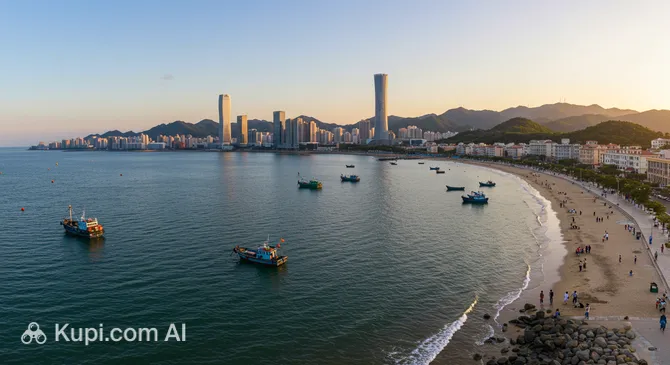
Located on the picturesque coast of the South China Sea, Qinzhou is a dynamic port city in the Guangxi Zhuang Autonomous Region of southeastern China. It is a place where the industrial power of a modern port harmoniously blends with the charm of coastal landscapes and the region's rich cultural heritage. With a population of over 3.3 million people, the city serves as a vital link between the country's inland provinces and global maritime trade routes.
Qinzhou's geographical position defines its unique character: the city stretches along Beibu Gulf, which grants it a mild subtropical climate and an abundance of water resources. Tourists are drawn here not only by business activity but also by the opportunity to touch the rich historical past, reflected in old quarters and traditional crafts that have survived through the centuries.
Qinzhou. Illustration.
Source: Kupi.com AI
Key highlights of the city include the famous Nixing pottery, which is one of China's four great types of ceramics, and the scenic Sanniang Bay, where rare white dolphins can be spotted. The developing tourism infrastructure makes Qinzhou increasingly accessible and comfortable for travelers seeking an authentic Chinese experience away from overcrowded metropolises.
We invite you to discover Qinzhou—a city where the salty sea breeze meets the aroma of ancient tea traditions and the bustle of modern avenues. It is an ideal destination for those who want to see a "different" China, full of tranquility, maritime aesthetics, and hospitality.
Weather Overview
Qinzhou is characterized by a humid subtropical climate, which is significantly influenced by seasonal monsoons. Four seasons are clearly defined here, each lending its own charm to the city. Overall, the annual temperature usually fluctuates within a comfortable range from 11°C to 32°C, making the city accessible for visits year-round, though periods of high humidity should be taken into account.
Summer in Qinzhou is long, hot, and very humid. Between May and September, the thermometer often stays above 30°C, and the average maximum in July and August reaches 31-32°C. This is also the rainy season: August sees the highest amount of precipitation (about 277 mm). Winter, in contrast, is short and quite cool, but rarely truly frosty. January is the coldest month with an average temperature of around 15°C, when the weather remains predominantly dry and partly cloudy.
If you are planning a trip, the most favorable time would be spring (March-April) or autumn (October-November), when the most pleasant weather in the city sets in. During these periods, the air temperature is moderate, and the number of rainy days is noticeably reduced, which is ideal for long walks along the embankment and visiting natural attractions in the vicinity of the gulf.
Average monthly temperature
Average monthly precipitation
Interesting Facts
Ancient Pottery Heritage: Qinzhou is the birthplace of unique Nixing pottery, which is made from clay found only in the vicinity of the local Qinjiang River. Surprisingly, these items are not glazed—their unique colors and luster appear exclusively during the high-temperature firing process.
Home for White Dolphins: The waters near Qinzhou are one of the few places in the world where you can encounter Chinese white dolphins in their natural environment. These mammals, sometimes called "sea pandas," have a unique pinkish skin tone.
Strategic "Sea Gateway": The city serves as a key node for the "New International Land-Sea Trade Corridor," linking China's western provinces with Southeast Asian markets and the rest of the world.
Monsoon Character: The city's climate is so heavily dependent on monsoons that the difference between the wet and dry seasons is felt more acutely here than in many other coastal cities in the region, directly affecting the rhythm of life and agriculture.
Cultural Crossroads: Qinzhou is home to representatives of various ethnic groups, including the Zhuang people, which is reflected in the local architecture, dialects, and distinctive festive traditions.
How to Get There
Thanks to its status as an important logistics hub in Southern China, Qinzhou boasts a well-developed transport network. The city is conveniently connected to the key economic centers of the Guangxi region and neighboring provinces. To plan your trip, you can check current information on how to get to the city by various means of transport.
While Qinzhou itself does not have a major international airport, the city is served by nearby air hubs such as Nanning Wuxu Airport (NNG). This is a major transport hub receiving many domestic and international flights. From the airport, Qinzhou can be easily reached by high-speed train or scheduled bus, which takes just over an hour. It is also worth considering the airport in the city of Beihai, which is at a similar distance.
Railway communication is the most convenient and popular way to travel. Qinzhou East Station handles modern high-speed trains that connect the city with Nanning, Guangzhou, and Beihai. Traveling in a comfortable carriage allows you to enjoy picturesque views of the South Chinese landscapes outside the window. For shorter distances or trips to neighboring counties, the regular Qinzhou railway station can be used.
Highways are also in excellent condition, providing comfortable travel by bus or taxi. If you prefer sea travel, passenger services are occasionally organized from the Port of Qinzhou, connecting the city with other coastal points in the South China Sea.
Main Attractions
Qinzhou is a city where maritime history comes to life in a modern setting. One of the main jewels of the region is rightfully considered Sanniang Bay. This place is famous not only for its golden beaches and whimsical rock formations but also for being home to rare Chinese white dolphins. Taking a boat trip in hopes of seeing these graceful creatures in their natural habitat is one of the most unforgettable experiences for any tourist.
For lovers of art and history, getting to know Nixing Pottery is a must. This type of ceramic art has a history of over a thousand years and is the pride of Qinzhou. Visiting specialized museums or workshops allows you not only to see the process of creating unique vases and teapots from special local clay but also to purchase an authentic work of art that does not change color over time.
The Marine Port Complex of Qinzhou is equally interesting, showcasing the scale of China's modern economic development. The city's embankments are perfect for evening walks, offering breathtaking views of the South China Sea and massive cargo ships on the horizon. Here, you can also find cozy museums dedicated to trade and navigation, which tell the story of how the sea has shaped the fate of this region over centuries.
Architecture enthusiasts should explore the historical district, where old colonial-style buildings and traditional Chinese houses have been preserved. These streets retain the atmosphere of an old port city, creating a sharp yet harmonious contrast with the skyscrapers of the business center. Qinzhou offers a wonderful balance between natural beauty and man-made wonders, making visitors want to return again and again.
Local Cuisine
The gastronomic identity of Qinzhou is inextricably linked to its proximity to the South China Sea. The main treasure of the local cuisine is the freshest seafood. In numerous restaurants on the waterfront and in the city markets, you will find a huge selection of fish, shrimp, crabs, and mollusks. The traditional Cantonese style of cooking prevalent here allows the natural taste of the products to be preserved, using minimal thermal processing and light sauces.
You should definitely try the local rice noodles, which in Guangxi have dozens of variations. In Qinzhou, they are often served with a rich broth and added pork or seafood. Another signature dish of the region is oysters, which are considered some of the best in the province thanks to the clean waters of the gulf. They are grilled with garlic and green onions, creating an incredible aroma that is impossible to resist.
The food culture in the city is diverse: from elegant restaurants overlooking the bay to the bustling rows of street food. Locals prefer to dine in large groups, ordering many dishes for the shared table. Popular drinks include various types of tea, as well as local beer. For those who like exotic flavors, Qinzhou offers traditional Guangxi snacks that skillfully combine spiciness, sourness, and the freshness of local herbs and spices.
Travel Tips
Welcome to Qinzhou! To make your journey through this seaside city as comfortable and pleasant as possible, we have prepared some practical recommendations for you.
Clothing and Essentials: Given the subtropical climate, bring light clothing made of natural fabrics. In summer months, sunscreen, glasses, and an umbrella are mandatory—it will save you from both the sun and sudden monsoon rain. You will need comfortable shoes for walking along the waterfront and attractions.
Transport: The main way to get around is by bus and taxi. We recommend installing a taxi-hailing app (such as DiDi); this will eliminate difficulties in explaining your destination. Baidu or Gaode maps are best for navigation.
Finance: The official currency is the Chinese Yuan (CNY). International payment cards are not accepted everywhere, so be sure to set up Alipay or WeChat Pay linked to your card—this is the primary payment method in China. It is worth having cash just in case.
Health and Safety: The city is safe for tourists, but standard precautions are wise. Drink only bottled water. Pharmacies are frequent, but medicine names will be in Chinese, so carry a basic first-aid kit with you.
Communication: English is not widely spoken. Be sure to download an offline translator and save your hotel address in Chinese characters to show to a taxi driver.
Local Etiquette: Chinese people are very friendly to guests. A slight bow or a nod of the head is sufficient when greeting. Tipping is not customary in restaurants—it may even embarrass the staff.
What to Avoid: It is best not to discuss sensitive political topics. Also, avoid photographing military facilities or people in uniform without their explicit permission.
Specific Tip: Visit the seafood market early in the morning. This is the best time to see the city's life from the inside and try the freshest delicacies at minimal prices.
May your introduction to Qinzhou be filled with bright discoveries and pleasant encounters. This city knows how to surprise those who are ready for adventure!
Entertainment & Nightlife
In the evening, Qinzhou is transformed, offering guests a relaxed and welcoming atmosphere. Most after-dark activity is concentrated around the waterfront and central shopping districts. Numerous night markets open here, where you can not only buy souvenirs but also immerse yourself in the world of local street food. The aromas of fried seafood and pungent spices create a unique flavor, while boisterous groups of locals add life to the city streets.
For fans of more traditional leisure, the city offers modern karaoke clubs (KTV)—the most popular form of entertainment in China. Establishments in Qinzhou are known for their high level of service and modern equipment. You can also find cozy bars and pubs in the city center and coastal zones, serving both local beer and classic cocktails. These spots offer a calm atmosphere, perfect for a peaceful end to the day accompanied by the sound of the surf or light music.
Daytime entertainment in the city includes visiting modern cinemas in large shopping malls and strolling through picturesque parks. During holidays, Qinzhou often hosts traditional festivals, including dragon dances, street theater performances, and musical shows that reflect the culture of the people of Guangxi. Safety in the city is high, so even late-night walks along the illuminated embankments are comfortable. To return to your hotel at night, it is best to use official taxi apps, which operate around the clock.
Parks & Museums
Qinzhou pleasantly surprises with its harmony between urban landscapes and green recreation areas. The main place for strolls among both locals and tourists are the coastal parks stretching along the South China Sea. Here, you can enjoy the refreshing breeze, admire views of the Beibu Gulf, and watch the life of the port. These parks are ideal for morning jogs or quiet sunset picnics when the city lights begin to reflect in the water.
The cultural heart of the city is its museums, with the Nixing Pottery Museum occupying a special place. It presents an impressive collection of ceramic items reflecting the centuries-old history of this unique craft. Visitors can not only see masterpieces by ancient artisans but also learn about the complex firing technology that made Qinzhou world-famous. It is also worth visiting the Qinzhou City Museum, whose exhibits are dedicated to maritime trade, the ethnography of the peoples of Guangxi, and heroic pages of local history.
For those seeking solitude with nature, the city offers small botanical gardens and themed parks dedicated to local flora. Many of them are decorated with traditional pavilions and bridges, creating the classic atmosphere of old China. Visiting these places allows for a better understanding of the soul of Qinzhou—a city that remembers its roots despite the rapid development of transport and industry.
Getting Around
The public transport system in Qinzhou is organized to provide convenient movement between residential areas, the port zone, and tourist sites. The backbone of urban transport is the bus network. The route system covers almost the entire city, and fares remain very affordable. Routes are usually indicated at stops, but it's worth having a map or a mobile translator app, as information is most often presented in Chinese.
Taxis in Qinzhou are a fast and comfortable way to get around, especially for tourists. Cars can be hailed on the street or called via popular Chinese apps (such as DiDi). Trip prices are quite reasonable. Car-sharing and electric scooter rental services are also actively developing in the city, becoming a popular alternative for young people and those who want to explore the coastal streets on their own.
A unique feature of Qinzhou is its water transport. Given the city's maritime status, excursion boats and ferries are available here, allowing you to see the port and the bay from the water. Payment on buses is often made either in cash (no change given) or via mobile payment systems. For tourists, the most convenient option is to use apps linked to international cards, which significantly simplifies payment for any type of transport.
Accommodation
Qinzhou offers travelers a decent selection of places to stay, catering to different budgets and travel purposes. For those who value comfort and international-level service, high-end hotels are located in the city center and along the picturesque waterfront. Many of them offer panoramic views of the port or the sea bay, making the stay especially atmospheric.
For more budget-conscious tourists or those planning a long stay, many mid-range hotels and cozy guesthouses are available in Qinzhou's residential areas. It is recommended to look for accommodation in the coastal zones—this will provide quick access to the best seafood restaurants and main walking areas. In the central part of the city, housing is convenient due to its proximity to shopping malls and transport hubs like the railway station.
When planning a trip, especially during Chinese public holidays or local festivals, it is worth booking accommodation in advance. During peak season, popular seaside hotels can be fully booked. Major international and local online platforms are most commonly used for booking. The average price range in Qinzhou remains very attractive compared to larger Chinese metropolises, allowing you to get an excellent level of comfort for reasonable money.
Nearby Cities
Qinzhou is an ideal starting point for exploring the southern part of the Guangxi autonomous region, offering easy access to neighboring coastal and historical cities. Each of them has its own unique character and deserves separate attention as part of a day trip.
Just 45 kilometers away is Fangchenggang—a port city with breathtaking sea views and beautiful beaches. A bit further away is the famous Beihai, known for its vast "Silver Beach" and historical streets that have preserved colonial architecture. If you are interested in border-town flavor, you can head to Dongxing, which is located right on the border with Vietnam, giving it a unique atmosphere of cultural blending.
Trips to these cities are easily made via high-speed trains or intercity buses that run regularly throughout the day. Exploring the surroundings of Qinzhou will allow you to see the diversity of southern China—from quiet fishing villages to modern seaside resorts.
Shopping & Souvenirs
Shopping in Qinzhou is an exciting combination of modern shopping malls and colorful local markets. The city is famous for goods that are hard to find anywhere else, primarily the renowned Nixing pottery. In specialized stores and workshops, you can purchase everything from delicate tea sets to massive decorative vases, which serve as unique souvenirs and true works of art.
The city's main shopping zones are concentrated in the central districts, where large malls offer a wide selection of clothing, electronics, and cosmetics. However, for a truly authentic atmosphere, head to the local seafood markets and souvenir rows. Thanks to its coastal location, Qinzhou offers an excellent selection of pearl products and seashell jewelry, which are traditionally brought from here as gifts.
Shops in the city generally open from early morning until late evening, seven days a week. Large centers accept bank cards, but for purchases at markets or in small shops, it is better to have cash yuan or use the QR-code payment systems popular in China. Don't forget to haggle at the markets—it's not just a way to save money, but also a part of the local social culture.