Support

Hotan

About

Welcome to Hotan, an ancient oasis city that serves as a vibrant testament to the enduring spirit of the Silk Road. Known for its rich cultural tapestry and stunning natural surroundings, this destination offers travelers a unique glimpse into a region where tradition and daily life blend seamlessly. It is a place where the echoes of ancient caravans still seem to linger in the bustling streets and quiet desert winds.

Geographically, Hotan is situated in the southwestern part of the Xinjiang Uyghur Autonomous Region of China. It lies in the Tarim Basin, nestled between the majestic Kunlun Mountains to the south and the vast Taklamakan Desert to the north. With a population of approximately 322,300, the city maintains a lively atmosphere within an arid desert climate, enjoying long, sunny days that illuminate its unique landscape.
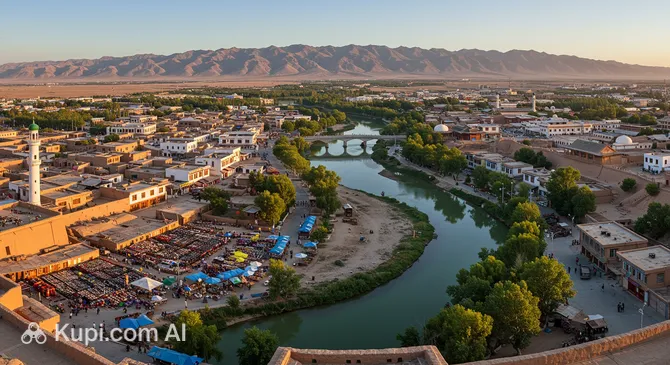
Hotan. Source: Kupi.Binoculars

The city has long been a pivotal stop for merchants and travelers crossing the continent. The history of Hotan is deeply intertwined with the ancient trade routes that connected the East and West, influencing its architecture, cuisine, and local customs. Visitors are often captivated by the region's legendary craftsmanship, particularly its famous nephrite jade, which has been prized and traded here for millennia.

Beyond its historical allure, Hotan is renowned for its traditional industries and vibrant markets. Travelers can witness the production of the exquisite Atlas silk, a fabric with distinct patterns that is a hallmark of the local culture. A visit to the local bazaars offers a sensory delight, where you can taste sweet local fruits, famous walnuts, and dates, or simply admire the hand-woven carpets that the city is famous for.

Whether you are an adventurer looking to gaze upon the endless sands of the desert or a culture enthusiast eager to see ancient crafts in action, Hotan welcomes you. It is a destination of discovery that promises an authentic and unforgettable experience for every visitor.

Weather Overview

Hotan experiences an arid desert climate, characterized by clear skies, dry air, and distinct seasonal changes. Because the city is located on the edge of the Taklamakan Desert, rainfall is extremely scarce throughout the year. For a more detailed breakdown of conditions during your intended travel dates, you can consult the current weather in Hotan.

Summers in the region are generally warm to hot, spanning from June to August. July is typically the warmest month, with average temperatures hovering around 26.6°C and daily highs often reaching 33.1°C. Conversely, winters are cold and crisp. January is usually the coldest time of year, with average temperatures dropping to -3.4°C and nighttime lows falling to -8.5°C.

Precipitation is negligible year-round, with data indicating nearly 0mm of rainfall for most months, though you might encounter a rare wet day during the summer. Travelers can generally expect warm summers with occasional heat and cold, dry winters, making the transitional seasons of spring and autumn particularly pleasant for exploration.

Interesting Facts

Beyond its bustling bazaars, Hotan holds fascinating secrets that whisper of its glorious past along the Silk Road. From ancient legends to natural wonders, the city offers unique stories that few travelers know before they arrive.
  • The Legend of the Silk Princess: Local lore claims that the closely guarded secret of silk production first left China via Hotan. According to the story, a Chinese princess betrothed to the King of Khotan hid silkworm eggs and mulberry seeds in her elaborate headdress to smuggle them past border guards, effectively breaking the imperial monopoly and bringing the silk industry to the oasis.

  • Rivers of Precious Stone: The city is flanked by two legendary waterways named after the treasures they conceal: the White Jade River (Yurungkash) and the Black Jade River (Karakash). To this day, locals and visitors alike can be seen scanning the riverbanks after the summer floods, hoping to find a valuable pebble of nephrite jade washed down from the mountains.

  • The Walnut King: Just outside the city stands a majestic walnut tree estimated to be over 500 years old. Known as the "Walnut King," its massive trunk is so wide that it takes several people to encircle it. Despite its age and a hollow center, the tree miraculously continues to produce thousands of high-quality, thin-shelled walnuts every year.

  • Cities Beneath the Sand: The surrounding Taklamakan Desert hides the ruins of ancient civilizations, such as the archaeological site of Melikawat. Visitors who venture to these remnants of a once-thriving Buddhist center can often find shards of ancient pottery and glass lying directly on the desert surface, preserved for centuries by the arid climate.

How to Get There

Reaching this historic oasis on the edge of the Taklamakan Desert is an adventure in itself, with air travel being the most convenient option for most visitors. For a comprehensive guide on all available transport methods and routes, you can read more about how to get to Hotan.

The primary gateway to the city is Hotan Airport (HTN). It is a regional hub located just 9.2 km from the city center, making the transfer very quick and easy. A taxi ride to the downtown area typically takes approximately 34 minutes, depending on traffic. With an annual passenger traffic of around 1.5 million, it is a well-equipped facility that connects Hotan to major Chinese cities like Urumqi, from where you can catch connecting flights to international destinations.

Alternatively, travelers exploring the wider region might consider flying into Shache (Yeerqiang) Airport (QSZ). However, it is important to note that this airport is located in the city of Kuiyibagecun, roughly 282.2 km away from Hotan. The journey by road from Shache to Hotan is significant, taking approximately 7.5 hours by taxi or car. This option is generally best suited for those planning a multi-stop itinerary through southern Xinjiang rather than a direct trip to Hotan.

For clarity, here is a summary of the main airports serving the area:

Airport Name City Passenger Traffic Km from City
Hotan Airport Hotan Medium 9.2
Shache (Yeerqiang) Kuiyibagecun Small 282.2

Beyond air travel, Hotan is accessible by train and long-distance bus. The city is connected to the national rail network, offering a scenic, albeit longer, journey through the desert landscape. The famous desert highways also provide a unique road trip experience for those arriving by car or bus from neighboring cities like Kashgar or Urumqi.

Main Attractions

Hotan Cultural Museum is an essential stop for anyone wishing to understand the deep historical roots of this region. As a former center of the ancient Kingdom of Khotan and a pivotal point on the Silk Road, the city has a rich past that is beautifully preserved here. The museum houses a fascinating collection of artifacts, including ancient pottery, wooden utensils, and fragments of silk that date back nearly two millennia. The highlight for many visitors is the exhibition of well-preserved mummies, which offer a hauntingly realistic glimpse into the lives of the people who inhabited this oasis centuries ago.

For a unique outdoor experience, a visit to the Yurungkash River, also known as the White Jade River, is a must. This river flows down from the Kunlun Mountains and is legendary for the precious white nephrite jade found in its bed. It is not just a scenic waterway; it is a place of activity and hope. Tourists often join locals along the riverbanks to dig through the pebbles, trying their luck at finding a piece of the valuable stone. Even if you don't find a gem, the view of the water against the desert backdrop is a reward in itself.

No trip to the city is complete without experiencing the vibrant atmosphere of the Hotan Grand Bazaar. While the market is open daily, it truly comes alive on Sundays, transforming into one of the largest and most energetic markets in the region. It is the perfect place to immerse yourself in local culture and witness the trade of Hotan's famous "three treasures": jade, carpets, and Atlas silk. Visitors can browse endless stalls of colorful fabrics, sample local dried fruits and nuts, and enjoy the lively bargaining that has characterized this trade hub for centuries.

Venturing into the desert outskirts brings you to the Melikawat Ruins, an archaeological site that whispers of the city's pre-Islamic Buddhist past. Located on the southern edge of the Taklamakan Desert, these crumbling walls and foundations are all that remain of a once-thriving capital. Exploring the site offers a profound sense of isolation and history, as shards of ancient pottery and glass can still be found scattered across the sand. It is a compelling destination for history buffs and photographers looking to capture the stark beauty of ruins against the shifting dunes.

Local Cuisine

The culinary landscape of Hotan is a feast for the senses, deeply rooted in the traditions of the Silk Road and the rich agricultural heritage of the oasis. The local cuisine is predominantly Uyghur, characterized by the generous use of mutton, fresh vegetables, and fragrant spices like cumin and chili powder. Unlike many other regions, the food here often features unique charcoal-roasting techniques that impart a distinct smoky flavor to the dishes, making every meal a memorable experience for gastronomic adventurers.

One cannot visit Hotan without trying the region's signature Polu (pilaf). This hearty dish is a staple centerpiece at gatherings, consisting of fluffy rice cooked with tender chunks of lamb, sweet yellow carrots, and onions, often enriched with local dried fruits like raisins or apricots. Another "must-try" is the famous Hotan Kebab. While skewers are popular throughout Xinjiang, the local variety is celebrated for its succulent meat, often roasted on tamarisk branches which infuse the lamb with a subtle, woody aroma.

For those seeking something truly unique to this specific oasis, the tradition of "roasting everything" is a fascinating culinary discovery. Street vendors skillfully cook a variety of foods in hot wood ash and charcoal. You can find roasted eggs—ranging from chicken to goose and pigeon eggs—slow-cooked in the embers until they achieve a nutty, toasted flavor. Even roasted pumpkins and buns are prepared in this traditional manner, offering a warm and comforting snack that is perfect for the desert climate.

When it comes to beverages, tea culture is paramount. Locals often enjoy medicinal teas infused with herbs, rose flowers, and dates, believed to have health benefits and cooling properties. For a refreshing cold drink, especially during the hot summer months, freshly squeezed pomegranate juice is incredibly popular, showcasing the sweetness of the locally grown fruit. Another traditional favorite is Dogh, a crushed ice yogurt drink often sweetened with honey or syrup, which provides instant relief from the midday heat.

The heart of the city's food scene beats strongest at the Hotan Night Market. This is not just a place to eat; it is a cultural phenomenon where tourists and locals mingle under the glow of warm lights. Here, the air is thick with the scent of grilling meat and spices. Visitors can wander from stall to stall, sampling everything from spicy sheep entrails and homemade yogurt to the renowned local walnut cakes, which are dense, sweet, and packed with the nuts for which Hotan is famous. Dining here provides an authentic glimpse into the community spirit and vibrant nightlife of the city.

Travel Tips

Visiting Hotan is a journey into the heart of the ancient Silk Road, offering an experience quite unlike the modern metropolises of eastern China. To help you navigate the unique desert climate, cultural nuances, and logistics of this fascinating oasis, here are some practical tips to ensure your trip is smooth and enjoyable.

  1. Pack for Extremes and Modesty: The desert climate means temperatures can fluctuate significantly. Bring lightweight, breathable clothing for the day and warm layers for the chilly desert nights. Since Hotan is a culturally traditional area, it is respectful to dress modestly; avoid short shorts or revealing tops. Comfortable, closed-toe shoes are essential for walking through the dusty bazaars and exploring the Melikawat Ruins.

  2. Navigating the City: Taxis are the most convenient and affordable way to get around Hotan. While public buses exist, they can be difficult to navigate without local language skills. Ride-hailing apps used elsewhere in China may work, but flagging down a regular taxi is often easier here. Always have your destination written in Chinese (and Uyghur, if possible) to show the driver.

  3. Digital Payments and Cash: While mobile payments like Alipay and WeChat Pay are ubiquitous even in smaller cities, it is wise to carry some cash (Renminbi) when visiting traditional markets or buying from street vendors. International credit cards are rarely accepted directly at shops or restaurants, so ensure you have set up a mobile payment account linked to your card or withdrew cash from an ATM in the city center.

  4. Health and Hydration: The air in Hotan is extremely dry. Dehydration and dry skin can happen quickly, so carry a reusable water bottle, heavy moisturizer, and lip balm. If you have sensitive respiratory systems, consider bringing a mask, as dust storms or floating dust from the Taklamakan Desert can occur. Pharmacies are generally marked with a green cross, but bring your own basic prescription meds.

  5. Overcoming the Language Barrier: English is not widely spoken in Hotan. Communication can be a challenge, so having an offline translation app on your phone is crucial. Download the necessary language packs (Mandarin Chinese) beforehand. Learning a simple greeting like "Salam" (Peace) can go a long way in breaking the ice with the friendly locals.

  6. Respecting Local Etiquette: The people of Hotan are known for their hospitality. When greeting locals, placing your right hand over your heart and nodding slightly is a polite and culturally appropriate gesture. Always ask for permission before taking close-up photos of people, especially elders or those working in the market, as a sign of respect.

  7. Photography Restrictions: Be very mindful of where you point your camera. As a general rule in this region, avoid photographing police stations, security checkpoints, military personnel, or government vehicles. Doing so can lead to uncomfortable situations or requests to delete your photos. Stick to capturing the beautiful architecture, landscapes, and bustling market scenes.

  8. Understanding "Local Time": Although the official time is Beijing Time (GMT+8), daily life in Hotan often follows an unofficial "local time" which is roughly two hours behind. This means lunch might be served around 2:00 PM or 3:00 PM Beijing time, and dinner can be as late as 9:00 PM or 10:00 PM. Clarify which time is being referred to when booking tours or meeting locals.

By keeping these practicalities in mind, you will be well-prepared to embrace the rich history and warm culture of Hotan. Whether you are bargaining for jade in the bazaar or watching the sunset over the desert dunes, a little preparation allows you to focus entirely on the magic of your adventure.

Entertainment & Nightlife

Entertainment in Hotan is a unique experience that differs significantly from the bustling club scenes found in China's eastern coastal cities. Here, nightlife is less about loud music and dance floors, and more about vibrant social gatherings, culinary exploration, and community festivities. The city comes alive after the sun sets, with the cool desert air inviting locals and tourists alike to the streets for evening strolls and late-night dining.

The undisputed heart of the city's evening culture is the Hotan Night Market. This is not merely a place to eat; it is a sensory spectacle and the primary entertainment hub for the region. Located near the city center, this vast, often covered venue operates well into the early hours of the morning. The atmosphere is electric, filled with the smoke of charcoal grills, the chatter of families, and sometimes traditional music performances. It is the perfect spot to immerse yourself in the local "slow life," enjoying delicacies like roasted fish and spicy lamb while sitting on communal benches.

For those who prefer a scenic evening walk, Tuanjie Square (Unity Square) offers a lively yet relaxed environment. In the evenings, this central plaza often fills with locals engaging in traditional dancing or modern square dancing. It is a fantastic place to people-watch and soak in the harmonious blend of cultures. The surrounding streets are well-lit and bustling with shops that stay open late, allowing for some nocturnal retail therapy or a simple leisurely promenade under the city lights.

If you are looking for a place to enjoy a quiet drink, options are somewhat more limited compared to major metropolises. The "bar scene" in Hotan is generally low-key, often centered around KTV (karaoke) venues or the lobby lounges of larger international-style hotels. These venues offer a sophisticated and safe environment to unwind with a beer or a cocktail after a long day of sightseeing. Do not expect rowdy pubs; the vibe is usually dignified and conversational.

Practical Advice for Night Owls:

  • Timing is Key: Due to its western location, Hotan effectively operates on a time zone that is about two hours behind Beijing, even though the official clock is the same. This means the sky stays bright late, and nightlife typically does not kick off until after 9:00 PM or 10:00 PM Beijing time.
  • Getting Around: Taxis are the best way to move between the night market and your hotel. They are affordable and readily available at night. Flagging one down on the street is common practice.
  • Safety: The city is generally very safe for night walks, with well-lit main streets and a visible security presence. However, as with any travel destination, it is wise to stay in populated areas and keep your valuables secure.

While the nights are for feasting, daytime entertainment in Hotan offers a different pace. Visitors can spend their daylight hours exploring cultural institutions like the Hotan Cultural Museum to delve into Silk Road history, or visiting local amusement parks which are popular with families on weekends. The blend of educational daytime activities and the vibrant, food-centric nightlife creates a balanced and memorable travel experience in this ancient oasis.

Parks & Museums

Despite its location on the edge of the vast Taklamakan Desert, Hotan offers a surprising number of refreshing green spaces and cultural institutions. The city serves as an oasis in every sense, providing lush parks where travelers can escape the arid heat, alongside museums that preserve the rich artistic and historical legacy of this ancient Silk Road hub.

Kunlun Lake Park is one of the city's most prominent natural areas, offering a stunning contrast to the surrounding desert landscape. Dominated by a large artificial lake, the park is a favorite recreational spot for locals and visitors alike. You can rent a small boat to drift on the water, enjoying the reflection of the distant mountains, or stroll along the shaded paths lined with willow trees. It is a peaceful retreat that showcases the vital role of water management in this arid region.

For a glimpse into the daily life of the residents, Hotan Park (Hetian Park) in the city center is the place to be. As the oldest park in the city, it functions as a communal "living room." Here, you will find vibrant flower beds, ancient trees providing deep shade, and statues celebrating local culture. It is particularly lively in the mornings and evenings when elders gather to exercise, play traditional instruments, or engage in friendly conversation, offering tourists an authentic look at the local social fabric.

Hotan Cultural Museum stands as the primary guardian of the region's history. While it is a major attraction in its own right, it functions specifically as an educational journey through the timeline of the Kingdom of Khotan. The galleries display a vast array of artifacts, including ancient coins, wooden tablets inscribed with lost languages, and delicate fragments of silk that prove the city's pivotal role in global trade. It is an essential stop for anyone wishing to understand the complex layers of civilizations that have flourished here.

Given Hotan's reputation as the "Cradle of Carpets," the exhibition halls within the local Carpet Workshops serve as unique cultural galleries. These venues often display antique rugs alongside modern masterpieces, effectively acting as museums of textile art. Visitors can observe the intricate designs that feature pomegranate flowers and geometric patterns, learning about a craft that has been refined over two thousand years. It is a "living museum" experience where the exhibits are still being created by skilled artisans before your eyes.

For a truly authentic experience, try visiting the parks just before sunset. As the heat of the day subsides, these green spaces fill with families and groups of friends. You might stumble upon impromptu performances of traditional dance or music, providing a spontaneous and delightful cultural encounter that you won't find in any guidebook.

Getting Around

Navigating Hotan is relatively straightforward compared to the sprawling megacities found elsewhere in the country. The city does not possess a metro system, so the public transportation network relies primarily on a system of municipal buses and an abundance of affordable taxis. The compact nature of the city center also makes it quite accessible for those who prefer to explore on foot, though motorized transport is recommended for reaching attractions on the outskirts.

Public buses are the most economical way to travel, connecting major residential areas, bazaars, and tourist sites. The bus fleet is generally modern and air-conditioned, providing a comfortable respite from the desert heat. Routes are numbered, and while bus stops are marked, the information is typically displayed only in Chinese and the local language. For tourists who do not read these languages, using a navigation app to identify the correct bus number beforehand is essential. Buses typically operate from early morning until late evening, accommodating the city's schedule which often extends later due to the time difference with the capital.

For the vast majority of travelers, taxis serve as the primary and most convenient form of transport. They are ubiquitous on the streets and can be easily hailed by raising your hand. Taxis in Hotan are strictly metered, and the fares are very reasonable, making them a cost-effective choice even for solo travelers. Unlike in some larger cities where ride-hailing apps are the only option, flagging down a cab on the street remains the standard practice here. It is highly advisable to have your destination written in Chinese characters to show the driver, as English proficiency among drivers is limited.

Regarding the payment system, digital wallets are the norm. Most buses and taxis accept payment via Alipay or WeChat Pay. On buses, you will find a QR code scanner at the front door near the driver; you simply scan and pay the fixed fare, which is usually very low (often around 1 to 2 RMB). If you prefer to use cash, you must have the exact change ready in coins or small notes to drop into the fare box upon entry, as drivers do not carry change. Taxis also accept cash, but paying via a mobile app is preferred by most drivers to avoid handling money.

While there are no trams or historic cable cars in the city center, the transport experience is authentic to the region. You may see locals using electric scooters and bicycles to navigate the traffic. For tourists, renting a bike is less common and can be complicated regarding deposits and return stations. Therefore, relying on the combination of walking for short distances and utilizing the plentiful taxis for longer trips is the most practical advice for a stress-free visit.

Accommodation

Accommodation in Hotan generally caters to a mix of business travelers and tourists exploring the Silk Road. The options typically range from functional budget guesthouses to comfortable mid-range hotels that offer modern amenities. While you may not find ultra-luxury international resort chains here, the city provides several high-standard local hotels that deliver excellent service, clean facilities, and a touch of local Uyghur hospitality.

For the most convenient experience, visitors are advised to stay in the city center, particularly near Tuanjie Square (Unity Square) or within walking distance of the Hotan Night Market. Staying in this central area places you right in the heart of the action, allowing for easy evening strolls to dinner spots and quick access to taxis for daytime excursions. Being central also means you are closer to major landmarks like the museum and the main bazaars, minimizing travel time.

When it comes to booking, it is crucial for international travelers to confirm that their chosen accommodation is authorized to host foreign guests. In this region, not all properties have the license to accept non-Chinese ID holders. Therefore, using major international booking platforms or contacting the hotel directly in advance is highly recommended to avoid any issues upon arrival. Prices in Hotan are generally quite reasonable compared to eastern China, with mid-range options offering great value for money. During the peak travel season in late summer and early autumn, rooms can fill up quickly, so securing your reservation a few weeks ahead is a wise move.

Nearby Cities

For those looking to explore the surroundings, Hotan serves as an excellent base for day trips or short excursions to several interesting nearby locations. Given the vast scale of the region, some of these historic cities are best enjoyed as the next stop on your Silk Road itinerary or as a dedicated overnight trip. One of the most culturally significant neighbors is **Shache** (also known as Yarkant). Located relatively close by regional standards, it was once the capital of the Yarkand Khanate. Visitors here are often captivated by the magnificent Golden Mosque and the Mausoleum of Amannisa Khan, a renowned poet and musician of the 16th century. It offers a quieter, yet deeply historical atmosphere compared to larger tourist hubs. For those willing to travel a bit further, **Kashgar** is an unmissable destination that defines the spirit of the ancient trade routes. As the westernmost city in China, it is famous for its labyrinthine Old City, the grand Id Kah Mosque, and the bustling Sunday Livestock Market. While it requires a longer journey, the vibrant mix of cultures and architectural heritage makes it a highlight of any trip to the area.
City Population Distance (km)
Kashgar 920,000 431
Shache 851,374 276
Korla 770,000 743
Aksu 535,657 451
Kuqa 462,588 575
These nearby destinations offer a glimpse into the diverse culture and landscapes of the region, allowing travelers to piece together the fascinating history of the southern Silk Road.

Shopping & Souvenirs

Shopping in Hotan is far more than a simple retail transaction; it is a cultural immersion into the rich heritage of the Silk Road. The city is legendary for its distinct local craftsmanship, most notably the "Three Treasures of Hotan": nephrite jade, Atlas silk, and wool carpets. Unlike the homogenized shopping experiences found in modern metropolises, the retail scene here is characterized by bustling open-air bazaars, traditional workshops, and a vibrant atmosphere where bargaining is an art form. Visitors will find that buying goods here often involves watching them being made, adding a layer of authenticity to every purchase.

The primary commercial pulse of the city beats around the central districts near Tuanjie Square and the major avenues leading to the bazaars. Here, you will find a mix of modern retail stores selling clothing and electronics alongside traditional shops. Beijing Road is one of the main thoroughfares where tourists can find a variety of shops offering everything from daily necessities to local handicrafts. Walking down these streets offers a fascinating contrast between contemporary China and the ancient traditions that still define the region's commerce.

While Hotan is famous for its traditional markets, it has also seen the development of modern shopping environments. There are several commercial centers and department stores in the downtown area that offer a more climate-controlled shopping experience. These malls typically feature fashion boutiques, jewelry stores specializing in gold and jade, and supermarkets. They provide a comfortable escape from the desert heat and are good places to find fixed-price goods if you prefer to avoid the intensity of haggling in the marketplaces.

The undisputed highlight of the local shopping scene is the Hotan Grand Bazaar. While it operates daily, it transforms into a spectacular event on Sundays, attracting tens of thousands of people from the surrounding oasis towns. It is a sprawling labyrinth of stalls selling spices, fabrics, livestock, and household goods. Additionally, the Jade Market is a specialized trading ground where buyers inspect raw and polished stones. Whether you are a serious collector or a curious observer, watching the energetic negotiations over pieces of river jade is an experience unique to this city.

When searching for the perfect souvenir, the choices are deeply rooted in local history. Nephrite jade is the most iconic purchase; it ranges from affordable trinkets to investment-grade white "mutton fat" jade. Atlas silk, with its vibrant, tie-dyed patterns, is another must-buy, often sold as scarves or fabric by the meter. For those with more luggage space, a hand-woven Hotan carpet is a lifetime investment, renowned for its intricate designs and durability. Foodies should not leave without a bag of the region's famous thin-shelled walnuts or sweet red dates, which are considered some of the best in the country.

Store hours in Hotan are influenced by the unofficial "local time," which is roughly two hours behind Beijing time. Consequently, shops typically open later, around 10:00 AM or 11:00 AM Beijing time, and remain open well into the night, often until 10:00 PM or later. Regarding payment, mobile platforms like WeChat Pay and Alipay are universally accepted in stores and even by most market stallholders. However, carrying some cash (Renminbi) is advisable for smaller transactions in the rural bazaars or when buying from elderly vendors.

Tax-free shopping for tourists is not a widespread feature in Hotan compared to major coastal cities like Shanghai or Beijing. Most transactions in markets and local shops are final, and formal tax refund schemes are generally not available. Travelers should assume the price negotiated is the final cost and focus on the value and uniqueness of the goods rather than potential tax rebates.

Nearby cities

Reached the end of the page?

That means the route is fully explored