Support

Nanjing Lukou International Airport

About the Airport

Nanjing Lukou International Airport (NKG) is the main aerial gateway to Nanjing and a key transport hub in the Yangtze River Delta. Opened in 1997, it quickly became one of the busiest airports in China, serving tens of millions of passengers annually. Beyond its role in passenger transport, Lukou is a primary center for China Postal Airlines, making it one of Asia's largest logistics hubs for postal services. This modern airport serves as an excellent starting point for exploring the ancient southern capital of China and its surroundings.
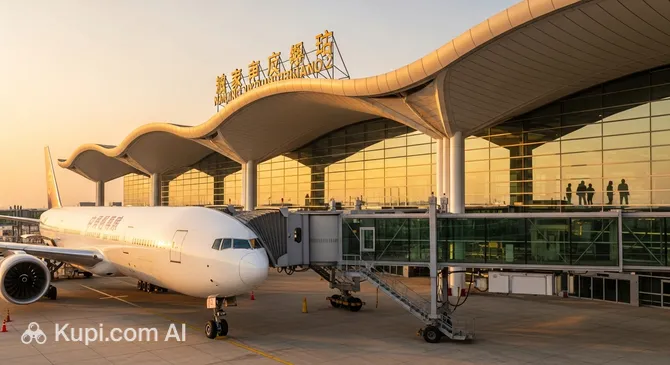
Nanjing Lukou International Airport. Source: Kupi.com Binoculars
IATA Code NKG
ICAO Code ZSNJ
City Nanjing
Distance to center Approx. 35 km
Status International
Annual Passengers Over 30 million (2019)
Popular Airlines China Eastern Airlines, China Southern Airlines, Juneyao Air
Schedule online board "Nanjing Lukou International Airport"

Lukou Airport offers travelers a high level of comfort and convenience. It consists of two modern terminals, between which navigation is seamless. A distinct advantage is its direct integration with the urban transport system: Metro Line S1 connects the airport to the center of Nanjing and Nanjing South Railway Station, allowing you to reach the city quickly and traffic-free. The presence of two parallel runways, each 3,600 meters long, allows for the accommodation of all aircraft types and ensures high capacity. Inside the terminals, passengers will find everything they need: from duty-free shops and restaurants to business lounges and currency exchange counters.

Contact Information

For your convenience, we have compiled the essential contact information for Nanjing Lukou International Airport (NKG).

  • Official Website: www.nkgair.com. Up-to-date information on flights, services, and passenger regulations is available on the site.
  • Inquiry Hotline: +86-25-96066. This is the main number for obtaining information about airport operations.
  • Address: Lukou Town, Jiangning District, Nanjing, Jiangsu Province, China.
  • Email: The airport does not provide a public email address for general inquiries. It is recommended to use the feedback forms on the official website.
  • Social Media: Official airport accounts can be found on their website. Typically, they are active on popular Chinese social networks such as WeChat.
  • Lost & Found: For issues related to lost or found luggage, please contact: +86-25-69820462.
  • Passenger Support Service: To resolve most issues, you may call the general inquiry hotline or visit the information desks directly within the airport terminals.

How to Get to the Airport

Getting to Nanjing Lukou International Airport from the center of Nanjing is possible via several methods, each convenient in its own way. Choosing the best option depends on your budget, amount of luggage, and location within the city. The airport is well-integrated into the transport system, making the journey fast and straightforward.

Public Transport

The fastest, most reliable, and economical way to reach the airport is by metro. The dedicated Line S1 (Airport Line) connects the city directly to the airport terminals. A key transfer hub is Nanjing South Railway Station, where Line S1 intersects with Lines 1, 3, and S3. The trip from this station to the airport takes approximately 35-45 minutes. This is not only the quickest but also a very budget-friendly option. Additionally, airport shuttle buses operate across the city, linking the airport with major districts of Nanjing, including the central railway station. Travel time by bus is about 60-90 minutes depending on the route and traffic conditions, with a fare of around 20-25 RMB. This is a good choice if you are staying far from metro stations.

Taxi and Transfers

For maximum comfort, especially if traveling with family or a large amount of luggage, a taxi or pre-booked transfer is ideal. A trip from the city center to the airport will take 40-60 minutes, though this may increase during peak hours. The cost of a taxi ride is usually between 100–150 RMB. Ride-hailing apps (such as Didi) are very popular in China and often offer more competitive rates. It is recommended to have the airport address written in Chinese characters (南京禄口国际机场) to avoid misunderstandings with the driver.

Car Rental and Parking

Car rental offers freedom of movement but can be a complex option for foreign tourists due to the requirement of a Chinese driver's license and unfamiliar traffic regulations. If you still decide to drive a personal or rented car, Lukou Airport provides extensive parking zones. Both short-term and long-term parking facilities with varying rates are available, which is convenient for those leaving their car for the duration of their trip.

Terminals and Map

Nanjing Lukou International Airport (NKG) is a key aviation hub in Eastern China. Currently, the airport consists of two terminals — T1 and T2. It is important to know that at present, all passenger flights, both domestic and international, are handled in the modern Terminal 2. Terminal 1 is closed for major renovation, so travelers should direct themselves exclusively to T2.

Terminal 2 is a large and well-organized building where orientation is easy thanks to clear signage. Signs are provided in Chinese and English, significantly simplifying navigation through the airport. The terminal structure is logical: it is divided into zones for domestic and international departures, helping to distribute passenger flows and avoid confusion.

The terminal layout is standard for major modern airports. The Departure Zone is located on the upper floor and includes check-in counters, baggage drop-off points, passport control, and security screening zones. After completing formalities, passengers enter a spacious sterile area with shops, cafes, and boarding gates. The Arrival Zone is located on the lower floor, housing baggage claim belts, customs control, and exits to taxi stands, buses, and the metro station.

Since all operations are concentrated in one terminal, transfers between terminals are currently not relevant for passengers. The entire journey from check-in to boarding takes place within a single building. It is recommended to allow sufficient time for check-in and security screening. For international flights, arrive at the airport 2.5–3 hours before departure, and for domestic flights — 1.5–2 hours prior. During peak hours and national holidays, waiting times may increase.

To easily orient yourself at Lukou Airport, pay attention to the information boards immediately upon arrival. They display the check-in counter numbers for your flight. Follow the signs for "Departures" or "Arrivals" depending on your purpose. If you have any questions, staff at the information desks are always ready to assist.

Airport History

The history of Nanjing Lukou International Airport (NKG) is a vivid example of the rapid development of aviation infrastructure in China. The airport opened on June 28, 1997, replacing the old Nanjing Dajiaochang Airport, which could no longer cope with the city's growing needs for passenger and cargo transport. From the very beginning, Lukou was designed as a modern aviation hub capable of handling international flights and serving as a vital gateway to Jiangsu Province.

A key stage in the airport's development was a massive expansion timed for the 2014 Summer Youth Olympic Games held in Nanjing. As part of this modernization, Terminal 2 (T2) was built and commissioned, along with a second runway. This more than doubled the airport's capacity, preparing it to welcome a huge influx of athletes, delegations, and tourists from around the world. This reconstruction elevated Lukou to the ranks of the largest and most modern airports in the country.

Since its opening, Lukou Airport has demonstrated impressive growth rates in passenger traffic and cargo volumes, regularly ranking among China's busiest airports. It has become a significant hub for airlines such as China Eastern Airlines and Shenzhen Airlines, as well as a key center for the cargo carrier China Postal Airlines, underscoring its strategic importance for national logistics.

Among interesting facts, it is worth noting that the architectural design of the first terminal was inspired by the image of a flying seagull, symbolizing the freedom of flight and the dynamic development of the region. The airport continues to modernize constantly, implementing the latest technologies for passenger convenience, confirming its status as a vital and modern transport hub in Eastern China.

Services and Amenities

Nanjing Lukou International Airport (NKG) offers passengers a wide range of services for a comfortable stay. All main infrastructure for travelers is concentrated in the active Terminal 2. Here you will find numerous restaurants and cafes offering both local Chinese cuisine and familiar international dishes. For shopping enthusiasts, there are Duty Free shops, boutiques of famous brands, and souvenir stalls where you can buy gifts to remember your trip.

If you prefer to wait for your flight in a calmer setting, VIP halls and business lounges are at your service. They offer comfortable seating, complimentary snacks and beverages, fresh press, and a quiet atmosphere for rest or work. Free Wi-Fi is available throughout the airport, and numerous charging stations for gadgets will help you stay connected.

Financial matters can be handled at bank branches and currency exchange counters located within the terminal building. In case of need, passengers can visit medical points for first aid. For travelers with small children, special mother and baby rooms are equipped, providing a peaceful environment to care for your little one.

The airport is well-adapted for passengers with reduced mobility: ramps, elevators, and specially equipped restrooms are provided. You can also pre-book an escort service. For long layovers or early departures, it is convenient to stay at one of the hotels located in immediate proximity to the airport. For business travelers, conference rooms and business centers are available for meetings and work.

Dining

Nanjing Lukou International Airport (NKG) offers passengers diverse establishments to suit every taste and budget. Regardless of how much time you have before departure, you will easily find a place to have a snack or a full meal. All cafes and restaurants are concentrated in Terminal 2, both in the public area before security (landside) and in the departure zone after security (airside).

If you wish to experience local cuisine, be sure to try the famous Nanjing salted duck or a bowl of aromatic duck blood vermicelli soup — these are true hallmarks of Nanjing gastronomy. Numerous restaurants serving traditional Chinese cuisine offer these and other authentic dishes. For those in a hurry, snack bars with dim sum or steamed baozi buns are excellent options that are convenient to take away.

Besides local delicacies, the airport also features popular international fast-food chains such as KFC and Starbucks, as well as various coffee shops and beverage lounges. This is a great choice for those who prefer familiar food or simply want a cup of coffee before their flight. For a more substantial lunch, you can visit one of the à la carte restaurants, where Asian and European dishes are served in a relaxed atmosphere.

Regarding special dietary needs, vegetarian options can be found in some restaurants, though the selection may be limited. For Halal, vegan, or gluten-free dishes, it is recommended to clarify ingredients and availability with the staff in advance. The price range varies from budget food courts to more expensive restaurants. Operating hours for most establishments are aligned with flight schedules, and some outlets in the departure zone operate around the clock to serve passengers on night flights.

Travel Tips

To ensure your journey through Nanjing Lukou International Airport is as comfortable and stress-free as possible, we have prepared some useful tips. Following these recommendations will help you save time, money, and peace of mind.

Arrival Time at the Airport. We recommend arriving at the airport at least 2-3 hours before domestic flights and 3-4 hours before international flights. Nanjing is a major transport hub, and during peak hours, queues for check-in and security can be long. Allowing extra time will enable you to go through all procedures calmly.

Check-in and Security. To save time, use online check-in, which usually opens 24 hours before departure. Self-service kiosks are also available at the airport. When passing through security control, be prepared to remove laptops, tablets, and other large electronic devices from your carry-on luggage. Particular attention is paid to power banks in airports in China — they are permitted only in carry-on luggage, and the device casing must have a clear marking indicating its capacity.

Seat Selection and Hand Luggage. If the airline allows seat selection, decide what is more important to you: a window view, extra legroom at the emergency exit, or the ability to leave the cabin quickly by choosing a seat at the front. Regarding hand luggage, remember the standard restrictions: liquids in containers no larger than 100 ml, packed in a transparent bag, and no sharp objects.

For Transfer Passengers. If you have a connecting flight, carefully follow the "Transfer" signs. Depending on whether your next flight is domestic or international, you may need to go through security screening again, and sometimes passport control. Ensure you have enough time between flights for all these procedures.

Customs Control and Saving Money. When arriving in China from abroad, fill out the customs declaration in advance if necessary. To save money, bring an empty water bottle and fill it at drinking fountains after the security zone. Public transport, including the metro linking the airport to the city, is an excellent way to save on taxi fares.

In Case of Flight Delay. If your flight is delayed, remain calm. First, check the information on the departure boards or contact your airline representative for clarification. For long delays, airlines usually provide passengers with vouchers for food and water, and in the case of an overnight delay — hotel accommodation. Having travel insurance will help compensate for unforeseen expenses.

Reached the end of the page?

That means the route is fully explored