Support

The Bund

About

The Bund, or Waitan as it is called in Chinese, is a famous waterfront in Shanghai, stretching for 1.5 kilometers along the west bank of the Huangpu River. It is not just a street, but an iconic place where history meets modernity, and one of the main tourist attractions in China. The name "Bund" is of Persian origin, meaning "embankment" or "dam," and it became popular during the British colonial era, while the Chinese "Waitan" translates as "Outer Beach."
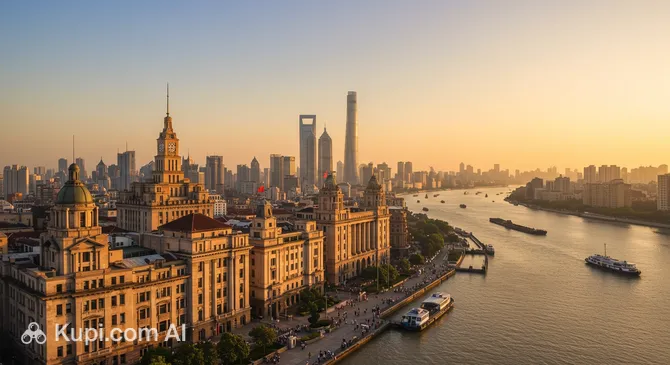
The Bund. Illustration.
Source: Kupi.com AI

Traveler photos:

The main feature of the Bund is its impressive architectural ensemble, consisting of 52 historical buildings constructed in the late 19th and early 20th centuries. These structures represent a true "open-air museum of architecture," showcasing a rich diversity of Western styles, from Romanesque and Gothic to Baroque, Renaissance, and Neoclassicism. Among the most famous buildings are the Asia Building (former offices of the Asiatic Petroleum Company) and the old HSBC Building, which now houses the Shanghai Pudong Development Bank.

The Bund offers a unique panorama where you can observe the breathtaking contrast between historical Western architectural heritage on one bank and the ultra-modern skyscrapers of the Pudong district on the other. This view vividly symbolizes Shanghai's dynamic development, where the past harmoniously coexists with the future. The waterfront is one of the city's most recognizable symbols and a must-visit for any tourist wishing to feel the spirit of this metropolis.

Contacts

The Bund is a public space, so the waterfront does not have a single central contact point. For general tourist information about Shanghai and the promenade itself, it is recommended to contact the Shanghai Tourist Information Center. Up-to-date information on events and happenings at the Bund can be found on the city's official tourism website.

How to contactContact
AddressZhong Shan Dong Yi Lu, Waitan, Huang Pu Qu, Shang Hai Shi, China, 200002

What to Do

At the Bund, a wealth of opportunities for an unforgettable time awaits you. First and foremost is a walk along the promenade itself, during which you can examine the famous ensemble of historical buildings in detail. Each of them is a separate chapter in the history of Shanghai, with unique architectural features that together create an impressive panorama of various styles, from Gothic and Renaissance to Art Deco.

The view of the opposite bank of the Huangpu River is especially impressive. There lies the modern Pudong business district with its futuristic skyscrapers, including the famous Oriental Pearl TV Tower and the majestic Shanghai Tower. This contrast between the Bund's colonial architecture and Pudong's ultra-modern high-rises creates an unforgettable scene often called the "dialogue of eras" in Shanghai.

In the evening, the Bund is transformed: the night illumination of the buildings turns on, reflecting in the waters of the Huangpu and creating a truly magical and romantic atmosphere. Many consider a night walk along the waterfront to be one of the highlights of visiting the city. Besides admiring the architecture and views, you can visit numerous shops on the Bund, sit in restaurants and cafes nestled in historical buildings, or take a river cruise on the Huangpu to see the waterfront's splendor from the water and experience the cultural fusion of East and West so characteristic of Shanghai.

Getting There

Getting to the famous Bund waterfront in Shanghai is quite easy, as it is perfectly integrated into the city's public transport network. One of the most convenient and fastest ways is the metro. The closest stations to the Bund are "East Nanjing Road", served by lines 2 and 10, and "Yuyuan Garden" on line 10. From either of these stations, a pleasant 10-15 minute walk will take you to the waterfront, allowing you to gradually immerse yourself in the atmosphere of this historic district.

Numerous city buses serve as an alternative public transport option. Many routes pass in the immediate vicinity of the Bund or have stops there. Notable routes include No. 20, 37, 42, 55, 65, 71, 123, 145, 301, and others. A bus ride can be an excellent opportunity to see more of the city scenery on your way to the waterfront.

For those who prefer maximum comfort or are traveling with luggage, taxis or popular ride-hailing services in Shanghai are always available to take you directly to the heart of the Bund. Additionally, if you are staying in the city center—for example, near the bustling Nanjing Road or People's Square—you can take a pleasant walk to the Bund while enjoying the views of one of the world's most dynamic metropolises.

Nearest city: Shanghai

History & Facts

The history of the Bund is inextricably linked to Shanghai's colonial period. It all began in 1843 when the British chose this stretch along the Huangpu River as an anchorage for their ships. Just two years later, in 1845, based on the so-called "Shanghai Land Regulations," an 830-acre area west of the waterfront was officially declared a British concession. This is where key facilities of the time were built, including the British Consulate, marking the beginning of the development of the future famous promenade.

The period from the 1860s to the 1930s was a golden age for the Bund, transforming it into the most protected and prestigious foreign enclave in all of Shanghai. In the late 19th century, majestic Western-style buildings began appearing one after another along the waterfront, which today constitute its priceless architectural heritage. Originally, these buildings housed the offices of influential foreign banks, major trading companies, consulates of various nations, and private clubs, vividly reflecting Shanghai's rapidly growing status as an international financial and trade center of that era.

As the heart of the British Concession, the Bund played a key role in the modern development of Shanghai, serving as a catalyst for its transformation. Over time, the waterfront turned into more than just a business center; it became a vibrant symbol of the city and its cosmopolitan spirit, where Eastern and Western cultures harmoniously intertwined. Today, the historical buildings of the Bund serve as a living reminder of the significant influence of the Western colonial era on the city's history and character, and the waterfront itself is rightfully one of the most popular and visited tourist attractions in China.

Time Needed

To fully enjoy a walk along the Bund and experience its unique atmosphere, it is recommended to set aside approximately 2 to 3 hours. This time is generally sufficient to leisurely walk the entire 1.5-kilometer waterfront, admire the majestic historical buildings, take memorable photos of the famous Pudong skyline with its skyscrapers on the opposite bank of the Huangpu River, and perhaps even stop by one of the many cafes or restaurants to rest and enjoy the views.

If you plan a deeper dive into the history and architectural details of each building on the Bund, you may need additional time. Many of these structures have rich histories and unique features that can take several more hours to study. It is also worth noting that the Bund creates completely different impressions depending on the time of day. Many tourists strive to see the waterfront both in daylight to appreciate all the architectural details and in the evening when the magnificent building illumination turns on, creating a truly magical scene.

Thus, if you want a comprehensive experience of the Bund, including daytime exploration and evening light viewing, your visit could last significantly longer, perhaps even requiring two separate visits. However, for a first introduction and vivid impressions, 2-3 hours will be quite sufficient.

Working Hours

The Bund waterfront in Shanghai, as an open public space, is accessible 24/7 throughout the year. You can walk along it at any time convenient for you, without any restrictions or the need for prior booking for the promenade itself.

However, keep in mind that individual buildings, museums, restaurants, shops, and other establishments located on the Bund have their own operating hours. Most are typically open to visitors from 10:00 AM to 10:00 PM. A particularly popular time to visit the Bund is in the evening, approximately from 6:00 PM to 10:00 PM, when the famous building illumination is turned on, and the waterfront along with the Pudong panorama appears in all its glory. To visit specific venues on the Bund, it is recommended to check their hours and booking requirements in advance on official websites or via contact phone numbers.

Nearby

Visiting such an iconic landmark as the Bund is a highlight in itself. However, to truly soak in the atmosphere of Shanghai and make your journey even more rewarding, it is worth exploring what lies in the immediate vicinity. Discovering the surrounding areas will allow you to uncover new facets of this amazing city, see it from different angles, and gain a more complete understanding of its diversity.

The area around the Bund waterfront is rich with interesting spots, from modern skyscrapers and shopping centers to historic gardens and cozy establishments. A short walk or a quick ride will lead you to other landmark sites in Shanghai, complementing your impressions of the Bund's majestic panorama.

NameDistance
Bar Rouge0.2 km
Oriental Pearl Tower0.9 km
Shanghai Ocean Aquarium1.1 km
IFC Mall1.1 km
Yuyuan Old Street1.4 km
Yu Garden1.5 km
Shanghai Tower1.6 km

Have you reached the end of the page?

So the route has been studied inside and out