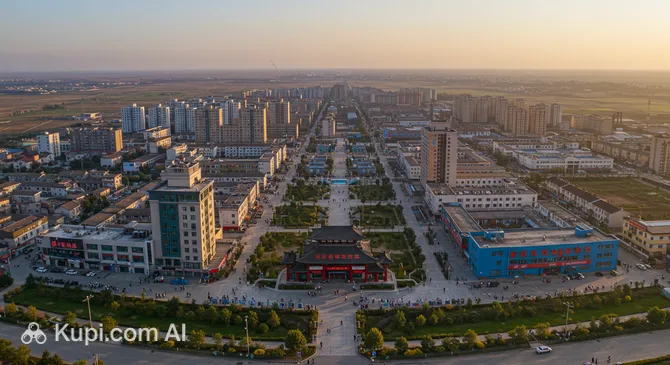
Shenmu is a dynamically developing county-level city located in the northern part of Shaanxi Province, China. The city is known as one of the region's largest industrial centers, with its prosperity inextricably linked to rich coal deposits. Despite its purely business and industrial appearance, Shenmu holds an amazing archaeological heritage that dates back to ancient times.
Shenmu. Illustration.
Source: Kupi.com AI
Geographically, the city stretches across the Loess Plateau, bordering the vast sands of the Mu Us Desert. The county's population is about 237,000 people, and although Shenmu cannot be called a typical tourist hub, it attracts travelers with its unique atmosphere where modern industry meets Neolithic history. The city's name translates as "Magic Trees," recalling the legendary three pines of the Tang Dynasty that once graced these lands.
The main magnet for history buffs here is the ruins of the ancient city of Shimao—one of the largest Neolithic settlements in East Asia. A visit to this site allows you to feel the scale of an ancient civilization against the backdrop of North China's rugged landscapes. Shenmu is recommended for those seeking an authentic experience off the beaten path and wanting to see a "different" China—hardworking, large-scale, and inextricably linked to its roots.
Weather Overview
The climate in Shenmu is distinctly continental, due to its location on the Loess Plateau near the Mu Us Desert. Winters here are harsh and dry: in January, the average temperature drops to -7°C, and night frosts can reach -13°C. Summer, on the contrary, can be quite hot—in July and August, the thermometer often rises to +30°C, and it is during the summer months that the bulk of the annual precipitation falls.
One of the specific features of the region is strong winds and sandstorms, which most often occur in the spring period. The dry air and proximity to the desert dictate their own rules: travelers are recommended to always carry products to protect their skin and eyes. If you want to know more about how the weather in the city changes by month, you should check the detailed forecast in advance.
Late spring (May) and early autumn (September) are considered the most comfortable times to visit, when the air temperature is most pleasant for walking and the risk of encountering dust storms or exhausting heat is minimal. It should be taken into account that the city's industrial status and active coal mining can affect air quality, especially on windless days, which makes the county's climate picture quite specific.
Average monthly temperature
Average monthly precipitation
Interesting Facts
Around 2300 BC, the city of Shimao existed on the territory of modern-day Shenmu—one of the largest Neolithic settlements in all of China, discovered by archaeologists only in the second half of the 20th century.
The city received the poetic name "Shenmu," which means "Magic Trees," thanks to three ancient pines that were planted during the Tang Dynasty.
The local museum houses a priceless collection of 70 stone bas-reliefs that are over 4,000 years old, making it a must-visit for all archaeology enthusiasts.
Shenmu is a strategically important energy hub—it is a key coal mining area in Shaanxi Province, which largely determines the county's economic power and industrial landscape.
Despite its industrial focus, the city is actively developing cultural projects aimed at preserving the heritage of the Loess Plateau and popularizing artifacts of the Shimao culture.
How to Get There
The transport accessibility of Shenmu is due to its importance as a major economic hub in Shaanxi Province. You can reach the city in various ways, but rail travel is the most convenient for tourists. More detailed information about routes can be found on the page describing how to get to the city.
The main transportation hub is the Shenmu Railway Station. It is connected by a network of high-speed and regular trains to major cities in the region. For example, the journey from Xi'an, the provincial capital, takes 3 to 4 hours by high-speed train, making even a short weekend trip possible. From neighboring Yulin, the journey takes only about an hour.
Station
Passenger traffic
Distance
Ordos Railway Station
4
98 km
Lüliang Railway Station
2
152 km
Qianzhai Railway Station
2
169 km
Xinzhou West Railway Station
3
196 km
Baotou railway station
10
204 km
For those who prefer air travel, the nearest air hub is Yulin Yuyang Airport. It receives regular flights from Beijing, Xi'an, and other major metropolises in China. From the airport, Shenmu can be reached by taxi or bus in about an hour. Traveling by car via the G65 expressway is also a popular option, providing freedom of movement across the picturesque Loess Plateau.
Although Shenmu is primarily known as an industrial center, it hides treasures that can impress even the most sophisticated lover of antiquities. The main jewel of the region is the ruins of the city of Shimao. This archaeological site, which is over 4,000 years old, is considered one of the largest Neolithic settlements in China. Tourists can see the remains of massive stone walls and terraces that once formed a powerful fortress on the edge of the desert.
In the very heart of the county, the Shenmu Museum is well worth a visit. This is where a unique collection of artifacts found during the Shimao excavations is kept. Among the most valuable exhibits are detailed stone relief sculptures and jade products that provide a glimpse into the life and culture of the people who lived here long before the emergence of the great Chinese dynasties.
The legendary "Magic Trees"—ancient pines planted back in the Tang Dynasty—are considered a symbol of the continuity of generations in Shenmu. These natural monuments gave the city its name and remain an important point of attraction for local residents. It is also worth paying attention to the historical drum towers, which add a touch of traditional Chinese charm to the industrial landscape.
Local Cuisine
The cuisine of Shenmu is a true hymn to the generosity and simplicity of the Loess Plateau. The local diet is based on wheat dishes and hearty meat specialties characteristic of northern Shaanxi Province. The main gastronomic symbol of the region is rightfully considered Biangbiang noodles—wide, hand-pulled noodles served with hot oil, vinegar, and plenty of garlic.
Mutton holds a special place on the tables of Shenmu residents. It is worth trying the tender meat stewed with onions and local spices, as well as fragrant dumplings with meat and vegetable fillings. Dining here is always a substantial affair designed to restore strength, so portions in local establishments are traditionally large.
The city's gastronomic scene is represented mainly by cozy family restaurants and authentic eateries where the locals themselves eat. Popular drinks include various types of strong tea, which helps cope with the dry climate, and local beer brands. If you want to get to know the true taste of the north, head to the evening food markets, where you can try street delicacies fresh from the stove accompanied by the hospitable smiles of local chefs.
Travel Tips
A trip to Shenmu promises to be a unique experience of getting to know the industrial heart of China and its ancient secrets. To make your trip as comfortable as possible, we have prepared some practical tips.
Clothing and Protection: The climate here is continental and dry. Dust storms are possible in the spring, so be sure to bring protective masks and goggles. Clothing should be practical, and shoes should be comfortable for walking on uneven terrain.
Transportation within the city: The best way to get around is by taxi. Install the Didi app; it will significantly simplify calling a car. For bus trips, exchange small change in advance if you don't use mobile payments.
Finances:Alipay and WeChat Pay are accepted almost everywhere in Shenmu. International cards do not work everywhere, so it is worth having a supply of cash yuan for small expenses in local shops.
Health: Due to the high dust levels and dry air, use moisturizing eye drops and skin creams. Pharmacies can be found in the city center, but it is better to bring specific medications with you.
Communication: English is very limited in the county. Be sure to download an offline translator and carry a hotel card with the address in Chinese.
Local Etiquette: Residents of Shenmu are friendly but straightforward. A greeting with a light bow or a nod of the head is always welcome. Try not to discuss topics related to the region's ecology.
What to Avoid: Do not plan long walks near mining zones and large industrial facilities—there is a lot of heavy machinery and high noise levels.
Additional Tip: If you plan to visit the Shimao ruins, it is best to hire a driver for the whole day, as public transport to the archaeological site runs infrequently.
May your acquaintance with this amazing land of "magic trees" be bright and inspiring! Shenmu knows how to surprise those who are ready to look beyond the horizon of usual routes.
Entertainment & Nightlife
The entertainment scene in Shenmu is primarily oriented toward local residents, which creates an atmosphere of genuine hospitality without the touristy polish. Most activity after sunset is concentrated in the city's central districts, where numerous karaoke bars (KTV) are located—a favorite leisure spot for workers and employees. Here, you can experience the true flavor of Chinese leisure in the company of friends and colleagues.
For those who prefer a quieter evening, the doors of local restaurants are open, where life teems until late at night. There are virtually no European-style nightclubs in the city, but evening strolls through the illuminated central squares allow you to enjoy the rhythm of life in this prosperous county. If you are looking for larger-scale shows or cinemas, many locals prefer to head to neighboring Yulin, which is about an hour's drive away.
During the day, entertainment is more educational in nature: from visiting historical monuments to relaxing in the city's few squares. Safety in the city is high, and for getting around in the evening, it is best to use official taxis, which are easy to call through popular mobile apps.
Parks & Museums
The Shenmu Museum is rightfully considered the main cultural center of the county. This modern building hides priceless evidence of ancient history—artifacts of the Shimao culture. The museum's exhibition includes stone sculptures, ceramics, and jewelry that are over four thousand years old. A visit to the museum makes you realize that Shenmu is not only a coal capital but also the birthplace of one of the oldest civilizations in the region.
The city's park infrastructure is adapted to the harsh continental climate of the Loess Plateau. Although there are no large-scale green spaces, local parks are true oases of tranquility. The area around the Three Ancient Pines is of particular importance, where a well-maintained recreation zone has been created. These trees, revered as a symbol of the city, create a special atmosphere of unity with nature and history.
For those looking for larger natural spaces, the walking areas along the hills surrounding the city will be of interest. From here, panoramic views of industrial landscapes and the endless expanses of the plateau open up. Although greening the city requires constant effort due to the proximity of the desert, city authorities are actively developing squares and alleys in the central part of the county, making them convenient for leisurely evening strolls.
Getting Around
The public transport system in Shenmu is represented by a developed network of bus routes and numerous taxis. Buses are the most budget-friendly way to get around, connecting residential neighborhoods with industrial zones and the railway station. The interval of movement in the central part of the city is usually about 10–15 minutes, but in the outskirts, the wait can stretch up to half an hour.
Taxis in the city are available and inexpensive, making them the preferred option for tourists. A car can be hailed on the street or called via the Didi app. It is worth noting that due to the specifics of the region (coal mining and proximity to the desert), roads can be dusty, so a taxi ride with air conditioning will provide much greater comfort than walking along busy highways.
Payment on buses is made in cash or via mobile payment systems. There is no metro in Shenmu, which is typical for cities of this scale. For those who want more freedom, electric scooters are a popular means of transportation, but tourists should be cautious due to heavy truck traffic at the city exits. During peak hours, minor congestion is possible at main intersections, but overall the transport situation in the county remains stable.
Accommodation
The choice of accommodation in Shenmu reflects the city's character as a business and industrial center. It is dominated by mid-range hotels and modern guesthouses catering to visiting specialists and transit travelers. There are virtually no luxury five-star resorts from international chains in the city, but local service offers a decent level of comfort for a reasonable price.
The central part of the city is considered the most convenient area to stay. This is where the main infrastructure is concentrated: restaurants, shops, and transport hubs. Staying in the center allows you to minimize travel time and be in the thick of urban life. Accommodation options near the railway station are also popular, which is convenient for those planning early departures to other regions.
To book accommodation, it is best to use popular Chinese and international services such as Trip.com or Agoda. It is recommended to choose hotels licensed to host foreign nationals and to book in advance, especially during major industrial exhibitions or national holidays when demand for rooms increases significantly.
Nearby Cities
Thanks to its location in northern Shaanxi Province, Shenmu serves as an excellent starting point for exploring the surroundings and getting to know the culture of the Loess Plateau. Neighboring cities and counties offer travelers unique landscapes and historical monuments that are perfect for day trips.
One of the most interesting destinations is Fugu, located just 53 kilometers away. This city is also closely connected to the banks of the Yellow River and offers picturesque views of the great river. Another notable place is Huanghuajie, which is easily accessible by car or bus. For those looking for more large-scale impressions, consider a trip to Liuguoju, where the special flavor of North China has been preserved.
City
Population
Distance
Huanghuajie
50 032
36 km
Fugu
124 002
53 km
Liuguoju
16 929
64 km
Zhujiagua
8 507
69 km
Shangchuankou
69 252
76 km
In addition to major cities, the region around Shenmu is famous for its natural attractions, such as the "Wave Valley" in Jingbian or authentic cave villages where life flows just as it did centuries ago. Exploring these places will allow you to gain a deeper understanding of the history and traditions of this harsh but incredibly beautiful land.
Shopping & Souvenirs
Shopping in Shenmu is primarily an introduction to the daily life of a prosperous industrial county. You won't find huge shopping malls with global luxury brands here, but you can visit bustling local markets and modern supermarkets located in the central part of the city. The main shopping streets are concentrated in the center, where life does not quiet down until late evening.
If you are looking for something unique, check out the souvenir shops at the local museum. Here you can purchase high-quality replicas of archaeological finds from Shimao, which make an excellent gift for history lovers. The region is also famous for its tea varieties and folk crafts of the Loess Plateau, reflecting the harsh but poetic character of northern Shaanxi.
For everyday purchases, supermarkets in the area of the central squares are ideal. Shops usually open from early morning until 9–10 PM. Most retail outlets accept payment via popular mobile apps (WeChat Pay, Alipay), which have practically replaced cash in China. At local markets, however, it is worth having a small amount of yuan in cash for small purchases and the opportunity to haggle a bit.