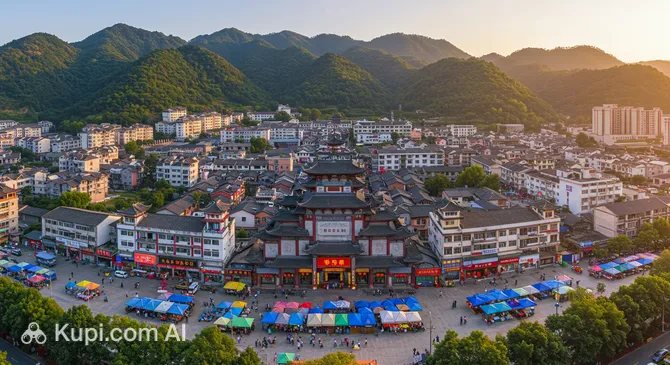
Sihui is a dynamic and unique city in Guangdong Province, which rightfully holds the title of "the jade capital" of China. Located in a picturesque spot at the intersection of waterways, the city harmoniously combines its status as a major industrial hub with that of an emerging tourist center. With a population of about 593,000 people, it embodies the energy of a modern Chinese mid-sized city while preserving deep artisan traditions.
The city's geographical location has historically determined its significance as a logistics center. The name Sihui itself translates as "the confluence of four rivers," emphasizing its close connection to the region's water arteries. The city's rich history, rooted in deep antiquity, is reflected today in its architecture and the unique rhythm of life of its residents.
Sihui. Illustration.
Source: Kupi.com AI
The main magnet for travelers here is the numerous jade workshops and markets, where one can witness the process of transforming raw stone into exquisite works of art. Additionally, Sihui is famous for its mineral spring resorts, offering relaxation surrounded by nature. This place is ideal for those who want to see the "real" China, combining business activity with a commitment to tradition.
A visit to Sihui is an excellent addition to a journey through Southern China. We invite you to immerse yourself in the atmosphere of this amazing city, where the sound of jade carvers' tools intertwines with the noise of river waves and the hospitality of the locals.
Weather Overview
The climate of Sihui is classified as subtropical monsoon, which means warm and humid summers combined with mild winters. Thanks to its location in the southern part of China, the city is bathed in greenery almost year-round, but high air humidity is a constant companion here, especially during the rainy season.
The summer months, from May to September, are characterized by high temperatures (averaging around +28...+30°C) and frequent downpours. June is traditionally considered the rainiest month. Winter in Sihui is very comfortable for walking: in January and December, the average temperature stays at +14...+15°C, and frosts are extremely rare. The current weather in Sihui allows tourists to plan trips at any time of the year, though spring and autumn are considered the most favorable seasons.
It should be taken into account that the city's geographical position at the confluence of four rivers contributes to the formation of morning mists. Travelers are recommended to bring light clothing made of natural fabrics for summer and a windbreaker for cool winter evenings. During the peak monsoon period, don't forget a reliable umbrella or raincoat, as rainfall can be quite intense.
Average monthly temperature
Average monthly precipitation
Interesting Facts
The city of Sihui has an ancient history: it was founded as early as 214 BC during the Qin Dynasty, making it one of the oldest settlements in Guangdong Province.
The city's name literally translates as "confluence of four rivers." This name perfectly describes its geography—historically, the city flourished as a key logistics hub at the intersection of the south's waterways.
Despite the city's centuries-old history, its "jade" fame is relatively young. Large-scale stone processing began here at the end of the Qing Dynasty, and Sihui officially received the title of "Hometown of Jade Processing in China" only in 2002.
Before the industrial boom, the city's economy relied for centuries on "three pillars": rice cultivation, fishing, and the production of famous local citrus fruits, which are still prized in the region today.
Sihui is incredibly conveniently located for travelers in Guangdong: the drive to Guangzhou or Foshan takes about 2 hours, while the high-tech Shenzhen can be reached in 3.5 hours.
How to Get There
Sihui is conveniently located in the heart of Guangdong Province, making it easily accessible from the major transport hubs of Southern China. Although the city does not have its own airport, its proximity to metropolises allows tourists to plan their routes with ease. For those who want to study all the nuances of logistics in advance, it will be useful to learn more about how to get to Sihui.
The nearest air gates to the city are the international airports of Guangzhou and Foshan. From there, the most convenient way to reach Sihui is by car or regular bus. The main flow of passengers and cargo moves along modern expressways. It is worth considering that during peak hours and on weekends, travel time can increase by nearly 50% due to heavy traffic.
The region's rail links are also actively developing. The nearest major railway stations are located in neighboring cities, from where intercity buses run regularly to Sihui. This allows travelers to combine high-speed trains with road transport for maximum comfort.
Station
Passenger traffic
Distance
Guangzhoubei Railway Station
10
33 km
Guangzhou railway station
15
44 km
Guangzhou railway station
15
44 km
Guangzhoudong Railway Station
14
50 km
Guangzhou South railway station
14
56 km
Within the region, bus services remain the most popular way to get around, connecting Sihui with Shenzhen, Foshan, and other cities. For those who value independence, renting a car is an excellent solution, allowing for quick travel between the county's industrial zones and natural attractions.
Main Attractions
The main tourist treasures of Sihui are inextricably linked to its status as a major center for jade processing. While the city does not offer classic world-scale architectural monuments, its uniqueness lies in its living craft culture. Tourists should definitely visit the local jade workshops and shopping centers, where masters create delicate jewelry and sculptures from this stone, which is sacred to the Chinese, right before your eyes.
For those seeking solitude and natural beauty, the picturesque Sihui Qishi River area is an ideal destination. Here, you can take leisurely walks through the forest among ancient trees and get acquainted with the life of local villages. This area is famous for its peaceful atmosphere and is a wonderful example of harmony between man and nature in the densely populated Guangdong Province.
Another important point on the city map is the modern mineral spring resorts. These wellness complexes offer a wide range of therapeutic and relaxing treatments. The combination of ancient Chinese medicine traditions and the comfort of modern spa centers makes Sihui an attractive place to recharge after busy excursions or business trips.
It is also worth paying attention to handmade products recognized as objects of intangible cultural heritage. In local shops, you can find unique souvenirs created using ancient technologies passed down from generation to generation. Such immersion in an authentic environment allows for a better understanding of the soul of southern China.
Local Cuisine
Sihui's culinary identity is closely tied to the rich traditions of Cantonese cuisine. The main focus here is on preserving the natural taste of the ingredients, so the dishes are fresh and light. Historically, the region was famous for its flooded rice fields and citrus orchards, which left an imprint on the local menu: rice and fruit are used everywhere here, from main courses to desserts.
Be sure to try fresh seafood and river fish, which are steamed here with ginger and green onions. Thanks to the proximity of the rivers, the fish always reaches the table at its freshest. The city is also known for its variations of "congee" rice porridge with various additives and traditional dim sum, which are perfect for a leisurely breakfast or lunch.
The food culture in Sihui is diverse: from democratic street stalls to modern restaurants. Tea houses play an important role in the life of the citizens. The tradition of tea drinking here is not just a meal, but a way of communicating. Try regional tea varieties, which are often served with light snacks. The city's gastronomic scene is constantly evolving, offering guests both authentic Guangdong flavors and modern culinary trends.
Travel Tips
Planning a trip to Sihui is a great way to see the industrial heart of Guangdong Province and get acquainted with a unique craft. These practical tips will help make your trip as comfortable as possible.
Clothing and Season: The best time to visit is spring and autumn. In summer, it is very humid and hot, so bring light clothing made from natural fabrics and an umbrella. Winters are mild, but a windbreaker won't hurt. For walking around workshops and markets, comfortable closed shoes are a must.
Getting Around the City: Install the DiDi app (the Chinese equivalent of Uber/Grab). This is the most reliable way to travel, as English is rarely encountered among bus drivers.
Finances and Payment: Cash is becoming a thing of the past. Be sure to set up Alipay or WeChat Pay linked to your international card. UnionPay cards are accepted in hotels, but at jade markets, it's more convenient to pay via QR code.
Connectivity: Buy a local SIM card at your arrival airport (Guangzhou). Wi-Fi is available in hotels, but you may need a VPN to access your usual services.
Language Barrier: English is not widely spoken in Sihui. Download an offline translator and always carry a hotel card with the address in Chinese characters.
Etiquette and Communication: In business-oriented Sihui, punctuality is valued. When visiting workshops, always ask for permission before taking photos—some jade processing methods may be trade secrets.
What to Avoid: Do not buy expensive jade in makeshift markets without an expert. There are many fakes in the city center; for serious purchases, go to large certified shopping houses.
Health: Drink only bottled water. In industrial areas on hot days, there may be smog, so people with allergies should carry a protective mask.
Sihui will reveal itself to you as a city of hardworking masters and amazing discoveries. Have a pleasant journey and happy finds!
Entertainment & Nightlife
Entertainment in Sihui reflects the lifestyle of a typical modern city in southern China. Most activity is concentrated around the central districts, where locals and business travelers spend their evenings. Evening life is represented by formats traditional to the region: numerous karaoke clubs (KTV), massage parlors, and cozy night eateries where you can try fresh seafood.
For those who prefer a quieter and more health-oriented vacation, Sihui offers visits to mineral spring resorts. Many of them stay open until late in the evening, providing guests with the opportunity to relax in hot pools after a busy day. This is a great way to spend time in silence, enjoying spa treatments and quality service.
In the summer months, walks and picnics in the scenic zones along the Sihui Qishi River become a popular leisure activity. A more relaxed atmosphere prevails here, conducive to family vacations. Despite the lack of loud, world-class nightclubs, the city wins you over with its safety and the opportunity to observe the daily life of provincial Guangdong.
If you crave a more vibrant and large-scale nightlife with major dance floors and bars, you can always head to the neighboring metropolises of Guangzhou or Foshan. Thanks to excellent transport accessibility, residents and guests of Sihui often choose these cities for a lively weekend, returning to the calm of Sihui for work and relaxation.
Parks & Museums
Sihui's park culture is centered around its natural wealth and traditions. One of the most attractive places for walking is the picturesque Sihui Qishi River area. Recreational zones have been established here, where modern landscape solutions sit alongside ancient trees. It is an ideal place for those who want to take a break from city noise, enjoy clean air, and take in the views of the river that gave the city its name.
While there are no large-scale state-level art museums in Sihui, the city offers unique specialized exhibitions. The main focus is on the history and art of jade processing. In exhibition halls at large shopping centers and workshops, you can see rare specimens of the stone and learn about the complex technology of transforming it into jewelry masterpieces. These "living museums" allow you to touch the city's main craft.
For those interested in ethnography, excursions to nearby ancient villages will be of interest. They serve as a kind of open-air museum, preserving the traditional architecture of Guangdong Province. Many mineral spring resorts also have their own well-maintained parks, where therapeutic procedures can be combined with walks along shaded alleys, immersing yourself in an atmosphere of tranquility and contemplation.
Getting Around
The transportation system of Sihui is typical of a rapidly developing Chinese industrial city. The basis of public transport is an extensive network of bus routes. Buses run between all significant areas of the city and connect the center with adjacent settlements. Navigation may require the use of online maps and a translator, as information at stops is most often presented only in Chinese.
There is currently no metro in Sihui, so for fast and comfortable travel, tourists most often choose taxis. Mobile applications such as DiDi work excellently in the city, allowing you to call a car to any point and see the fare in advance. This is the most convenient way to get around, especially if you plan to visit remote jade markets or suburban spring resorts.
Bus fares are usually paid either in cash (it's better to have small bills without change) or with universal transport cards and QR codes. For tourists, renting a car can also be a good option, especially for trips around the scenic surroundings of Guangdong Province. However, keep in mind that traffic during peak hours in central areas can be very heavy, so plan your movements in advance.
Accommodation
The hotel stock in Sihui is primarily oriented toward business travelers and specialists coming to this industrial center. Mid-range hotels and budget inns predominate here, offering the necessary set of services for a comfortable stay: clean rooms, Wi-Fi, and breakfast. There are virtually no luxury five-star complexes in the city itself, but quality four-star options will satisfy the needs of demanding tourists.
When choosing a place to stay, it is recommended to prefer hotels in the central part of the city or in new residential micro-districts. This ensures proximity to restaurants, shopping centers, and convenient transport links. It is best to avoid booking accommodation directly in industrial zones, as it can be noisy and the recreational infrastructure is less developed.
For those planning to stay in the city for a long period, rental apartments are available. Accommodation prices in Sihui are significantly lower than in neighboring metropolises like Guangzhou, making the city a great option for budget-conscious travelers. Nevertheless, during major industry exhibitions or national holidays, it is recommended to book accommodation in advance, as the demand for quality rooms in the city center increases sharply.
Nearby Cities
Sihui is an excellent starting point for exploring Guangdong Province, offering travelers the chance to discover the diversity of southern Chinese cities. Thanks to a well-developed road network, many interesting locations are accessible for day trips.
Just a few dozen kilometers away is Foshan, a city famous for its ceramics and martial arts schools. Another option for a visit is Shiling, which attracts tourists with its local flavor. For lovers of nature and mountain landscapes, Qingyuan, famous for its thermal springs and rafting, is an excellent choice.
Don't forget about destinations like Danzao, which allow for a deeper immersion into the region's atmosphere. Each of these places has its own unique character and cultural heritage, turning your journey from Sihui into a fascinating exploration of Southern China's history and modernity.
Shopping & Souvenirs
Shopping in Sihui is primarily a hunt for jade products. The city is a true Mecca for connoisseurs of this stone. An incredible number of specialized markets and shopping centers are concentrated here, where you can find everything from tiny "good luck" amulets to massive sculptures costing a fortune. The main shopping streets literally glow with green shades from the storefronts, offering a unique experience of immersion into the world of Chinese jewelry art.
Besides jade, Sihui is famous for its handmade products, which are included in the list of intangible cultural heritage. These may include traditional woven items, embroidery, or ceramics. In local shops hidden in the alleys of central districts, you can often find truly authentic items created by local craftsmen, which will make a wonderful souvenir to remember your trip.
For everyday shopping, the city has modern shopping malls and lively local markets. Tourists should remember that mobile payments (WeChat Pay and Alipay) are the most popular method of payment in shops and markets, although large centers also accept cards. When buying expensive jade, exercise caution: always ask for quality certificates and don't be afraid to bargain, as it is part of the local trading culture.