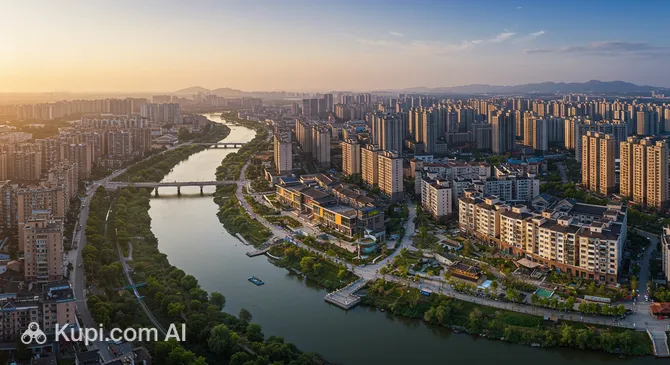
Qingyuan is a picturesque city in the north of Guangdong Province, located in the heart of Southern China. The city is known for its unique atmosphere, where the modern dynamics of a metropolis with a population of about 4 million people harmoniously coexist with the pristine beauty of the Beijiang River banks. This place is often called the "green lungs" of the region due to the abundance of forests, karst mountains, and clean water bodies.
Qingyuan. Illustration.
Source: Kupi.com AI
Geographically, the city occupies a strategic position, serving as an important link between the industrial Pearl River Delta and the mountain ranges of the northern part of the province. The climate here is mild and subtropical, allowing for lush greenery to be enjoyed year-round. There are many glorious pages in the history of Qingyuan: the administrative center was founded as early as the 6th century, and the influence of the Yao and Zhuang ethnic minorities has added a unique flavor to the local culture.
Qingyuan primarily attracts travelers with its natural parks, opportunities for extreme river rafting, and ancient villages that have preserved the spirit of old China. If you are looking for a peaceful getaway in nature combined with exploring a rich cultural heritage, this city will be an ideal discovery for you.
Weather Overview
Qingyuan is dominated by a subtropical monsoon climate, characterized by warm, humid summers and mild, relatively dry winters. The average annual temperature stays around 20–22°C. In winter, for example in January, the thermometer usually fluctuates between 10°C and 18°C, making walks comfortable, although evenings can be cool.
The summer period brings heat and heavy precipitation. Rainfall peaks in May and June, with up to 460 mm of precipitation per month. During this time, humidity increases significantly, and daytime temperatures often exceed 30°C. If you are planning active outdoor recreation, the best time to visit is autumn or spring, when the weather in the city is most stable.
When packing for your trip, keep in mind that the weather in the mountains around Qingyuan can change rapidly. Be sure to bring light waterproof clothing and sunscreen, as the subtropical sun remains active even on cloudy days.
Average monthly temperature
Average monthly precipitation
Interesting Facts
Qingyuan is a place where history intertwines with geographical records. Here are some curious facts about this city:
Ancient roots: Qingyuan's history as an administrative district began as early as the beginning of the 6th century during the Liang Dynasty, making it one of the oldest settlements in the region.
Ethnic melting pot: The city is home to significant Yao and Zhuang communities, whose traditions, costumes, and festivals distinguish Qingyuan significantly from typical Han cities in Guangdong Province.
Massive territory: Qingyuan is the largest prefecture-level city by area in Guangdong Province, covering approximately 19,000 square kilometers.
River route: For centuries, the Beijiang River served as the main transport artery for moving goods between northern and southern China, contributing to the city's economic prosperity.
How to Get There
Qingyuan stands out for its excellent transport accessibility, especially due to its proximity to Guangzhou — one of the world's largest metropolises. The distance between the cities is only about 60–70 kilometers, making it easy to get here by high-speed train, intercity bus, or car. More detailed information on routes can be found in the how to get to Qingyuan section.
For those arriving from afar, the main aviation hub is Guangzhou Baiyun International Airport (CAN). Direct shuttle buses run regularly from the airport to Qingyuan, and a taxi ride takes about an hour. This makes the city a convenient destination for short weekend trips from anywhere in China.
In the city itself and its surroundings, railway stations play an important role. The strategic Beijing–Guangzhou line passes through Qingyuan. The most significant for travelers is the Qingyuan-City Terminal (QYS), providing connections to the key economic centers of the region. Rail travel is the fastest and most reliable way to get around, especially if you plan to visit neighboring counties.
Station
Passenger traffic
Distance
Guangzhoubei Railway Station
10
37 km
Guangzhou railway station
15
62 km
Guangzhou railway station
15
62 km
Guangzhoudong Railway Station
14
65 km
Guangzhou South railway station
14
79 km
Main Attractions
The main treasure of the city is the Beijiang River (North River). Boat trips on motorboats and traditional junks allow you to see the famous "Three Gorges of Beijiang," where steep cliffs are reflected in emerald water. The ancient Feilai Temple, which is over fifteen hundred years old, is also located on the banks of the river; this place is considered sacred and attracts many pilgrims with its peaceful atmosphere.
For thrill-seekers, Qingyuan offers the Huangtengxia area. It features a famous glass platform hanging over an abyss and one of the most popular rafting routes in the province. The combination of adrenaline and panoramic mountain views makes this place a must-visit during the warm season.
No less interesting are the region's ancient villages, which are over 700 years old. Founded during the Southern Song Dynasty, they have preserved unique architecture from the Ming and Qing periods. Walking along narrow cobbled streets among ancient houses, you can feel the breath of centuries and see the traditional way of life of local residents, which has remained virtually unchanged for hundreds of years.
Local Cuisine
The gastronomic scene in Qingyuan is a real feast for lovers of Cantonese cuisine with a special local twist. The main dish that has made the city famous throughout China is Qingyuan Chicken. The birds here are free-range, resulting in meat that is tender and flavorful. It is usually served boiled with a ginger and scallion sauce to maximize the preservation of its natural flavor.
Thanks to its location on the Beijiang River, local restaurants always have an abundance of fresh river fish and seafood. Be sure to try steamed fish with soy sauce or thick fish soups. The influence of the Yao and Zhuang peoples is seen in the use of forest herbs, bamboo shoots, and specific spices that give familiar Chinese dishes an unusual flavor profile.
As a beverage, local tea grown on plantations in Yingde County is often served. Qingyuan's tea culture is very developed: drinking tea here is a way to relax and enjoy socializing. Street food also deserves attention: in the markets, you can find various rice rolls, roasted chestnuts, and sticky rice sweets that are eaten on the go.
Travel Tips
Qingyuan is a hospitable city; however, knowing a few practical nuances will help make your trip as comfortable as possible.
Clothing and belongings: Summer here is hot and humid, so bring light clothing made of natural fabrics. For mountain walks, comfortable shoes with non-slip soles are mandatory. A windbreaker and an umbrella may be useful in spring and autumn.
Transport: The most convenient way to move around is by taxi and bus. Download the Didi app to call cars; this will significantly simplify communication with drivers.
Finances: Mobile payments are used everywhere in China. Link your card to Alipay in advance. In small shops and in the mountains, it's better to have cash yuan with you.
Health and safety: The city is safe, but always keep a hotel card with the address in Chinese with you. Pharmacies are common, but they may not know international drug names — use an online translator.
Communication: English is not widely spoken. Install an offline translator and learn basic phrases: "Nihao" (hello) and "Xiexie" (thank you).
Local etiquette: When visiting ethnic Yao and Zhuang villages, always ask for permission before taking photos of local residents in national costumes.
What to avoid: Do not discuss political topics and try not to show excessive emotion in public places — restraint is valued in China.
Additional tip: The best time to visit is October and November, when the weather is dry and warm, ideal for hiking and river trips.
By following these simple recommendations, you will be able to fully immerse yourself in the atmosphere of Qingyuan and enjoy every moment of your adventure!
Entertainment & Nightlife
Entertainment in Qingyuan is closely linked to its natural landscape and ethnic diversity. During the day, the city offers active recreation: from boat trips on the Beijiang River to visiting theme parks and high-altitude glass bridges. Visits to the ethnic villages of the Yao people, where you can see traditional drum dances and learn about unique rituals, are also popular.
Nightlife is mainly concentrated in the Qingcheng district. Numerous bars and restaurants operate along the embankment and on central streets, offering both local Cantonese cuisine and international dishes. The atmosphere in these establishments is relaxed, and average prices are pleasantly surprising compared to neighboring Guangzhou. The dress code in most places is casual, highlighting the city's resort-like character.
For a more peaceful evening, walks through night markets are ideal, where you can try street food and buy handmade souvenirs. Safety in the city is high, so even late-night strolls along the illuminated embankments are quite comfortable. For moving around at night, it is best to use official taxi apps, which operate 24/7.
Parks & Museums
Qingyuan's park culture is inextricably linked with its embankments. Numerous green zones along the Beijiang River are favorite spots for relaxation for both locals and tourists. Here you can have a picnic, do morning exercises, or simply take a walk, admiring how the city's skyscrapers contrast with the river surface and the distant mountains.
For those interested in open-air history, the ancient villages of the region are a real museum. Some of them have over 700 years of history. These settlements represent a unique architectural ensemble where every house and every bridge can tell a story about the lives of dynasties from past centuries. Local historical exhibitions dedicated to the region's development since the Sui Dynasty also operate in the Qingcheng district.
Nature lovers should visit the landscape parks in the vicinity of Yingde county, where karst formations create whimsical caves and grottoes. These natural sites function as geological museums, demonstrating the power of natural processes that have shaped the appearance of Southern China over millions of years.
Getting Around
The public transport system in Qingyuan is oriented toward the convenience of moving between districts and connecting with the suburbs. The backbone of urban transport consists of buses, whose route network covers all significant points of the city, including the Qingcheng and Qingxin districts. Bus fares are fixed and very affordable, making them the most budget-friendly way to get around.
To pay for travel, it is most convenient to use local transport cards or mobile apps (Alipay/WeChat); however, you can also pay in cash on buses (it is advisable to have exact change). An alternative to buses is an extensive network of taxis. Cars can be hailed directly on the street or called via the Didi app. Taxis are a comfortable and fast way to reach remote attractions or the railway station.
A feature of Qingyuan is its role as a river hub. Although water transport is mostly used for tourism today, pleasure boats remain an important element of the transport infrastructure for those who want to see the city and its surroundings from the water. Rail links connect Qingyuan with Guangzhou and Beijing, turning the city into a convenient hub for traveling around the country.
Accommodation
Qingyuan offers a wide range of accommodation options to suit the needs of any traveler. The main concentration of hotels is in the Qingcheng district, which is the administrative and business center. Here you can find both modern hotels from well-known Chinese and international chains, as well as budget-friendly options for economical tourists.
Hotels located on the front line of the Beijiang River are particularly popular. They offer beautiful panoramic views of the water and mountains. If your goal is ecotourism and immersion in rural life, you should consider guesthouses in Yingde or Lianzhou counties. There you can find cozy houses decorated in a traditional style, surrounded by tea plantations and karst cliffs.
Accommodation prices in Qingyuan are usually lower than in Guangzhou or Shenzhen; however, during Chinese national holidays (such as "Golden Week" in October), prices can increase significantly. It is recommended to book accommodation in advance through popular services like Trip.com to ensure the best choice and favorable terms.
Nearby Cities
Thanks to its location, Qingyuan serves as an excellent starting point for exploring the northern and central regions of Guangdong Province. The city's surroundings are rich in both natural parks and industrial centers, which are easily accessible as part of a day trip.
Just 26 kilometers away is the city of Shiling, known for its industry and proximity to natural areas. If you want to get to know larger cities in the region, you should pay attention to Foshan, which is famous for its architecture, martial arts traditions, and ceramics. A trip there won't take much time but will provide many new impressions.
Don't miss the opportunity to head a bit further south to see Guangzhou, or explore less crowded settlements such as Sihui and Heyunkeng. Each of these destinations reveals its own facet of life in Southern China, turning your vacation into a complete exploration of the region.
Shopping & Souvenirs
Shopping in Qingyuan is primarily an opportunity to purchase unique local products and handicrafts. Qingcheng is considered the main shopping district, where the primary department stores and markets are concentrated. Here you can find both familiar clothing and electronics, as well as specialized shops with goods from remote counties.
If you are looking for authentic souvenirs, look for bamboo products traditionally made by Yao and Zhuang artisans. The city is also famous for its Yingde tea and various spices. Qingyuan's food markets are an adventure in themselves: here you can buy the famous dried fish, local fruits, and medicinal herbs.
Most shops operate from 9:00 or 10:00 AM until late evening. Payment in large shopping centers is accepted by card, but in markets and small shops, mobile payment systems like Alipay and WeChat Pay dominate. Cash is still accepted everywhere, so tourists are recommended to have a small supply of yuan for small purchases.