Support

Huizhou Airport

About the Airport

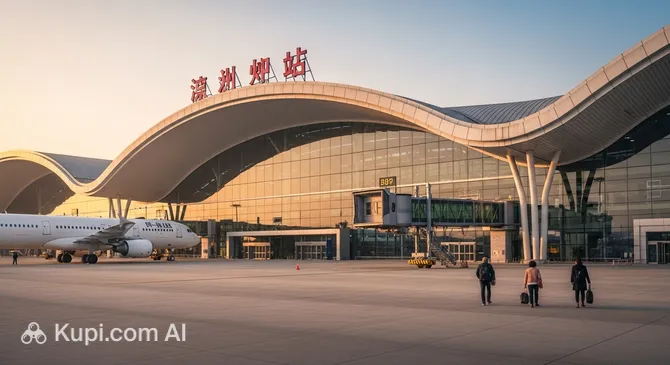
Huizhou Airport. Source: Kupi.com Binoculars

Huizhou Pingtan Airport is not just another air harbour, but a revived transport hub with a unique history. As a dual-use airport, it serves both civil and military aviation. After a long hiatus, it reopened its doors to passengers in 2015, quickly becoming an important gateway for travellers seeking to explore the city of Huizhou and the dynamic Pearl River Delta region in China. Today, it is a modern and compact airport offering a convenient start to any journey.

IATA Code HUZ
ICAO Code ZGHZ
City Huizhou
Distance to Center approx. 20 km
Status International (Civil/Military)
Annual Passengers 2,617,937 (2023)
Popular Airlines Air China, China Eastern Airlines, Tianjin Airlines
Schedule Online Flight Board "Huizhou Airport"

Despite its relatively small size, Huizhou Airport is distinguished by its efficiency and passenger convenience. It serves as a vital transport node connecting the city with key metropolises in China, including Beijing, Shanghai, Chengdu, and Wuhan. Thanks to its strategic location, it is an excellent alternative to the larger and busier airports in the region, such as Guangzhou and Shenzhen. You can reach the city centre via dedicated shuttle buses or taxis, making the trip quick and comfortable.

Contact Information

For the most up-to-date information on flights, services, and regulations at Huizhou Airport, it is recommended to use official communication channels. Below are the key contact details for Pingtan Airport (HUZ) that travellers may need.

  • Official Website: www.hzairport.com. Please note that the main version of the site is in Chinese, so you may need a browser-integrated translator for navigation.
  • Information Desk Phone: +86-752-5718114. You can call this number to clarify flight schedules, terminal operations, and other services.
  • Airport Address: Pingtan Town, Huiyang District, Huizhou, Guangdong, China.
  • Lost & Found: If you encounter lost or damaged luggage, please contact +86-752-5718012 for assistance.
  • Email and Social Media: An official email address for general inquiries is not published. It is recommended to use the phone for communication. The airport is primarily represented on local Chinese social networks.
  • Passenger Support: For general questions related to your stay and service at the airport, please contact the main information desk.

Please consider that calls from outside China may incur international roaming charges. Staff may communicate primarily in Chinese, although English-speaking personnel are often available in international zones.

Getting to the Airport

There are several ways to get to Huizhou Pingtan Airport (HUZ), located approximately 25 kilometres from the city centre of Huizhou. The choice depends on your budget, time, and comfort preferences. The journey from the city centre usually takes between 40 to 60 minutes depending on traffic conditions.

Public Transport is the most economical option. Special shuttle buses (Airport Express Lines) run from various districts of the city to the airport. They connect the terminal with key points such as bus stations and major hotels. This is a reliable and inexpensive method, ideal for travellers with light luggage. It is best to check schedules and routes in advance, as they are subject to change.

Taxi or Private Transfer offers significantly more comfort and convenience. This is the optimal choice if you are travelling with family, a large amount of luggage, or simply wish to reach your destination without transfers. Cars can be found at official stands near hotels or in the city, as well as ordered through ride-hailing apps popular in China. The cost of the trip will be higher than the bus, but it ensures maximum convenience and speed.

For those who prefer complete freedom of movement, car rental is available. Offices of both local and international rental companies are present at the airport. This option suits tourists planning to actively explore the region. However, it is worth remembering that foreigners generally require a local driving license or a notarized translation to drive in China. The airport also provides parking for short-term and long-term storage of personal vehicles.

When planning your route, it is useful to know about other major airports in the region that can serve as alternative arrival points. Among them are: Shenzhen Bao'an International Airport (SZX), Hong Kong International Airport (HKG), and Guangzhou Baiyun International Airport (CAN). From these hubs, you can reach Huizhou via high-speed trains or intercity buses.

Terminals and Layout

Huizhou Airport (HUZ) is a modern and compact aviation hub with one passenger terminal that serves all domestic and international flights. This structure makes it very convenient for navigation, as all key zones are located within a single building, and you will not have to worry about moving between different complexes.

The terminal layout is intuitive and follows a classic two-level model. The First Floor is entirely dedicated to the arrivals area. Here, passengers reclaim their baggage, go through necessary customs formalities (for international flights), and exit to the greeting hall, from where they can access taxis or buses. The Second Floor is the departures area. You enter here upon arriving at the airport. Located here are the check-in counters, baggage drop-off points, and beyond them, the security screening area leading to the airside zone with waiting lounges and boarding gates.

Check-in and screening procedures at Huizhou Airport generally proceed quite quickly due to its relatively small size. Nevertheless, it is recommended to arrive at the airport at least 1.5-2 hours before a domestic flight and 2.5-3 hours before an international one. This time will be sufficient to complete all formalities without rushing, enjoy a coffee, and find your boarding gate.

For convenient navigation throughout the terminal, numerous signs are installed in Chinese and English. All zones — from check-in to gates — are connected by spacious corridors, making it practically impossible to get lost. A top tip: after entering the building, proceed immediately to the second floor to check in for your flight, and after passing security control, simply follow the signs to your boarding gate number.

Airport History

The history of Huizhou Pingtan Airport (HUZ) is unique as it is closely intertwined with its dual purpose — military and civilian. Initially built in the 1950s as a military airfield, it performed exclusively defence tasks for the Air Force of the People's Liberation Army of China for decades.

The first step towards civil aviation was taken in 1985 when the airport began accepting commercial flights. This was an important stage, which, however, turned out to be temporary. In 2002, civilian flight services were suspended, and the airport once again focused entirely on military functions, leaving the city without direct air connections for many years.

The true revival of the airport as a civilian hub began in the new millennium. As part of the development strategy for the Pearl River Delta region, a decision was made for its large-scale reconstruction. After significant investment and the construction of modern infrastructure, on February 5, 2015, Huizhou Pingtan Airport was ceremoniously opened for commercial flights. This event became a key moment in the city's modern history, returning it to the country's air route map.

Since its second opening, the airport has demonstrated impressive growth rates. To cope with the rapidly increasing passenger flow, further modernization was carried out. A landmark event was the opening of the new and more spacious Terminal T2 in August 2019. This modern complex allowed not only for a significant increase in capacity but also raised the level of comfort for travellers, offering new services and amenities.

Thus, the history of Huizhou Airport is a vivid example of transformation. Having journeyed from a closed military facility to a temporary civilian port and finally to a modern and dynamically developing regional hub, it has become an important part of Guangdong Province's transport system, contributing to economic growth and tourism development in the region.

Services and Amenities

Huizhou Airport (HUZ) offers passengers all the necessary services for a comfortable wait before their flight. Despite its relatively small size, the terminal is designed to meet the basic needs of travellers.

Inside the airport building, you will find several cafes and restaurants where you can have a snack before departure, drink coffee, or have a full meal. Establishments offering both local Chinese cuisine and fast food are present here. Shops are also available where you can purchase souvenirs, travel essentials, and light snacks.

For passengers preferring enhanced comfort, VIP lounges are provided. They offer a quieter atmosphere, complimentary beverages and snacks, as well as the latest press. There is also ample seating in the general waiting hall. Free Wi-Fi is available throughout the terminal, and charging stations for mobile devices are installed in waiting areas.

Financial services are represented by ATMs from several major banks. Currency exchange points are also available, but it is recommended to check their opening hours in advance, especially if your flight is late at night or early in the morning. In case of necessity, passengers can contact the medical centre for first aid.

The airport is equipped for the comfortable stay of passengers with children — nursing rooms are available. For travellers with reduced mobility, a barrier-free environment has been created: ramps, special restrooms, and the option to request an escort service within the terminal.

Although there are no hotels directly inside the airport building, several hotels of varying comfort levels are located in the immediate vicinity and can be easily reached by taxi. For business travellers, basic business services, such as workspaces and internet access, are most often provided within the VIP lounges.

Where to Eat

At Huizhou Airport, travellers can find various options for a snack or a full meal to help pass the time while waiting for a flight. The main dining establishments are concentrated in the main terminal building and are available both in the public area before security control (landside) and in the secure departure zone (airside).

For those looking for a quick bite, coffee shops and fast-food outlets are ideal. Here you can order familiar sandwiches, pastries, and, of course, good coffee. Such establishments are an excellent choice if there is not much time left before boarding. They are usually located both before and after passport control, which is very convenient.

If you have an hour or more to spare, consider restaurants with table service. This is a wonderful opportunity to experience local cuisine. In Huizhou, the culinary traditions of Cantonese and Hakka cuisine are strong, so you can find dishes such as dim sum, noodles, or rice with various toppings on the menus of local restaurants. This is an excellent chance to taste the authentic flavours of China before departure.

Regarding special dietary needs, finding certified Halal or gluten-free dishes may be challenging. However, many Chinese restaurants offer vegetarian options or can prepare a meat-free dish upon your request. It is recommended to clarify the ingredients with the staff. The price range at the airport is typically slightly higher than the city average but remains quite acceptable. Most establishments operate according to the flight schedule, opening early in the morning and closing after the departure of the last aircraft.

Travel Tips

To ensure your journey from the city of Huizhou begins without unnecessary stress, follow a few simple tips. It is recommended to arrive at the airport at least 2 hours before departure for domestic flights within China and 3 hours before international flights. This will give you enough time to calmly complete check-in, drop off luggage, and clear all pre-flight formalities.

To save time, use the online check-in service if your airline provides it. When passing through security control, be prepared to remove laptops and other large electronic devices from your carry-on luggage. Chinese airports have strict rules regarding the carriage of portable batteries (power banks): they must have clear markings indicating their capacity and must be carried only in hand luggage. Liquids are permitted in containers up to 100 ml, packed in a single transparent bag.

When choosing a seat on the plane, consider your preferences: a window seat allows you to enjoy the views, while an aisle seat lets you move freely without disturbing neighbours. Passengers with short layovers should choose a seat closer to the aircraft exit. If you have a connecting flight at Huizhou Airport, follow the "Transfer" signs and check in advance if you need a transit visa to exit into the city.

Customs control typically proceeds quickly. Have your passport and boarding pass ready. If you are carrying goods subject to declaration, complete the relevant documents in advance. To save on beverages, you can bring an empty bottle and fill it with water at special fountains after the security checkpoint.

In case of a flight delay, do not panic. First, contact your airline's representative counter for the latest information. Depending on the duration of the delay, you may be entitled to vouchers for food or beverages, and for extended waits, hotel accommodation. Keep an eye on the information screens for updates and keep all receipts for unforeseen expenses.

Reached the end of the page?

That means the route is fully explored