Support

Wuhan Tianhe International Airport

Airports in the city

About the Airport

Tianhe International Airport is not merely an air gateway to the metropolis of Wuhan, but a true symbol of the rapid development of central China. Its name, "Tianhe," poetically translates to "Sky River" — one of the ancient Chinese names for the Milky Way. Located at the intersection of the country's most vital air routes, this modern and high-tech hub plays a key role in the region's transport system, offering travelers a comfortable start or conclusion to their journey through the Celestial Empire.
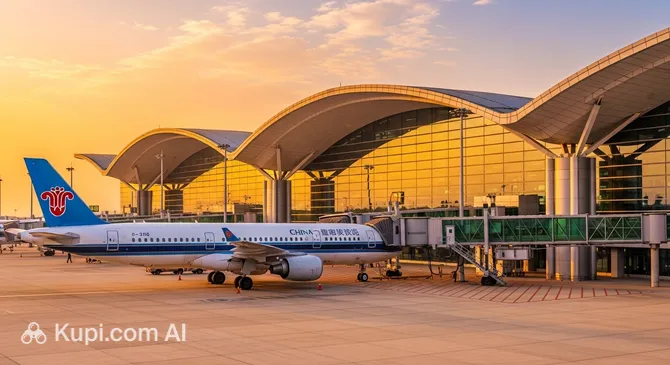
Wuhan Tianhe International Airport. Source: Kupi.com Binoculars
IATA Code WUH
ICAO Code ZHHH
City Wuhan
Distance to Centre approx. 26 km
Status International
Annual Passengers approx. 21.6 million (2023 data)
Popular Airlines China Southern Airlines, China Eastern Airlines, Air China
Schedule online board "Tianhe International Airport (Wuhan)"

One of the airport's main features is Terminal 3, opened in 2017. It is one of the largest terminal buildings in central China, renowned for its impressive architecture and high level of service. The airport is excellently connected to the city: the centre can be easily reached by metro, high-speed train, shuttle buses, or taxi. For passenger convenience, free Wi-Fi is available throughout the premises, along with numerous shops, restaurants serving local and international cuisine, and comfortable lounges. Additionally, since 2019, a 144-hour visa-free transit policy has been in effect for citizens of 53 countries, making Wuhan an even more attractive point for transfers and short visits.

Contact Information

To obtain current information regarding flights, services, and regulations at Wuhan Tianhe Airport, it is recommended to use the following official contacts:

  • Official Website: wuh.hbairport.com
  • Inquiry Service Phone: +86-27-96577 (24-hour hotline)
  • Address: Tianhe Street, Huangpi District, Wuhan, Hubei, China
  • Email: The airport does not provide a public email address for general inquiries. It is recommended to use the contact forms on the official website or call via telephone.
  • Social Media: The primary channel for news and updates is the airport's official account on the WeChat app.
  • Lost & Found: For issues related to items lost within the terminal, you may contact: +86-27-65590138. If your luggage was lost by the airline, you should contact your carrier's representative directly.
  • Passenger Support: Information desks are located throughout the terminals, where staff are ready to provide assistance and answer your questions.

How to Get to the Airport

Tianhe International Airport (WUH) has excellent transport links with Wuhan, allowing travelers to choose the most convenient way to reach the terminals. Depending on your budget, amount of luggage, and preferences, you can use public transport, a taxi, or a rental car.

Public Transport

Metro: Perhaps the most reliable and economical way to reach the airport. Line 2 (Blue Line) of the Wuhan Metro directly connects the city centre with the `Tianhe International Airport` station, located right within the terminal complex. The journey from the city centre takes approximately 45-60 minutes. This is an excellent option to avoid city traffic, especially during peak hours.

Shuttle Buses: Special buses run to the airport from various districts of the city. They depart from major transport hubs, railway stations, and certain hotels. This is a good compromise between cost and comfort, particularly if you are traveling with bulky luggage. Travel time can vary from 60 to 90 minutes depending on the route and traffic conditions.

Taxi and Transfers

Taking a taxi is the most comfortable way to get to the airport, especially if you are traveling with family or a large number of suitcases. The trip from the centre of Wuhan will take about 40-60 minutes, though this time can increase significantly due to traffic. It is recommended to use official metered taxis or book a car through popular apps in China, such as DiDi. The cost will be significantly higher than public transport. You can also pre-book a private transfer.

Car Rental and Parking

If you prefer to drive yourself, car rental counters operate at the airport and in the city. However, please note that foreign citizens generally require a Chinese driving license to drive in the country. For those arriving at the airport in their own or rented vehicle, Tianhe Airport is equipped with spacious parking lots for both short-term and long-term parking.

Terminals and Map

Tianhe International Airport in Wuhan is a modern and massive transport hub. Currently, the main passenger flow is handled in Terminal 3 (T3), which opened in 2017. The previous terminals, T1 and T2, are not currently used for regular commercial passenger flights. All international and the vast majority of domestic flights for this major metropolis of central China depart from and arrive specifically at T3, which significantly simplifies navigation for travelers.

Terminal 3 has a recognizable shape resembling a phoenix or a butterfly, with a central building and several pier-galleries extending from it. This structure, typical of new Asian airports, is intuitively easy to understand. The departure zone is located on the upper floors, while the arrival zone is on the lower ones. Navigation poses no difficulties: all signs are duplicated in English, and airport staff are generally ready to assist foreign tourists. Distances within the terminal can be significant, so numerous travelators (moving walkways) are provided for passenger convenience.

Procedures at the airport are organized quite efficiently, but due to the large size of the terminal and high passenger traffic, it is worth allocating sufficient time. For international flights, it is recommended to arrive at least 3-4 hours before departure, and for domestic flights — 2-2.5 hours. The check-in area is divided into several "islands" (A, B, C, etc.) assigned to different airlines — it is best to check your counter number in advance on the information board. After check-in, passengers undergo security screening, and for international flights, passport control as well.

Since all operations are concentrated in one building, transfers between terminals are not relevant for passengers. The key is moving within T3 itself and its connection to the city. The terminal is directly connected to the transport hub, from where you can access the metro station, intercity bus, or high-speed train. This makes the journey from the airport to the city and back maximally convenient. The main advice when navigating Tianhe Airport is to follow the signs carefully and not leave security checks until the last moment.

Airport History

The history of Tianhe International Airport is a reflection of the rapid development of the city of Wuhan and the entire central region of China. The airport was opened on April 15, 1995, replacing the old Nanhu Airport, which could no longer cope with the growing passenger traffic and modern civil aviation requirements. From the very beginning, Tianhe was designed as a major transport hub capable of handling not only domestic but also international flights.

The first significant phase of expansion occurred in the 2000s. In 2008, in time for the Beijing Olympics, Terminal 2 was opened. This allowed for a significant increase in capacity and improved service quality for passengers. However, the growth rate of air travel in the region was so high that even more massive modernization was soon required. Thus began the construction of the airport's third phase.

A key moment in the airport's history was the opening in August 2017 of the new Terminal 3, one of the largest and most modern terminal structures in the central part of the country. Simultaneously, a second runway was put into operation. This project turned Tianhe into one of China's most important aviation hubs, capable of receiving the largest passenger aircraft, including the Airbus A380. Capacity grew to 35 million passengers per year.

In early 2020, the airport faced an unprecedented challenge, temporarily suspending all flights due to large-scale sanitary restrictions. Airport operations were completely paralyzed for several months. However, as early as April of that same year, it was one of the first in the world to resume domestic flights, and subsequently international ones, becoming an important symbol of recovery and adaptation to new global realities. This experience demonstrated the exceptional resilience and organizational power of the air harbour.

Services and Amenities

Tianhe International Airport in Wuhan offers passengers a wide range of services, making the wait for a flight comfortable and productive. For gourmets and shopping enthusiasts, there are plenty of options here: from restaurants offering local and international cuisine to cosy coffee shops and fast-food outlets. In numerous shops, including Duty Free, you can purchase souvenirs, fashion apparel, cosmetics, and goods from famous brands.

For those wishing to stay connected or work, free Wi-Fi is available throughout the terminal, as well as numerous charging stations for electronic devices. Passengers who value enhanced comfort can use the services of lounges and VIP halls. They offer a secluded atmosphere, snacks, beverages, and convenient workspaces. For business travelers, business centres and conference rooms are provided where meetings can be held or work can be done in silence.

Financial matters can be easily resolved at the airport thanks to the presence of bank branches, ATMs, and currency exchange points. In case of necessity, passengers can visit medical points for first aid. Families with children will appreciate the presence of nursing rooms equipped with everything necessary for baby care. For passengers with reduced mobility, a barrier-free environment has been created, including ramps, elevators, and special assistance upon prior request.

If you have a long layover or an early flight, you can stay at one of the hotels located in the immediate vicinity of the airport. Many of them offer free transfers to the terminals, making the journey even more convenient. Tianhe Airport is a modern transport hub that cares for the needs of every traveler arriving in or departing from China.

Where to Eat

At Tianhe International Airport in Wuhan, travelers will find diverse dining spots capable of satisfying any taste and budget. Most cafes and restaurants are concentrated in the main Terminal 3, both in the public area (before security check) and in the departure zone (after security).

For those wishing to explore local cuisine, the airport offers an excellent opportunity to try famous dishes from Hubei province. Be sure to look for establishments serving "Reganmian" (热干面) — hot dry noodles with sesame sauce, which is the calling card of Wuhan. Other local delicacies can also be found. For a full lunch or dinner in the departure zone, Chinese restaurants operate where you can leisurely enjoy a meal before your flight.

If you prefer something more familiar, the airport has many fast-food chains such as KFC, McDonald's, and Starbucks. They are ideal for a quick snack and are located in both the arrival and departure zones. Their opening hours usually cover most flights, starting from early morning until late evening. Besides fast food, there are coffee shops and small cafes offering sandwiches, pastries, and beverages.

The price range at the airport is generally higher than in the city. A quick snack will cost a moderate amount, while a full meal in a restaurant will be more expensive. Regarding dietary restrictions, vegetarians will be able to find vegetable, rice, and tofu dishes in Asian restaurants. However, finding specific options such as Halal, vegan, or gluten-free dishes may require some effort; it is highly recommended to clarify the ingredients with the staff at the establishment beforehand.

Travel Tips

To ensure your journey through Tianhe International Airport goes smoothly, make use of our tips. Proper preparation will help save time, reduce stress, and even save money, making the wait for your flight comfortable.

Arrival Time at the Airport: We recommend arriving at the airport at least 2-3 hours before domestic flights and 3-4 hours before international flights. Wuhan Tianhe is a large and busy hub, so extra time will allow you to complete all formalities without rushing, especially during peak hours and national holidays in China.

Check-in and Security: To avoid queues at check-in counters, use online check-in on your airline's website. The security screening procedure here is quite thorough. Be prepared to remove laptops, tablets, and power banks from your hand luggage in advance. Liquids up to 100 ml must be packed in a separate transparent bag.

Seat Selection: A classic choice: a window seat for those who love to gaze at clouds and views during takeoff, or an aisle seat, which gives more legroom and the ability to stand up without disturbing neighbours. For long-haul flights, this choice can be especially important.

Hand Luggage: Pay close attention to baggage rules. China has strict restrictions on carrying power banks (external batteries): they can only be carried in hand luggage, and the capacity marking must be clearly visible on the casing. Lighters and matches are generally completely prohibited.

Transfer Passengers: If you have a connecting flight, check in advance whether you need to collect and re-check your luggage. Follow the "Transfers" signs at the airport. Allow at least 2-3 hours for the transfer, especially if it involves passing through passport control.

Customs Control: For international flights, have your passport, visa, and boarding pass ready. If you are importing or exporting goods subject to declaration, fill out the appropriate form in advance to speed up the procedure.

Saving Time and Money: Bring an empty water bottle with you — after security, you can fill it at drinking fountains. Prices for food and drinks at the airport are traditionally higher, so a light snack brought with you won't hurt. Public transport, including the metro, is the most budget-friendly way to get to the city.

Flight Delays: In case of a flight delay or cancellation, contact your airline representative for information and possible compensation (meal vouchers, hotel accommodation). Monitor information on the departure boards. The airport offers enough shops, cafes, and rest areas to pass the waiting time.

Reached the end of the page?

That means the route is fully explored