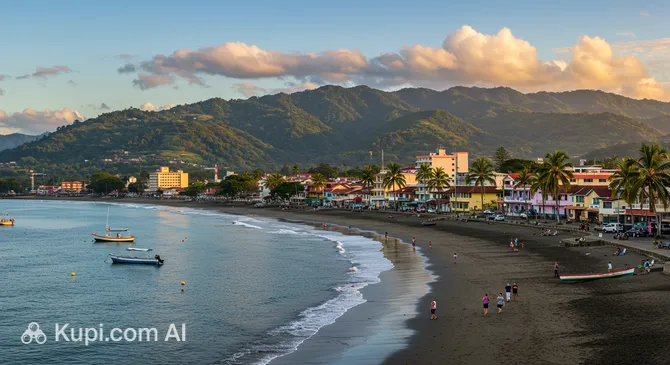
Puntarenas is not just a city, but a true gateway to the Pacific Ocean and the country's main seaport, located on a unique long sandbar stretching directly into the turquoise waters of the gulf. This colorful corner, home to about 41,500 people, is situated on the west coast of Costa Rica, about 90 kilometers from the capital. As the administrative center of the province of the same name, it serves as an ideal starting point for traveling around the picturesque Nicoya Peninsula.
Puntarenas. Illustration.
Source: Kupi.com AI
The atmosphere here is a wonderful mix of leisurely seaside comfort and vibrant Latin American energy. The heart of city life is the Paseo de los Turistas promenade, decorated with palm trees and cozy cafes. Life is always bustling here: local fishermen offer their fresh catch, while travelers enjoy stunning sunsets or set off on sea cruises. Despite its resort appearance, Puntarenas' history as an important trade and transport hub has left a notable mark on the city's architecture and traditions.
The city's surroundings are a real magnet for eco-tourism enthusiasts. Nearby lie dense tropical forests and mangroves, where sloths, iguanas, and monkeys can be found in their natural habitat. Puntarenas is worth visiting to experience the authentic spirit of a port city, try local delicacies at colorful markets, and touch the pristine nature of the region.
Weather Overview
Puntarenas greets travelers with a hot tropical climate typical of the Pacific coast of Costa Rica. Eternal summer reigns here, and the weather largely determines the city's rhythm of life. Thanks to its proximity to the ocean, the heat is often tempered by a fresh sea breeze, which makes walks along the promenade particularly pleasant.
The temperature regime here is remarkably stable. According to statistics, the average air temperature throughout the year fluctuates in a comfortable range from +25°C to +27°C. During the day, the thermometer often rises to +30°C, especially in February and March, while nights remain warm, with temperatures around +23...+24°C. These are ideal conditions for those wanting to escape the cold at any time of year.
When planning a trip, it is important to consider the seasonality of precipitation. The year is clearly divided into two periods: dry and wet. From January to March, rain is a rarity (only 0–1 mm of precipitation), which guarantees cloudless skies and bright sunshine. Starting in May and through November, the number of rainy days increases sharply, peaking in October. However, even in the rainy season, precipitation often falls as short but powerful tropical showers, after which the sun comes out again. To choose the best dates for your vacation, we recommend checking the detailed weather in Puntarenas before booking your tickets.
Summarizing the climatic features of the region: expect consistently hot weather year-round with a dry and sunny winter and a wet season from May to November, when nature becomes its most lush and green.
Average monthly temperature
Average monthly precipitation
Interesting Facts
In addition to its status as a major port and popular beach destination, Puntarenas holds many fascinating stories and natural secrets that not all travelers know about. Here are some surprising facts that will help you see this city from a new perspective:
Pacific Marine Park. Illustration.
Source: Kupi.com AI
Traveler photos:
Coffee Gateway to the World. Historically, it was Puntarenas that served as the country's main export hub. In the 19th and early 20th centuries, ships loaded to the brim with famous Costa Rican coffee left from here for Europe and North America. This trade route transformed a small settlement into a thriving city.
Bridge with Predators. Very close to the city, on the Tárcoles River, is a place that evokes both shivers and admiration — the so-called "Crocodile Bridge." From a safe height, you can observe one of the largest populations of wild American crocodiles lazily basking in the sun.
Ocean Rescue Center. The city is home to the Pacific Marine Park, which fulfills an important mission. This is not just an aquarium for entertainment, but a real hospital for marine life, where injured turtles and fish are treated and nursed back to health before being returned to the wild.
Pirate Legends. The atmosphere of the old port has given rise to many myths. Locals pass down stories from generation to generation about sea ghosts and lost pirate treasures that are rumored to still lie at the bottom of the Gulf of Nicoya, waiting for their hour.
Strategic Geography. The city is unique for its location on a narrow sandbar jutting out into the ocean. This makes it an ideal base for eco-tourism: from here, it's just a stone's throw to famous reserves such as the Monteverde cloud forests and the Manuel Antonio jungles.
How to Get There
Puntarenas is an important transport hub on the Pacific coast, and you can get here in various ways. Most often, tourists combine a flight with a trip by car or bus. You can find more details on how to get to Puntarenas by exploring all available routes and modes of transport.
Puntarenas city itself does not have its own airport, so most international travelers arrive at Juan Santamaría International Airport (SJO). It is located in the city of Alajuela, approximately 68 km from Puntarenas. This is the country's main air gateway with a huge passenger flow. The journey from the airport to the coast by taxi or transfer usually takes about 2 hours, following a scenic highway.
Another option, convenient for domestic flights or private aviation, is Tambor Airport (TMU). It is located in the village of Tambor on the Nicoya Peninsula, just 33 km from Puntarenas in a straight line. However, since it is located across the gulf, the travel time (about 1 hour 10 minutes) will include a ferry crossing or a water taxi, which can be an exciting part of the journey in itself.
For clarity, here is summary information on the main airports in the region:
Railway connections directly to the city of Puntarenas are currently not used for regular passenger tourist travel. The main alternative is a developed network of bus routes connecting the port with the capital, San José, and other regions. Taking the bus is an economical and colorful way to reach the destination, allowing you to enjoy the views of Costa Rica from the window.
Main Attractions
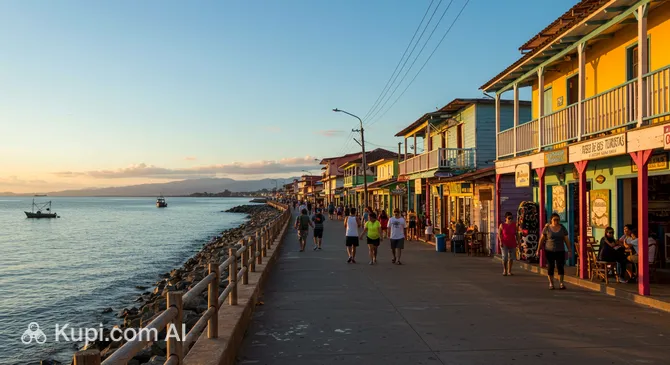
Despite its compact size, Puntarenas is rich in interesting places reflecting its port history and proximity to the ocean. A journey through the city should begin with its main artery — the Paseo de los Turistas promenade. This is not just a walking area, but a true center of cultural and social life. Here, tourists can take a leisurely stroll under the shade of palm trees, admiring the view of ships and fishing boats in the Gulf of Nicoya. The promenade is famous for its kiosks selling local delicacies and souvenir shops, creating a unique festive atmosphere, especially at sunset.
Nature lovers and families with children should definitely visit the Pacific Marine Park. This unique place combines the functions of an aquarium and a marine animal rehabilitation center. Visitors can observe the life of coral reef inhabitants, see sharks, rays, crocodiles, and sea turtles in conditions as close to natural as possible. The park plays an important role in environmental education and preserving the region's biodiversity, making a visit both exciting and educational.
Puntarenas Lighthouse. Illustration.
Source: Kupi.com AI
Traveler photos:
Another iconic attraction is the historical Puntarenas Lighthouse, located in the area known as "La Punta" (The Point). Although it now serves more as an architectural monument than a navigational aid, this structure remains an important symbol of the city. A pleasant walking area is arranged around the lighthouse, offering perhaps the most breathtaking panoramic views of the endless ocean. It is an ideal location for taking memorable photos against the backdrop of the seascape.
For those looking for entertainment and wanting to try their luck, the Yadran Beach Resort & Casino may be of interest. This complex stands out for its distinctive architecture and offers guests not only gaming halls but also recreational opportunities. This place adds a touch of resort excitement to the city and is a popular attraction for those wanting to diversify their evening leisure.
Local Cuisine
Puntarenas cuisine is a hymn to freshness and the bounties of the ocean. The main gastronomic hallmark of the city is rightfully considered ceviche. Here, this dish is prepared in almost every home and restaurant: fresh fish or shrimp are marinated in lime juice, with finely chopped onions, cilantro, and chili peppers added. The taste is bright, refreshing, and perfectly suited for the hot tropical climate.
The epicenter of the city's culinary life is the Paseo de los Turistas promenade. Numerous kiosks and open-air cafes line the promenade, from which appetizing grill aromas waft. It's worth trying the fish, squid, or octopus cooked over an open fire here. For those who want a more substantial meal, an excellent choice is the traditional Costa Rican "casado" — a hearty plate combining rice, black beans, fried bananas (plantains), salad, and a main protein, most often fish.
Street food in Puntarenas deserves special attention and is an important part of the local culture. Walking through the city, it's impossible to pass by stalls selling "pan de elote" — a sweetish corn bread, or crispy churros. On weekends, food festivals are often held at the markets, turning an ordinary lunch into a small celebration of taste.
As for drinks, it is customary here to quench your thirst with ice-cold coconut milk straight from the nut or a variety of fresh fruit juices. Be sure to try the authentic "guavada" drink based on cane sugar and lime. It is very refreshing and restores energy after walking under the sun.
Travel Tips
Welcome to Puntarenas! To ensure your journey to this colorful port city and the main marine gateway of Costa Rica is as comfortable and worry-free as possible, we have prepared a list of useful recommendations based on the local climate and rhythm of life.
Clothing and Sun Protection. The climate here is hot and humid, so prefer loose clothing made from natural breathable fabrics (cotton, linen). The sun on the coast is very active: be sure to use high SPF cream, wear a hat, and sunglasses. Comfortable open shoes are suitable for walks along the promenade, and if you plan excursions to the mangrove forests, bring closed lightweight sneakers.
Transport Nuances. The city is located on a narrow spit, and its center is easy to explore on foot. For long distances, use official red taxis with a yellow triangle on the door (always ask to turn on the meter — "la maría"). If you plan to cross to the Nicoya Peninsula, buy ferry tickets online in advance, especially on weekends, to avoid long queues at the port under the scorching sun.
Finances and Cash. While US dollars are accepted in many tourist spots, the exchange rate may be unfavorable. It is better to always have local currency (colones) in small bills. You will need them to pay for bus fares, purchases at street kiosks ("chinamos"), and tips. Cards are accepted in most restaurants and supermarkets, but cash is preferred at markets.
Health and Water. Although tap water in the country is considered relatively safe, tourists are recommended to drink bottled water to avoid stomach acclimatization. Be sure to bring insect repellent: mosquitoes can be active at sunset and in shaded park areas.
Communication and Language. In the tourist zone (on the Paseo), many understand English, but deep in the city, Spanish remains the primary language. Learn the universal phrase "Pura Vida" ("Pure Life"). Locals use it as a greeting, farewell, thank you, and answer to the question "how are you." It is the magic key to the hearts of Costa Ricans.
Safety and Neighborhoods. Puntarenas is a port city, so observe basic safety precautions. In the evening, it is better to stick to the well-lit Paseo de los Turistas promenade and avoid walking alone in the dark alleys of remote neighborhoods (for example, El Carmen). Do not leave valuables unattended on the beach while swimming.
What to Avoid. Do not ignore warning flags on the beaches. Currents in the Pacific Ocean can be very strong and unpredictable even near the shore. Also, try not to swim in close proximity to the piers and the mouth of the estuary, where the water may be less clean due to shipping.
Local Hack. While in Puntarenas, be sure to try the legendary "Churchill" (Churchill) dessert. It is not just shaved ice with syrup and condensed milk, but a true gastronomic symbol of the city. The most delicious and authentic "Churchills" are sold in kiosks along the promenade — it's the perfect way to cool down in the midday heat.
By following these simple tips, you can avoid minor troubles and fully immerse yourself in the relaxed "Pura Vida" atmosphere, enjoying the ocean breeze and the hospitality of Puntarenas.
Entertainment & Nightlife
Entertainment and nightlife in Puntarenas have their own unique character, distinct from the urban polish of San José or the beach parties of Guanacaste. A spirit of port-side fun prevails here: loud music, dancing until dawn, and a blending of cultures. The main action unfolds after sunset, when the heat subsides and the city is filled with a refreshing ocean breeze. The crowd here is diverse: from locals relaxing with their families to cruise ship tourists and young people looking for adventure.
The epicenter of evening life is undoubtedly the Paseo de los Turistas promenade. This is not just a street for walking, but a true open-air entertainment district. Along the promenade are numerous bars and open kiosks, which locals call "chinamos." In the evening, they transform into mini-clubs: salsa, merengue, cumbia, and reggaeton blast from everywhere. The dress code here is as democratic as possible — shorts and T-shirts are perfectly appropriate. The main thing is comfortable dancing shoes, because Costa Ricans dance everywhere, even right on the sidewalk.
Paseo de los Turistas. Illustration.
Source: Kupi.com AI
Traveler photos:
For those seeking more organized leisure and excitement, the main point of attraction is the Yadran Beach Resort & Casino. This establishment offers classic resort-town entertainment: slot machines, card tables, and a bar with excellent cocktails. This is the place to come if you want to spend the evening in a more relaxed setting or try your luck. The complex stands out for its architecture and is one of the most recognizable nightlife spots in the city.
If you want to start the evening with something more romantic and calm, head to the area where the Puntarenas Lighthouse is located. Although the lighthouse itself is not a nightclub, the area around it ("La Punta") is ideal for watching the sunset and having your first evening cocktails in nearby cafes with ocean views before diving into the noisy life of the central promenade.
Practical Tips and Safety:
Time: Active life begins after 9:00 PM; bars stay open until 2:00–3:00 AM.
Prices: Drink prices are moderate. Local beer (Imperial, Pilsen) is inexpensive; cocktails are slightly more expensive.
Safety: Puntarenas is a port city, so exercise caution at night. Walk only in the well-lit tourist zone (Paseo) and avoid dark alleys and beach areas away from streetlights.
Transport: Do not walk long distances at night. To return to your hotel, always call an official red taxi or ask the establishment's staff to do it for you.
As for daytime entertainment, it is more traditional in Puntarenas. The city offers visits to the House of Culture (Casa de la Cultura), which hosts exhibitions and performances, or a look into the historical museum. However, most tourists prefer water excursions or relaxing in parks during the day, saving their energy for the vibrant nightly fiesta on the shores of the Pacific Ocean.
Parks & Museums
Puntarenas offers travelers an interesting combination of natural areas closely linked to the ocean and cultural venues that tell the story of the region's rich port past. Although the city does not abound in massive botanical gardens, there are unique places where you can relax in the shade of trees or get acquainted with marine fauna and history.
The city's main natural and entertainment area is the Pacific Marine Park. This place is more than just a park; it is an educational center and an open-air aquarium. Here, amidst well-kept greenery and pools, you can see sharks, rays, sea turtles, and crocodiles. The park is ideal for family walks, allowing children and adults to learn more about Costa Rica's underwater world without leaving dry land.
Pacific Marine Park. Illustration.
Source: Kupi.com AI
Traveler photos:
Another important "green artery" of the city is the famous Paseo de los Turistas promenade. Although it is more of a promenade than a classic park, the alley planted with spreading almond trees and palms provides pleasant shade and coolness even on a hot afternoon. It is a favorite spot for locals for leisurely strolls with views of the Gulf of Nicoya and the sandy beach.
Speaking of museums and culture, it's worth visiting the House of Culture (Casa de la Cultura). It is located in the historical building of the former Civil Guard headquarters. Art exhibitions, theatrical productions, and musical concerts are held here regularly. The building also houses a small museum whose exhibition is dedicated to the history of the city, archaeological finds, and vintage photographs of Puntarenas.
History buffs and fans of unusual excursions will find San Lucas Island National Park, located in the nearby gulf, interesting. This is a former prison often compared to Alcatraz. Today it is a historical and architectural reserve where you can wander among the ruins of old prison cells, see the wall drawings of prisoners, and simultaneously enjoy the island's wildlife.
Among architectural monuments, the Puntarenas Lighthouse holds a special place. Although you cannot go inside, the structure itself and the surrounding area are iconic for the city. Also noteworthy is the Cathedral of the Sacred Heart of Jesus (Catedral del Sagrado Corazón de Jesús) — a beautiful stone building built in the early 20th century, which has preserved its majesty and is the spiritual center of the city.
Insider Tip: If you want to see a "different" Puntarenas, walk to Mora y Cañas Park (Parque Mora y Cañas). This is a small but historically significant place where a monument to national heroes is installed. The park is slightly away from the noisy tourist area and offers a calmer atmosphere for relaxation.
Getting Around
The public transport system in the city of Puntarenas is quite simple and compact, due to the geography of the city itself — it is located on a narrow and long sandbar. You won't find subways, trams, or trolleybuses here. The main way to get around for local residents and tourists remains buses, taxis, as well as the ferry service, which plays a key role in the region's logistics.
City and intercity buses are the most popular and budget-friendly mode of transport. Within the city, routes run along the main streets, connecting the La Punta area (the very end of the spit) with the mainland. Buses run regularly, but there may not be a clear minute-by-minute schedule at stops, so focus on the frequency of movement (usually every 15–20 minutes). For trips to the capital or other regions, there are separate bus terminals from which comfortable air-conditioned liners depart.
The payment system in Puntarenas public transport is conservative. On city buses, the fare is paid in cash directly to the driver upon entry. There are no validators or electronic transport cards for inner-city trips here. The fare is low and amounts to a few hundred colones. It is highly recommended to have small bills or local currency coins with you, as the driver may not have change for large banknotes.
A unique feature of the city's transport system is the ferry service. Large cargo and passenger ferries depart from Puntarenas to the Nicoya Peninsula (to Paquera and Playa Naranjo). This is not just transport, but a real attraction with beautiful views of the gulf. Ferry tickets can be bought at the ticket office in the port, but in high season and on weekends, it's better to book them in advance through the official websites of the operators to avoid long queues.
As an alternative to public transport, official taxis are widespread. They are easy to recognize by their bright red color and the yellow triangle on the doors. Trips should be made according to the meter, which locals call "la maría." If there is no meter or it is turned off, be sure to agree on a fixed price before starting the trip. Popular mobile taxi apps also work in the city, which can be more convenient for tourists who do not speak Spanish.
Given the flat terrain and the elongated shape of the city, cycling can be a great option for getting around. Riding along the Paseo de los Turistas on a rented bicycle is not just a way to get from point A to point B, but also a pleasant pastime. On the other hand, renting a car (car-sharing in the usual sense does not exist here, only classic rentals) makes sense if you plan to travel outside the city to explore the surroundings.
Accommodation
The choice of accommodation in Puntarenas is quite diverse, although you won't find the abundance of ultra-luxury international hotel chains typical of other resort areas in the country. The city offers a wide range of options: from budget hostels for backpackers and cozy guest houses ("cabinas") to mid-range hotels and resort complexes with a full range of services. Many accommodation options are characterized by democratic prices and the authentic atmosphere of a port city.
In terms of location, the most popular and convenient area for tourists is the zone along the Paseo de los Turistas promenade and the end of the spit, known as La Punta. Staying here puts you within walking distance of the beach, main restaurants, souvenir shops, and the ferry terminal. It is an ideal choice for those who want to be in the center of the action and enjoy evening walks by the ocean without needing a taxi.
Yadran Beach Resort & Casino. Illustration.
Source: Kupi.com AI
Traveler photos:
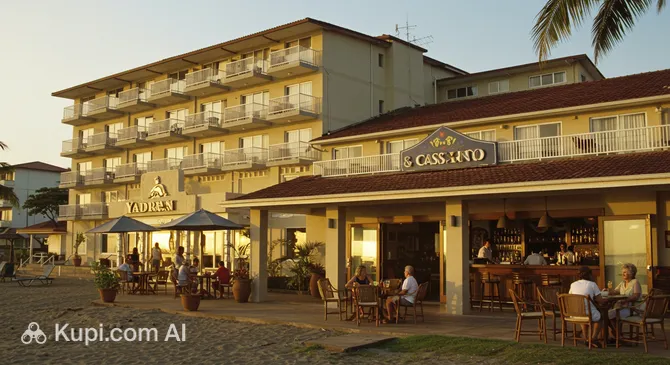
Among specific accommodation examples that combine comfort and entertainment, the Yadran Beach Resort & Casino is worth noting. This hotel is one of the city's landmarks thanks to its recognizable architecture and its own leisure infrastructure, including a pool and gaming halls. Such complexes are great for travelers looking for more than just a place to sleep, but a full resort experience within the city limits.
The price range in Puntarenas can be described as moderate. A budget room can cost from $30-$40 per night, while more comfortable conditions will cost $80-$150. It is recommended to book accommodation through popular online platforms or directly. Important tip: if your trip falls during the "high season" (December to April), national holidays, or especially Holy Week (Semana Santa), make sure to book several months in advance, as the city is extremely popular with locals and the best spots fill up quickly.
Nearby Cities
For those who want to explore the surroundings, Puntarenas serves as an excellent starting point for day trips to several interesting nearby locations. The city's convenient location allows you to quickly swap the hot seaside for the coolness of mountain valleys and get to know the authentic life of the Costa Rican provinces.
Just a few minutes' drive away is Esparza — one of the oldest cities in the country, founded by Spanish conquistadors. Here you can stroll through the cozy central park and feel the spirit of colonial history. A little further, among the green hills, lies San Ramón, known as the "city of poets and presidents." It attracts travelers with its majestic cathedral, museums, and milder climate. And for fans of agrotourism, it's worth visiting Naranjo, famous for its coffee plantations where world-class beans are grown.
City
Population
Distance
Esparza
28 644
18 km
Abangaritos
18 039
26 km
Orotina
9 664
35 km
San Ramon
80 566
41 km
Jesus
9 744
43 km
These nearby destinations provide insight into the diverse culture and landscapes of the region, significantly enriching the travel experience.
Shopping & Souvenirs
Shopping in Puntarenas is not a chase for global brands or high fashion, but rather an immersion into the colorful atmosphere of a port city. Trade here is primarily oriented towards beach holidays and souvenirs for tourists arriving on cruise ships, as well as the daily needs of local residents. Browsing the shops here is a great way to feel the rhythm of local life and find something authentic to remember Costa Rica by.
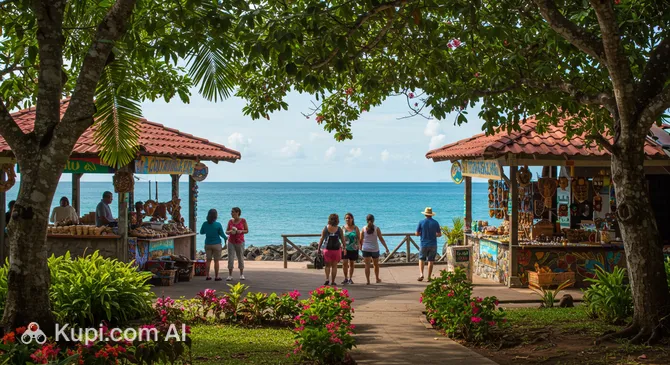
The main shopping artery for tourists is undoubtedly the Paseo de los Turistas promenade. A whole string of bright kiosks and souvenir shops, which locals call "chinamos," lines the promenade. This is where the largest selection of handicrafts is concentrated: from seashell and coconut jewelry to bright beach towels and T-shirts. If you are interested in more practical shopping, it's worth heading deeper into the city center (El Centro), to the area of the central avenues. Here you will find clothing, shoe, and electronics stores, as well as pharmacies, where prices are often lower than in the tourist zone.
Paseo de los Turistas. Illustration.
Source: Kupi.com AI
Traveler photos:
There are no large capital-scale shopping malls directly on the Puntarenas sandbar. For large-scale shopping, local residents usually go to neighboring cities or suburbs. However, in the El Roble area (near the center), you can find small shopping plazas such as Plaza del Pacífico, which features supermarkets, several boutiques, and cafes. This is a convenient place if you need to buy groceries or items forgotten at home in a more comfortable, air-conditioned environment.
The true heart of the city's trade is the Central Market (Mercado Municipal). This place is a must-visit for those looking for gastronomic souvenirs. A noisy and lively atmosphere reigns here: stalls are bursting with the freshest fish and seafood, exotic fruits, and vegetables. At the market, you can not only buy food but also have an inexpensive snack at local eateries (sodas), as well as find stalls with simple but heartfelt handmade goods.
As souvenirs from Puntarenas, people most often bring back famous Costa Rican coffee — one of the best in the world. Also look out for products made from tropical woods: kitchen utensils, boxes, or decorative masks. Hammocks, bright ceramics, and, of course, all sorts of accessories with the phrase "Pura Vida" are popular. Culinary enthusiasts should grab a bottle of Salsa Lizano — the main secret of the local flavor.
Shops in the city usually operate from 8:00–9:00 AM to 6:00–7:00 PM. Souvenir stalls on the promenade may stay open longer, especially on days when cruise ships arrive or on weekends. The primary currency is the Costa Rican colón, but US dollars are accepted almost everywhere, especially in tourist spots. Bank cards (Visa, MasterCard) are also widely used, but it's better to have cash at the market or in small kiosks.
Regarding the Tax Free system, Costa Rica has a mechanism for returning sales tax (IVA) to foreign tourists for purchases in affiliated stores. However, in the small shops and markets of Puntarenas, this system is very rare. If you plan major purchases, look for stores with a "Tax Free Shopping" sticker and keep your receipts for processing the refund at the airport before your flight, but don't count on this for ordinary souvenirs.