Support

Baracoa

About

Baracoa is a place where time seems to slow down, allowing travelers to enjoy the authentic atmosphere of the Caribbean. Located on the easternmost tip of the island, this city is often called the "First City," as it was here that the country's colonial era began.

Situated in the Guantanamo province, the city is surrounded by dense tropical forests and mountains. The climate here is humid and warm, creating ideal conditions for lush vegetation and cocoa cultivation. A trip here reveals a different side of such a popular destination as Cuba: wilder, greener, and more secluded.
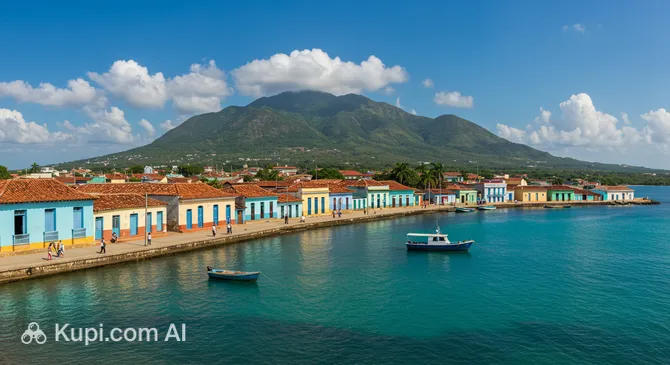
Baracoa. Illustration.
Source: Kupi.com AI

The city was founded by the conquistador Diego Velázquez in 1511, and the rich history of Baracoa can be felt in every street. For a long time, the settlement was cut off from the rest of the island by impassable mountains, which allowed for the preservation of unique traditions, cuisine, and even a special way of life for the locals.

Among the main attractions, the famous flat-topped mountain El Yunque stands out; it serves as a symbol of the region and is visible from almost everywhere. Equally important is the cathedral, which houses the Cruz de la Parra — believed to be the only surviving wooden cross planted by Christopher Columbus himself. Additionally, Baracoa is known as the country's chocolate capital, so visiting local cocoa plantations will be a highlight of your journey.

Visiting Baracoa is a chance to see the non-touristy, authentic life of the island and enjoy incredible landscapes. This cozy corner with a population of about 80,000 people hospitably awaits those ready to discover the hidden treasures of the Caribbean.

Weather Overview

The climate in this corner of the island is remarkably stable and mild, allowing you to visit in any season. The average air temperature fluctuates within a very comfortable range: from 23.7°C in the winter months (January-February) to 27.2°C at the height of summer (August).

A characteristic feature of the region is high humidity and regular precipitation, which makes the local nature so lush. The number of rainy days is significant: from 16 in March to 26 in September and October. Expect consistently warm weather year-round with frequent but refreshing rains that maintain the riot of tropical greenery.

To choose the ideal time for your trip and prepare for the climate's peculiarities, we recommend checking the detailed weather in Baracoa before you depart. This will help you pack correctly and plan excursions to natural attractions.

Average monthly temperature

Average monthly precipitation

Interesting Facts

Beyond its main historical monuments, Baracoa hides many surprising features and local legends that give the place a special charm. Here are a few facts to help you see the "First City" from a new perspective:

  • Home of a unique delicacy: Only here can you try "cucurucho" — a traditional sweet made of coconut, honey, sugar, and fruits (guava, papaya, or orange), wrapped in palm leaves. This is the region's gastronomic hallmark, which is almost impossible to find in other parts of the country for which Cuba is known.

  • Living jewels: The city's surroundings are home to Polymita picta — amazing tree snails often called the most beautiful in the world. Their shells feature an incredible variety of bright colors and patterns, and these mollusks can only be found in this region.

  • The Legend of the Miel River: There is a romantic belief among locals regarding the Río Miel (Honey River). It is said that anyone who bathes in its waters will definitely return to Baracoa, and perhaps even stay forever after finding love here.

  • Road above the clouds: Until the 1960s, the city could only be reached by sea. This isolation was broken by the construction of the La Farola viaduct — an impressive mountain road that literally soars above the tropical forest and is considered one of the seven wonders of Cuban engineering.

How to Get There

Traveling to this remote corner of Cuba is a true adventure that begins long before you arrive in the city. Due to its geographical isolation, getting here is not as easy as reaching popular resorts, but the scenic views along the way fully compensate for the travel time. You can find more details on how to get to Baracoa to plan your route as efficiently as possible.

Since Baracoa itself does not have a large international terminal for overseas flights, tourists usually fly into major nearby cities in the provinces of Guantánamo, Santiago de Cuba, or Holguín, and then continue their journey by land.

One of the most convenient options is flying into Antonio Maceo Airport (IATA: SCU). It is located in the city of Santiago de Cuba, approximately 146 km from Baracoa. This is a major transport hub that handles many flights. The journey from here by taxi or bus takes about 4 hours, and part of the road passes through picturesque mountain serpentines.

Another popular route is via Frank País Airport (IATA: HOG), located in the city of Holguín. The distance to the center of Baracoa is about 196 km. This airport also serves a significant flow of tourists. The transfer from here takes longer — expect about 5 hours and 20 minutes in transit — but the road allows you to see the diverse landscapes of eastern Cuba.

For clarity, here is summary information on the main airports located relatively close to the city (including airports of neighboring island nations within the vicinity range but not suitable for direct transfer):

AirportPassenger trafficDistance
Mariana Grajales Airport75 km
Inagua Airport7 500110 km
Antonio Maceo Airport2.7 mln146 km
Frank Pais Airport1 mln196 km
Springpoint Airport2 000238 km

Railway connections in this mountainous region are poorly developed, and there are no direct trains to Baracoa. The primary way to travel between cities remains road transport. The most exciting stage of the journey is crossing the mountain pass via the famous La Farola viaduct. This engineering marvel connects the city with the rest of the island, and the drive along this road is an unforgettable excursion in its own right.

Main Attractions

Lost among jungles and mountains, this city offers travelers a unique set of experiences, blending colonial history and pristine nature. You won't find massive entertainment complexes here, but there are places steeped in the spirit of time and Caribbean exoticism.

The heart of the city is the Cathedral of Our Lady of the Assumption (Catedral de Nuestra Señora de la Asunción). From the outside, it may seem modest, but inside it holds one of the main relics of the entire Western Hemisphere — the Cruz de la Parra (Vine Cross). It is the only surviving one of the 29 wooden crosses planted by Christopher Columbus in the New World in 1492. Pilgrims and tourists from all over the world come to see this ancient artifact, which has become a national monument.

It is impossible to imagine the region's landscape without the famous flat-topped mountain El Yunque. It rises above the forests like a natural lighthouse that has served as a landmark for sailors for centuries. For active tourists, climbing to the summit is a must. The trail passes through cocoa plantations and fruit groves, and the flat peak offers breathtaking views of the bay and the city. This site has been declared a national natural monument.

To dive into the history of the city's defense against pirates, it is worth visiting Fort Matachín. This is one of three fortresses built by the Spanish in the 18th century to defend the settlement. Today, it houses the Baracoa Municipal Museum. In its halls, you can learn about the culture of the indigenous Taíno people, see archaeological finds, and get acquainted with the story of the city's famous "Russian" resident — Magdalena Rovinskaya, who became a local legend.

Water enthusiasts should definitely head to the Toa River — the mightiest river in Cuba. It is an ideal spot for ecotourism: traditional "cayuca" boat trips are organized here through lush tropical thickets. The crystal-clear water and surrounding jungle, which are part of a biosphere reserve, allow you to feel like a pioneer far from civilization.

For a beach getaway, Maguana Beach, located about 20 km from the city, is the best choice. Unlike the dark volcanic sands within the city limits, here you will find white sand and turquoise water protected by a coral reef. This is a picturesque place where you can relax in the shade of palms and try fresh seafood at small coastal cafes.

Local Cuisine

The cuisine of Baracoa is strikingly different from the culinary traditions of the rest of the island, and many gourmets consider it the most interesting in Cuba. Due to the region's long isolation and abundance of tropical forests, local dishes have acquired a unique character dominated by two main ingredients: coconut and cocoa. While food in other provinces may seem simple, here it is saturated with spicy aromas and the sweetish notes of coconut milk, which is added almost everywhere.

The main gastronomic hit that every tourist must try is fish in coconut sauce (Pescado con leche de coco). This dish is often called "Santa Barbara fish." Fresh fillet is simmered in a thick sauce made of coconut milk with tomatoes, garlic, and local spices (achiote), gaining a very delicate texture. Also, look out for tetí — a tiny, translucent fish that enters the mouths of local rivers during certain moon phases. It is prepared in various ways, but most often fried with garlic and pepper or added to omelets as a delicacy.

Another authentic dish is bacán. This is a local variation of tamale, but instead of corn, the base is grated green banana (plantain) mixed with coconut milk and lime juice. Inside, there is usually a filling of pork or crab meat seasoned with spices. All this is wrapped in a banana leaf and boiled, turning into a hearty and aromatic "packet" that is convenient to take on a mountain excursion.

Since Baracoa is the country's chocolate capital, desserts and drinks revolve around cocoa. Be sure to order chorote — a thick hot chocolate that locals often brew with coconut milk and thicken with banana flour. It is a very nutritious drink that often replaces breakfast. Among refreshing drinks, prú is popular — a fermented infusion made from roots and herbs with a refreshing taste.

The dining culture in the city is quite relaxed and soulful. There are few pretentious establishments, but paladares — private family restaurants — flourish. This is where you can try the most delicious home-cooked food. The owners often serve the guests themselves, offering a menu based on whatever was caught or harvested that morning. Street food consists mainly of fruits and sweets sold right by the road or at small impromptu markets.

Travel Tips

A trip to Baracoa is an immersion into true exoticism, but the remoteness and specific climate of the region require special preparation. To ensure your trip to this tropical paradise is comfortable and surprise-free, we have compiled a list of important recommendations to help you plan your vacation.

  1. Clothing and Gear: Baracoa is the wettest place Cuba is famous for, so a light raincoat or a high-quality umbrella should always be in your backpack, regardless of the forecast. Due to the high humidity, things take a long time to dry, so bring spare sets made of light, breathable fabrics (cotton, linen). For climbing El Yunque mountain or walking through the jungle, closed-toe, broken-in shoes with non-slip soles are essential.

  2. Transport: The city center is compact and best explored on foot. For short distances, bici-taxis (bicycle rickshaws) are ideal — they are cheap and colorful. Renting a car here is difficult due to a shortage of vehicles and fuel, and mountain roads are often washed out. For trips to remote beaches like Maguana, it is better to arrange with official taxi drivers in advance and fix the price before departure.

  3. Finances: Cards are accepted very rarely here, and terminals often don't work due to connection outages. Your main asset is cash (Cuban pesos for small expenses and Euros/Dollars for paying for accommodation or taxis). There are few ATMs in the city, and they may run out of money, so bring a sufficient supply of cash in small bills. Tipping is welcomed everywhere; 5–10% of the bill will be received with gratitude.

  4. Health and Safety: The region has many rivers and dense vegetation, so mosquito and insect repellents are essential, especially at sunset. Pharmacies are stocked irregularly, so be sure to pack your own first-aid kit with all necessary medications (painkillers, stomach remedies, bandages). Drink only bottled water and avoid ice in drinks at street cafes.

  5. Communication: English is only understood in hotels and tourist bureaus. Learn a few basic phrases in Spanish or download an offline translator — locals will appreciate your effort. Mobile internet can be unstable. To access Wi-Fi in public areas (like the central square park), you will need ETECSA cards, which are best bought in advance or at the telecom office (you must have your passport with you).

  6. Local Etiquette: Residents of Baracoa are very friendly and relaxed. It's not customary to rush here, so service in restaurants may be slow — treat this with understanding. It is customary to say hello ("Buenos días" or "Hola") when entering a shop or getting into a taxi. If you want to photograph a colorful local, always ask for permission first.

  7. What to Avoid: Do not buy cigars or tortoise shell products from street vendors ("jineteros"). Cigars will likely be fakes made of banana leaves, and exporting tortoise shell products is prohibited by law and carries a huge fine at customs.

  8. Sweet Tip: Be sure to buy cocoa butter or pure cocoa balls from the locals — this is the best souvenir from the chocolate capital, costing very little but of the highest quality. Look for them at small markets or from farmers along the road rather than in souvenir shops.

Baracoa is a city with a soul that reveals itself to those ready to embrace its slow pace and natural wildness. By following these simple tips, you can avoid daily hassles and fully devote yourself to exploring this amazing land.

Entertainment & Nightlife

Nightlife in Baracoa, much like the city itself, possesses a unique, genuine charm. You won't find neon signs for massive nightclubs or pretentious lounges here. Evening leisure in the "First City" is an immersion into authentic Cuban culture, where the main elements are live music, dancing until you drop, and warm interaction with the locals.

The epicenter of evening activity is the pedestrian zone in the city center — Maceo Street (Calle Maceo), which locals call "El Bulevar." As darkness falls, the heat subsides, and residents come out for a walk. This is the best place to feel the city's rhythm: music drifts from the open doors of cafes, and groups gather on corners to discuss the news of the day.

The main establishment every tourist must visit is the legendary Casa de la Trova. It is the soul of musical Baracoa. Every evening, local bands perform traditional son, salsa, and bolero. The atmosphere here is incredibly relaxed: tourists dance alongside Cubans, and the lines between the stage and the audience practically disappear. Entry usually costs a symbolic amount, and the mojitos here are made according to old recipes — strong and refreshing.

For those who want to keep the fun going after midnight, El Ranchón is an excellent choice. This venue, located on a hill, is famous for its open-air discos. People come here for more modern rhythms, including reggaeton, and the chance to dance with a view of the night city. Another popular location is the Terraza La Punta bar, located in a historic fort on the shore. This is a calmer spot where you can enjoy a cocktail to the sound of the waves.

Practical tips for tourists:

  • Timing: Life in the venues starts after 9:00 PM – 10:00 PM. There is no point in coming earlier — the halls will be empty.
  • Dress code: Very relaxed. Shorts, t-shirts, and sandals are perfectly appropriate even in the most popular spots.
  • Safety: Baracoa is one of the safest cities that Cuba is proud of. However, street lighting is very poor or non-existent, so it is recommended to have a flashlight or take a taxi to return to your hotel at night.
  • Money: Cards are almost never accepted in bars. Always have cash pesos in small denominations to pay for entrance tickets and drinks.

Daytime entertainment in the city is more relaxed and educational. If you want a break from the beaches and jungle hikes, take a stroll along the Malecón promenade, where a monument to Christopher Columbus stands. History buffs will enjoy the Archaeological Museum "Cueva del Paraíso", located in caves on the city's terraces — it offers a magnificent view, and the exhibition tells the story of the Taíno Indians' way of life.

Parks & Museums

The cultural and natural landscape of Baracoa is inextricably linked to its geographical position. Here, green zones flow seamlessly into dense tropical forests, and museums housed in ancient fortresses and caves hold memories of the conquistadors and the island's indigenous inhabitants. This is a city where history is studied not only through exhibits behind glass but through touching ancient walls and walking under the shade of centuries-old trees.

The region's primary natural treasure is certainly the Alexander von Humboldt National Park (Parque Nacional Alejandro de Humboldt). Although it is located a bit away from the city limits, visiting it is a must for nature lovers. This UNESCO World Heritage site is considered one of the most biologically diverse places in the Caribbean. Tourists are drawn here by untouched jungles, many endemic species of plants and animals, and the chance to swim in cool waterfalls after a trek.

In the heart of the city, public life centers around Independence Park (Parque Independencia). This is a classic central square for Cuban cities, surrounded by colonial architecture. Here you can hide from the midday heat while watching the slow pace of local life. Special attention should be paid to the bust of Chief Hatuey installed here — the legendary leader of the Taíno Indian resistance, who became a symbol of defiance and freedom for the entire island.

Among the museums, the Baracoa Municipal Museum plays a key role, located within the walls of the historic Fort Matachín. The 18th-century building itself is an important monument of military architecture. The museum's exhibition covers all stages of the region's life: from the daily lives of the aborigines to the history of the struggle for independence. Visitors are particularly interested in the collections of the famous colored polymita snails, which only live in these parts, and the story of the mysterious "Russian mother" — Magdalena Rovinskaya, who left a bright mark on the city's history.

The Archaeological Museum "Cueva del Paraíso" (Museo Arqueológico Cueva del Paraíso) offers a unique experience. Unlike traditional galleries, this museum is located in a natural cave system on one of the city's terraces. It features a rich collection of ceramics, jewelry, and tools of the Taíno Indians found in the vicinity. Besides its historical value, this place attracts tourists with a stunning observation deck: it offers one of the best panoramic views of the city, the bay, and El Yunque mountain.

For those seeking authentic experiences, we suggest not just looking at the exhibits but talking to the museum staff. Often, the caretakers are local enthusiasts ready to tell legends that haven't made it into official guidebooks. After your cultural program, stroll along the Malecón promenade to the small park near Fort La Punta to see how the city's history harmoniously blends with modern life against the backdrop of the ocean.

Getting Around

The public transport system in Baracoa is vastly different from the usual schemes of large metropolises. You won't find a metro, trams, or strict schedules on electronic displays here. The city is compact, and its transport infrastructure is rather spontaneous but very colorful, perfectly suited to the slow pace of life in this region.

The most popular and convenient means of moving around the city is the bici-taxi — a three-wheeled bicycle with a seat for two passengers under a canopy. This is a true symbol of the local streets. Bici-taxi drivers know every alleyway and often act as impromptu guides. It is an eco-friendly and inexpensive way to get from your hotel to a restaurant or museum.

For slightly longer distances or when carrying heavy luggage, horse-drawn carriages (coches de caballos) are used. They run on specific routes connecting the center with the outskirts. This is an exotic form of transport for tourists but absolutely everyday for locals. There are also city buses ("guaguas"), but they run infrequently, are often overcrowded, and lack a clear schedule, so it is not recommended for travelers to rely on them.

The payment system here is as simple as it gets: no transport cards, apps, or validators exist. Payment is made exclusively in cash directly to the driver. It is best to use local currency (pesos) in small bills. Prices for bici-taxis and carriages are not officially fixed, although unspoken rates for different zones of the city exist.

An important practical tip: always agree on the price of the ride before getting in. This golden rule will save you from misunderstandings at the end of the trip. For tourists, prices may be quoted a bit higher, so moderate bargaining is perfectly appropriate and even expected. If you are planning a trip to a beach outside the city, clarify if the price includes waiting time and the return journey.

As an alternative to public transport, classic taxis are popular. These can be vintage 1950s American cars, "Ladas," or more modern vehicles. They should be used for longer trips, such as to El Yunque mountain or Maguana Beach. You can also find bicycle rentals in the city (often offered by private guest house owners), which is a great way to explore the surroundings on your own.

Transport in the city is active during daylight hours. After sunset, the number of bici-taxis and carriages on the streets drops sharply. If you are planning a late dinner or a visit to a night venue, arrange your return trip in advance or get the phone number of a reliable taxi driver.

Accommodation

Accommodation in Baracoa is significantly different from what tourists are used to seeing in the popular beach resorts Cuba is famous for. Here, you won't find massive "all-inclusive" chain complexes or skyscrapers of glass and concrete. The city's hotel stock consists of cozy options that blend harmoniously with colonial architecture and the surrounding nature. The main choice is between mid-range state-run hotels and the private sector.

The most popular and authentic type of accommodation is casas particulares — private guest houses. These are licensed mini-hotels where the owners rent out one or more rooms to tourists. By choosing this option, you get not only a roof over your head but also a chance to immerse yourself in local daily life. Rooms in "casas" are usually equipped with everything necessary: air conditioning, a private bathroom, and a refrigerator. Additionally, private homes often offer the most delicious home-cooked meals made from fresh local products.

For those who prefer classic hotel service, several state-run hotels operate in the city. They generally fall into the 3-4 star category. A unique feature of the local hotel stock is their location: some hotels are set within ancient Spanish fortresses, allowing guests to live surrounded by history and enjoy panoramic views of the bay and El Yunque mountain. However, keep in mind that the level of service and infrastructure here may be more modest than in Havana or Varadero.

In terms of location, the historic center of the city is the most convenient place to stay, especially the streets around Independence Park and the cathedral. Staying here puts you within walking distance of major museums, restaurants, and the Casa de la Trova. Another popular area is the Malecón promenade. Accommodation here is chosen for the ocean views and fresh breeze, though be prepared for the sound of the surf and occasionally the sounds of nightlife.

The price range in Baracoa can be described as moderate and affordable.

  • Budget segment: Private rooms (casas) are the most economical option, with prices often ranging between $20–$40 per night.
  • Mid-range segment: State hotels offer rooms priced from $50 to $100, depending on the season and view characteristics.

A few tips on booking. Although many travelers find accommodation upon arrival (hosts with signs often meet the buses), the best options are taken quickly during high season (December to March and July-August). It is recommended to book your stay in advance through online platforms. Note that internet in the region can be spotty, so have a printout of your booking and the address. To pay for stays in the private sector, it is best to have cash (Euros or Dollars), as cards are not accepted everywhere.

Nearby Cities

For those who want to explore the surroundings, Baracoa serves as an excellent starting point for day trips to several interesting nearby locations:

The nearest major center is the city of Guantánamo. It is known worldwide thanks to the famous song "Guantanamera," but for a tourist, it is primarily interesting for its colonial architecture, such as the eclectic Palacio de Salcines. This is the provincial capital, where you can observe the daily life of Cubans far from the beach resorts.

If you have time for a short visit with an overnight stay, definitely head to Santiago de Cuba. This is the country's second most important city, the cradle of the Cuban revolution and son music. Iconic attractions like the San Pedro de la Roca fortress (a UNESCO site) and the famous Santa Ifigenia cemetery are located here. The city bustles with energy and culture, offering a stark contrast to the quiet and secluded atmosphere of Baracoa.

Nature lovers should look toward Mayarí. This city provides access to the Sierra Cristal mountain range and the picturesque Pinares de Mayarí plateau. A trip in this direction will allow you to enjoy views of pine forests, waterfalls, and mountain lakes, which makes for a great addition to the coastal tropical landscapes.

CityPopulationDistance
Imias9 69934 km
Punta de Maisí38 km
San Antonio del Sur26 50946 km
Manuel Tames21 23747 km
Moa73 05358 km

These nearby destinations provide an overview of the region's diverse culture and landscapes, from bustling historical metropolises to quiet corners of mountain nature.

Shopping & Souvenirs

General Overview: Shopping in Baracoa is not about chasing global brands but an exciting immersion into local flavor and traditions. In this secluded corner where Cuba exists in its pristine form, you won't find huge shopping malls. Instead, the city offers unique products made only here: from famous chocolate to exotic sweets and original handmade crafts.

Main Shopping Streets: The center of the city's commercial life is Martí Street (Calle Martí). This is the main artery where major state shops, pharmacies, and small boutiques are concentrated. A walk here will allow you to buy all the essentials. Also worth noting is the pedestrian zone of Maceo Street (El Bulevar), where you can often find vendors of local delicacies and souvenirs.

Shopping Centers: There are no shopping centers of the kind familiar to Europeans in Baracoa. Their role is played by state stores of the Tiendas Panamericanas and TRD Caribe chains. The selection here is basic: rum, soft drinks, canned goods, and sometimes cosmetics and clothing. For tourists, these points are primarily important as places to buy quality alcohol and bottled water at fixed prices.

Markets: The atmosphere of a real market reigns in small areas near the Malecón promenade and around the central park. There are no large-scale bazaars, but local artisans display their work right on the streets. This is the best place to find authentic items. If you are interested in fresh fruit, look for an agromercado (farmers' market), where bananas, guavas, and coconuts are sold for local pesos.

Souvenirs: You must bring home gastronomic souvenirs from Baracoa. First and foremost is cucurucho — a sweet paste made of coconut, honey, and fruit wrapped in a palm leaf; this dessert is made only in this region. Since the city is considered the chocolate capital, buy some cocoa: in balls (for brewing a drink), in oil form (an excellent cosmetic product), or as bars of homemade chocolate. Among non-edible items, wooden figurines and seed jewelry are popular. Note: taking shells of the beautiful Polymita snails out of the country is prohibited by law, so buy only their skillfully made wooden replicas.

Opening Hours and Payment: Most shops are open from 9:00 AM to 5:00 PM or 6:00 PM, but be prepared for midday breaks. On Sundays, many shops only work until lunch. The most important tip for shopping in Baracoa is to always have cash. Bank cards are accepted very rarely and inconsistently due to connection problems. It is best to have small bills of Cuban pesos for transactions with street vendors.

Tax Free: Tax refund services (Tax Free) are not available in Baracoa. Trade here is primarily conducted through small state outlets or private individuals, where this system is not applied.

Reached the end of the page?

That means the route is fully explored