Support

Uherske Hradiste

About

Uherské Hradiště is a cozy and picturesque town nestled on the banks of the Morava River in the heart of the historical region of Moravia. Located in the east of the Czech Republic, it serves as an important cultural and tourist center of the Zlín Region, where centuries-old traditions and a modern pace of life meet in a wonderful way.

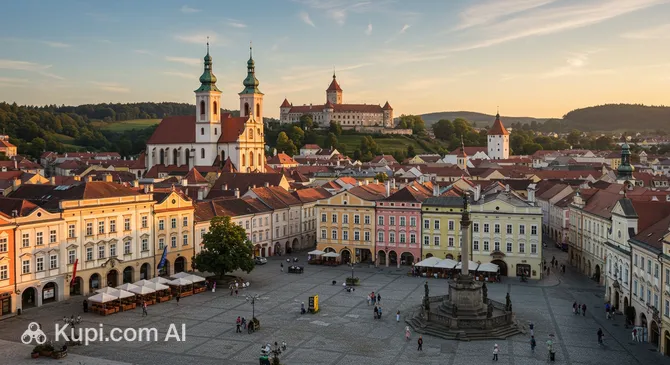
Uherske Hradiste. Illustration.
Source: Kupi.com AI

Despite having a population of only about 25,000, the town boasts a particularly lively atmosphere. Uherské Hradiště manages to maintain its provincial charm, offering guests walks along ancient streets, relaxation in quiet squares, and visits to colorful markets. It is a place where it is easy to forget about time and simply enjoy the moment.

The architectural appearance of the city is quite diverse: majestic churches stand alongside cozy cafes, while modern museums and well-kept parks harmoniously complement the urban landscape. The deep history of Uherské Hradiště can be felt at every step, inviting travelers to explore the rich heritage of the region.

The town is often called the gateway to the world of Moravian customs. It is worth visiting for its vibrant folklore festivals, a chance to get to know the famous vineyards, and visits to cozy wine cellars. Uherské Hradiště will be a wonderful discovery for those seeking authentic experiences and wanting to feel true Czech hospitality.

Weather Overview

The climate in this region of Moravia can be described as moderate, which makes traveling comfortable for most of the year. Summer in the town is usually warm and conducive to long walks: in July and August, the average temperature is around 20–21°C, and during the day, the air often warms up to 25.7°C. However, even in the warmest months, don't forget an umbrella, as rain is not uncommon here.

Winters here are cool but without extreme frosts. In January, the average temperature stays around 0.4°C, occasionally dropping to -2.1°C at night. Spring and autumn bring a change of colors, but travelers should be prepared for precipitation, especially in May, when statistics record up to 14 rainy days.

To pack your suitcase correctly, we recommend checking the forecast and the weather in Uherské Hradiště for your travel dates in advance. Expect warm summers with occasional rain and cool, relatively mild winters.

Average monthly temperature

Average monthly precipitation

Interesting Facts

In addition to its main attractions, Uherské Hradiště holds many fascinating secrets that reveal the soul of this Moravian region. Here are a few facts that make the town truly special:

  • The King Who Remains Silent. The town is famous for the unique "Ride of the Kings" ritual, which is included in the UNESCO Intangible Cultural Heritage list. The most amazing detail of the festival is the "king" himself: a young boy dressed in a female national costume who holds a rose in his mouth. The flower is not just for beauty, but to maintain ritual silence throughout the entire procession.

  • The Cultural Heart of Moravia. Uherské Hradiště is rightfully considered one of the region's main cultural hubs, and not just because of its history. Every year, it hosts the famous "Summer Film School" (Letní filmová škola)—a major international film festival that transforms the town into a massive open-air cinema and attracts thousands of cinephiles from all over Europe.

  • Wine Traditions Within City Limits. Winemaking traditions here are so strong that vineyards and historical wine cellars can be found right on the outskirts of the town, in the Mařatice district. Locals are proud of their wines, and the autumn harvest festivals are the main events of town life.

  • Traces of an Ancient Fortress. Although the town looks peaceful and cozy today, ruins of an old fortress are preserved here, serving as a reminder of its turbulent past. These fragments of defensive structures are steeped in urban legends and recall times when the town was an important bastion protecting local residents from raids.

How to Get There

When planning a trip to the heart of Moravia, it is important to think through your route in advance. You can find out all the ways to get to the town on our dedicated page, while below we will look at the main transport hubs located in the vicinity.

There is no airport in Uherské Hradiště itself, so travelers usually fly into neighboring large cities. The closest option is Brno–Tuřany Airport (BRQ) in Brno, located about 57 km away. The journey from there by taxi or rental car will take about 1 hour. This is a convenient choice for those who want to minimize ground transfer time.

For international flights, many tourists choose Vienna International Airport (VIE) in Austria. Despite being located in another city (Vienna) about 125 km from Uherské Hradiště, this major aviation hub offers the highest number of flights. Travel time from Vienna is about 2–2.5 hours. You can also consider Bratislava Airport (BTS), located 101 km away.

For clarity, here is a summary of the main airports:

AirportPassenger trafficDistance
Turany Airport749 15357 km
Mosnov Airport493 00084 km
Bratislava Airport1.9 mln102 km
Vienna International Airport31.7 mln125 km
Pardubice Airport200 205163 km

If you prefer rail transport, keep in mind that major international expresses often arrive at the stations of neighboring metropolises. For example, Vienna Central Station in Vienna (Austria) is a powerful transport hub. It is located approximately 127 km from Uherské Hradiště, and you can easily plan your further journey from there with a transfer.

Another option for arriving from the east or north is Ostrava Main Railway Station. This station is located in the city of Ostrava, about 105 km from your destination. A car transfer from this hub will take about 1.5–2 hours.

Below is information about the nearest major railway stations:

StationPassenger trafficDistance
Ostrava Main Railway Station105 km
Wien Mitte CAT Station97.8 mln125 km
Vienna Central Station44 mln127 km
Vienna Westbahnhof18.3 mln128 km
Pardubice Main Railway Station164 km

Main Attractions

Uherské Hradiště is a true treasure trove for those who want to get acquainted with the culture and history of Moravian Slovakia. The town offers more than just sightseeing; it provides an immersion into the living traditions of the region. Here are several key places that are definitely worth including in your travel itinerary.

One of the main cultural symbols of the town is the Slovácko Museum (Slovácké muzeum). Located in the picturesque Smetana Gardens park, it introduces visitors to the rich ethnography of the region. Here, you can see unique folk costumes, everyday items, and archaeological finds. This place will be especially interesting for those who want to understand the soul of the region, its folklore, and the craft traditions carefully preserved by the locals.

The heart of the town is rightfully considered to be Masaryk Square. This is an ideal place for leisurely walks where history comes alive in the architecture. Tourists are invariably drawn to the majestic complex of the former Jesuit College and the Church of St. Francis Xavier. The square is surrounded by old burgher houses, with a Baroque fountain at its center. It is a pleasant spot to just stop, have a coffee, and enjoy the atmosphere of the old town.

For fans of active recreation and unusual technical monuments, the Baťa Canal (Baťův kanál) is a must-visit. This historical waterway, built in the 1930s, has today turned into a popular tourist attraction. Travelers can rent a boat or go on a cruise on a motor ship, enjoying the views of Moravian nature from the water. Convenient cycling paths are also laid along the canal, making it a great place for family vacations.

Another gem of the town is the Joža Uprka Gallery, located in the building of the former Jesuit College. The exhibition is dedicated to the work of the famous artist who celebrated the beauty of Moravian folk life in his paintings. His bright, life-filled canvases allow visitors to see how the holidays and daily lives of local residents looked in the past and to feel the flavor of this amazing region.

Local Cuisine

The cuisine of Uherské Hradiště is a colorful union of Moravian and Slovak culinary traditions, promising travelers hearty and memorable meals. The foundation of the local menu consists of dishes that are perfect for regaining strength after long walks. A major gastronomic "must-try" is the famous Moravian dumplings (knedlíky), served as a side dish to thick meat sauces. Equally popular is pork knuckle, roasted to a golden crust and served with sauerkraut and fresh bread, as well as rich goulash and seasonal vegetable or game soups prepared according to old recipes.

A particular pride of the region is its winemaking, which has roots stretching back into the deep past. Local wines are considered among the best in the country, so lunch or dinner here is traditionally accompanied by a glass of local production. We recommend paying attention to aromatic white varieties such as Grüner Veltliner or Muscat, as well as rich red wines that perfectly complement the flavor of meat dishes and local cheeses. Wineries often host tastings, allowing guests to delve deeper into the region's culture.

The food culture in Uherské Hradiště is closely linked to the town's markets and fairs, where you can buy the freshest farm products. Tourists should try the homemade cheeses, aromatic smoked meats, and, of course, traditional pastries. A real hit is the Moravian pies with generous fillings of poppy seeds, curd cheese, or plums—they are the perfect addition to a cup of strong coffee in one of the cozy street cafes.

The town's gastronomic life is in full swing year-round, peaking during numerous festivals. Wine celebrations, street food days, and autumn fairs transform the streets into a huge open-air tasting room. This is the best time not only to enjoy delicacies but also to see how local residents honor their traditions, turning every meal into a small celebration.

Travel Tips

A journey to Uherské Hradiště promises to be full of bright discoveries, as it is the true heart of Moravian traditions and folklore. To ensure your trip to the Czech Republic is as comfortable and carefree as possible, we have prepared a list of useful recommendations to help you feel confident in this hospitable town.

  1. Clothing and Footwear. The climate here is mild, but the weather can be changeable. For walks in the historical center, which is paved with cobblestones, be sure to bring comfortable flat shoes—heels are best left for the theater. If you plan to visit the famous wine cellars, take a sweater or a light jacket even in summer: underground, the temperature stays at +12...+14°C year-round.
  2. Transport. Uherské Hradiště is a compact town, and its main beauties are best explored on foot. For trips to neighboring districts or attractions on the outskirts, it is convenient to use city buses (tickets can be bought from the driver) or a bicycle. The region is famous for its cycling routes, especially along the Baťa Canal, so renting a bike is a great idea.
  3. Finances. The national currency is the Czech koruna (CZK). Although cards are accepted in most restaurants and supermarkets, you will definitely need cash. It is necessary for paying at small parking lots, in souvenir shops, at farmers' markets, and in small family wine shops. It is best to exchange money at banks, avoiding street exchangers with questionable rates.
  4. Health and Safety. The town is very peaceful and safe; you can walk here without worry even in the evening. Pharmacies are marked with a Lékárna sign with a green cross; most basic medicines are sold without a prescription. Tap water in the town meets high sanitary standards and is drinkable, so feel free to bring a reusable bottle.
  5. Communication. The official language is Czech. Young people and tourism staff often speak English, and the older generation may understand German. However, locals really appreciate it when tourists try to speak their language. Learn a couple of phrases: "Dobrý den" (Good day) and "Děkuji" (Thank you)—it will instantly melt the ice in communication.
  6. Local Etiquette. In the Czech Republic, politeness in daily small things is expected. When entering a shop, cafe, or even an elevator, it is customary to greet everyone present, and when leaving, to say goodbye ("Na shledanou"). In restaurants, it is not customary to call a waiter with a loud voice; simply establishing eye contact and a slight nod is enough.
  7. What to Avoid. Don't confuse Moravia with Bohemia (the western part of the Czech Republic). Local residents are very proud of their regional identity, folklore, and dialect. Also, don't compare local wine to beer in the context of "just having a drink": in this region, wine is treated as a noble beverage requiring tasting and respect.
  8. Wine Life-Hack. If you want to buy wine as a souvenir, look for "Vinotéka" signs or buy directly from winemakers. You can often ask to taste the drink before buying ("ochutnávka"). Remember that during the harvest season (autumn), people drink "burčák"—a young fermenting wine that is deceptive with its sweet taste and rapid intoxicating effect.

Uherské Hradiště is a town that reveals itself to those who don't rush and are ready to enjoy the moment. Follow these simple tips, respect local traditions, and your journey through Moravian Slovakia will become one of your warmest memories!

Entertainment & Nightlife

Nightlife in Uherské Hradiště will surprise you with its diversity: from cozy wine cellars to bustling dance floors. Despite the town's modest size, it vibrates with energy, largely thanks to its students and the rich cultural traditions of the region. It is common to start the evening slowly here—with a glass of Moravian wine in one of the central squares before gradually moving on to more active entertainment.

The epicenter of evening activity is the area around Masaryk Square (Masarykovo náměstí) and Hradební Street. This is where most of the popular bars and clubs are concentrated, with music playing until the morning. The atmosphere in these establishments is casual and friendly: there is no strict dress code, and locals are always happy to welcome guests. The crowd is diverse—from students relaxing after lectures to older fans of live music.

If you are looking for a place with history and quality sound, be sure to check out Klub Mír. This is a legendary venue operating since the early 90s, regularly hosting rock concerts, alternative performers, and themed parties. For those who want to dance until dawn, Club No.6 on Hradební Street is an excellent choice—a modern disco club with several bars and current DJ sets. Meanwhile, lovers of a relaxed atmosphere and signature cocktails should visit Barbar Bar, where you can enjoy conversation in a stylish interior.

A special place in the evening program is occupied by wine culture. Unlike other Czech towns where beer reigns supreme, evenings here are often spent in "vinotéky" (wine shops/bars). Many of them stay open late, offering tastings of local varieties accompanied by live cimbalom music. This is a unique experience that combines fun with immersion in Moravian folklore.

In terms of safety, Uherské Hradiště is a very peaceful town. Night walks in the center pose no threats, and the streets are well-lit. Taxis are available 24/7, but hailing a car on the street at night can be difficult, so it is better to have a local service number handy or use an app. Prices in establishments are pleasantly lower than in Prague or Brno, making your stay even more attractive.

During the day, the town offers an equally interesting cultural program. Art fans should visit the Slovácko Theatre (Slovácké divadlo), known for its bold productions far beyond the region's borders. For a family outing, the modern Aquapark with relaxation zones is perfect, while history buffs can continue exploring the region's past at open-air museums on the outskirts of town.

Parks & Museums

Uherské Hradiště offers travelers a harmonious combination of natural beauty and rich cultural heritage, where well-kept city gardens sit alongside unique museum collections. A walk through this town allows for a smooth transition from contemplating greenery to immersing oneself in the deep history and traditions of Moravian Slovakia.

The main green oasis in the very center of the town is the Smetana Gardens (Smetanovy sady). This park, laid out in the English style, serves as an ideal place to escape the city bustle. Here, you can stroll along shaded alleys, admire ancient trees, or simply sit on a bench enjoying the silence. The park flows seamlessly into the grounds of the town's main museum, creating a unified cultural and natural ensemble loved by both tourists and locals.

For those who prefer larger-scale landscapes and panoramic views, a visit to the Rochus natural park, located on the hills above the town, is a must. This is a unique area where history meets ecology: old varieties of fruit trees characteristic of the region are being restored here, and picturesque walking trails have been laid out. The top of the hill offers a breathtaking view of the Morava River valley and the Chřiby mountain range, making it an ideal spot for photo sessions.

The cultural program should begin with a deep dive into ethnography at the Slovácko Museum (Slovácké muzeum). It is not just an exhibition space, but a true guardian of the region's memory. The displays detail folk costumes, crafts, and ancient rituals that are still alive in local villages. The museum will be of interest to everyone who wants to understand Moravia's unique cultural code and see the richness of folk creativity.

Connoisseurs of fine arts should not miss the Joža Uprka Gallery (Galerie Joži Uprky). It is housed in the historical halls of the former Jesuit College and represents the largest collection of works by this outstanding artist. Uprka's paintings, filled with color and expression, vividly illustrate the holidays and daily life of Moravian Slovakia at the turn of the 19th and 20th centuries, allowing a look at the region's history through the lens of talented Impressionism.

The town's architectural character is complemented by significant historical sites. Particular attention is drawn to the monumental complex of the former Jesuit College, which dominates the center with its Baroque majesty. No less interesting is the former synagogue—a Neo-Romanesque building that was carefully restored and today serves as the Bedřich Beneš Buchlovan City Library, serving as a reminder of the town's multicultural past.

Insider Tip: After visiting Rochus Park, don't rush back to the center. Walk through the territory of the open-air museum (skanzen) located there to see authentic folk buildings in their natural environment, away from the noise of the modern town.

Getting Around

The transport system of Uherské Hradiště is characterized by simplicity and convenience, which fully corresponds to the relaxed pace of life in this Moravian town. Since the historical center is quite compact, most attractions are easily reached on foot. However, for trips to more distant areas, vineyards, or neighboring settlements, public transport is an indispensable helper.

The foundation of the urban transport network is buses (MHD). There are no subways or trams here, but bus routes expertly cover the entire territory of the town and connect it with suburbs like Jarošov or Mařatice. Buses run regularly, especially on weekdays; however, on weekends and in the evening, intervals can increase, so it is better to check the schedule in advance at stops or using online planners (e.g., IDOS).

Rail connection is an important part of the transport infrastructure. The railway station is within walking distance of the center. Trains connect the town with the major transport hub Staré Město u Uherského Hradiště, from where expresses depart to other regions. This is a convenient option for short trips out of town.

The fare payment system here is very tourist-friendly. You don't need to look for special kiosks or figure out complex zones. A ticket can be purchased directly from the driver upon entering the bus. Both cash (Czech koruna) and contactless bank cards are accepted, which is very convenient. The fare is low and depends on the tariff grid of the Integrated Transport of the Zlín Region (IDZK).

Bicycles occupy a special place in the town's life. Thanks to the flat terrain and proximity to tourist cycling routes (including the popular paths along the Baťa Canal), two-wheeled transport is incredibly popular here. Bike-sharing systems (such as Nextbike) operate in the town, allowing you to rent a bike via a mobile app for a short period. This is perhaps the most atmospheric way to explore the surroundings.

If you need to get somewhere quickly or at a late hour, local taxi services are at your disposal. Unlike in metropolises, international aggregators are not as common here, so cars often wait for passengers at designated stands (for example, at the station or main squares) or are called by phone. Taxi prices are moderate, but it is recommended to check the estimated cost of the trip before boarding.

Accommodation

Where to stay:

Accommodation options in Uherské Hradiště perfectly reflect the cozy and hospitable character of the town. You won't find massive skyscraper chain hotels here; instead, tourists are offered stays in small boutique hotels located in renovated historical buildings or in family pensions (penzion). The latter are especially popular in this region: they often offer a homely atmosphere, delicious breakfasts, and frequently have their own wine cellars. Hostels are available for budget travelers and students, while apartments with kitchens are widely represented for family vacations.

The choice of neighborhood depends on your trip's goals. If you want to be in the center of the action, we recommend looking for housing in the historical center, around Masaryk Square. This will allow you to be within walking distance of the main attractions, museums, and restaurants. For those visiting for the wine culture and peace, the Mařatice district is an ideal choice. It is located a bit away from the center, but this is where the famous historical wine cellars and vineyards are located, creating a uniquely romantic atmosphere.

Important booking tip: Uherské Hradiště is a popular venue for major events. If your trip coincides with the dates of the Summer Film School (usually late July – early August) or the Slovácko Wine Festival (September), you must book accommodation at least 3–4 months in advance. During these periods, the town is overflowing, and finding a free room at the last minute is almost impossible.

The price range in the town can be described as moderate, especially compared to Prague. The bulk of the offerings is in the mid-range segment—comfortable rooms with all amenities at a reasonable price. Budget options are also available, but their number is limited. It is most convenient to book accommodation through major international online platforms, although many small pensions also welcome direct booking through their websites or via email.

Nearby Cities

For those who want to explore the surroundings, Uherské Hradiště serves as an excellent starting point for day trips to several interesting nearby locations. Its convenient location in the heart of Moravia allows for quick access to significant cultural and historical centers of the region.

Just a few dozen kilometers away is Zlín—a unique city inextricably linked with the name of the shoe tycoon Tomáš Baťa. It impresses with its functionalist red-brick architecture and clear layout. Tourists should visit the famous "skyscraper" (Administrative Building No. 21) with its unique elevator office and the Shoe Museum.

History buffs and fans of urban dynamics should definitely visit Brno, the second-largest city in the Czech Republic. It is home to the famous Villa Tugendhat (a UNESCO site), the somber yet majestic Špilberk Castle, and mysterious underground passages. Brno is also famous for its gastronomic scene and numerous cozy coffee shops.

No less interesting is Olomouc, often called the "hidden gem" of the country. Its historical center is second only to Prague in beauty and the number of monuments. The main attraction is the Holy Trinity Column, and as a gastronomic souvenir, people bring back the famous Olomouc cheese (tvarůžky).

CityPopulationDistance
Veseli nad Moravou10 80714 km
Uhersky Brod16 40914 km
Otrokovice17 59215 km
Zlin74 47823 km
Kroměříž28 36025 km

These nearby destinations provide an insight into the diverse culture and landscapes of the region, making your trip even more fulfilling.

Shopping & Souvenirs

Shopping in Uherské Hradiště is not a hunt for global high-fashion brands, but rather a leisurely immersion into the atmosphere of regional traditions. The town is not overloaded with giant malls, which helps preserve its coziness and authenticity. It is interesting to look for unique items from local artisans, quality food products, and, of course, the famous Moravian wines. Shopping here is often combined with exploring the architecture of the historical center.

The heart of the town's commercial life is Masaryk Square (Masarykovo náměstí) and the adjacent streets, especially Prostřední Street. This pedestrian zone is filled with small boutiques, bookstores, clothing shops, and cozy souvenir stores. It is a pleasure to walk here, peering into the windows of old houses where you can find everything from modern Czech footwear to jewelry and home goods.

While Uherské Hradiště is not famous for huge shopping complexes, for daily needs and purchasing well-known clothing brands, residents and tourists head to small shopping passages and retail parks located near the outskirts or within walking distance of the center. These places usually concentrate supermarkets, electronics stores, and popular budget clothing brands, which is convenient for those who want to buy everything they need in one place.

Local markets deserve special attention. Farmers' fairs are often held in the town's main squares, especially on weekends or during holidays. This is the best place to buy fresh seasonal fruits, homemade cheeses, honey, and aromatic pastries. The atmosphere here is always lively and friendly, and sellers are happy to let you taste their goods.

The choice of souvenirs in Uherské Hradiště is inextricably linked with the culture of Moravian Slovakia. Here is what is worth bringing back as a memento:

  • Moravian Wine. This is the main gift from the region. Visit specialized wine shops (Vinotéka) to choose a bottle of high-quality Riesling, Muscat, or Pálava wine produced locally.
  • Traditional Ceramics. Bright majolica with characteristic floral patterns, often produced in the neighboring village of Tupesy (tupeská keramika), will be a decoration for any kitchen.
  • Blueprint/Indigo Print Products (Modrotisk). Fabrics and clothing dyed blue with white patterns using an ancient technology included in the UNESCO list are the pride of the region.
  • Folklore Souvenirs. Dolls in national costumes made of corn husks or fabric, embroidery, and lace.

Most shops in the town center are open from Monday to Friday from 9:00 to 17:00 or 18:00. On Saturdays, many shops work on a reduced schedule—until noon (12:00), and Sunday is often a day off, except for large supermarkets. Payment by cards (Visa, Mastercard) is widely accepted even in small shops, but it is recommended to have cash in Czech koruna for visiting markets or small kiosks.

Tourists from non-EU countries can use the Tax Free system (VAT refund) when purchasing goods for over 2001 CZK in a single receipt. Look for "Tax Free Shopping" stickers in windows or ask the sellers about this possibility. However, keep in mind that this service is more commonly available in chain stores than in small craft shops.
Reached the end of the page?

That means the route is fully explored