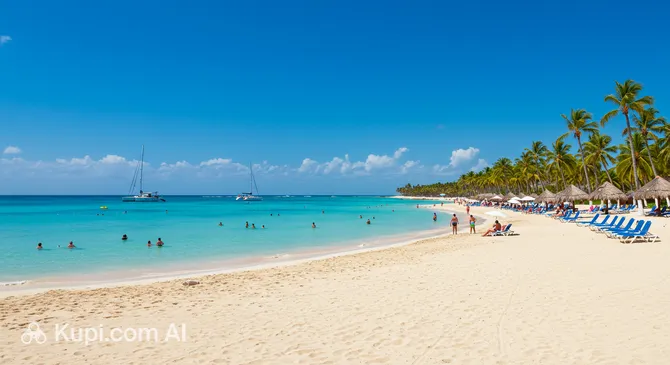
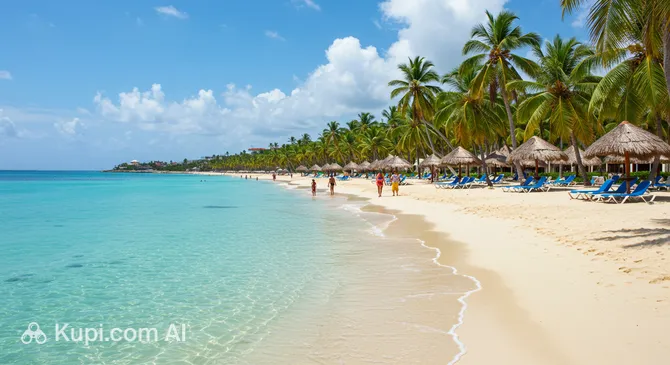
Bavaro is one of the most famous and vibrant resort centers in the Dominican Republic, synonymous with a paradise vacation of snow-white beaches and the turquoise waters of the Caribbean Sea. Located on the country's eastern coast in the La Altagracia province, this town attracts tourists from all over the world with its unique atmosphere of eternal summer and hospitality.
Bavaro. Illustration.
Source: Kupi.com AI
The climate in Bavaro is tropical and trade-wind-driven, with comfortable air and water temperatures year-round, making it an ideal destination for a beach holiday at any time. The town's population is approximately 55,000 people, many of whom work in the tourism sector, creating the most comfortable conditions for guests.
The main pride of Bavaro is undoubtedly its magnificent beaches, stretching for many kilometers. The famous Playa Bavaro, with its sand as soft as flour and calm waters protected by a coral reef, is considered one of the best in the world. Here, you can not only enjoy the sun and swimming but also engage in various water sports. Furthermore, the region is famous for its luxurious all-inclusive hotels and well-developed tourist infrastructure. Bavaro is also a convenient starting point for excursions to iconic sites such as Saona Island or the picturesque Hoyo Azul cenote.
If you dream of an unforgettable Caribbean vacation full of sun, relaxation, and vivid impressions, Bavaro will be an excellent choice. This resort offers the perfect combination of natural beauty, high-quality service, and diverse entertainment for the most discerning traveler.
In Bavaro, a classic tropical climate awaits you, providing warmth and sunshine almost all year round. Expect consistently high temperatures: averaging from 25°C in the cooler months (January-February) to 28°C in the height of summer and autumn (July-September), with daytime maximums often rising to 29-30°C. A characteristic feature of the weather is frequent but usually short tropical showers. Although precipitation is possible in any month, the intensity and number of rainy days increase slightly from May to November. For a more detailed look at the weather conditions by month, visit the Bavaro Climate page.
Average monthly temperature
Average monthly precipitation
Interesting Facts
In addition to its world-famous beaches and luxury hotels, Bavaro hides several curious details and facts that not all tourists are aware of. Ready to get to know this Caribbean paradise a little deeper?
Initially, Bavaro was not a town in the usual sense, but rather the name of a stretch of coastline where the first hotels began to appear in the 1970s. Its rapid development is largely due to the opening of the Punta Cana International Airport, which made the region easily accessible to tourists from all over the world.
It is believed that the name "Bavaro" comes from a specific type of palm tree that grew abundantly on this coast before its active development. These coconut palms remain an integral part of the landscape and a symbol of a tropical holiday to this day.
The famous Bavaro Beach is part of the so-called Costa del Coco (Coconut Coast). This is one of the longest continuous stretches of white sand in the Caribbean, spanning many kilometers and connecting several beaches in the region.
Many of the picturesque lagoons and artificial lakes that decorate the grounds of resort complexes in Bavaro, such as in Caribbean Lake Park, are actually man-made. They were created to enhance the feeling of a tropical paradise and provide guests with additional opportunities for relaxation and water activities.
How to Get There
Bavaro is one of the most accessible resorts in the Dominican Republic due to its proximity to major transportation hubs. Most tourists arrive here by plane using the nearby Punta Cana airport, but there are alternative options for flying through other cities. You can find all the ways to get to the town and plan your perfect route on our dedicated page.
The most convenient option is Punta Cana International Airport (IATA: PUJ). It is located in the city of Punta Cana, just 16 km from the center of Bavaro. This is the region's largest aviation hub with a huge passenger flow, receiving flights from all over the world. The journey to most Bavaro hotels by taxi or transfer will take only about 20–30 minutes, making it the absolute favorite among travelers.
If tickets to Punta Cana are unavailable, you can consider flying into La Romana Airport (IATA: LRM). It is located in the city of La Romana, approximately 55 km from Bavaro. This is an international airport with less traffic, but it is also convenient for tourists. The travel time by taxi is about 1 hour (approximately 50-60 minutes).
As an alternative for those who want to combine a beach holiday with a visit to the capital, Las Américas International Airport (IATA: SDQ) is suitable. It is located in Santo Domingo, about 132 km from Bavaro. This is a large airport with a wide choice of flights. The journey from here to the resort will take significantly longer—about 2–2.5 hours by taxi or bus.
For convenience, here is a summary of the main airports:
Bavaro is not just about endless beaches; it also offers many fascinating places that will make your vacation unforgettable. Here are just a few that are definitely worth including in your itinerary:
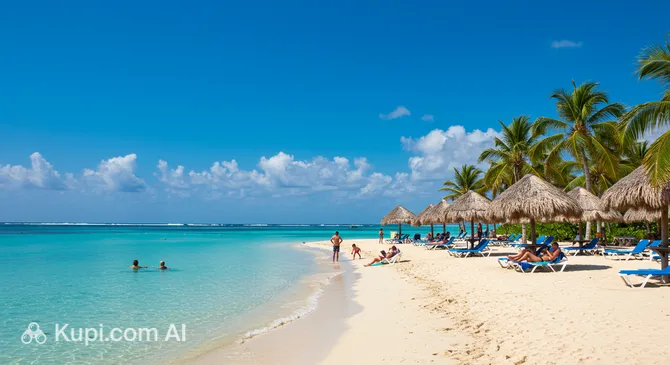
The crown jewel of the resort is undoubtedly the famous Bavaro Beach. These are kilometers of dazzlingly white, flour-fine sand washed by the azure waters of the Atlantic Ocean. It is an ideal place for relaxation, sunbathing, swimming, and water sports. Its beauty is regularly recognized in global rankings of the best beaches.
Bavaro Beach. Illustration.
Source: Kupi.com AI
Traveler photos:
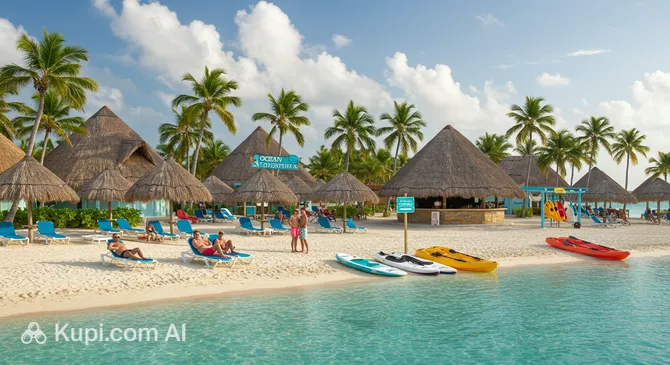
For fans of active recreation and sea adventures, Ocean Adventures park is an excellent choice. Here, you can swim with nurse sharks and stingrays in a safe environment, go snorkeling on the reef, ride a speedboat, or simply relax while enjoying Caribbean hospitality and an entertainment program. It is a great opportunity to get an adrenaline rush and vivid memories.
Ocean Adventures. Illustration.
Source: Kupi.com AI
Traveler photos:
If you want to dive into the modern life of the resort, head to Downtown Punta Cana. This is a lively area with shopping centers such as the Downtown Punta Cana Shopping Center and the San Juan Shopping Center, numerous restaurants, bars, a cinema, and even a concert venue. Here, you can find souvenirs, taste local and international cuisine, or simply stroll along the well-kept streets.
Downtown Punta Cana. Illustration.
Source: Kupi.com AI
Traveler photos:
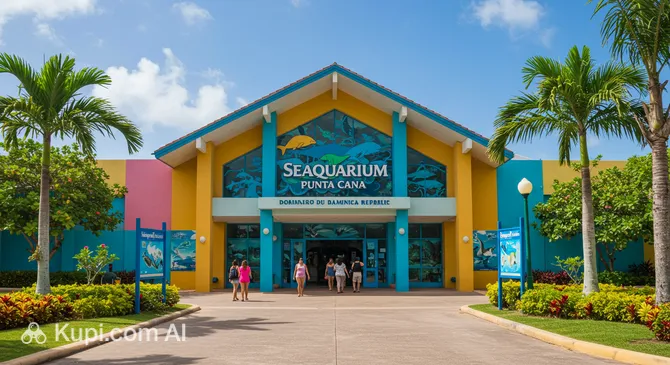
A unique experience awaits visitors at Seaquarium Punta Cana. This is not just an aquarium but an entire underwater adventure where you can walk on the seabed in a special helmet, observe stingrays, nurse sharks, and other marine life in their natural environment, and even swim with sea lions. It is a great option for a family holiday and getting to know the underwater world of the Caribbean.
Seaquarium Punta Cana. Illustration.
Source: Kupi.com AI
Traveler photos:
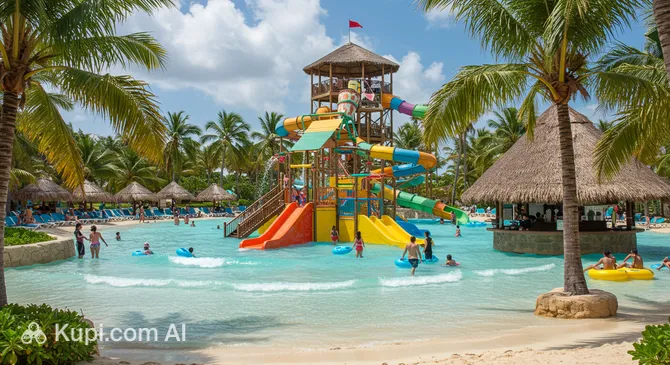
For a fun time with the whole family, the Splash Water Park is perfect. Located on the grounds of one of the large hotel complexes, it offers various water slides, pools, and attractions for children and adults. It is an excellent place to cool off and have fun on a hot Caribbean day, adding bright emotions to your beach holiday.
Splash Water Park. Illustration.
Source: Kupi.com AI
Traveler photos:
Local Cuisine
The gastronomy of Bavaro is a vibrant and appetizing journey into the world of Caribbean flavors, where Dominican culinary traditions harmoniously blend with the freshness of local products. The cuisine here is a colorful mix of Creole, Spanish, African, and even Taino (indigenous) influences, making it truly unique. The foundation of many dishes is the freshest seafood, rice, beans, plantains (platano), and, of course, juicy tropical fruits.
Be sure to try La Bandera Dominicana ("The Dominican Flag")—a traditional dish consisting of rice, red beans, stewed meat (usually chicken or beef), and salad. Another iconic dish is Sancocho, a thick and hearty stew made from several types of meat and various root vegetables. Seafood lovers should definitely taste Pescado con Coco—fish simmered in a fragrant coconut sauce. Also popular is Mofongo—mashed fried green plantains with garlic and pork cracklings, often served with meat or shrimp. Don't pass up Chivo Guisado (stewed goat) or crispy Chicharrones (fried pork skin/belly).
As for drinks, the Dominican Republic is famous for its rum. Try well-known brands such as Brugal, Barceló, or Bermúdez. The local Presidente beer is an excellent choice on a hot day. Don't forget about Mamajuana—a traditional infusion of rum, red wine, honey, and various roots and herbs, which is attributed with medicinal properties. Popular non-alcoholic drinks include fresh juices from mango, passion fruit, and pineapple, as well as the refreshing Morir Soñando ("To Die Dreaming")—a cocktail of orange juice and milk.
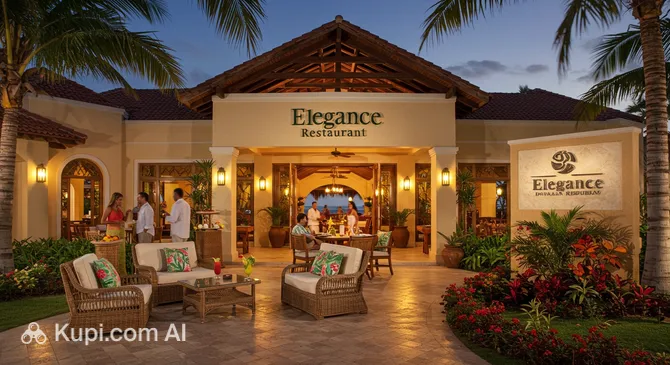
The dining culture in Bavaro is diverse. Most tourists eat at their hotel restaurants, many of which operate on an all-inclusive basis and offer a wide selection of international and local dishes. However, to experience the real taste of the Dominican Republic, it is worth visiting independent restaurants located both on the beaches and in tourist areas, such as the Elegance Restaurant. Locals often prefer small family establishments called "comedores," where you can taste authentic dishes at affordable prices. Street food is also common, with "chimi" trucks—Dominican burgers—being particularly popular.
Elegance Restaurant. Illustration.
Source: Kupi.com AI
Traveler photos:
The gastronomic scene of Bavaro attracts tourists with its variety, fresh ingredients, and the opportunity to try exotic dishes. Whether it's a luxury dinner at a fine-dining restaurant, a beach lunch with freshly caught fish, or an introduction to simple but filling Creole food—everyone will find something to their taste. The bright flavors of tropical fruits, aromatic spices, and the hospitality of the locals will make your culinary journey through Bavaro unforgettable.
Travel Tips
Welcome to sunny Bavaro! To make your journey to this paradise corner of the Dominican Republic as comfortable and carefree as possible, we have prepared some practical tips. They will help you better navigate and enjoy every moment of your vacation.
Clothing and Essentials:Bavaro has a tropical climate, so the base of your wardrobe should be light, breathable clothing made of natural fabrics (cotton, linen). Don't forget swimsuits, pareos, shorts, and T-shirts. A hat, sunglasses, and high-SPF sunscreen are essential to protect against the active sun. In the evening, a light sweater or wrap might be useful, along with mosquito repellent. For footwear, bring comfortable sandals or flip-flops for the beach and walks, as well as closed-toed shoes if you plan on excursions. Don't forget an adapter for electrical appliances (Type A and B sockets are used in the Dominican Republic, with a voltage of 110V).
Resort Transport: You can get around Bavaro in several ways. The most common option for tourists is a taxi. There are plenty of them at hotels and in tourist areas; it is recommended to agree on the price of the trip in advance, as taximeters are rarely used. For more budget-friendly trips, there are local minibuses called "guaguas," but they can be crowded and don't always follow a strict schedule. Car rental is possible, but take into account the local driving style; an international license is usually required. Many hotels offer transfers, and organized transport is often provided for excursions.
Finances: The official currency is the Dominican Peso (DOP). US Dollars (USD) are widely accepted in the tourist areas of Bavaro, but paying in local currency is often more economical. You can exchange currency at banks or exchange offices ("casas de cambio"); avoid street money changers. Credit and debit cards (Visa, Mastercard) are accepted in most hotels, large restaurants, and shops. Nonetheless, it's always useful to have some cash for small purchases, tips, and at markets. ATMs are available, but use them with caution, choosing those located in banks or hotels. Tipping is welcomed: in restaurants, it's usually 10% of the bill (if not included), and for maids and porters, 1-2 USD.
Health and Safety: There are pharmacies ("farmacias") in Bavaro, and some are open 24/7. It is recommended to carry a basic first-aid kit. Be sure to take out medical insurance before your trip. Drink only bottled water. Bavaro is considered a fairly safe resort, especially within hotel grounds. However, as with everywhere, observe basic precautions: do not leave valuables unattended on the beach, do not carry large sums of money, and avoid walking alone in poorly lit or deserted places after dark.
Communication: The official language in the Dominican Republic is Spanish. In the tourist area of Bavaro, many hotel, restaurant, and shop employees speak English. Learning a few simple phrases in Spanish, such as "Hola" (Hello), "Gracias" (Thank you), "Por favor" (Please), and "¿Cuánto cuesta?" (How much is it?), is always appreciated by the locals. You can buy a local SIM card at the airport or at communication stores. Wi-Fi is available in most hotels and many cafes.
Local Etiquette: Dominicans are very open and friendly people. A greeting of "Hola" with a smile is appropriate almost everywhere. Politeness and a calm tone are valued in communication. Don't be surprised if locals address you informally. "Mañana time" (tomorrow) is a fairly common concept here, so don't expect punctuality in everything; treat this with understanding—you're on vacation!
What to Avoid:It is strictly recommended not to drink tap water—use only bottled water. Also, try not to buy food from questionable street vendors if you are not sure of its quality. Avoid excessive alcohol consumption outside the hotel area, especially in unfamiliar places, so as not to become an easy target for trouble.
Additional Tip for Bavaro: Be sure to try fresh tropical fruits—mangoes, pineapples, passion fruit, and papayas. They can be bought at local markets or from beach vendors. This is the true taste of the Caribbean! And don't hesitate to bargain at markets (within reasonable limits and with a smile)—it's part of the local culture.
We hope these tips make your stay in Bavaro even more pleasant and memorable. Enjoy the sun, the sea, and the hospitality of this amazing resort!
Entertainment & Nightlife
When the sun sets over the turquoise waters of Bavaro, the resort doesn't go to sleep; instead, it comes alive with new colors. Evening and night entertainment here is diverse: from relaxed gatherings in beach bars to the sound of the surf to high-energy dancing in trendy clubs and gambling in casinos. The nightlife of Bavaro is concentrated mainly around large hotel complexes, as well as in special entertainment zones where everyone will find something to their liking.
One of the centers of evening activity is the Downtown Punta Cana area, which is home to numerous restaurants, bars, and shops. Here, you can find establishments for every taste: from cozy cafes to stylish lounges. Beach parties organized by hotels and bars along the coast are also popular, for example, on El Cortecito Beach, where you can enjoy a cocktail while admiring the sunset and then dance to Caribbean rhythms.
For fans of the club atmosphere, Bavaro offers several excellent options. Nightclubs here feature energetic music—from Latin American hits to modern electronic music—and an international crowd. One such place is Mezcalito Bar and Grill, known for its lively atmosphere. Most clubs start to fill up closer to midnight and stay open until the early morning. The dress code usually varies from casual to smart casual, especially in more prestigious establishments.
Mezcalito Bar and Grill. Illustration.
Source: Kupi.com AI
Traveler photos:
If you prefer a quieter evening, numerous bars are at your service. These can be sports bars where you can watch match broadcasts, such as Xtra Time Sports Bar, or elegant cocktail bars at hotels offering signature drinks and live music. Many establishments offer happy hours and special drink promotions. The atmosphere in bars is usually more relaxed and conducive to socializing.
Gambling enthusiasts will also find plenty to do. Some large resort complexes, such as the Costa Bavaro Resort, Spa & Casino, have their own casinos where you can try your luck at roulette, poker, blackjack, or slot machines. Casinos usually operate until late at night or around the clock, offering guests not only games but also bars and sometimes entertainment shows.
Practical tips for nightlife in Bavaro: The best time to visit clubs is after 11:00 PM or midnight. Average drink prices in popular tourist spots may be higher than in less-promoted establishments. For getting around at night, it is safest to use official taxis, which can be ordered through the hotel or found at special stands. Always confirm the fare in advance. In general, the dress code in Bavaro is quite democratic, but some clubs and restaurants may require more formal attire (e.g., long trousers and closed shoes for men).
Regarding safety, Bavaro is considered a relatively safe resort, especially in tourist zones and hotel territories. However, when going out in the evening, stick to well-lit and busy streets, do not leave your drinks unattended, and keep an eye on your personal belongings. Calling a taxi through the hotel reception or using trusted services is a good way to ensure a safe return.
During the day, Bavaro offers plenty of entertainment for the whole family: from exciting water adventures at Splash Water Park or Caribbean Lake Park to exploring the underwater world at Seaquarium Punta Cana or active recreation at Ocean Adventures. You can also visit the Punta Cana Dolphinarium or spend time shopping at the Downtown Punta Cana Shopping Center.
Parks & Museums
Bavaro is not only synonymous with endless beaches but also a place where you can find charming natural corners and touch the local culture, even if traditional museums and galleries are not its main feature. Here, nature and authentic Dominican traditions create a unique atmosphere for curious travelers.
When speaking of parks and green zones in Bavaro, its magnificent beaches are the first thing that comes to mind. The famous Bavaro Beach itself is like an open-air natural park. However, beyond it, it is worth paying attention to other coastal gems. For example, El Cortecito Beach offers a more secluded and authentic atmosphere compared to some larger sections. Here, you can find small restaurants with local cuisine right on the sand and observe the life of the fishing village that once gave rise to this resort. It is a great place for peaceful relaxation and enjoying Caribbean landscapes.
Cortecito Beach. Illustration.
Source: Kupi.com AI
Traveler photos:
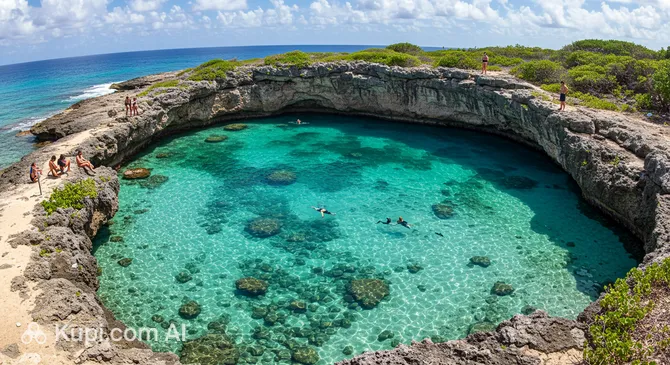
Another interesting natural object that can be categorized as a unique recreation zone is the so-called Natural Pool. This is an extensive shallow area in the ocean with crystal-clear water and a sandy bottom, located some distance from the shore. Boat excursions are often organized here, during which you can swim in the calm waters, see starfish, and simply enjoy the feeling of being in the middle of the Caribbean Sea. It is a kind of natural water park created by nature itself.
Natural Pool. Illustration.
Source: Kupi.com AI
Traveler photos:
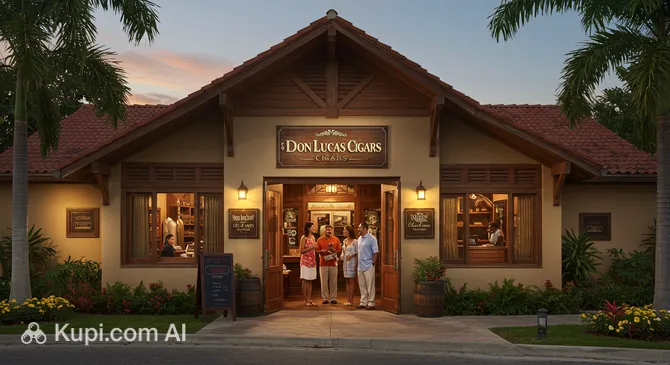
Although Bavaro does not boast an abundance of classic museums or art galleries, you can immerse yourself in the culture of the Dominican Republic here in other ways. One such place is Don Lucas Cigars. This is not just a shop but an entire factory and museum where you can learn all about the production process of the famous Dominican cigars—from growing tobacco to rolling and storage. Visitors are offered tours where they can observe the masters at work and even try their hand at this art. This is a wonderful opportunity to touch an important element of Dominican heritage.
Don Lucas Cigars. Illustration.
Source: Kupi.com AI
Traveler photos:
To get acquainted with local crafts and souvenirs, it is worth visiting the small markets and shops found in the Downtown Punta Cana area or along some of the beaches. They sell wooden products, "Haitian naive" style paintings, jewelry made of larimar (Dominican turquoise) and amber, as well as other authentic goods. Interacting with sellers and choosing a unique souvenir can also be part of the cultural experience.
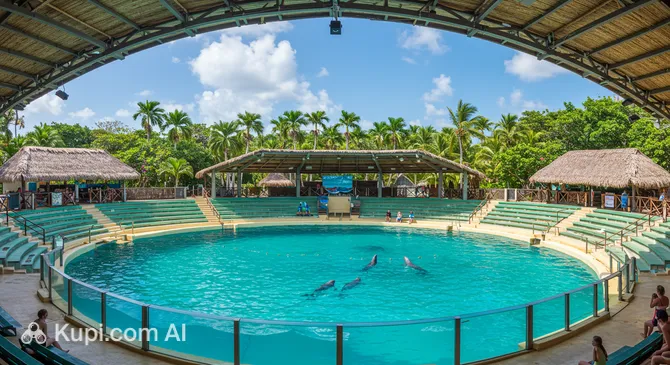
Among other sites of interest to tourists offering educational entertainment is the Punta Cana Dolphinarium. Here, you can not only watch shows featuring dolphins and sea lions but also swim with these amazing animals. While it is more of an entertainment site, it provides an opportunity to learn more about marine inhabitants and get unforgettable impressions, especially for families with children.
Dolphinarium Punta Cana. Illustration.
Source: Kupi.com AI
Traveler photos:
Insider tip: To feel the local flavor more deeply, do not limit yourself only to tourist zones. Peek into small local cafes called "comedores," where the Dominicans themselves eat, to try authentic cuisine. Also, if you see roadside stalls with tropical fruits, feel free to stop—this is a chance to try the freshest and juiciest gifts of Caribbean nature.
Getting Around
The public transport system in Bavaro is quite specific and differs from what residents of major cities are used to. As a resort area oriented towards tourists, Bavaro offers several ways to get around, each with its own characteristics. You won't find a metro or trams here, but you can use local modes of transport, taxis, or rent a car.
The main form of inexpensive local transport are the shared taxis known as "guaguas." These are usually minibuses or small buses that ply the main roads, connecting various districts of Bavaro and neighboring settlements. Guaguas do not have clearly marked stops (except for a few key points)—you can flag them down with a wave of your hand almost anywhere along their route. There is no set schedule; they depart once they are full. Payment is made in cash directly to the driver or conductor. The fare is low, but it is better to confirm it with locals or in advance to avoid misunderstandings. This is an authentic, though sometimes crowded and not the most comfortable, way to travel.
Another popular and very common type of transport for short trips is "motoconchos," which are motorcycle taxis. Motoconcho drivers offer their services everywhere. This is a fast and cheap way to travel short distances, especially if you are traveling alone. You must agree on the price of the trip in advance. It is worth remembering that this type of transport is considered less safe, and helmets are not always provided to passengers, so use it with caution.
Taxis are the most comfortable and common way for tourists to get around Bavaro. Official taxis can usually be found at hotels, the airport, and busy tourist areas. Taxis can also be called through your hotel reception. It is important to remember that taximeters are rarely used, so always agree on the cost of the trip before it starts to avoid unpleasant surprises. Taxi prices are significantly higher than those for guaguas or motoconchos.
For greater independence, you can rent a car. Rental agencies are located both at the airport and in Bavaro itself. However, be aware that the driving style on local roads can be quite chaotic, and the quality of some roads outside major tourist thoroughfares leaves much to be desired. An international driving permit and a credit card are usually required for rentals. Many hotels also offer their guests shuttle services to beaches, shopping centers, or the airport. For organized excursions, special tourist transport is usually provided.
Within resort areas or along the beach for short distances, you can move around on foot. Some hotels offer bicycle rentals, which can be a pleasant way to explore the surroundings. There is no unified travel card system or mobile apps for paying for public transport in Bavaro. To pay for guaguas, motoconchos, and often taxis, you will need cash, preferably in local currency or small US dollar bills.
Accommodation
Bavaro offers a wide range of accommodation options capable of satisfying the needs of diverse travelers—from budget holiday seekers to luxury lovers. Here you will find everything: from affordable apartments and guesthouses to mid-range hotels and, of course, the famous all-inclusive resort complexes that are the hallmark of the region.
Most hotels and resorts are located along the famous Bavaro Beach and its adjacent beach areas, providing direct access to the white sand and azure sea. These areas are the most popular among tourists due to their developed infrastructure and proximity to major entertainment. Accommodation options can also be found in the Downtown Punta Cana area, where shops, restaurants, and entertainment venues are concentrated.
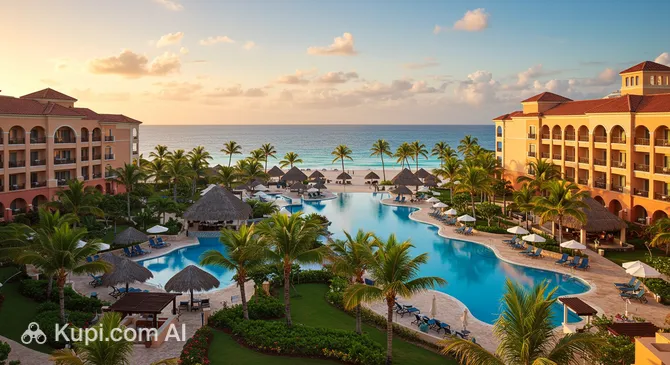
Costa Bávaro Resort, Spa & Casino. Illustration.
Source: Kupi.com AI
Traveler photos:
Among the well-known accommodation options are large resort complexes offering a full range of services. For example, the Costa Bavaro Resort, Spa & Casino or the Wellness Resort at Punta Cana Beach are examples of such places where guests can enjoy not only comfortable accommodation but also a variety of restaurants, pools, spas, and entertainment programs right on site.
As for the price range, in Bavaro, you can find budget options (hostels, inexpensive apartments), mid-range offers (small hotels, apart-hotels), and, certainly, luxury resorts. It is recommended to book accommodation in advance, especially if your trip falls during the peak tourist season (usually from December to April, and also in July-August), to ensure the best choice and prices. The most common booking methods are popular online platforms and travel aggregators, as well as direct booking through official hotel websites.
Nearby Cities
For those who want to explore the surrounding area, Bavaro serves as an excellent starting point for day trips to several interesting nearby locations:
These nearby destinations allow you to get a sense of the region's diverse culture and landscapes. Each of these trips can be a fascinating addition to your vacation in Bavaro, opening up new facets of the Dominican Republic.
Shopping & Souvenirs
Shopping in Bavaro is a pleasant addition to a beach holiday, offering tourists the opportunity to purchase souvenirs, local delicacies, and resort-style goods. While Bavaro is not a global shopping hub, you can find everything necessary for a comfortable stay and take home a piece of Dominican flavor. The main focus is on goods for tourists: beachwear, suncare cosmetics, local crafts, and, of course, the famous Dominican rum and cigars.
Major shopping opportunities are concentrated in several key areas. A popular spot is the Downtown Punta Cana district, which houses various shops, boutiques, and souvenir stalls. Small shops and retail outlets can also be found along the main tourist streets and within the grounds of large hotel complexes. Souvenir and beach accessory sellers often offer their goods directly on the beaches.
For more conventional shopping, Bavaro has several shopping centers. One of the most famous is the Downtown Punta Cana Shopping Center, offering a good selection of clothing, footwear, accessories, and electronics stores, as well as a supermarket, restaurants, and entertainment. Another popular mall is the San Juan Shopping Center, where you can also find various shops, a supermarket, a cinema, and a food court. These shopping centers offer a format more familiar to Europeans and Americans, with air-conditioned premises and fixed prices.
Downtown Mall Punta Cana. Illustration.
Source: Kupi.com AI
Traveler photos:
As for markets, in Bavaro, they are mainly represented by small souvenir rows and stalls where local artisans sell their creations. Here you can find more authentic goods, but be prepared for the fact that prices might be inflated, and bargaining is quite appropriate. These markets often sell paintings in the "Haitian naive" style, woodwork, ceramics, and jewelry made of larimar and amber.
San Juan Shopping Center. Illustration.
Source: Kupi.com AI
Traveler photos:
From Bavaro and the Dominican Republic in general, travelers traditionally bring back rum (brands like Brugal, Barceló, Bermúdez), cigars (you can visit specialized shops or factories, such as Don Lucas Cigars), coffee, items made of larimar (a semi-precious sky-blue stone found only in the Dominican Republic), and amber (Dominican amber often contains interesting inclusions). Also popular are mamajuana (a national herbal infusion), cocoa, coconut oil-based cosmetics, colorful clothing, hats, and various handmade crafts.
Shops in the tourist areas of Bavaro usually operate from the morning (around 9:00-10:00 AM) until late evening (until 9:00-10:00 PM), especially in shopping centers. Small stalls may have more flexible hours and sometimes close for a siesta in the middle of the day. In most tourist locations, both Dominican pesos (DOP) and US dollars (USD) are accepted. Credit cards (Visa, Mastercard) are widely used in shopping centers and large stores. Cash is preferred in markets and small stalls, and here you can bargain.
Tourists in the Dominican Republic may be entitled to a refund of the value-added tax (ITBIS) on certain goods purchased in stores participating in the Tax Free system. To do this, you must make a purchase of a certain amount, properly fill out the documents in the store, and present them along with the goods to customs at the airport before your flight. Check the conditions and refund procedure directly at the places of purchase.