The Serapeum of Alexandria is a majestic ancient temple complex built in Alexandria in honor of the god Serapis, revered as the city's patron. Its construction was initiated by Ptolemy III, who ruled from 246 to 222 BC. According to historical descriptions, the Serapeum, strategically positioned on a rocky plateau overlooking both land and sea, was considered the largest and most magnificent of all temples in the Greek quarter of ancient Alexandria.
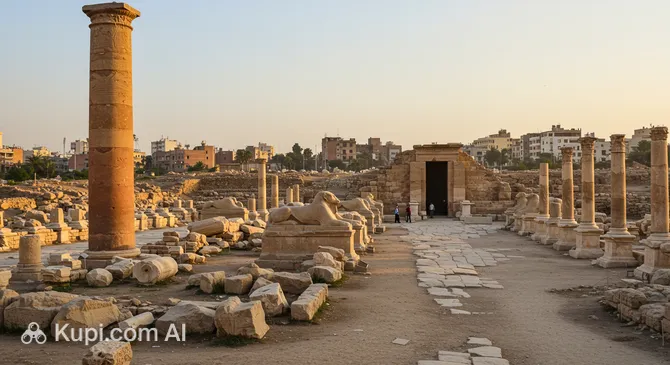
Traveller photos:
Today, the ruins of the Serapeum, also known as the Serapeion, are among the significant historical attractions of Alexandria. The complex is located in the area between the Amud el-Sawari cemetery and the Kom el-Shoqafa plateau. In ancient times, it was not merely a religious structure but also an important cultural center; the temple housed a branch of the famous Library of Alexandria, making it one of the hubs of knowledge and scholarship of that era.
The Serapeum serves as a striking testament to the unique cultural syncretism characteristic of the Hellenistic and Roman periods in the history of Egypt. Visiting this archaeological monument allows travelers to touch the rich and multifaceted past of the city, feeling the atmosphere of an ancient world where Greek and Egyptian traditions were closely intertwined to create a unique cultural landscape.