Support

Greco-Roman Museum

About

The Graeco-Roman Museum is one of the gems of Alexandria and one of Egypt's most important archaeological collections. It is rightfully considered the country's second most significant archaeological museum after the Grand Egyptian Museum and is a unique collection entirely dedicated to the rich heritage of the Graeco-Roman period in Egyptian history.
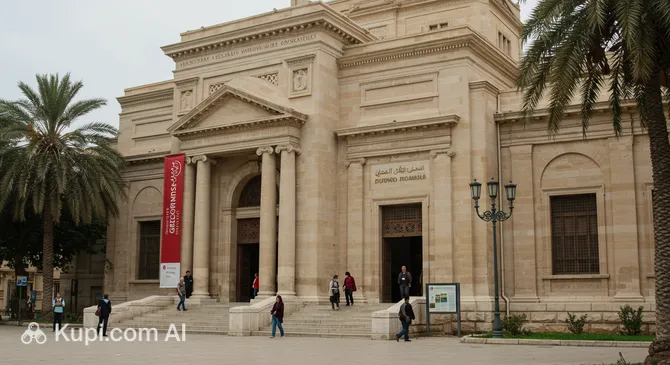
Greco-Roman Museum. Illustration.
Source: Kupi.com AI

Traveller photos:

The museum is housed in a purpose-built neoclassical building, which is an architectural landmark in its own right. Inside, 27 exhibition halls await visitors, along with a charming garden where you can continue exploring artifacts of that era. The exhibition is carefully designed to give guests a comprehensive understanding of Egyptian civilization during the reign of the Greeks and Romans.

Following an extensive reconstruction that lasted nearly two decades, the Graeco-Roman Museum reopened its doors to the public in 2023, presenting updated displays and an improved space. This event was a milestone for the cultural life of Alexandria, offering both tourists and locals a fresh perspective on this unique historical layer.

Contacts

For the most up-to-date information regarding the Graeco-Roman Museum, including visiting hours and ticket prices, it is recommended to consult official sources. You can find more details on the museum's official websites.

How to contactContact
AddressAl Mesallah Sharq, Al Attarin, Alexandria Governorate 5372053, Egypt
Phone+20 3 4225327
Websitewww.alexandria.gov.eg

What to Do

A visit to the Graeco-Roman Museum in Alexandria is a unique opportunity to dive into the rich history of the period when the cultures of Ancient Egypt, Greece, and Rome were closely intertwined. Museum guests can explore an extensive collection of artifacts gathered from the time of Alexander the Great's conquest of Egypt and the subsequent Roman rule. It is a place where pages of history come to life, demonstrating the fusion of great civilizations.

Inside the museum, 27 halls await visitors, each holding its own treasures. Among the exhibits, one can see impressive mummies, exquisite gold jewelry, and portraits of Alexander the Great himself, the city's founder. Walking through the halls allows you to trace the development of art and daily life in Graeco-Roman Egypt. In addition to the indoor displays, the museum features a picturesque garden where you can also find interesting artifacts and enjoy the atmosphere of the past.

The museum's collection has been constantly enriched by archaeological excavations conducted in Alexandria and its surroundings. Each exhibit tells its own story, allowing visitors to form a complete picture of the cultural heritage of this significant period. Studying these authentic historical artifacts is not just a tour, but a true journey through time, revealing the depth and multifaceted nature of the Graeco-Roman era in Egypt.

Getting There

The Graeco-Roman Museum is conveniently located in the heart of Alexandria, at 5 Al-Mathaf Al-Romani Street. This central location makes it easily accessible for tourists wishing to explore the region's rich history. Regardless of where you are staying in the city, reaching the museum is quite simple.

There are several ways to get to the Graeco-Roman Museum. If you prefer public transport, Alexandria has an extensive network of bus routes, many of which pass through the city center and stop near the museum. This is an economical option that also allows you to see the city along the way.

An alternative to public transport is taking a taxi. Taxis in Alexandria are relatively inexpensive and widely available. A taxi ride from most city center hotels to the museum will be quick and comfortable. Additionally, if you are staying nearby, a walk to the museum can be a pleasant way to explore the central streets of Alexandria and soak up its atmosphere.

Overall, thanks to the well-developed transport infrastructure of Alexandria, reaching the Graeco-Roman Museum is effortless. Choose the most convenient method for you and set off to encounter the unique artifacts of the Graeco-Roman period in Egypt.

Nearest city: Alexandria

History & Facts

The Graeco-Roman Museum in Alexandria has a rich history that began in 1892. Its foundation was made possible through generous donations from wealthy residents of the city, who sought to preserve and showcase unique Graeco-Roman artifacts discovered during archaeological excavations in Alexandria and its surroundings. Initially, the museum was modestly housed on Rosset Street (now known as Sharia El Horreya), occupying only five rooms in a single-story building. However, the collection grew rapidly, and on October 17, 1895, the museum officially opened in a new, more spacious building where the exhibits occupied eleven halls.

The initiative for the museum's creation came from its first director, Giuseppe Botti, an Italian national. His primary goal was to prevent the export and destruction of priceless ancient artifacts that were being found in large numbers during construction and archaeological work in Alexandria. Together with Evaristo Breccia, who also served as director, they laid the foundation for one of the most significant Graeco-Roman collections in Egypt. As archaeological research expanded and the number of finds increased, the museum's collection was constantly enriched, eventually growing to 23 halls, each telling its own chapter of this fascinating period's history.

In 1996, the museum building became the property of the Egyptian state, and on August 31, 2003, it was ceremoniously reopened under the patronage of Egypt's Supreme Council of Antiquities. However, just two years later, in 2005, the museum was forced to close its doors to visitors for extensive reconstruction, as the building had deteriorated over time. The restoration process proved long and complex, facing funding issues and spanning nearly two decades. Work only resumed with renewed vigor ten years after it first began.

Finally, after a long wait and meticulous work by restorers, the Graeco-Roman Museum reopened its doors to the public in October 2023. Renovated and modernized, it is once again ready to introduce visitors from around the world to the priceless treasures of the Graeco-Roman era found on Egyptian soil. This event was a true celebration for all admirers of history and culture.

Time Needed

When planning a visit to the Graeco-Roman Museum in Alexandria, it is worth setting aside approximately 2-3 hours for the tour. This amount of time is generally sufficient for most visitors to explore the main exhibitions and get a general overview of the rich history of the Graeco-Roman period in Egypt.

If you have a deep interest in history and archaeology, you might need a bit more time – up to half a day. The museum boasts an extensive collection of artifacts, including sculptures, coins, sarcophagi, and everyday items, each telling its own unique story. Carefully studying the details and reading the information plaques can significantly extend the duration of your visit.

For those who prefer a more cursory overview and want to focus only on the most iconic exhibits, 1.5-2 hours may be enough. In any case, a visit to the Graeco-Roman Museum is a fascinating immersion into the past that will leave lasting impressions.

Working Hours

The exact opening hours of the Graeco-Roman Museum in Alexandria can vary, so it is highly recommended to check for current information before your visit. The most reliable way is to check the museum's official website (if available) or contact local tourist information centers upon arrival in Alexandria.

Generally, major museums aim to remain open year-round, but there may be schedule changes depending on the season or special events. It is also wise to find out in advance if pre-booking tickets is required, especially if you plan to visit during the peak tourist season, to avoid potential queues and guarantee your entry.

9:00 – 17:00

Nearby

A visit to the Graeco-Roman Museum in Alexandria is an immersion into the region's rich history. However, to make your journey even more fulfilling and complete, it is worth spending time exploring the museum's surroundings. Often, just near famous landmarks, equally interesting places are hidden, allowing for a deeper understanding of the city's culture and atmosphere.

A stroll through the nearby streets can reveal authentic cafes, local markets, or other historical sites that will complement the impressions from the main excursion. This is a wonderful opportunity to see the daily life of Alexandria and feel its unique character.

NameDistance
NYX Lounge0.3 km
Kebda Awlad El Fellah0.3 km
Jeeda's0.4 km
Cavafy Museum0.5 km
Roman Amphitheatre of Alexandria0.6 km
Spitfire Bar0.6 km
Alexandria National Museum0.6 km

Reached the bottom of the page?

Looks like you know this route inside out