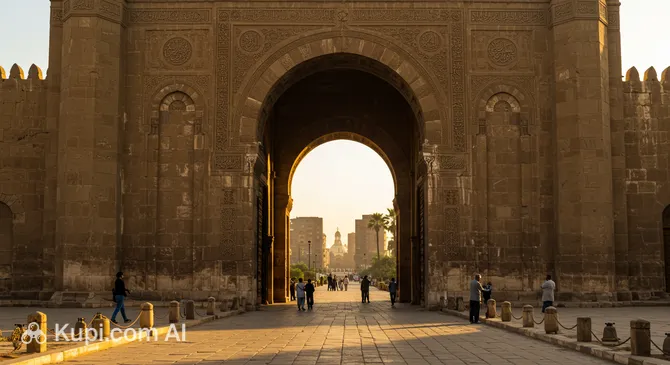
Bab al-Futuh, which translates as the "Gate of Conquests," is one of the three majestic Fatimid-era gates that have survived to this day in Cairo, Egypt. Located in the northern part of historic Cairo, these impressive gates serve as a silent witness to the city's rich history and are an integral part of its ancient fortifications. They invite travelers to touch the past and feel the spirit of the medieval metropolis.
Traveler photos:
Architecturally, Bab al-Futuh is a monumental structure with two massive semi-circular two-story towers, built predominantly of solid stone masonry. The entrance to the city walls lies between these towers. A special feature of the gate is its unique and varied decorative elements, which set it apart from other Cairo gates of the same era, such as Bab al-Nasr. Every stone here seems to hold its own story, drawing attention with the skillful work of past masters.
Looking inside the gate, right after the entrance and down a flight of stairs, one can find a spacious vaulted room. In times past, it served to house and assemble troops preparing for the defense of the city or new campaigns. Climbing to the top of Bab al-Futuh, you can enjoy a panoramic view of historic Cairo. Of particular interest are the gracefully joined vaults and carved reliefs, among which one can notice images of a hippopotamus and a procession with offerings—these are reused blocks from ancient Pharaonic temples in Memphis, adding even more mystery and historical depth to the gate.