The Giza Necropolis is a world-famous archaeological complex located in the suburbs of Cairo, on the edge of the desert. As one of the most important monuments of Ancient Egypt's civilization, it is included in the UNESCO World Heritage list. It is not just a group of pyramids, but a vast "city of the dead" belonging to the Old Kingdom era, serving as the final resting place for pharaohs and nobility.
Traveler photos:
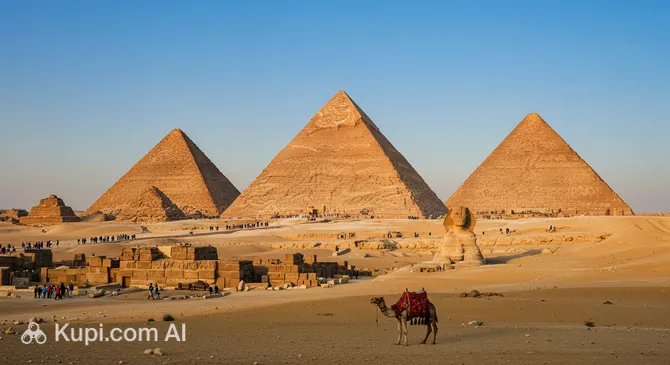
The heart of the necropolis consists of the three Great Pyramids: the Pyramid of Cheops (Khufu), the only one of the Seven Wonders of the Ancient World to survive to this day, as well as the pyramids of Chephren (Khafre) and Mykerinos (Menkaure). Standing near them is another iconic symbol—the monumental statue of the Great Sphinx, a mysterious guardian protecting the peace of the ancient rulers.
The complex is much more extensive than it appears at first glance. In addition to the great pyramids, it includes the queen's satellite pyramids, temple ruins, special pits for "solar boats" on which the pharaohs were intended to travel in the afterlife, and several cemeteries with more than seven thousand mastaba tombs. Visiting the necropolis in Giza is a unique opportunity to touch thousands of years of history and feel the greatness of one of the most mysterious civilizations in human history.