The Cairo Citadel, also known as the Citadel of Saladin (Al-Qala), is a majestic medieval Islamic fortress perched on the Muqattam Hills overlooking Cairo. It is one of Egypt's key historical and architectural monuments. The fortress was founded by the famous Sultan Saladin in the 12th century to protect the city from the Crusaders and served as the residence of the country's rulers for nearly 700 years. Today, it is a popular UNESCO World Heritage site that attracts tourists not only for its rich history but also for its breathtaking panoramic views of Cairo.
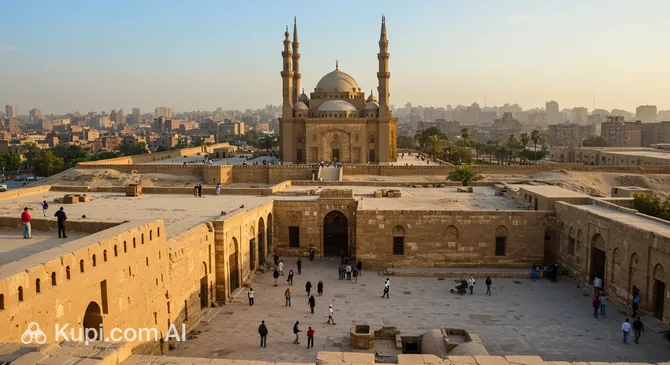
Traveler photos:
The historical significance of the Citadel is immense, as it was the heart of Egypt's political and military life from the Ayyubid dynasty until the 19th century. It was from here that sultans and pashas governed the state until the government moved to the new Abdeen Palace in 1874. Over centuries of existence, the complex was rebuilt and expanded many times, reflecting the tastes and ambitions of different eras, particularly the Mamluk periods and the reign of Muhammad Ali.
Within the vast territory of the fortress are several outstanding attractions. The jewel of the complex is the Mosque of Muhammad Ali, also known as the Alabaster Mosque, whose elegant minarets are visible from many points in the city. Additionally, the older Mosque of Sultan al-Nasir Muhammad and several museums, including the National Military Museum and the Carriage Museum, are of great interest. A walk through the Citadel is a fascinating immersion into history, allowing you to see some of the best examples of Islamic military architecture.