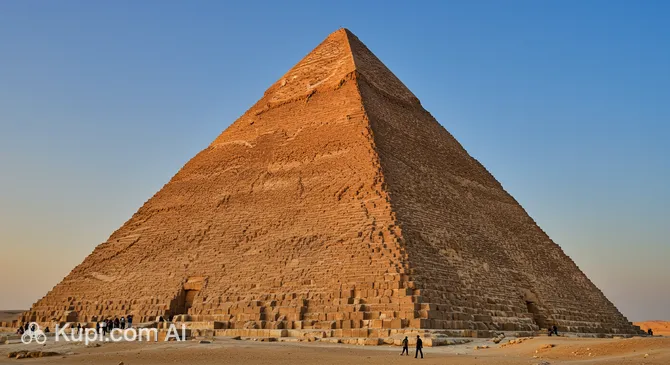
The Great Pyramid of Giza, also known as the Pyramid of Cheops, is a monumental structure and the greatest architectural monument of Ancient Egypt, located on the Giza Plateau in a suburb of Cairo. It is the only one of the "Seven Wonders of the Ancient World" still standing today, with an estimated age of about 4,500 years. The pyramid was built as a tomb for Pharaoh Cheops and remained the tallest man-made structure on Earth for nearly four millennia.
Traveler photos:
Originally, the pyramid's height reached nearly 147 meters, but due to time and erosion, it is about 138 meters today. The base of the pyramid is an almost perfect square with a side of about 230 meters. Construction of this colossal structure required more than 2.3 million stone blocks, each weighing an average of 2.5 tons. Originally, the pyramid was covered with smooth white limestone casing that shone brightly in the sun.
Inside the pyramid is a complex system of corridors and three main chambers located at different levels. Despite being a highly popular tourist destination, many mysteries of its construction and the purpose of its internal rooms remain unsolved. Since 1979, the entire Giza pyramid complex, including the Pyramid of Cheops, has been a UNESCO World Heritage site, continuing to inspire awe in millions of travelers from all over the world.