Support

Tartu Airport

About the Airport

Tartu Airport (TAY) is not merely an air hub, but a welcoming gateway to the academic and cultural heart of Estonia. Unlike giant transport hubs, it offers travellers a calm and almost homely atmosphere, where there is no place for hustle and long queues. This compact airport is perfect for those who value their time and comfort, starting their acquaintance with the southern part of the country with pleasant impressions.

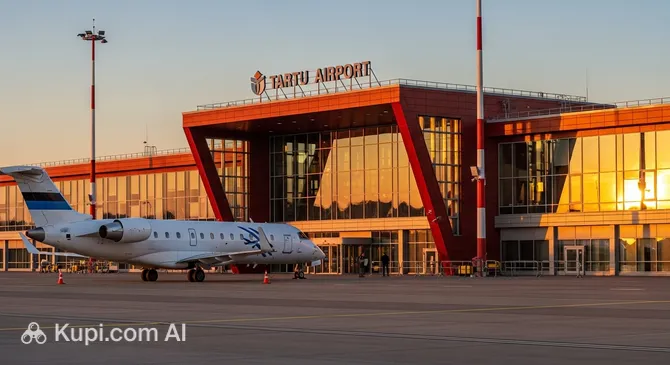
Tartu Airport. Source: Kupi.com Binoculars
IATA Code TAY
ICAO Code EETU
City Tartu
Distance to centre approx. 10 km
Status International
Annual passengers ~10,000 – 20,000
Popular Airlines Finnair

The main advantage of Tartu Airport is its compactness and efficiency. Check-in, security screening, and baggage claim procedures are surprisingly quick here, allowing you to save time and peace of mind. The airport serves as a key transport hub for the entire southern region of Estonia, providing convenient access not only to Tartu but also to its picturesque surroundings.

Despite its modest size, the airport offers all necessary amenities: free Wi-Fi throughout the territory, a cosy café where you can enjoy a coffee before your flight, and car rental desks for those planning an independent journey. The main carrier is Finnair, operating regular flights to Helsinki. This makes Tartu easily accessible from anywhere in the world via one of Northern Europe's largest hubs.

Contact Information

  • Official Website: www.tartu-airport.ee
  • Information Service Phone: +372 730 9210
  • Address: Lennu 40, Reola küla, Kambja vald, 61701 Tartumaa, Estonia
  • Email: tartu.info@tll.aero
  • Social Media: Tartu Airport is part of the Tallinn Airport group (Tallinna Lennujaam). You can follow news on the official pages of the main airport, for example, on Facebook.
  • Lost Luggage Information: If your luggage was lost during the flight, you should first contact your airline's representative office. For items left in the terminal building, you can write to the Lost and Found service email: lost.found@tll.aero.
  • Passenger Support Contacts: For general questions and enquiries, please use the main airport information phone number.

How to Get to the Airport

Tartu Airport (TAY) is located approximately 11 kilometres south of the city centre of Tartu, making the journey there quick and convenient. Despite its compact size, the air harbour offers several transfer options suitable for any budget and travel style. When planning your trip, you can easily choose the optimal way to reach the terminal.

The most economical way to get to the airport is the dedicated Airport Shuttle. Its schedule is synchronised with flight arrivals and departures, which is very convenient. The journey from the city centre takes about 20-30 minutes. The ticket price is around 5–6 Euros. It is recommended to book a seat on the shuttle online in advance to guarantee your spot. This is an excellent choice for solo travellers and those who value a balance of price and comfort. There is no direct connection to the airport via standard city buses or trains.

For those who prefer maximum comfort and speed, the ideal solution is a taxi or private transfer. A car ride from Tartu centre to the airport will take just 15-20 minutes depending on traffic. In Estonia, taxi apps like Bolt are popular, making summoning a car simple and fast. The cost of the trip will be approximately 15–20 Euros. This is more expensive than the shuttle, but is compensated by convenience, especially if you are travelling with family or a large amount of luggage. You can also pre-book a transfer that will meet you at a specified location at the appointed time.

If you are travelling in your own or a rented car, getting to the airport is effortless. The road is well-marked, and parking is available at the terminal. There are zones for short-term stops (for dropping off passengers) as well as paid long-term parking for those who wish to leave their car during their absence. Inside the airport building, there are also desks for car rental companies, where you can pick up or return a vehicle before your flight.

Terminals and Map

Tartu Airport (TAY) is a small and very cosy regional airport, distinguished by a simple and clear structure. There is only one passenger terminal here, serving all flights — both domestic and international. Thanks to this, navigation through the airport is simplified to the maximum, and getting lost here is practically impossible.

The terminal consists of a single compact building where all key zones are within walking distance of each other. Immediately upon entry, you find yourself in the general hall where check-in counters and the information desk are located. Departure and arrival zones are clearly separated but situated under one roof. After check-in, passengers proceed to security screening, followed by a small and comfortable waiting lounge with boarding gates. The arrival zone is located in another part of the building and includes the baggage claim belt and customs control.

One of the main advantages of Tartu Airport is the rapid completion of all formalities. Flight check-in and security screening usually take no more than 15-20 minutes. Even on busy days, long queues are rare here. Generally, arriving at the airport 1-1.5 hours before departure is more than sufficient to go through all procedures without haste.

Since there is only one terminal, no transfers between terminals are required. All navigation is intuitive, and signs in Estonian and English will help you orient yourself easily. The main recommendation for travellers is simply to follow the signs. The small dimensions of the airport allow you to avoid the hustle and stress typical of large aviation hubs, making the start and end of your journey as comfortable as possible.

Airport History

The history of Tartu Airport (TAY) begins in the post-war years. It was founded in 1946 and located in the Ülenurme parish, approximately 11 kilometres south of the city centre. Initially, the airport served civil aviation needs and connected the second-largest city of Estonia with other regions.

An important stage in the development of the airport complex was the construction of a new terminal building in 1981. This allowed for improved passenger service quality and increased throughput capacity. During the Soviet period, the airport primarily received domestic flights, playing a key role in regional communication.

A new era for Tartu Airport began after the restoration of Estonia's independence. To meet modern international standards, a large-scale reconstruction was carried out, completed in 2009. During the modernisation, the runway was extended to 1800 metres, enabling the reception of larger aircraft. Navigation systems were also updated, and the passenger terminal was reconstructed.

Interesting fact: Tartu Airport is not only a transport hub but also an important educational centre. The Estonian Aviation Academy (Eesti Lennuakadeemia) is based on its territory, training future pilots and aviation specialists. Today, the airport continues to play an important role in the development of tourism, business, and science in the southern part of the country, ensuring convenient air connections.

Services and Amenities

Tartu Airport (TAY) is a compact and modern regional airport offering passengers all necessary services for a comfortable wait for their flight. Here you will find a small cosy café where you can have coffee and a snack before departure, as well as purchase souvenirs. Free Wi-Fi is available throughout the terminal, and special stands and power outlets are provided in the waiting hall for charging gadgets.

For passengers travelling with small children, a mother and child room is equipped. Passengers with reduced mobility can count on comprehensive assistance; for this, it is recommended to notify the airline in advance of your needs when booking a ticket. Although there are no separate VIP lounges at the airport, the general waiting area is distinguished by cleanliness and a calm atmosphere, allowing you to spend time comfortably before boarding.

There are no bank branches or full-service currency exchange points in the terminal building, so financial matters are best settled in the city beforehand. Medical assistance is provided by airport staff who have undergone special training if necessary. There are no hotels directly at the airport, but a wide selection of accommodation options is available in the city of Tartu itself, located just a few kilometres away. Specialised conference halls and business centres are also located in the city.

Where to Eat

Tartu Airport (TAY) is a compact regional airport, so the choice of dining establishments here is limited, but allows for a comfortable snack before departure. All options are concentrated in the single terminal.

The main place to eat is the café in the public area of the airport, located before the security zone (landside). It is accessible to departing passengers as well as those seeing them off or meeting them. Here, travellers can order coffee, tea, soft drinks, and choose from a standard selection of snacks: sandwiches, salads, fresh pastries, and desserts. Sometimes the menu features more substantial dishes, such as the soup of the day.

If you wish to try something from the local cuisine, pay attention to the pastries — you might find traditional Estonian buns or pies. For a full lunch or dinner, the selection will be minimal, so it is better to eat beforehand at one of the establishments in Tartu. For a quick bite, the café is ideal.

Passengers with strict dietary restrictions should be prepared that specialised dishes (vegan, gluten-free, Halal) will likely not be available on the menu. In this case, it is more reliable to bring food with you. The price range in the café is average for airports — higher than in the city, but acceptable. The establishment's opening hours depend directly on the flight schedule: it opens before the first departures and closes after the last departure.

Tips for Travellers

Travelling through Tartu Airport (TAY) usually proceeds smoothly and without unnecessary fuss thanks to its compact size. However, knowing a few nuances will make your trip even more comfortable. Here are some useful tips for passengers flying from the second-largest city in Estonia.

When to arrive at the airport? Since the airport in Tartu is small, formalities are completed faster here than in major hubs. It is recommended to arrive 1.5-2 hours before an international flight departure. If you are travelling with hand luggage only and have already checked in online, you can arrive a little later, but a time buffer is never amiss.

Check-in and security control. Check-in counters and the security control point are located in one small terminal, so you won't get lost. The process usually goes quickly, but to avoid delays, have your passport and boarding pass ready in advance. Screening rules are standard: be prepared to remove electronics and liquid containers from your hand luggage.

Tips for choosing a seat on the plane. Most airlines offer seat selection during online check-in. If you want to enjoy the views during takeoff or landing, choose a window seat. For those who value convenience and the ability to stand up freely without disturbing neighbours, an aisle seat is the ideal option. Bear in mind that budget carriers often charge an additional fee for selecting a specific seat.

What is prohibited in hand luggage? Standard international aviation rules apply. Liquids are permitted in containers of no more than 100 ml, packed in a transparent bag with a volume of up to 1 litre. Sharp objects, flammable substances, and weapons are prohibited. Always check your airline's rules, as they may have additional restrictions.

Customs control. For flights within the Schengen area, there is no systematic customs control. If you are arriving from a non-Schengen country, you will need to pass border control. Customs operates on a "Green" and "Red" channel system. If you have no goods to declare, feel free to go through the "Green" channel.

Connecting passengers. Tartu Airport is not a major transit hub, and most flights are direct. If you do have a connection planned, it will be simple thanks to the small size of the terminal. All navigation is intuitive, and the distance between gates is minimal.

How to save time and money?

  • Check in for your flight online — this is the main way to save time upon arrival.
  • Book a taxi in advance or study the public transport schedule to avoid overpaying for an urgent ride.
  • Since the choice of cafés and shops at the airport is limited, it is better to eat in the city or bring permitted snacks with you.

What to do in case of flight delay? In the event of a flight delay or cancellation, first contact your airline representative — you can easily find their counter in the departure hall. Monitor information on the boards and announcements. Remember that on flights operated by European carriers, EU passenger rights apply (Regulation 261/2004), which may provide for meals, drinks, and even compensation depending on the length of the delay.
Reached the end of the page?

That means the route is fully explored