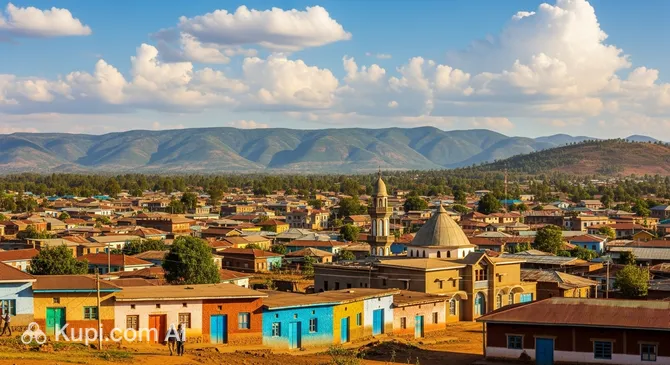
While Goba is not defined by manicured city gardens or expansive museum complexes, it serves as the ultimate doorstep to some of the most spectacular natural wilderness in Ethiopia. The town's "green spaces" are vast, untamed landscapes, and its cultural heritage is best experienced through its living history, religious sites, and the remnants of its administrative past.
Bale Mountains National Park is the region's primary natural attraction and effectively functions as the town's extended backyard. Located just a short drive from the city center, this park is a UNESCO-nominated site known for its distinct ecological zones. Visitors can explore the Harenna Forest with its moss-draped trees or trek through the Gaysay Grasslands. It is a place of immense biodiversity, offering a chance to breathe the fresh mountain air while spotting endemic species like the mountain nyala and the Menelik's bushbuck in their natural habitat.
The Sanetti Plateau offers a starkly different kind of natural beauty. Ascending from Goba, this high-altitude afro-alpine moorland is dotted with giant lobelias and lichen-covered rocks, resembling a landscape from another planet. It is one of the few places in the world where you can drive up to 4,000 meters and witness the rare Ethiopian wolf hunting among the vegetation. The plateau provides expansive views and a profound sense of solitude that is hard to find elsewhere.
regarding museums, the town itself is modest, but the Bale Mountains National Park Museum in nearby Dinsho serves as the key educational hub for the area. Although small, this facility offers valuable insights into the region's unique ecosystem. Exhibits typically include taxidermy of local wildlife, relief maps of the mountains, and information on the conservation efforts to protect the endangered wolf and nyala populations. It provides essential context for anyone planning to trek into the park.
In the absence of large art galleries, the local Orthodox churches, such as the Kidane Mihret Church, act as the custodians of the city's artistic and cultural heritage. In Ethiopian tradition, churches are often repositories of centuries-old religious art, including vibrant murals depicting biblical scenes, intricate processional crosses, and ancient manuscripts. A respectful visit to the church grounds offers a glimpse into the deep spiritual roots that define the culture of the highlands.
For history and architecture enthusiasts, the Wabe Shebelle Hotel stands as a significant landmark. Built during the era of Emperor Haile Selassie, the hotel features architecture that reflects the style of the 1960s and 70s. It has hosted numerous dignitaries over the decades and retains a nostalgic atmosphere. The building itself is a testament to Goba's historical importance as a provincial capital and a center for high-altitude tourism.
The town center also features several Italian-era stone buildings, remnants of the brief occupation in the 1930s. These structures, with their distinct masonry and design, are scattered among newer developments and serve as silent witnesses to the town's layered history. Walking through the older quarters allows visitors to observe these architectural details, which give Goba a unique character compared to other towns in the Oromia Region.
For an authentic insider experience, take a walk to the outskirts of town towards the Goba River. The banks of the river are often bustling with local activity, from women washing clothes to children playing, offering a candid look at daily life. It is also a surprisingly good spot for birdwatching, as many highland species frequent the water's edge, providing a quiet moment of connection with nature within the city limits.