Support

Arba Minch

About

Welcome to Arba Minch, a captivating destination whose name translates to "Forty Springs" in Amharic. Situated in the southern part of Ethiopia, this city is renowned for its abundant groundwater and lush greenery. It serves as a vital commercial and transport hub in the South Ethiopia Region, boasting a population of approximately 192,000 residents. The city offers a unique blend of urban energy and breathtaking natural beauty, making it a favorite stop for travelers exploring the Great Rift Valley.

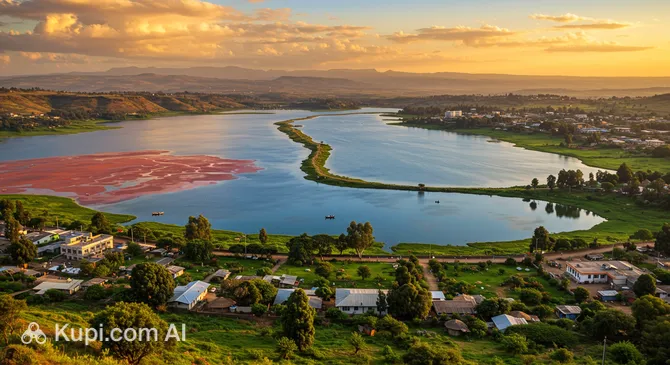
Arba Minch. Source: Kupi.Binoculars

Geographically, Arba Minch is blessed with a stunning location between two major rift valley lakes: Lake Abaya and Lake Chamo. These two bodies of water are separated by a scenic ridge of land known as the "Bridge of God," which offers spectacular panoramic views. The local climate is generally warm and tropical, contributing to the region's reputation as a major fruit-producing area, particularly famous for its delicious bananas, mangoes, and apples.

The city is not just about scenic landscapes; it has grown significantly over the decades. To understand how this settlement evolved from a collection of natural springs into a bustling university town and administrative center, one should explore the history of Arba Minch. This background adds depth to the experience of visiting the local markets and interacting with the welcoming communities.

For nature enthusiasts, Arba Minch is the perfect gateway to Nechisar National Park, where visitors can spot zebras, gazelles, and a wide variety of bird species. A boat trip on Lake Chamo is another must-do activity, often leading to the famous "Crocodile Market," a spot known for its impressive populations of crocodiles and hippos. Whether you are looking to relax by the springs or embark on a safari adventure, Arba Minch promises an unforgettable experience.

Weather Overview

Travelers planning a trip to this region will find a generally mild and agreeable climate that supports year-round exploration. The weather in Arba Minch is characterized by consistent warmth, with average monthly temperatures hovering between 18.6°C and 22.2°C. February is typically the warmest month, seeing highs up to 27.2°C, while the coolest average temperatures occur in July.

Rainfall patterns play a significant role in the local seasons. The area experiences a prolonged period of frequent precipitation from March through October, where the number of wet days can be as high as 28 to 30 days per month, particularly in April and October. Despite the frequency of rain, the temperatures remain comfortable. In contrast, the months of December and January are the driest, with only about 8 to 9 wet days, offering more predictable conditions for outdoor adventures. Overall, visitors can expect warm days with occasional rain during the extended wet season and drier, sunny spells during the winter months.

Interesting Facts

Beyond the stunning vistas of the Rift Valley, Arba Minch holds several unique characteristics that add to its charm and complexity. Here are some intriguing facts that make this city truly unique:

  • The city is geographically divided into two distinct towns that function as one: Shecha, the upper town located on higher ground, serves as the administrative and tourist center, while Sikela, the lower town, acts as the commercial and transport hub. A paved road of about four kilometers connects these two vibrant sections.

  • Although Lake Abaya and Lake Chamo are situated right next to each other, they are visually very different. Lake Abaya typically has a reddish-brown color due to a high load of suspended sediments, whereas Lake Chamo remains clear and blue, creating a striking contrast when viewed from the "Bridge of God."

  • The name "Forty Springs" is quite literal; it refers to a specific cluster of bubbling thermal springs located within the dense groundwater forest of Nechisar National Park. These springs are not only the city's namesake but are also locally believed to possess therapeutic properties.

  • The famous "Crocodile Market" on Lake Chamo is a humorous misnomer. No trading actually takes place there; instead, the name describes a specific bank of the lake where Nile crocodiles congregate in such massive numbers that it resembles a crowded marketplace.

How to Get There

Reaching this captivating destination in the Great Rift Valley is relatively straightforward, with air travel being the most efficient option for most international visitors connecting through the capital. For a comprehensive overview of routes and transport modes, you can read more about how to get to Arba Minch.

The city is served by its own domestic hub, Arba Minch Airport (AMH). Located just 3.7 km from the city center, it is the most convenient entry point. A taxi or shuttle ride from the terminal to the main hotels typically takes about 25 minutes. While it is a smaller facility handling around 30,000 passengers annually, it offers regular scheduled flights that save travelers the long overland journey from Addis Ababa.

For those exploring the broader region of Southern Ethiopia, other airports might serve as alternative starting points. You can fly into Jinka (BCO), which is located in the city of Jinka. However, be aware that this airport is approximately 113 km away, and the subsequent drive to Arba Minch can take roughly 3 hours. Another option is Awassa (AWA) in the city of Awasa, situated about 154 km away. These hubs are generally used by tourists planning a multi-stop itinerary through the Omo Valley and the Rift Valley lakes.

For clarity, here is a summary of the main airports:

Airport Name City Passenger Traffic Km from City
Jimma Airport Jimma Medium 197.8
Awassa Awasa Small 154.6
Jinka Jinka Small 113.6
Arba Minch Airport Arba Minch Small 3.7

Main Attractions

Arba Minch is a hub for natural wonders and cultural experiences in Southern Ethiopia. From wildlife encounters to breathtaking landscapes, the city offers a variety of sites that cater to adventurous travelers. Below are some of the most compelling places to explore during your stay.

Nechisar National Park is undoubtedly the region's crown jewel. Spanning the scenic "Bridge of God" that separates the two great Rift Valley lakes, this park offers a diverse landscape ranging from open savannahs to dense groundwater forests. It is a haven for wildlife enthusiasts, providing opportunities to spot Burchell's zebras, Grant's gazelles, and the endemic Swayne's hartebeest. The park's unique geography and rich biodiversity make it a top priority for anyone visiting the area.

For a closer look at aquatic wildlife, a boat trip on Lake Chamo is an essential experience. The lake is famous for an area known locally as the "Crocodile Market." Despite the name, this is not a place of trade but a sandy bank where massive Nile crocodiles congregate to bask in the sun. Visitors can drift safely nearby to observe these impressive reptiles alongside pods of hippos and a vast array of water birds, including pelicans and storks.

Just a short drive into the nearby highlands lies the Dorze Village in Chencha. This cultural attraction is renowned for the Dorze people's unique architectural style—towering bamboo huts shaped like beehives. Tourists are welcomed to learn about their traditional way of life, which includes expert weaving and the cultivation of the false banana plant (enset). The cooler climate and panoramic views back down toward the lakes add to the charm of this cultural excursion.

Finally, you cannot visit Arba Minch without seeing the Forty Springs, the natural phenomenon that gave the city its name. Located within the groundwater forest of Nechisar National Park, these bubbling thermal springs are surrounded by lush vegetation. Walking through the forest to reach the springs offers a refreshing escape and a chance to see monkeys and diverse birdlife in a tranquil setting.

Local Cuisine

The culinary scene in Arba Minch is heavily influenced by its bountiful surroundings, particularly the twin lakes of Abaya and Chamo. Consequently, fresh fish is the undisputed star of the local menu. Visitors should not miss the opportunity to try the locally caught Nile Perch (Nech Asa) or Tilapia. These are typically prepared in two popular ways: fried whole until crispy or cut into bite-sized chunks and sautéed with onions and spices, a dish locally referred to as fish goulash. Served with a side of rice or bread, it is a simple yet flavorful meal that defines the city's gastronomy.

Beyond seafood, the region's agricultural heritage brings unique flavors to the table. Since Arba Minch is situated in the heart of the Gamo zone, traditional dishes utilizing the Enset (false banana) plant are common. You might encounter Kocho, a fermented flatbread made from the enset stem, which has a distinct, slightly sour taste and a chewy texture. It is often eaten with Kitfo (minced raw or cooked beef) or a spicy cheese spread, offering a true taste of Southern Ethiopia that differs significantly from the cuisine found in the north.

The city's tropical climate makes it a major production hub for fruits, and the local beverage culture reflects this abundance. Freshly squeezed fruit juice, or Spris (a layered mix of avocado, mango, and papaya), is incredibly popular and widely available in cafes throughout the town. For something stronger, travelers can sample Tej, a traditional Ethiopian honey wine served in flask-like glass vessels. Coffee lovers will also feel at home, as the traditional coffee ceremony remains an integral part of daily life and hospitality here.

Dining in Arba Minch is generally a relaxed and informal affair. The lower town, Sikela, is bustling with local eateries and vibrant markets where you can buy fresh bananas and pineapples directly from vendors. Many restaurants offer open-air seating to take advantage of the warm evenings. While hotel restaurants provide a mix of international and Ethiopian dishes, the smaller local spots are where you will find the most authentic flavors and the liveliest atmosphere.

Travel Tips

Visiting Arba Minch is an exciting adventure into the heart of the Rift Valley, but a smooth journey requires a bit of local know-how. To help you navigate the unique layout of the city and enjoy its tropical charm without a hitch, here are some essential practical tips.

  1. Clothing and Gear: Since the weather is generally warm and tropical, pack lightweight, breathable fabrics like cotton or linen. However, evenings in the upper town (Shecha) can feel breezy, so a light sweater is useful. If you plan to hike in Nechisar National Park, bring sturdy, comfortable walking shoes. While Arba Minch is relaxed, it is respectful to dress modestly; avoid very short shorts or revealing tops when walking in town or visiting markets.
  2. Transportation: The most popular and convenient way to get around is the Bajaj (a three-wheeled auto-rickshaw). They are perfect for navigating the 4km stretch between Shecha (uptown) and Sikela (downtown). Taxis are available but more expensive. Car rentals are generally arranged with a driver. Always agree on the fare before starting your journey in a Bajaj or taxi, as meters are rarely used.
  3. Finances: The local currency is the Ethiopian Birr (ETB). While major hotels may accept Visa or Mastercard, cash is king for almost everything else, including restaurants, markets, and transport. ATMs are available in both Shecha and Sikela (Commercial Bank of Ethiopia is reliable), but they can occasionally be out of service or cash. It is wise to carry enough cash for daily expenses and keep small bills for tips and Bajaj fares.
  4. Health and Safety: Arba Minch is located at a lower altitude near lakes, meaning mosquitoes are present. Carry effective insect repellent and consider taking malaria prophylaxis after consulting your doctor. Pharmacies are available in the city center, but they may not stock specific prescription brands, so bring your own personal supply. Stick to bottled water for drinking and brushing your teeth to avoid stomach issues.
  5. Communication: The official language is Amharic, though many locals in the tourism industry speak decent English. Learning a few basic Amharic phrases like Selam (Hello) and Ameseginalehu (Thank you) will go a long way in breaking the ice. Wi-Fi is available in most hotels but can be slow or intermittent. For reliable connectivity, buy a local SIM card from Ethio Telecom; you will need your passport to register.
  6. Local Etiquette: Ethiopians are known for their hospitality and polite greetings. A handshake is the standard greeting, often accompanied by touching your right shoulder to the other person's right shoulder if you are acquainted. When eating traditional food like Injera, always use your right hand. If invited for a coffee ceremony, be patient; it is a social ritual meant to be enjoyed slowly, not rushed.
  7. What to Avoid: Do not photograph people, especially in the countryside or markets, without asking for permission first; some may expect a small tip in return, while others may decline. Avoid walking alone between Shecha and Sikela at night, as the road connecting them is not fully lit; take a Bajaj instead.
  8. Market Tip: If you visit the local fruit markets in Sikela, you are in for a treat. Arba Minch is famous for its "apple bananas," mangoes, and pineapples. Don't be afraid to bargain—it's part of the culture. However, always wash or peel the fruit yourself before eating to ensure hygiene.

By keeping these practicalities in mind, you can focus less on logistics and more on the stunning views of the "Bridge of God" and the vibrant culture of Southern Ethiopia. Arba Minch is a welcoming city, and a little preparation will ensure your stay is as comfortable as it is memorable.

Entertainment & Nightlife

Entertainment and Nightlife:

The nightlife in Arba Minch reflects the city's laid-back and welcoming atmosphere. Unlike the high-energy clubbing scenes found in larger capitals, evening entertainment here is centered around socializing, enjoying local music, and relaxing with a drink after a day of exploration. The experience is split between the two main districts: Shecha (Uptown) and Sikela (Downtown), each offering a distinct vibe for night owls.

Shecha is the administrative center and generally quieter, hosting many of the city's top lodges and hotels. This area is perfect for those seeking a refined evening with stunning views over the lakes. In contrast, Sikela is the commercial heartbeat of the city, where the streets remain bustling well into the night. Here, you will find a higher concentration of local bars, known as "groceries," and traditional Azmari bets (music houses) where local minstrels improvise songs and play the masinko (a single-stringed fiddle).

For a reliable and safe night out, hotel bars are often the most popular choice for tourists. Haile Resort is a favorite spot, featuring a well-stocked bar and a club atmosphere on weekends where both locals and visitors mingle. Another excellent venue is Paradise Lodge, which is celebrated not just for its accommodation but for its restaurant and bar area that offers traditional dance performances and a relaxed setting to enjoy a cold St. George beer or a glass of Tej (honey wine). Tourist Hotel in the city center is another well-known establishment where you can experience a more classic Ethiopian hotel bar environment.

Practicalities are important when planning your evening. Most venues are casual, so there is no strict dress code; smart-casual attire is perfectly acceptable everywhere. The nightlife usually kicks off around 8:00 PM and winds down by midnight or 1:00 AM, although some local spots in Sikela may stay open later. Prices are generally very affordable compared to Western standards, with local beers and spirits costing a fraction of what you might expect.

Safety is generally good, but standard precautions apply. While the city is friendly, the road connecting Shecha and Sikela is long (about 4 km) and not well-lit. It is strongly advised not to walk this route at night. Instead, use a Bajaj (auto-rickshaw) or a taxi. Bajajs are plentiful in the early evening, but their availability drops as the night progresses, so having a taxi number from your hotel reception is a good backup plan.

While the nights are for relaxing, daytime entertainment in Arba Minch is largely defined by nature and culture. Apart from the major natural attractions, visitors can explore the local markets in Sikela, which are vibrant hubs of daily life. For a quiet afternoon, a visit to the local museum or simply enjoying a traditional coffee ceremony at a roadside cafe offers a pleasant way to soak in the local culture before the sun sets.

Parks & Museums

Arba Minch is a city where nature and culture intertwine seamlessly, offering visitors a chance to explore lush green spaces and delve into the rich heritage of Southern Ethiopia. While the city is best known as a gateway to the wilderness, it also possesses specific sites dedicated to preserving the history and traditions of the diverse ethnic groups inhabiting the region.

Nechisar National Park is the most significant natural area surrounding the city. Although often visited for its wildlife, the park serves as a magnificent green lung comprising the unique "Bridge of God" isthmus. This landscape offers a dramatic contrast between the dry savannah grasses and the thick bushland, providing hiking opportunities with sweeping views over Lake Abaya and Lake Chamo. It is a perfect spot for nature lovers who appreciate raw, untouched scenic beauty alongside their wildlife viewing.

Another vital green space is the Groundwater Forest, home to the city's namesake, the Forty Springs. This dense, jungle-like forest stands in stark contrast to the surrounding savannah. Visitors can walk along shaded trails under a canopy of massive sycamore and fig trees, accompanied by the sounds of bubbling springs and the chatter of troops of baboons and colobus monkeys. It is a tranquil retreat that feels worlds away from the bustling town centers.

For those interested in the cultural fabric of the region, the Arba Minch Museum is a key institution. Located in the upper town of Shecha, this ethnographic museum offers a comprehensive look at the traditions, lifestyles, and craftsmanship of the people in the Gamo Gofa zone. The exhibits typically feature traditional clothing, household tools, ceremonial items, and agricultural implements, providing context to the vibrant communities travelers encounter in the area.

While not a museum in the traditional sense, the nearby Dorze Village functions as a living museum of architecture and culture. The Dorze people are famous for their towering bamboo houses, which can stand up to six meters tall and are shaped like beehives. Exploring these structures offers insight into sustainable local architecture and the ingenious weaving techniques that have been passed down through generations.

In terms of religious architecture, the city is home to several vibrant Ethiopian Orthodox churches, such as the Arba Minch St. Michael Church. These sites are often painted in bright colors and serve as centers of community life. Visitors can admire the traditional octagonal design and the peaceful gardens that often surround these places of worship, offering a quiet space for reflection.

For an authentic local experience, take a walk along the cliff edges of Shecha in the late afternoon. This area offers informal viewpoints that rival any paid observation deck. You can sit on the grassy verges and watch the sunset illuminate the Rift Valley lakes below, a favorite pastime for locals seeking a moment of peace at the end of the day.

Getting Around

The public transport system in Arba Minch is straightforward, informal, and heavily reliant on road-based vehicles. Unlike larger global capitals, the city does not possess a metro, tram, or heavy rail network. Instead, the transportation infrastructure is designed to navigate the unique geography of the city, specifically the four-kilometer stretch of road that connects the upper administrative town of Shecha with the lower commercial town of Sikela. For visitors, getting around is generally an inexpensive and authentic local experience.

The most ubiquitous form of transport is the Bajaj, a three-wheeled auto-rickshaw that functions as the city's primary taxi service. These blue vehicles are everywhere and are ideal for short trips within neighborhoods or for traversing the hill between the two main districts. Bajajs operate on two distinct models: "shared" and "contract." In a shared arrangement, the driver picks up multiple passengers heading in the same direction, making it an extremely economical option. Alternatively, you can hire the vehicle for a private ride (contract), which is faster and more comfortable but costs slightly more.

For moving between Shecha and Sikela, or for traveling to nearby villages, minibuses are the standard mode of mass transit. These white or blue vans run on fixed routes and do not depart until they are full. They are the workhorses of the local transport system, carrying people, goods, and produce from the markets. While they are less comfortable than a Bajaj, they offer the cheapest way to travel longer distances. There are no designated bus stops in the Western sense; passengers simply flag one down from the roadside or board at the main bus station in Sikela.

The payment system across all forms of public transport in Arba Minch is exclusively cash-based. There are no travel cards, digital passes, or mobile apps for ticketing. Passengers must pay the driver or the assistant (often called a weyala in minibuses) directly in local currency. It is highly recommended to carry small denominations of notes and coins, as drivers often struggle to make change for large bills. Fares for shared routes are generally fixed and very low, while prices for private "contract" Bajaj rides should be negotiated and agreed upon before getting into the vehicle.

For those seeking more comfort or traveling with heavy luggage, standard taxis are available, though they are less common than Bajajs. These are typically older model sedans, often painted blue and white. They are usually found parked near major hotels, the airport, or the main bus station. Taxis do not use meters, so bargaining is an essential part of the process. If you prefer to drive yourself, car rental agencies are scarce and typically offer vehicles only with a driver, which is actually a benefit given the local road conditions and driving habits.

Tourists should be aware that public transport operating hours are roughly from dawn until shortly after dusk. Minibuses and shared Bajajs become infrequent after 8:00 PM or 9:00 PM. If you plan to stay out late, especially for dinner in a different part of town, it is wise to arrange a ride in advance or ask your hotel or restaurant to call a trusted driver for you. Additionally, while the city is walkable within specific districts, walking the long, unlit road connecting the upper and lower towns at night is discouraged; taking a vehicle is always the safer and more practical choice.

Accommodation

Finding the perfect place to stay in Arba Minch is a relatively easy task, as the city caters to a wide spectrum of travelers, from backpackers seeking simple lodgings to luxury tourists looking for comfort and scenic views. The accommodation landscape is generally divided between traditional hotels, eco-friendly lodges that blend with the environment, and basic pensions. While the options are not as exhaustive as in the capital, the quality of the top-tier establishments is surprisingly high, often capitalizing on the region's stunning geography.

The choice of where to stay largely depends on which part of the city you prefer: Shecha (Uptown) or Sikela (Downtown). Shecha is located on the ridge and is the preferred choice for most international visitors. Staying here offers cooler temperatures, a quieter atmosphere, and, most importantly, breathtaking panoramic views of Lake Abaya, Lake Chamo, and the "Bridge of God." This area is home to the city's premier lodges and resorts. In contrast, Sikela is the bustling commercial center at the bottom of the hill. Accommodation here is significantly cheaper and consists mostly of budget hotels and pensions. It is convenient for transport and accessing local markets, but it can be noisy and much warmer than the upper town.

For those seeking comfort and amenities, the city boasts a few standout establishments that have become landmarks in their own right. Haile Resort, owned by the legendary athlete Haile Gebrselassie, provides a modern hotel experience with comprehensive facilities, including a pool and fitness center. Another iconic option is Paradise Lodge, which is celebrated for its unique architecture; the rooms are built in the style of traditional bamboo huts (resembling those of the Dorze people) but come equipped with modern luxuries. These properties are typically located in Shecha to maximize the viewing experience of the Rift Valley lakes.

When it comes to prices and booking, Arba Minch is generally affordable by international standards. Budget travelers can find clean, basic rooms in Sikela for a very low cost, often paid in cash upon arrival. Mid-range to luxury options in Shecha command higher prices, comparable to standard Western rates, but offer significantly better services, including Wi-Fi and breakfast. While walk-ins are often possible for budget guesthouses, it is highly recommended to book in advance if you plan to stay at the popular lodges, especially during the dry season (December to February) or around Ethiopian holidays like Timkat, when domestic tourism spikes.

A final practical tip for checking in: while the major resorts accept credit cards (Visa and Mastercard), the connection can sometimes be unreliable. It is always wise to carry enough cash (Ethiopian Birr) to cover your stay, or at least a deposit, just in case the digital payment systems are down. Additionally, verify if your chosen accommodation provides a mosquito net, which is an essential amenity in this tropical region.

Nearby Cities

For those looking to explore the surroundings, Arba Minch serves as an excellent base for day trips to several interesting nearby locations.

The closest major urban center is Sodo (also known as Wolaita Sodo), situated approximately 95 kilometers to the north. As the capital of the Wolaita Zone, it is a bustling agricultural hub known for its welcoming atmosphere and the nearby Mount Damota, which offers hikers commanding views of the region. A visit here provides a deeper insight into the rich culture and traditions of the Wolaita people.

Further along the road lies the lakeside city of Awasa (Hawassa). Although it is a longer journey, it is one of the most popular destinations in the Rift Valley. Visitors are drawn to its beautiful lake, where one can spot hippos and a vast array of water birds. The city is also famous for its vibrant fish market and modern amenities, making it a relaxing spot for a short visit or a break during a longer itinerary.

City Population Distance (km)
Sodo 194,977 95
Awasa 350,000 153
Hosaina 179,761 171
Shashemene 208,368 173
Jimma 200,000 198

These nearby destinations offer a glimpse into the diverse culture and landscapes of the region.

Shopping & Souvenirs

Shopping in Arba Minch is an authentic and vibrant experience that stands in stark contrast to the sterilized atmosphere of modern shopping complexes. Rather than high-end boutiques and international chains, the city offers a colorful immersion into local Ethiopian life. The shopping scene here is dominated by bustling open-air markets, small roadside stalls, and traditional craft shops. It is a place where commerce is conducted with a personal touch, and the goods on offer—ranging from mouth-watering tropical fruits to exquisite hand-woven textiles—reflect the region's rich agricultural and cultural heritage.

The city's commercial activities are geographically split, much like its layout. Sikela (the lower town) serves as the primary commercial hub. This is where the locals shop, and the streets are lined with an array of small shops selling clothes, electronics, and household goods. It is chaotic, loud, and full of energy. In contrast, Shecha (the upper town) is quieter and caters more to the administrative and tourist crowd. Here, you are more likely to find souvenir shops and boutiques located within or near the major hotels and lodges, offering a more relaxed browsing environment.

Travelers expecting large, Western-style shopping malls will not find them in Arba Minch. The retail landscape is characterized by small, independent storefronts and mixed-use buildings rather than sprawling department stores. While there are a few multi-story buildings in Sikela that function as mini-malls with various small vendors inside, the true "shopping centers" of this city are its streets and marketplaces. This absence of global franchises allows for a more genuine exploration of local products and businesses.

The heart of the shopping experience lies in the local markets. The main market in Sikela is a must-visit, particularly on market days when traders from surrounding villages converge to sell their wares. It is a sensory overload of spices, grains, and fabrics. Given the region's fertile soil, the fruit markets are exceptional. Arba Minch is famous across the country for its bananas, mangoes, papayas, and pineapples. Visitors can buy these fresh delights at incredibly low prices directly from stalls along the road in Sikela. Be prepared to bargain, as it is an integral part of the transaction process here.

When it comes to souvenirs, the region is renowned for its high-quality textiles. The nearby Dorze people are legendary weavers, and their work can be found throughout Arba Minch. Look for the colorful Dorze woven cotton, which is fashioned into scarves, shawls (netela), and blankets. These items are durable, vibrant, and make for meaningful gifts. Additionally, traditional coffee pots (jebena) and local basketry are popular items to take home. Authentic coffee beans, often roasted locally, are another excellent purchase for foodies.

Opening hours for shops in Arba Minch are generally from 8:00 AM to 7:00 PM, Monday through Saturday. Many smaller shops and market stalls may close for a lunch break between 1:00 PM and 2:00 PM. Sunday is typically a quieter day, though the main markets often remain active. Regarding payment, cash is the absolute rule. Credit cards are rarely accepted outside of major hotels and high-end lodges. It is essential to carry sufficient Ethiopian Birr in smaller denominations, as vendors in the market often struggle to make change for large notes.

Regarding tax-free shopping, the country does not operate a VAT refund system for tourists that would be applicable in a city like Arba Minch. The prices you see or negotiate are the final prices. While you won't get a tax receipt to claim at the airport, the low cost of local goods generally makes shopping here very affordable for international visitors regardless.
Nearby cities

Reached the end of the page?

That means the route is fully explored