Support

Le Creusot

About

Le Creusot is a charming city nestled in the Saône-et-Loire department, where a rich industrial past blends harmoniously with French provincial allure. Situated among the picturesque hills and verdant valleys of the Bourgogne-Franche-Comté region, it attracts travelers with its unique atmosphere and authenticity. For many tourists, this is where the discovery of the real, non-tourist France begins.

Le Creusot. Illustration.
Source: Kupi.com AI

Despite a population of around 46,000, the city maintains an intimate feel while remaining an important cultural hub for the region. The history of Le Creusot is inextricably linked to the Industrial Revolution of the 19th and 20th centuries: it was here that the first French locomotives and steamships were built. Today, former plants and factories have been transformed into fascinating museums and architectural monuments, serving as reminders of the glorious era of engineers and master craftsmen.

The city is worth visiting not only to explore its unique technical heritage but also for leisurely strolls through well-kept parks and tastings of famous Burgundian cuisine. Le Creusot offers the perfect balance between educational tourism and a relaxing getaway, inviting guests to immerse themselves in the warmth and hospitality of local life.

Weather Overview

The climate in this region is temperate, making travel comfortable for most of the year. Summer in the city is usually warm and conducive to long walks: the hottest months are July and August, with an average temperature of about 21°C, often reaching 26°C during the day. This is the ideal time to explore the architecture and parks, as the number of rainy days is minimal during this period.

Winters here are cool but generally without severe frosts. In January, the average temperature stays around 3.7°C, dropping to 1.2°C at night. When planning a trip, keep in mind that the weather in Le Creusot can be quite damp, especially in December, which sees the highest number of rainy days (up to 17 days). Spring and autumn bring pleasant freshness: as early as May, average figures reach 14°C, creating excellent conditions for tourism.

In general, expect warm summers with comfortable sunny days and cool, fairly damp winters. Since rain is possible throughout the year (from 8 to 17 days a month depending on the season), a light raincoat or umbrella will be a useful companion for your journey.

Average monthly temperature

Average monthly precipitation

Interesting Facts

Beyond its main attractions, Le Creusot holds many fascinating secrets and stories that turn a walk through the city into a journey through time. Here are a few facts to help you better understand the unique character of this place:

  • "The French Sheffield". In the 19th century, the city earned this nickname thanks to the famous Schneider family. The metallurgical conglomerate they founded was so influential that the Schneider name became synonymous with technical progress and innovation for the entire region.

  • The Cradle of Transport. Le Creusot is rightfully considered the birthplace of French mechanical engineering. It was here in 1838 that the first French locomotive was created, and the country's first steamship was built, forever etching the city into the history of the Industrial Revolution.

  • A Symbol of Might. One of the city squares features a massive steam hammer weighing 100 tons. This giant mechanism is not just a monument, but a real reminder of the times when France's industrial future was forged in local workshops.

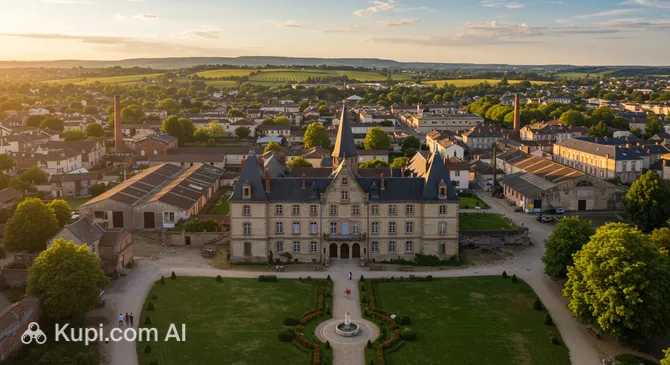
  • A Castle with an Industrial Past. The elegant Château de la Verrerie will surprise tourists with its history: the building was originally constructed as the Royal Glass Manufactory (Verrerie), producing crystal for Queen Marie Antoinette, and only later was it transformed into a luxurious industrialist residence.

Château de la Verrerie. Illustration.
Source: Kupi.com AI

Traveler photos:

How to Get There

When planning a trip to this industrial corner of Burgundy, it's wise to consider your route in advance. The city is well-positioned relative to major transport hubs, allowing you to combine a flight with a train or car journey. You can find all ways to get to the city on a dedicated page, while below we look at the most popular options.

The nearest major air hub is Lyon–Saint Exupéry Airport (IATA: LYS). There is no airport in Le Creusot itself, so many tourists choose a flight to Lyon, located about 130 km away. This is a major international hub with significant passenger traffic, receiving flights from all over the world. The drive from the airport to Le Creusot by rental car or taxi takes about 1.5 hours via high-speed motorways.

An alternative option is Geneva Airport (IATA: GVA). It is located in Geneva (Switzerland), approximately 144 km from Le Creusot. This is a very large international airport, convenient for those traveling from distant countries. The car journey from here takes about 2 hours. You might also consider the small regional Dole–Jura Airport (IATA: DLE) in Dole, which is the closest—only 80 km away (about a 1-hour drive)—but handles significantly fewer flights.

For clarity, here is summary information on the main airports:

AirportPassenger trafficDistance
Dole-Jura Airport125 14180 km
Lyon Saint-Exupéry International Airport10.0 mln130 km
Geneva Airport17.8 mln144 km
Clermont-Ferrand Auvergne Airport231 344149 km
Chambéry Airport169 000171 km

Rail links in France are excellent, and the train is often the most convenient way to reach the region. If you cannot find a direct route, it is helpful to look for major interchange hubs.

One of the key transit points is Dijon Station (IATA: DJX). It is located in Dijon, about 73 km from Le Creusot. This is an important station with high passenger traffic, receiving trains from Paris and other major cities. From here, you can reach your destination by taxi or transfer in less than 1 hour.

Another popular option is Lyon-Part-Dieu Station (IATA: XYD) in Lyon. Located 120 km from Le Creusot, this station serves millions of passengers annually and is one of the country's main transport hubs. Travel time by car from the station to Le Creusot is approximately 1 hour 30 minutes.

Below is a table with the nearest major railway stations:

StationPassenger trafficDistance
Dijon Railway Station5.8 mln73 km
Lyon Part-Dieu Station40.1 mln121 km
Gare de Lyon-Perrache7.6 mln121 km
Geneva Railway Station42.1 mln147 km
Grenoble Railway Station8.8 mln205 km

Main Attractions

Le Creusot is a city where industrial history comes to life at every turn, evolving into fascinating tourist routes. Exploring the local attractions allows you to see how former industrial giants have been transformed into cultural centers and recreational zones, creating the unique character of this Burgundian corner.

The absolute centerpiece and heart of the city is the Château de la Verrerie. This building is striking for its unusual architecture: originally built in the 18th century as a Royal Crystal Manufactory, it only later became the residence of the Schneider family of industrialists. Today, tourists come here to admire the elegant courtyard, visit the Museum of Man and Industry located within the castle walls, and stroll through the magnificent landscaped park surrounding the complex.

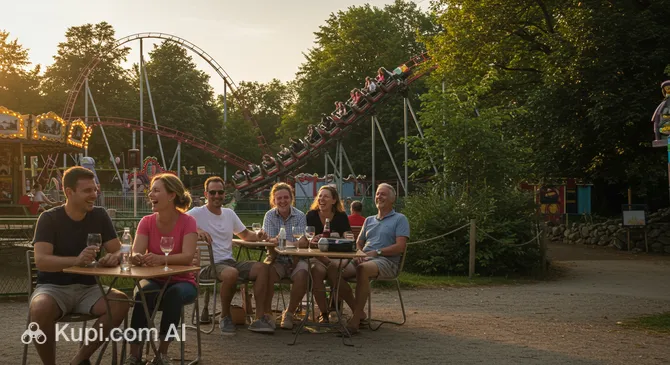
For those seeking outdoor entertainment and breathtaking views, Parc des Combes is the perfect destination. This unique tourist park spans over 70 hectares and offers guests not only amusement rides but also picturesque walking trails.

Parc des Combes. Illustration.
Source: Kupi.com AI

Traveler photos:

A highlight of the park is the "Train of the Two Valleys" (Train des Deux Vallées). The route of this vintage steam locomotive runs along a historical railway winding through hills and forests. The trip offers unforgettable panoramas of the city and the Morvan massif, while the variety of attractions—from roller coasters to gentle carousels—makes the park an excellent spot for family recreation.

Another iconic symbol that is impossible to miss is the Steam Hammer (Marteau Pilon). Located at the entrance to the city in Place Schneider, this hundred-ton giant was once the most powerful in the world. Today, it serves as an impressive monument to the industrial era, demonstrating the might of 19th-century engineering. Tourists often take photos here to capture the scale of this grand mechanism.

Technical history enthusiasts should also visit the Pavillon de l'Industrie. Located in the former administrative office of the factories, it houses interactive exhibits detailing the lives of workers and the development of metallurgy. Modern technology, including augmented reality, allows visitors to literally immerse themselves in the atmosphere of the past and understand how Le Creusot became one of the industrial centers of Europe.

Local Cuisine

Le Creusot is located in the heart of Burgundy, where gastronomy is elevated to a true cult. The main pride of local restaurants is dishes made from premium beef of the famous Charolais breed. A hallmark of the region and a must-try item on any tourist's menu is Boeuf Bourguignon—beef slowly braised in red wine with mushrooms, onions, and aromatic herbs. The meat becomes so tender it literally melts in your mouth.

Fans of authentic French delicacies should order Burgundy snails (escargots), served in hot garlic butter with herbs. Meals here usually conclude not with a dessert, but with a cheese plate. The surrounding areas produce world-famous varieties: the pungent but incredibly delicious Époisses and the delicate Brie de Meaux. These cheeses perfectly reveal their flavor when paired with a fresh, crunchy baguette.

The food culture in the city is not limited to restaurants. Street food here can also be surprising: try gougères—tiny choux pastry puffs with cheese, sold in local bakeries. On weekends, colorful farmers' markets appear in the squares. These are the best places to buy homemade sausages, pâtés, and seasonal vegetables, as well as to chat with locals and learn the secrets of preparing local dishes.

Of course, a gastronomic journey through Le Creusot is unthinkable without local drinks. Burgundy wines are world-renowned and an integral part of lunch or dinner. Any establishment will offer an extensive wine list where you can find the perfect variety to complement the taste of meat dishes or cheeses.

Travel Tips

Le Creusot is a city with a unique rhythm, where industrial history harmoniously coexists with the picturesque nature of Burgundy. To ensure your trip is as comfortable as possible and free of organizational surprises, we have prepared a list of useful recommendations to help you plan your visit.

  1. Clothing and Footwear. The weather in the region is changeable, so layering is the best approach. Be sure to bring comfortable flat shoes: the city is set on hilly terrain, and walking through the expansive Parc des Combes or historical quarters will require stamina. Even in summer, a light raincoat or windbreaker won't go amiss, as rain is not uncommon here.
  2. Transport. The city center is quite compact and pleasant to explore on foot. For moving between districts, the local MonRézo bus network is convenient. If arriving by high-speed train, note that the TGV station is outside the city, and you will need a shuttle or taxi to reach the center. Renting a car makes sense if you plan to travel beyond the city to explore nearby vineyards and castles.
  3. Finances. The official currency is the Euro. Bank cards are accepted almost everywhere: in supermarkets, museums, and restaurants. However, for morning farmers' markets or small bakeries, it is better to have some cash on hand. Tips in France are generally included in the bill, but leaving €1–2 in change or rounding up the amount is considered good etiquette.
  4. Health and Safety. Le Creusot is a quiet and safe city for tourists. Pharmacies are easily identified by a green neon cross; if a pharmacy is closed (e.g., at night or on Sunday), a list of on-duty locations is usually posted on the door. The emergency services number is 112. Tap water is safe to drink, but many travelers prefer bottled water by habit.
  5. Communication and Language. The primary language is French. In large hotels and museums, staff will likely understand English, but communication may be more difficult in small shops. We recommend downloading an offline translator and learning basic polite phrases ("Bonjour", "Merci"). A SIM card for internet can be purchased at mobile stores or tobacco shops (Tabac).
  6. Local Etiquette. Politeness plays a key role here. When entering a shop, cafe, or boarding a bus, always greet the staff or driver. Loud conversations in public places are frowned upon. Locals value discretion and a smile; it is the best way to win them over.
  7. What to Avoid. Don't plan major shopping or important tasks during lunchtime (usually 12:00 to 14:00)—many small shops and offices close for a break. Also, don't rush waiters in restaurants: dining in France is a ritual that should not be hurried.
  8. Important Note on Stations. Be careful when buying tickets: there are two different railway stations serving the city. "Le Creusot Ville" is in the city center and serves regional trains, while "Le Creusot - Montchanin TGV" is 8 km from the center and receives high-speed trains from Paris and Lyon. Confusion could cost you extra transfer time.

Le Creusot is a city that reveals itself to those willing to slow down and look around carefully. By following these simple tips, you can avoid minor troubles and feel like a welcome guest rather than just a tourist.

Entertainment & Nightlife

Nightlife in Le Creusot differs from that of bustling metropolises: you won't find massive nightclubs with world-famous DJs here, but you can immerse yourself in the atmosphere of a cozy French evening. Most activity is concentrated in the city center, particularly around Place Schneider and its adjacent streets. Evenings here typically begin with a traditional aperitif on a terrace, slowly transitioning into dinner with friends or family. The crowd is diverse—ranging from local university campus students to workers and tourists—creating a democratic and relaxed setting without a strict dress code.

For those wishing to spend the evening with a glass of wine or beer, several bars and pubs operate in the center, often broadcasting sports matches or hosting live music. If you find yourself hungry late at night after traditional brasseries have closed their kitchens, the choices narrow. In such cases, chain establishments like Burger King can be a convenient option for a quick and satisfying meal in a familiar format.

Parc des Combes. Illustration.
Source: Kupi.com AI

Traveler photos:

Regarding entertainment, it's worth mentioning what to do before dark to work up an appetite. During the day, the city's cultural life is in full swing: be sure to visit the majestic Château de la Verrerie with its museums or head to Parc des Combes for an adrenaline rush. After a busy day, a stroll through the evening city is a great way to wrap up your program.

In terms of safety, Le Creusot is a quiet city, and night walks along the well-lit central streets pose no threat. However, keep in mind a transportation nuance: taxi services here do not operate 24/7 on an "on-demand" basis as they do in major capitals. If you plan to stay out late at a bar, it is better to arrange a transfer in advance or ensure your accommodation is within walking distance. Prices in establishments will be a pleasant surprise: the average check for an evening cocktail or a pint of beer is significantly lower than in Paris or Lyon.

Parks & Museums

Despite its industrial fame, Le Creusot surprises tourists with its abundance of greenery and rich cultural program. The city harmoniously combines well-kept English-style gardens with modern museum spaces, allowing visitors to alternate between educational tours and relaxed outdoor recreation.

The main "green heart" of the city is rightfully considered the Parc de la Verrerie. This magnificent 28-hectare landscape surrounds the former royal manufactory. Here, you can stroll along shaded alleys among centuries-old trees, admire the ponds, and encounter free-roaming peacocks. It is the perfect spot for a picnic or quiet reading away from the city bustle.

For fans of larger-scale natural landscapes, Parc des Combes is a must-visit. Although many know it as an amusement park, it is first and foremost a vast natural massif spanning 70 hectares. It features picturesque walking routes and hiking trails that offer breathtaking panoramas of the Morvan mountains. This place is great for those who want to combine light physical activity with contemplating Burgundy's wild nature.

The city's cultural life centers around its historical heritage. The central attraction is the majestic Château de la Verrerie, which houses the Museum of Man and Industry (Musée de l'Homme et de l'Industrie). The museum's collection is unique: it tells the story of the Schneider dynasty, who turned the city into an industrial giant, and showcases a magnificent crystal collection, reflecting the building's original purpose. Here, you can also see models of old factories and everyday items used by 19th-century workers.

Another important cultural point is the Pavillon de l'Industrie, located in the former factory administration building. This modern exhibition space uses multimedia technology to immerse visitors in the history of metallurgy and show technology's impact on society. Interactive tablets and projections make the visit interesting even for those far from engineering.

Among architectural monuments, the Church of Saint-Eugène (Église Saint-Eugène) deserves special attention. Built in the early 20th century, it is a striking example of the use of steel and concrete in sacred architecture, reflecting the city's industrial spirit even in its religious structures.

Insider Tip: If you want to see a "different" Le Creusot, take a walk in the La Combe des Mineurs district. This is one of the first workers' settlements, built of red brick in an English style. The quiet streets and authentic architecture create a special atmosphere, transporting you to the era of the Industrial Revolution, but without the noise and crowds of tourists.

Getting Around

The public transport system in Le Creusot is compact, convenient, and perfectly suited to the size of the town. There is no metro or tram system; the primary mode of transport for locals and tourists is an extensive bus network connecting the city center with the outskirts, neighboring communes, and important transport hubs. The carrier is MonRézo, serving the entire urban area.

The bus network includes several regular city lines operating throughout the day. For tourists, a key route is often the special shuttle (Navette TGV), which connects the city center with the Le Creusot-Montchanin TGV high-speed train station. Since this station is located outside the city limits, the shuttle is synchronized with train arrivals from Paris and Lyon, allowing travelers to reach their destination quickly and affordably.

The fare system is simple and unified. A single ticket (Ticket Unité) is quite inexpensive—around €1.20. If you plan to travel a lot, it is better to buy a "carnet"—a set of 10 trips, which significantly reduces the cost per ride. There are also day passes allowing unlimited travel within 24 hours.

Tickets can be purchased in several ways. The simplest option for a tourist is to buy a single ticket directly from the driver when boarding the bus (it's best to have small cash ready, as they may not have change for large bills). To buy passes or sets of tickets, visit the specialized "Boutique MonRézo" office or tobacco shops (Tabac) marked with the transport company's logo. Mobile app ticketing is also available, eliminating the need for spare change.

An important detail: any ticket must be validated upon boarding. Validators are usually located near the driver's cabin. A ticket is valid for one hour from the moment of stamping, during which transfers to other bus lines are permitted. If you transfer, you must re-validate the ticket, but no additional fee will be charged.

As an alternative to buses, you can use taxi services in Le Creusot. However, keep in mind that it is not customary to hail a car on the street. Taxis must be booked in advance by phone or through online services, especially for trips early in the morning or late at night. Popular rideshare apps have a weak presence in the city, so for independent travel, it is better to consider a classic car rental.

For those with an active lifestyle, the city is developing a bike rental system, including electric bikes. The hilly terrain makes e-bikes an excellent choice for traveling between attractions. Rental points are often located near stations and in the center, allowing for easy combinations of cycling and public transport.

Accommodation

Le Creusot is not a mass tourist destination with massive resort complexes, and therein lies its special charm for travelers. The city's hotel stock consists mainly of cozy mid-range hotels (2–3 stars), small family-run inns, and chain hotels offering standardized service. In recent years, renting private apartments and guest houses (chambres d'hôtes) has gained popularity, allowing for a deeper immersion into the local lifestyle.

When choosing an area to stay, tourists are recommended to look at the city center. This is the most convenient location, as the main attractions, shops, and restaurants are within walking distance. Staying near an iconic landmark like the Château de la Verrerie is not only prestigious but also practical: it is easy to reach parks and museums from here, and in the evening, you can enjoy a stroll through the historical quarters.

Château de la Verrerie. Illustration.
Source: Kupi.com AI

Traveler photos:

Those traveling by car or planning to use high-speed trains frequently might consider accommodations on the outskirts or closer to the TGV station; however, keep in mind that it is located a significant distance from the historical center. If your goal is a quiet retreat in nature, look at the city's surroundings, where you can find characterful farmhouses converted into mini-hotels.

Pricing in Le Creusot is very reasonable, especially compared to Lyon or Paris. Budget lodging can be found for €45–60 per night, while a comfortable room in a mid-level hotel will cost between €70–100. There are virtually no luxury suites here, but the best rooms in local hotels offer a high level of comfort for a sensible price.

Booking advice is standard for Burgundy: if you plan to visit during the summer months (July–August) or during major regional festivals, it is best to look for accommodation in advance, about 1–2 months ahead. During the rest of the year, there are usually no issues with room availability, and you can book a suitable option via popular online platforms or directly on hotel websites just a couple of days before arrival.

Nearby Cities

For those looking to explore the surrounding area, Le Creusot serves as an excellent starting point for day trips to several interesting nearby locations:

Just an hour's drive away is Dijon—the historical capital of Burgundy. This city is famous for its magnificent architectural heritage, including the Palace of the Dukes of Burgundy and half-timbered houses. Tourists come here not only for the history but also to taste the famous Dijon mustard and follow the "Owl's Trail" (Parcours de la Chouette) through the city center's main sights.

Closest of all, literally 30–40 minutes away, is Chalon-sur-Saône. It is a city of art and history, known as the birthplace of photography thanks to inventor Nicéphore Niépce. It's pleasant to stroll along the scenic embankments of the Saône River, visit the photography museum, and enjoy the atmosphere of the ancient Place Saint-Vincent with its cafes and half-timbered facades.

Lovers of wine culture and southern charm should visit Mâcon. The city stands out with its colorful architecture featuring round-tiled roofs and pastel walls, giving it a Mediterranean look. Mâcon serves as a gateway to the famous vineyards of the Mâconnais region, and a stroll along the Esplanade Lamartine by the river offers beautiful panoramic views.

CityPopulationDistance
Montceau-les-Mines17 89715 km
Autun13 15719 km
Chalon-sur-Saône45 05633 km
Beaune20 71139 km
Paray-le-Monial9 21446 km

These nearby destinations provide an insight into the region's diverse culture and landscapes, perfectly complementing your journey through Burgundy.

Shopping & Souvenirs

Shopping in Le Creusot is a calm and leisurely activity, devoid of the hustle and bustle of major metropolises. You won't find endless rows of elite high-fashion boutiques here; however, the city offers excellent opportunities for purchasing quality local goods, clothing, and gastronomic souvenirs. Commercial life here focuses on comfort and attention to detail, allowing you to combine shopping with a pleasant stroll through historical quarters.

The main shopping artery of the city is Rue Maréchal Foch. Walking along it, tourists can browse various clothing and shoe stores, bookstores, and perfumeries. It is the perfect place to feel the rhythm of local life, grab a coffee between purchases, and look for something unique in small private shops where owners often personally greet guests and help with choices.

For those who prefer larger-scale shopping and well-known European brands, it's worth heading to the L'Arche Shopping Center. This complex brings together a large hypermarket, electronics stores, sporting goods, and fashion under one roof. It is the most practical option if you need to buy everything in one place or simply wait out bad weather while browsing.

Local markets deserve special attention as an essential part of the region's culture. Regular fairs held in city squares (such as Place Schneider) offer the freshest products: farm cheeses, homemade sausages, and seasonal fruits and vegetables. Visiting a market is not just a food run, but a true gastronomic experience where you can chat with local producers and sample delicacies before buying.

Gastronomy is the most common souvenir brought from Le Creusot. Burgundy is famous for its wines, so a bottle of good local wine makes an excellent gift. Traditional Dijon mustard, anise candies, and gingerbread are also popular. History buffs and those who appreciate fine things should visit the gift shop at the Château de la Verrerie attraction. Given the building's past as a royal glass manufactory, you can find themed souvenirs and items that recall the city's industrial heritage.

When planning a shopping trip, it is important to consider local working hours. Most boutiques are open from 9:00 or 10:00 to 19:00, but many small shops close for a lunch break from 12:00 to 14:00. Sunday is the traditional day off for most retail outlets, except for some grocery stores and bakeries that operate in the morning. Bank cards are accepted almost everywhere, but it's better to have some cash for market purchases.

Tourists residing outside the European Union can take advantage of the tax refund system (Tax Free). If your purchase in a single store exceeds €100.01, you can ask the seller for a special form (détaxe). This document must be presented at customs when leaving the country to receive a refund of part of the money spent.
Reached the end of the page?

That means the route is fully explored