Support

Beaune

About

Beaune is the true heart of Burgundy, nestled in the eastern part of France, just 30 kilometers from Dijon. The city is world-renowned for its surrounding famous vineyards, which are even listed as a UNESCO World Heritage site, and its position on the legendary "Route des Grands Crus." Because of this, Beaune is permeated with the aroma of grapevines and the spirit of old Europe, offering its guests a unique atmosphere.
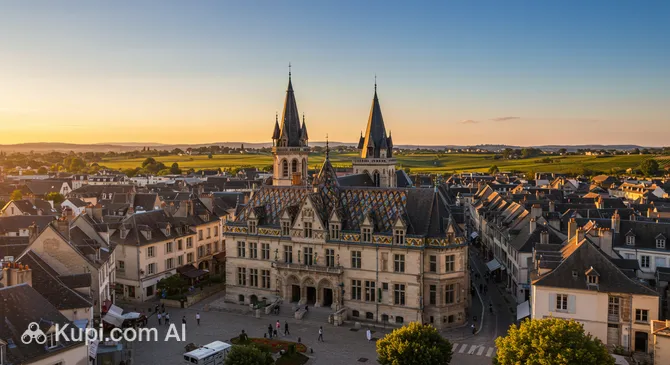
Beaune. Illustration.
Source: Kupi.com AI

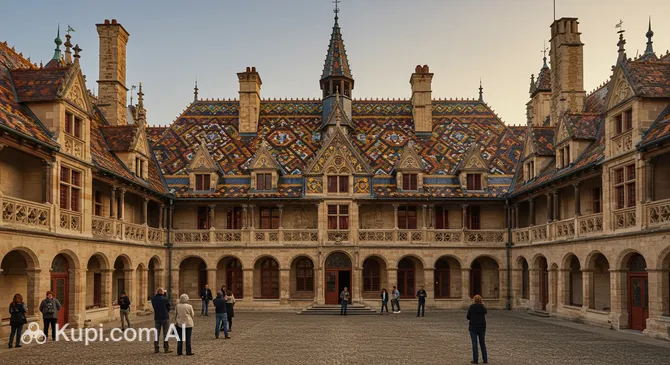
With a population of about 20,000, Beaune is a compact but incredibly atmospheric city where every corner holds the traces of a rich history. It is the administrative center of the district of the same name and is rightfully considered the wine capital of the region, where connoisseurs of fine drinks from all over the world gather annually. The architecture of Beaune is a true journey through time: here you can see well-preserved fortified walls, majestic Gothic towers, stroll through cobbled streets, and admire buildings with characteristic bright tiled roofs, the most famous of which is the former hospital, the Hôtel-Dieu (Hospices de Beaune).

Beaune is famous for its calm yet rich cultural life. It's easy to forget the rush of metropolises here, leisurely strolling through cozy streets, peeking into numerous wine cellars for tastings, or enjoying exquisite local cuisine in atmospheric restaurants. The city is perfect for those seeking an authentic French experience, who appreciate history, architecture, and, of course, excellent wine. Visiting Beaune means discovering the authentic Burgundy, where traditions are carefully preserved and every day is filled with unique tastes and aromas.

You can find more interesting facts on the history of Beaune page.
Weather Overview

The weather in Beaune is characterized by warm summers and cool winters. In the summer months, especially in July and August, the average temperature is around +20-21°C, with maximums reaching up to +26°C. In winter, for example in January, the average temperature stays around +3.6°C, with minimum values dropping to +1.1°C. Precipitation in Beaune occurs year-round, but the volume is usually small; however, the number of rainy days can vary, reaching a maximum in December (about 17 days). For more detailed information, please visit the Beaune Climate page.

Average monthly temperature

Average monthly precipitation

Interesting Facts

Beyond its world-famous vineyards and charming medieval architecture, Beaune holds many fascinating secrets and little-known details. This city is a true treasure box of surprises for the curious traveler.

Hôtel-Dieu Museum (Hospices de Beaune). Illustration.
Source: Kupi.com AI

Traveler photos:

  • Underground Wine City: Few realize that beneath the cobbled streets of Beaune lies one of the most extensive networks of wine cellars in the world. These multi-kilometer tunnels—a real "city beneath the city"—house millions of bottles of precious Burgundy wine, patiently waiting for their time.

  • The Hospital-Treasury: The majestic Hôtel-Dieu Museum, known for its colorful glazed tile roof, was originally built in the 15th century as a charitable hospital. Today, it is not only an architectural monument but also a guardian of priceless works of art, including the famous "Last Judgment" altarpiece by Rogier van der Weyden.

  • The Oldest Wine Auction: Every year on the third weekend of November, Beaune hosts the world's oldest and most famous charitable wine auction within the walls of the Hôtel-Dieu. This event, known as "The Three Glorious Days" (Les Trois Glorieuses), turns the city into a center of wine pilgrimage, accompanied by festivals and tastings.

  • Wine Cellars in a Fortress: Beaune is home to one of Burgundy's oldest and most respected wine houses, Bouchard Père & Fils, founded in 1731. Its unique wine cellars are located in the bastions and cellars of the former Château de Beaune, a medieval fortress from the 11th-15th centuries, giving the wine storage a special historical atmosphere.

How to Get There

You can reach this picturesque corner of Burgundy in various ways, combining flights with a train or car trip. Since the city itself does not have its own airport, travelers usually choose one of the major transport hubs nearby. You can find all the details and plan your route by following the link: more about how to get to Beaune.

The most popular option for international tourists is flying through the region's major cities. There is no airport in the city of Beaune itself, but you can fly into Lyon–Saint Exupéry Airport (LYS), located in the city of Lyon. It is approximately 145 km from Beaune. The journey from there by taxi or rental car will take about 1.5–2 hours. This is one of the most convenient hubs with many regular flights.

Another excellent alternative is Geneva Airport (GVA), located in neighboring Switzerland, in the city of Geneva, about 131 km from Beaune. The car journey from this airport takes approximately 2 hours. It is also worth mentioning the closest option to the city — Dole–Jura Airport (DLE). It is located in the city of Dole, just 45 km from Beaune, and the trip takes only 40–50 minutes, although the number of flights here is significantly lower.

For clarity, here is a summary of the main airports:

AirportPassenger trafficDistance
Dole-Jura Airport125 14145 km
Geneva Airport17.8 mln131 km
Lyon Saint-Exupéry International Airport10.0 mln145 km
Chambéry Airport169 000174 km
Clermont-Ferrand Auvergne Airport231 344188 km

Traveling by rail is a classic and very convenient way to get around France. The main advantage for tourists is the proximity to the city of Dijon. You can arrive at Dijon Station (36.6 km from Beaune) and then transfer to a regional train (TER). This is the primary way to reach the destination: local trains run frequently, and the travel time is only about 20 minutes. Another important transport hub is Lyon-Part-Dieu Station in the city of Lyon (about 140 km from Beaune), where TGV high-speed trains arrive from all over the country.

Below is information about the nearest major railway stations:

StationPassenger trafficDistance
Dijon Railway Station5.8 mln37 km
Geneva Railway Station42.1 mln135 km
Lyon Part-Dieu Station40.1 mln140 km
Gare de Lyon-Perrache7.6 mln142 km
Bern Railway Station69 mln198 km

Main Attractions

Beaune, a charming city in the heart of Burgundy, offers travelers many interesting places to explore. Among them, several key attractions stand out and should not be missed.

One of Beaune's most iconic landmarks is the Hôtel-Dieu Museum (Hospices de Beaune). This former medieval hospital, founded in the 15th century, is striking for its unique Burgundian Gothic architecture and its characteristic multicolored tiled roofs. Visitors can see ancient wards, a pharmacy, and a kitchen, as well as the famous "Last Judgment" polyptych by Rogier van der Weyden. This place immerses you in the atmosphere of medieval charity and medicine.

Hôtel-Dieu Museum (Hospices de Beaune). Illustration.
Source: Kupi.com AI

Traveler photos:

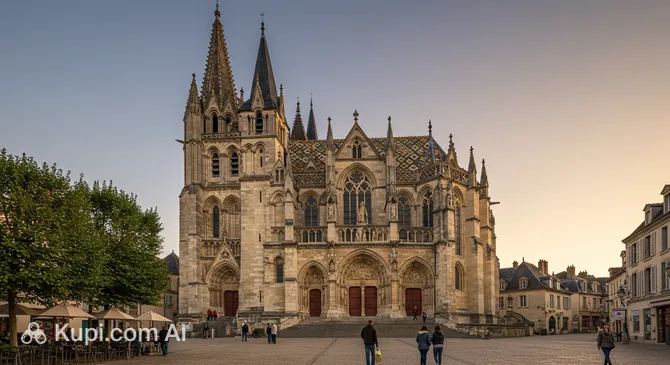
No less impressive is the Collegiate Church of Notre Dame in Beaune. This beautiful example of Romanesque and Gothic architecture dates back to the 12th-13th centuries. Inside the church are magnificent 15th-century tapestries depicting the life of the Virgin Mary, as well as ancient frescoes and sculptures. The church is an important spiritual and historical center of the city, attracting both pilgrims and art lovers.

Collegiate Church of Notre-Dame of Beaune. Illustration.
Source: Kupi.com AI

Traveler photos:

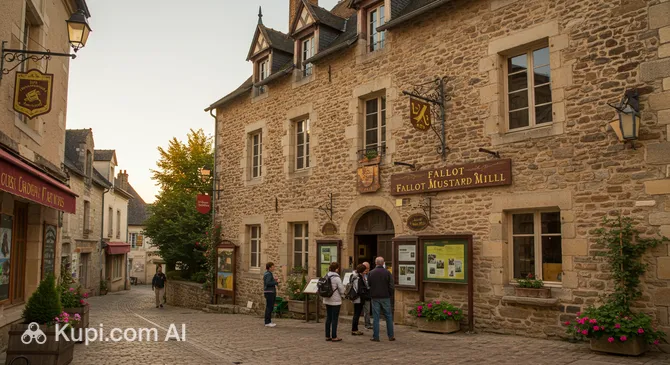
For foodies and curious travelers, a visit to the Fallot Mustard Mill (La Moutarderie Fallot) is a must. This is one of the last family-run businesses in Burgundy producing traditional Dijon mustard according to old recipes using stone grindstones. A tour of the factory allows you to learn the secrets of production, taste various types of mustard, and purchase unique souvenirs.

Fallot Mustard Mill. Illustration.
Source: Kupi.com AI

Traveler photos:

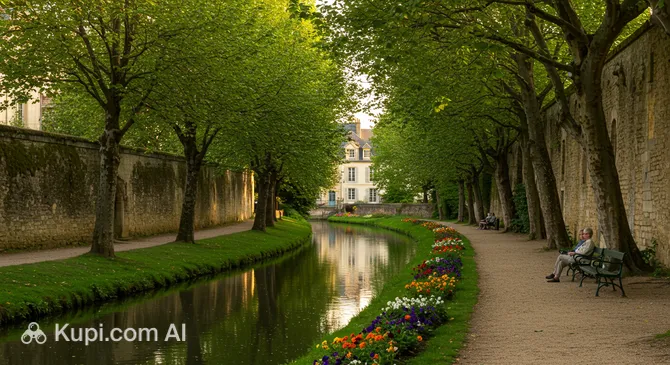
If you are looking for a place for quiet relaxation in nature, head to Bouzaize Park (Parc de la Bouzaize). This picturesque park with a lake, ancient trees, and well-kept alleys is a popular spot for walks, picnics, and family vacations. Here you can go boating, feed the ducks, or simply enjoy the peace and fresh air away from the city bustle.

Bouzaise Park. Illustration.
Source: Kupi.com AI

Traveler photos:

Local Cuisine

Beaune is a true paradise for gourmets and lovers of refined tastes, the heart of the Burgundy wine region. The city's gastronomic scene is famous for its traditions, high-quality local products, and, of course, world-famous wines. A trip to Beaune promises unforgettable culinary experiences, where every dish and every glass of wine tells a story of the region.

Among the dishes you must try in Beaune, classic Burgundian specialties stand out. Be sure to order Boeuf Bourguignon – tender beef braised in red wine with mushrooms, onions, and bacon. Other iconic dishes include Burgundy snails (escargots de Bourgogne) baked with garlic butter and parsley, and eggs en meurette (œufs en meurette), poached in a rich red wine sauce. Don't forget local cheeses like the aromatic Époisses and delicate Charolais. An important accompaniment to many dishes is the famous Dijon mustard, and to learn more about its production, you can visit the Fallot Mustard Mill.

Speaking of drinks, Beaune is primarily synonymous with magnificent Burgundy wines. Legendary red wines are produced here from the Pinot Noir grape variety, along with exquisite whites from Chardonnay. These can be tasted in numerous wine cellars (caveaux), wine houses, or simply ordered in any restaurant or bistro. In addition to wine, local liqueurs are popular, such as blackcurrant crème de cassis, which is often added to white wine to make a "Kir" cocktail.

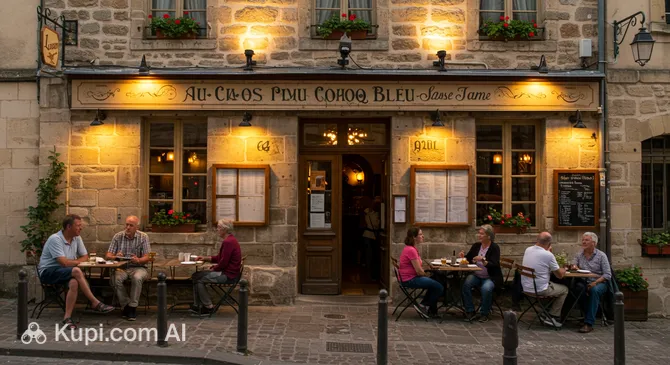
The dining culture in Beaune involves a leisurely enjoyment of food. Locals and tourists prefer to dine in traditional restaurants and cozy bistros serving authentic regional cuisine. One such place to appreciate local gastronomy is the restaurant Au Coq Bleu. A special place in the city's gastronomic life is occupied by farmers' markets, where you can buy the freshest products from local producers: vegetables, fruits, cheeses, meat delicacies, homemade pâtés, and fresh pastries. In November, the city comes alive thanks to the famous wine festival, accompanied by street food, tastings, and a festive atmosphere filled with the aromas of roasted chestnuts and fresh pastries.

Au Coq Bleu. Illustration.
Source: Kupi.com AI

Traveler photos:

Travel Tips

Welcome to Beaune! To ensure your trip through this charming city in the heart of Burgundy goes smoothly and leaves only pleasant impressions, we have prepared some practical tips.

  1. Clothing and items for the season:

    The climate in Beaune is temperate. In summer, bring light clothing, a hat, and sunscreen, but don't forget a light sweater or jacket for the evenings. Spring and autumn require layering and a waterproof jacket. In winter, you will need warm clothes, a hat, and gloves. A key wardrobe item is comfortable shoes, as you will be walking a lot on cobbled streets and possibly vineyards. Don't forget a European adapter for electronics. When visiting churches, such as the Basilica of Notre Dame, choose modest clothing that covers shoulders and knees.

  2. Getting around the city:

    Beaune is a small city, and its historic center is ideal for walking. Public transport is represented by local buses, but you will likely not need them for most attractions. If you plan to explore the surrounding wine-growing villages of Burgundy, consider renting a bicycle or a car. Taxis are available but can be relatively expensive; ride-hailing apps may be limited.

  3. Financial matters:

    The official currency is the Euro (EUR). Bank cards (Visa, Mastercard) are widely accepted in hotels, restaurants, and shops. ATMs (in France called "distributeurs automatiques de billets" or DAB) are easy to find. It is recommended to carry some cash for small purchases at markets or in small shops. In restaurants, a service charge (service compris) is often already included in the bill, but if you are very satisfied, you can leave an additional 5-10% tip. In cafes, tips are usually not left for a cup of coffee, or the amount is rounded up.

  4. Health and safety:

    Beaune is considered a very safe city. Nevertheless, always follow basic precautions: keep an eye on your belongings, especially in crowded places and markets. Pharmacies (pharmacies) are easily recognized by a green cross; some may operate on an on-call schedule after hours (information is usually posted on the door). The European emergency number is 112. Tap water is safe to drink.

  5. Language and communication:

    The official language is French. In tourist areas, hotels, and restaurants, many staff members speak English. However, locals greatly appreciate it when tourists try to speak French, even if it's just a few basic phrases: "Bonjour" (Hello), "Merci" (Thank you), "S'il vous plaît" (Please), "Au revoir" (Goodbye). Wi-Fi is available in most hotels, cafes, and public places. For mobile communication, you can purchase a local SIM card in operator stores or tobacco shops (Tabac).

  6. Local etiquette and traditions:

    The French value politeness. When entering a shop, cafe, or bakery, it is customary to say hello ("Bonjour, monsieur/madame") and goodbye upon leaving ("Au revoir"). Address strangers as "vous" (formal You) rather than "tu" (informal). Maintain a moderate volume in public places and restaurants. Leisureliness is part of the local culture, especially during meals; enjoy the moment.

  7. What to avoid:

    Try not to start a conversation in English without first saying hello in French—it may be perceived as impolite. Avoid discussing sensitive topics, such as politics or personal income, with people you don't know well. Also, do not rush service in restaurants—it's customary here to enjoy your food without haste.

  8. Special tip for Beaune:

    Beaune is the heart of the Burgundy wine region. Do not miss the chance to visit local wine cellars (caves) for tastings of famous wines. Many of them are located right in the city. Also, be sure to set aside time to visit the Hôtel-Dieu (Hospices de Beaune)—it is not only a stunning monument of medieval architecture with its famous colored roofs but also a place with a rich history.

We hope these tips help you better prepare for your trip and get the most enjoyment out of your stay in beautiful Beaune. Have a pleasant journey!

Entertainment & Nightlife

Beaune, a charming city in the heart of Burgundy, offers its guests not only a rich historical heritage but also a pleasant atmosphere for evening relaxation. The nightlife here is characterized more by coziness and gastronomic pleasures than by noisy club parties, which perfectly suits the spirit of this wine-growing region of France.

As evening falls, the historical center of Beaune comes alive in a special way. The main spots for evening strolls and social gatherings are concentrated around the central squares and adjacent streets. Here you will find many wine bars (bars à vin) where you can taste famous Burgundy wines in an authentic setting. Traditional restaurants and brasseries offering local cuisine are also popular. The atmosphere in such establishments is usually relaxed and friendly, attracting both locals and tourists. The dress code in most places is smart casual.

For an exquisite dinner, the restaurant Au Coq Bleu is highly recommended, known for its cuisine and atmosphere. It is best to book a table here in advance, especially during the tourist season. Many establishments stay open until midnight or slightly later, but active nightlife typically doesn't stretch until dawn as it does in major cities. Average prices for dinner with wine can vary, but the quality of local products and wines generally meets expectations.

Au Coq Bleu. Illustration.
Source: Kupi.com AI

Traveler photos:

In addition to excellent restaurants like the mentioned Au Coq Bleu, evening Beaune offers cozy wine bars where you can get to know the products of local wineries better, and small pubs with authentic French flair. It's best to look for specific venues while walking through the city center, paying attention to those that catch your eye with their atmosphere. Typically, peak hours are after 20:00.

Beaune is considered a safe enough city for evening walks, especially in its central part. Nevertheless, it is always worth taking usual precautions. To travel longer distances at night, you can use taxi services; information about local taxi companies can be obtained at your hotel or the tourist information center.

During the day, Beaune offers a rich cultural program. A visit to the famous Hôtel-Dieu Museum (Hospices de Beaune), the city's landmark, is a must. Lovers of outdoor walks will appreciate Bouzaize Park. Other places of interest for tourists include the Fallot Mustard Mill, where you can learn about the production of the famous Dijon mustard, and the majestic Collegiate Church of Notre Dame in Beaune.

Hôtel-Dieu Museum (Hospices de Beaune). Illustration.
Source: Kupi.com AI

Traveler photos:

Parks & Museums

Beaune, a charming city in the heart of Burgundy, offers its guests not only world-famous wines but also wonderful opportunities for outdoor relaxation and immersion in a rich cultural heritage. Here you will find well-kept parks for leisurely strolls and unique museums preserving centuries of history.

One of the city's main green oases is Bouzaize Park (Parc de la Bouzaize). This is an ideal place to take a break from the city bustle, where you can enjoy the silence, walk along a picturesque lake, have a picnic on the grass, or just sit on a bench in the shade of the trees. The park is especially beautiful in spring and summer, when everything is lush and blooming, attracting both locals and tourists seeking peace and fresh air.

The jewel of Beaune and its most famous museum is undoubtedly the Hôtel-Dieu Museum (Hospices de Beaune). This former medieval hospital, founded in the 15th century, is stunning for its unique architecture with bright glazed roofs that have become a symbol of Burgundy. Today it houses a museum where you can see ancient hospital wards, a pharmacy, a kitchen, and the famous "Last Judgment" polyptych by Rogier van der Weyden. A visit to the Hôtel-Dieu is a true journey through time and an opportunity to touch the history of mercy.

In addition to the Hôtel-Dieu, Beaune is proud of other significant sites. Be sure to visit the Collegiate Church of Notre Dame in Beaune, an impressive example of Romanesque and Gothic architecture. Inside are valuable 15th-century tapestries depicting scenes from the life of the Virgin Mary. For those interested in local traditions and gastronomy, a visit to the Fallot Mustard Mill will be a fascinating experience. This is one of the last family-run businesses producing the famous Burgundy mustard by traditional methods, where you can learn about the production process and, of course, taste various varieties.

To truly feel the spirit of Beaune, don't limit yourself to just the main attractions. Walk through the ancient streets surrounding the historic center, and you will discover many charming courtyards and details hidden from the eyes of most tourists. Peek into small wine cellars (caveaux) for tastings of local wines—it's an essential part of the Burgundy experience.

Getting Around

Public transport in Beaune, given the city's compact size, is primarily represented by a bus network. Buses connect various districts of Beaune and its immediate surroundings, providing a convenient and affordable way to get around, especially if you plan to visit places outside the historic center.

The fare payment system is quite simple. A single bus ticket, which usually costs 1-2 euros, can be purchased directly from the driver (it's recommended to have small change) or at tobacco shops (Tabac). Sometimes tickets are also available at the tourist office. For those planning to make many trips, day passes or so-called "carnets"—sets of several tickets—may be advantageous. It is important to remember that a purchased ticket must be validated immediately upon entering the bus in a special machine.

Buses in Beaune run according to a set schedule. You can check it on the information boards located at bus stops or by asking at the local tourist center. Generally, bus service is more frequent on weekdays. On weekends and public holidays, intervals between trips may increase, and some routes may have a reduced schedule or not operate at all. Evening bus service is usually limited, so plan late trips in advance.

In addition to buses, you can use taxi services to travel around Beaune and its surroundings. Taxi stands are usually located near the railway station and other key points in the city. This is a more expensive but more comfortable travel option, especially convenient for night trips or if you have a lot of luggage.

Given the charm of the Burgundy region, a popular way to explore Beaune and its picturesque surroundings, including the famous vineyards, is by bicycle. Bicycle rental points can be found in the city and its vicinity. Furthermore, the historic center of Beaune is compact enough to be easily explored on foot, allowing you to fully enjoy the atmosphere of the ancient streets and architecture.

Accommodation

When planning a trip to Beaune, you will find a variety of accommodation options to suit different preferences and budgets. The city offers a wide choice from cozy guesthouses (chambres d'hôtes) and rental apartments to traditional hotels of various star ratings. You can find both economical options and luxurious offerings, especially in hotels located in historical buildings.

The most popular areas for tourists are those located in the historic center of Beaune or in its immediate vicinity. Staying here will put you within walking distance of the main attractions, such as the famous Hôtel-Dieu Museum (Hospices de Beaune), charming streets, and numerous wine cellars. Accommodation options near the main transport hubs are also convenient if you plan to actively explore the surroundings.

While specific hotels don't always stand out in general landmark lists, Beaune has many establishments, from small family-run inns to larger chain hotels, each offering its own level of comfort and services. The price range varies: you can find budget options as well as mid-range and high-end rooms. It is recommended to pay attention to reviews and location when choosing.

To guarantee yourself the best option, especially during the peak tourist season or during famous wine festivals like the Hospices de Beaune auction, it is strongly recommended to book your accommodation in advance. Most hotels and apartments in Beaune are available for booking through popular online platforms, but you should also consider direct booking through official hotel websites, which can sometimes offer better terms or special deals.

Nearby Cities

For those who want to explore the surrounding area, Beaune serves as an excellent starting point for day trips to several interesting nearby locations:

CityPopulationDistance
Chalon-sur-Saône45 05627 km
Chenove14 21633 km
Longvic8 54534 km
Talant11 71337 km
Dijon158 00238 km

These nearby destinations provide insight into the diverse culture and landscapes of the region.

Shopping & Souvenirs

Shopping in Beaune is, first and foremost, an immersion into the world of Burgundian delicacies and wines. The city is not famous for huge shopping centers; instead, you will find many charming boutiques, specialty shops, and stalls offering authentic local products. The main emphasis is on gastronomy, wine, and handicrafts, which makes shopping in Beaune particularly pleasant and "delicious."

The main shopping arteries of Beaune are concentrated in its historic center. Stroll along Rue Carnot, Rue Monge, and the surrounding side streets, as well as around the central square, Place Carnot. Here you will find wine cellars, cheese shops, stores with local delicacies, antique salons, and small clothing and souvenir boutiques. The atmosphere of the ancient city adds charm to any shopping trip.

Beaune is not the kind of city where you should look for large modern shopping malls. Its charm lies in its small, often family-run shops. Instead of giant complexes, you will find small shopping galleries or simply clusters of interesting shops in the city center, where every window tells its own story.

Be sure to visit the famous Saturday Beaune Market (Marché de Beaune), which spreads across Place de la Halle and the surrounding streets. It is a true feast for foodies! Here you can buy the freshest local products: cheeses, sausages, fruits, vegetables, honey, pastries, as well as flowers, clothing, and handicrafts. The atmosphere here is very lively, and it's a great place to feel the true spirit of Burgundy and purchase delicious souvenirs.

It's impossible to leave Beaune without gastronomic gifts. The main souvenir is, of course, Burgundy wine. Pay attention to wines from the Pommard, Volnay, and Meursault appellations, which are produced nearby. Another iconic product of the region is Dijon mustard. You can visit and purchase products at the famous Fallot Mustard Mill. It's also worth bringing back Crème de Cassis liqueur, truffles (in season), honey, and local cheeses. In souvenir shops, you can find items related to winemaking: corkscrews, glasses, as well as ceramics and textiles with Burgundian symbols.

Most shops in Beaune are open roughly from 10:00 to 19:00, with a traditional lunch break somewhere between 12:00/13:00 and 14:00/15:00, especially in small private shops. Large supermarkets on the outskirts may have longer opening hours. Sunday is generally a day off for most shops, except for some tourist shops and bakeries. Some shops may also be closed on Monday. Credit cards (Visa, Mastercard) are accepted everywhere, but it's better to have some cash on hand for markets and small shops.

Tourists from non-European Union countries can take advantage of the Value Added Tax refund system (VAT, in France TVA) when making purchases over a certain minimum in one store (usually around 100 euros, but it's better to check on-site). To do this, you need to ask the shop for a special Tax Free form (bordereau de détaxe) and present it along with your purchases to customs when leaving the EU.

Reached the end of the page?

That means the route is fully explored