Support

Orly

Attractions

About

Orly is more than just a spot on the map of France; for many travelers, it provides their first or last impressions of Paris and its unique atmosphere. Located in the southern suburbs of the capital, Orly is primarily known for its international airport—one of the largest in the country—which serves as a bustling gateway to the heart of French culture and history.

Orly. Illustration.
Source: Kupi.com AI

Situated just a few kilometers south of Paris, Orly is an essential part of the Île-de-France capital region. It is not just a transit hub, but a commune with a life of its own, offering a slower pace compared to the bustling center of the metropolis. The climate here is typical of Northern France: mild winters and pleasant, warm summers, making travel comfortable at any time of year.

The key feature of Orly is undoubtedly Paris-Orly Airport (ORY). It is not merely a transport facility but an entire world with its own infrastructure, shops, and restaurants, where many exciting journeys begin or end. Another important feature of the city is its excellent transport links to the capital. From here, it is easy to reach all of Paris's famous landmarks, making Orly a convenient starting point for exploring the City of Light.

Whether you are planning a short stopover or looking for a convenient place to stay while getting to know Paris and its surroundings, Orly will welcome you hospitably. This city offers practicality and accessibility, opening the doors to unforgettable adventures in the French capital.

You can find more interesting facts on the history of Orly page.

Weather Overview

The weather in Orly is characterized by a temperate climate typical of the Île-de-France region, with distinct seasonal changes. In summer, especially in July and August, it is usually warm: the average temperature stays around 20-20.2°C, and the maximum can reach 25°C. Rainfall in the summer months is not heavy (about 2 mm) but occurs periodically, on average 8-12 days per month. Winters in Orly are cool, with an average temperature in January of about 5.0°C and minimum nighttime temperatures dropping to 2.5°C. In winter, the amount of precipitation is also low (2-3 mm per month), but it is more evenly distributed, occurring on 11-15 wet days.

Overall, expect a warm summer with occasional rain and cool winters with frequent, but usually light, precipitation. For more detailed information on the Orly climate and monthly weather conditions, we recommend visiting the corresponding page.

Average monthly temperature

Average monthly precipitation

Interesting Facts

Beyond its worldwide fame due to the airport of the same name, Orly is a city with a much deeper history and unexpected details that might surprise even the seasoned traveler. Here are a few little-known facts to help you see Orly in a new light:

Château de Vaux-le-Vicomte. Illustration.
Source: Kupi.com AI

Traveler photos:

  • The name of the city Orly is believed to originate from the Roman "Aureliacum," meaning "Aurelius's estate." This indicates that settlements existed here back in ancient times, long before the first runways appeared.

  • The territory where not only the airport but also the city of Orly itself is located today was once part of vast royal hunting grounds. French monarchs frequently spent time here indulging in their favorite pastime.

  • Very close to Orly lies the impressive Château de Vaux-le-Vicomte. This 17th-century architectural masterpiece, surrounded by magnificent gardens, served as the prototype and source of inspiration for the construction of the famous Versailles. Visiting it can be an unexpected cultural discovery for travelers.

  • The Orlyval automated metro line, which connects the Orly airport terminals with the Antony RER station (providing easy access to Paris), was one of the world's first fully automated transit systems of its kind when it opened in 1991, becoming a true symbol of technological progress.

How to Get There

Getting to Orly, an important transport hub in the Paris region, can be done in several ways, with flying being the most common choice for international travelers. The city is served by several major airports located in close proximity.

The main and most convenient option is Paris-Orly Airport (ORY). Although it bears the name of the city, the airport is administratively part of Paris but is located just 4.2 km from the center of Orly. This is a major international airport, and a trip from here to the city by taxi or bus will take approximately 25-30 minutes.

Another essential international air hub is Charles de Gaulle Airport (CDG), also located in Paris but a bit further away, about 31.6 km north of Orly. As the largest airport in France, it handles a huge number of flights from all over the world. The journey to Orly from here takes about 1 hour and 10 minutes.

For travelers choosing certain budget airlines, Beauvais–Tillé Airport (BVA) might be relevant. It is located significantly further from Orly, about 81.8 km away (listed as serving Paris), and the transfer from there will take approximately 2 hours 20 minutes to 2 hours 30 minutes. This airport has less passenger traffic than the previous two.

For clarity, here is a summary of the main airports serving the Orly direction:

AirportPassenger trafficDistance
Paris Orly Airport33.1 mln4 km
Charles de Gaulle Airport70.3 mln32 km
Beauvais-Tille Airport6.5 mln82 km
Saint Gatien Airport65 664178 km
Val de Loire Airport206 084192 km

Rail service also plays an important role in Orly's accessibility, although the city itself does not have its own major train stations. Travelers can use stations located in Paris, from where it is easy to reach Orly by local transport.

One of the closest and most significant stations, especially for those arriving on high-speed TGV trains, is Massy TGV Station (XJY). It is located in Paris, approximately 10.7 km from Orly. A trip from the station to the center of Orly by taxi or public transport takes about 35-40 minutes. This is a major transport hub.

It is also worth mentioning Gare de Lyon (LYY), one of the main railway stations in Paris, located about 11.3 km from Orly. This is a major station serving many national and international routes, especially to the south and east of France. The journey to Orly from here also takes about 35-40 minutes.

Below is information on the main railway stations in the vicinity of Orly:

StationPassenger trafficDistance
Massy TGV Station1.5 mln11 km
Gare de Lyon113.2 mln11 km
Gare de l'Est34 mln15 km
Gare du Nord Station220 mln16 km
Marne-la-Vallée–Chessy Station11.5 mln31 km

Additionally, Orly can be reached by car, as the city is well-connected to the main road network of the Île-de-France region. When planning a trip by car or using local bus routes, it is recommended to check current traffic patterns and schedules in advance.

Main Attractions

Although Orly is primarily known as a major transport hub, its surroundings and convenient connections to Paris provide access to many interesting attractions. Here are a few places worth considering for a visit during your trip:

For nature lovers and those seeking a quiet retreat, the Haute Vallée de Chevreuse Regional Nature Park is an excellent choice. This vast park, located southwest of Paris, offers picturesque landscapes, numerous hiking and cycling trails, and the chance to see charming villages and ancient castles. It is the ideal place to escape the city bustle and enjoy the beauty of the French countryside.

Haute Vallée de Chevreuse Regional Natural Park. Illustration.
Source: Kupi.com AI

Traveler photos:

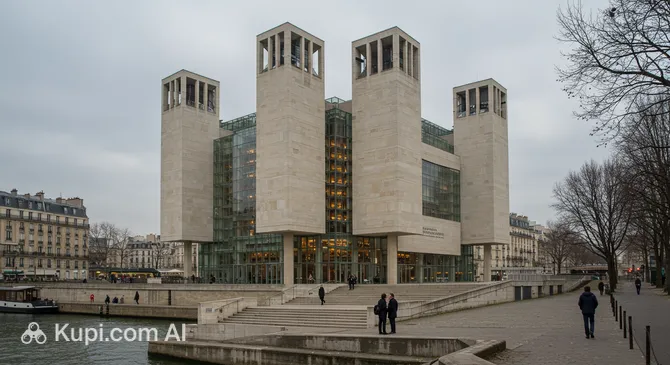
Connoisseurs of modern architecture and knowledge should definitely visit the François-Mitterrand Library, which is part of the National Library of France. Four tall towers in the shape of open books dominate the Seine in Paris and house millions of publications. In addition to its rich collections, the library attracts visitors with its exhibitions and cultural programs, serving as an important cultural center for the capital.

François-Mitterrand Library. Illustration.
Source: Kupi.com AI

Traveler photos:

If you are traveling with family or looking for active entertainment, check out Trampoline Park Paris Elancourt. Located in the town of Élancourt, this modern entertainment center offers numerous trampolines, foam pits, and various play zones where you can have fun and get an energy boost. It’s a great place to unwind and take a break from sightseeing, especially if you are with children.

Trampoline Park Paris Élancourt. Illustration.
Source: Kupi.com AI

Traveler photos:

Local Cuisine

Orly, as an important transport hub in France, offers travelers a wonderful opportunity to get acquainted with the basics of the famous French cuisine. The city's gastronomic scene, while compact, reflects the culinary traditions of the Île-de-France region and, of course, the influence of nearby Paris. Here, you can find cozy local spots as well as restaurants oriented toward an international audience, making Orly a convenient point for a first introduction to French delicacies.

When in Orly, be sure to try the classics of French gastronomy. Start your day with a crispy croissant or a pain au chocolat from a local bakery. For lunch or dinner, dishes like Quiche Lorraine (an open savory tart with bacon and egg), tender coq au vin (chicken in wine), or hearty Beef Bourguignon await you. Don't forget the famous French crêpes, which can be either sweet or savory—a perfect choice for a light snack or dessert.

A French meal is unthinkable without the right drinks. Wine, of course, takes center stage—ranging from light table wines to exquisite vintages representing various regions of France. In the morning and afternoon, the French prefer coffee, whether it's an espresso, cappuccino, or café au lait. Among non-alcoholic drinks, freshly squeezed juices and mineral water are popular. In the evening, you can enjoy an aperitif such as a kir (white wine with blackcurrant liqueur) or a glass of sparkling wine.

The food culture in Orly and its surroundings is diverse. You will find traditional bistros and brasseries serving classic dishes in a relaxed setting. Numerous cafes offer light snacks, pastries, and drinks throughout the day. For those looking for something specific, there are establishments in Orly for every taste, such as the restaurant Tasty Crousty, which offers its own take on popular dishes. For evening relaxation or an aperitif, you can stop by a bar like Loulou Antony.

Tasty Crousty. Illustration.
Source: Kupi.com AI

Traveler photos:

Loulou Antony. Illustration.
Source: Kupi.com AI

Traveler photos:

The gastronomic experience in Orly is a wonderful opportunity to touch the heart of French culinary arts. Even if your stay in the city is short, you will be able to enjoy authentic flavors that make France one of the world's top gastronomic destinations. From fresh pastries for breakfast to an exquisite dinner with a glass of wine, Orly will offer you pleasant culinary discoveries that will become a bright memory of your trip.

Travel Tips

Planning a trip to Orly? Wonderful! To ensure your journey through this town in France goes smoothly and leaves only pleasant impressions, we have prepared a few practical tips. They will help you better find your way around and enjoy every moment.

  1. Clothing and Essentials: The climate in the Île-de-France region is temperate, so choose clothing according to the season. In summer, light clothing will be useful, but don't forget a sweater or light jacket for the evenings. In winter, a warm jacket, hat, and gloves will be needed. Always bring comfortable shoes, as you will likely be walking a lot, especially if you plan trips to Paris. Don't forget a plug adapter (type E) and an umbrella or raincoat in case of sudden rain. When visiting churches or other religious sites, it is customary to cover your shoulders and knees.
  2. Transport in Orly and Surroundings: Orly is famous for its airport, and transport links here are well-developed. For trips to Paris and other suburbs, it is convenient to use RER trains (line B) and buses. Within the town itself, you can get around on local buses. Taxis and ride-hailing services (e.g., Uber) are available, especially around the airport area. Renting a car can be useful if you plan to explore the surroundings or other parts of France, but for moving around Orly itself or trips to Paris, it is not always practical due to traffic and parking difficulties.
  3. Financial Matters: The official currency in France is the Euro (EUR). You can exchange money at banks, exchange offices, or at the airport, although airport rates may be less favorable. Bank cards (Visa, Mastercard) are accepted almost everywhere, especially in hotels, restaurants, and large stores. It is recommended to have a small amount of cash on hand for minor purchases. ATMs (distributeurs automatiques de billets) are easy to find. Tips in France are often included in the bill (service compris), but if you particularly liked the service, you can leave an additional 5-10% or round up the amount.
  4. Health and Safety: Pharmacies (pharmacie), marked with a green cross, are available in town. Some may operate 24/7 on a duty system ("pharmacie de garde"). In case medical assistance is needed, EU citizens can use the EHIC card. Tourists from other countries are strongly recommended to have travel insurance. The single emergency number is 112. Orly is considered a fairly safe town, but as with everywhere, follow basic precautions: keep an eye on your belongings in crowded places, especially on public transport and at the airport.
  5. Language and Connectivity: The official language is French. In tourist areas, hotels, and the airport, many people speak English, but knowing a few basic phrases in French (e.g., "Bonjour" – hello, "Merci" – thank you, "S'il vous plaît" – please) will be very helpful and appreciated by the locals. A SIM card with internet access can be purchased at the airport or in mobile phone shops. Wi-Fi is available in most hotels, cafes, and some public places.
  6. Local Etiquette and Communication: The French value politeness. Always say hello when entering a shop or cafe ("Bonjour" or "Bonsoir" in the evening) and say goodbye ("Au revoir"). When addressing strangers, use "Monsieur" (sir), "Madame" (madam), or "Mademoiselle" (miss). Try not to speak too loudly in public places, especially on transport and in restaurants.
  7. What to Avoid: You should not start a conversation with people you don't know well on topics of politics or personal finance—it is considered impolite. Also, avoid photographing people without their permission. In France, it is not customary to eat on the go (except for products specifically intended for this, like sandwiches), especially if it's a full meal.
  8. Additional Tip for Orly: Given that Orly is primarily a major transport hub due to the airport, use it as a convenient starting point for exploring Paris. RER B trains will take you to the center of the capital in about 30-40 minutes. This can be a more economical accommodation option compared to Paris itself, especially if you have an early departure or late arrival.

We hope these tips make your stay in Orly as comfortable and pleasant as possible. This town, though small, can be a great gateway for exploring the Paris region. We wish you an unforgettable trip!

Entertainment & Nightlife

When the sun sets over Orly, the city offers its guests and residents cozy options for evening relaxation. While Orly, known mainly for its international airport, may not boast the thumping nightlife of a mega-metropolis, you can find pleasant spots to relax after a busy day or before an early flight. For those seeking large-scale entertainment, the lights of Paris are just a short train ride away.

The core of evening entertainment in Orly consists of local bars and restaurants where you can enjoy French cuisine and drinks in a calm setting. For example, the bar Loulou Antony can be a great choice for an aperitif or an evening cocktail. For dinner, you might consider establishments like Tasty Crousty, which offers a variety of dishes. The atmosphere in such places is usually laid-back and conducive to conversation. There are few traditional clubs with loud music and dancing until dawn in Orly itself; for that kind of entertainment, it’s better to head into the capital.

Most establishments in Orly stay open until late evening but not through the early morning hours typical of major clubbing hubs. If your evening plans include visiting nightclubs or concert venues in Paris, take note of the RER B train schedule, which is the main way to reach the city. Noctilien night buses also run, but the trip may take longer. Taxis or ride-sharing services are available, especially around the airport, and are a reliable way to get around after dark. Orly is generally considered a safe area, but as with anywhere, it's worth taking standard precautions, especially when returning late.

During the day, Orly and its surroundings also offer leisure options. Although the city doesn't abound with major museums or world-class theaters, interesting spots can be found nearby. For example, Trampoline Park Paris Elancourt is perfect for active family fun. Also, remember that proximity to Paris grants access to the full range of capital attractions—from the Louvre to the Eiffel Tower.

Trampoline Park Paris Élancourt. Illustration.
Source: Kupi.com AI

Traveler photos:

Thus, an evening in Orly is more about a quiet dinner and pleasant conversation in a cozy setting than wild parties. It is an excellent place for transit passengers or those who prefer a more measured holiday while having easy access to the vibrant nightlife and cultural treasures of Paris.

Parks & Museums

Orly, beyond its primary role as a vital transport hub in France, offers its visitors access to remarkable green spaces and the cultural heritage of the Île-de-France region. Although the city itself is quite compact, its favorable location and good transport links to Paris make it easy to reach impressive parks, historical castles, and significant cultural sites.

For nature lovers and outdoor enthusiasts, a trip to the Haute Vallée de Chevreuse Regional Nature Park is an excellent choice. This vast nature park offers miles of scenic trails for hiking and cycling, an opportunity to enjoy fresh air and the beauty of the French countryside. It is an ideal place to take a break from the city bustle and learn about the region's flora and fauna. In Orly itself, you can find small urban squares and green corners suitable for a short stroll or resting on a bench; however, for large-scale natural landscapes, it's worth heading to its outskirts.

Haute Vallée de Chevreuse Regional Natural Park. Illustration.
Source: Kupi.com AI

Traveler photos:

Regarding cultural heritage and museums, the surroundings of Orly and nearby Paris offer a wealth of choices. One of the most impressive historical sites accessible from Orly is Château de Vaux-le-Vicomte. This magnificent 17th-century castle, which served as the prototype for Versailles, amazes with its architecture, luxurious interiors, and magnificent gardens designed by André Le Nôtre. A visit to the château is a true immersion into the history and art of France.

Château de Vaux-le-Vicomte. Illustration.
Source: Kupi.com AI

Traveler photos:

For fans of modern architecture and knowledge, the François-Mitterrand Library in Paris, which is easily accessible from Orly, is an interesting site. It is one of the largest and most modern libraries in the world, impressing with its monumental design. In addition to its primary functions, the library often hosts exhibitions and cultural events, making it an important cultural center.

François-Mitterrand Library. Illustration.
Source: Kupi.com AI

Traveler photos:

Although Orly itself does not have major world-class museums, its proximity to Paris opens up limitless opportunities for cultural enrichment. The Louvre, the Musée d'Orsay, the Centre Pompidou, and many other galleries and exhibition halls are just a half-hour ride away. Insider tip: use Orly as a convenient and often quieter base for exploring not only the Parisian giants but also the lesser-known but charming castles and estates of the Île-de-France region, many of which house unique collections and stories.

Getting Around

Getting around the town of Orly and its surroundings, including the famous airport, is quite simple thanks to a well-developed public transport system integrated with the Parisian network. The core of the transport system consists of RER trains, buses, trams, and the special Orlyval automated train connecting the airport to RER line B. This makes it easy to reach both the center of Paris and other suburbs.

For trips from the town of Orly itself to Paris and back, it is most convenient to use the RER line C suburban trains (Orly-Ville station). If your goal is Orly Airport, the key transport arteries are: RER line B, which can be reached via the Orlyval automated train from the airport terminals (Orlyval connects the terminals with RER B at Antony station), and tram line T7, which runs from terminal Orly 4 to the Villejuif - Louis Aragon metro station (Paris metro line 7). In addition, there are many bus routes, including the OrlyBus express (to Place Denfert-Rochereau in Paris) and Noctilien night buses providing late-night service.

The fare system in Orly, as in the entire Île-de-France region, is diverse. For short trips, you can purchase single-trip Ticket t+ tickets (valid on buses and trams within one zone, and on the metro and RER in central Paris) or point-to-point tickets for RER trains. The cost of a ticket on the RER and Orlyval depends on the distance. For tourists planning to move around a lot, travel passes can be advantageous: Navigo Découverte (a weekly or monthly pass requiring the purchase of the card itself and a photo) or Mobilis (a day pass for unlimited travel in selected zones). Some tickets can be loaded onto a smartphone via special apps.

Tickets can be purchased at vending machines at RER stations and tram stops (many accept bank cards), at ticket offices, and in some tobacco shops (tabacs). It is crucial to validate your ticket before starting an RER train journey or when boarding a bus/tram. Public transport usually operates from early morning (about 5:30-6:00) until late evening (about 00:30-1:00), after which Noctilien night buses begin to run. For route planning and schedule checks, it is convenient to use official mobile apps such as "Île-de-France Mobilités" or "Bonjour RATP."

In addition to public transport, other ways to get around are available in Orly. Taxis can be found at official stands, especially at the airport, or ordered by phone. Ride-hailing services via apps (e.g., Uber, Bolt) are also popular. For those who prefer more independence, a wide choice of car rental companies is available at the airport. While bicycle rental in Orly itself may not be as developed as in central Paris, the possibility of renting a bike for trips around the area or to nearby park zones exists, especially during the warmer months.

Accommodation

In Orly, primarily known for its international airport and as a key transport hub in France, travelers will find various accommodation options. These are geared toward both short transit stops and longer stays for exploring Paris and its surroundings. Choices range from budget hotels and hostels, convenient for cost-conscious tourists, to comfortable mid-range hotels offering a good balance of price and quality. Apartments and rooms for rent are also available, which can be a convenient option for families or those who prefer more independence. Luxury resorts are less common in Orly itself; the main focus here is on functionality and convenience for air passengers.

Most accommodation options in Orly are concentrated in the immediate vicinity of Paris-Orly Airport (ORY) or along major transport routes. This ensures easy access to terminals and RER train stations heading into Paris. Choosing a hotel near the airport is particularly convenient for those with early departures or late arrivals. Many hotels in this zone offer free shuttle services to the terminals. For those planning to actively explore the capital of France, it is worth looking at accommodation with good access to the RER B stations (via Orlyval from the airport) or RER C (Orly-Ville station in the town of Orly), which allows for quick travel to central Paris.

The price range for accommodation in Orly is quite broad: from affordable options to more expensive chain hotels offering an extended range of services. In general, prices may be slightly lower than in the central districts of Paris, making Orly an attractive alternative for staying during a visit to the region. It is highly recommended to book your accommodation in advance, especially if your trip coincides with peak tourist season, major exhibitions, or holidays. The most popular booking methods include well-known international online platforms as well as direct booking on official hotel websites, which can sometimes offer better terms or special promotions.

Nearby Cities

For those looking to explore the surrounding area, Orly serves as an excellent starting point for day trips to several interesting nearby locations:

CityPopulationDistance
Villeneuve-le-Roi21 6791 km
Choisy-le-Roi46 1542 km
Thiais30 6762 km
Villeneuve-Saint-Georges34 8903 km
Athis-Mons35 6704 km

These nearby destinations provide a glimpse into the diverse culture and landscapes of the Île-de-France region. Each of these cities offers its own unique attractions, from historical centers to modern districts, and is easily accessible from Orly for a short visit.

Shopping & Souvenirs

Orly, being primarily a major transport hub due to its airport, offers basic shopping opportunities focused on the needs of travelers and local residents. The city is not famous for any special goods or exclusive boutiques, unlike neighboring Paris. However, in Orly Airport itself, you can find a good selection of Duty Free shops, as well as outlets selling French delicacies, perfumes, and souvenirs. For more extensive and varied shopping, it's worth heading to the capital of France.

In the town of Orly itself, the main retail outlets are concentrated in its center, where you can find small shops, supermarkets for everyday purchases, pharmacies, and bakeries. There are no specialized shopping streets with a large concentration of fashion boutiques here. The main commercial activity for tourists is focused in the terminals of Paris-Orly Airport, where well-known brand stores, newsstands, and souvenir shops are represented.

There are no large shopping malls in Orly comparable to those found in Paris or its immediate major suburbs. To visit large malls with a wide range of shops, restaurants, and entertainment, you will need to travel to neighboring communes or directly to Paris, where the choice of shopping centers is enormous—from Galeries Lafayette and Printemps to modern complexes like Les Halles or Beaugrenelle.

Typical Parisian markets—whether flea markets, antique markets, or the famous food markets—are not a characteristic feature of the shopping scene in Orly itself. Locals may visit small weekly markets to buy fresh produce if they are organized in the town. However, for the authentic atmosphere of a French market, where you can find farm products, local cheeses, fresh pastries, and unique finds, tourists are better off heading to Paris, known for its numerous and diverse markets.

From Orly, as from any corner of France, it is nice to bring back traditional French souvenirs. In the airport shops, you can purchase classic gifts: French wine, cheeses (packaged for transport), macarons, chocolate, perfume, and cosmetics from famous French brands. Small souvenirs with symbols of Paris and France—keychains, magnets, miniatures of the Eiffel Tower—are also popular. If you are looking for something more original, look for products by local artisans or regional delicacies, which can be found in specialized shops in Paris.

Most shops in Orly and throughout France operate from Monday to Saturday, usually from 9:00-10:00 to 19:00-20:00. Some small shops may close for a lunch break (approximately from 12:30 to 14:00). Large supermarkets often work without a break and may have longer opening hours. On Sunday, most shops are closed, except for some bakeries, grocery stores, and shops in tourist areas and airports. Shops at Orly Airport have a more flexible schedule adapted to flight times. The main method of payment is bank cards (Visa, Mastercard), and cash (euros) is also accepted.

Tourists who are not residents of the European Union can take advantage of the VAT refund system (Tax Free or détaxe) when shopping in France. To do this, you must make a purchase for a certain minimum amount (usually from 100.01 euros) in one store on one day. When buying, you need to ask the seller to issue a special Tax Free form. Before leaving the EU, for example, from Orly Airport, you must present your purchases, forms, and passport to customs to receive a stamp, after which you can receive a tax refund.


Nearby cities

Reached the end of the page?

That means the route is fully explored