Support

Yundum International Airport

About the Airport

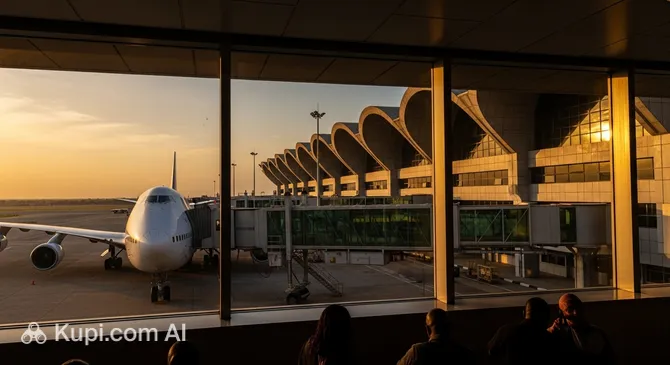
Yundum International Airport. Source: Kupi.com Binoculars

Yundum International Airport (BJL), also known as Banjul International Airport, is the main air gateway to The Gambia and the only commercial airport in the country. It is not just a transport hub, but a facility with an interesting history: in the past, its uniquely long runway was selected by NASA as one of the emergency landing sites for space shuttles. The modern terminal building, opened in 1996, was designed by the renowned Senegalese architect Pierre Goudiaby Atepa, giving it a distinctive architectural appearance.

IATA Code BJL
ICAO Code GBYD
City Banjul
Distance to center approx. 24 km
Status International
Annual Passengers over 400,000
Popular Airlines Brussels Airlines, Royal Air Maroc, Turkish Airlines
Schedule "Yundum International Airport" online board

A key feature of Yundum Airport is its runway, which is 3,600 meters long. This is one of the longest runways in Africa, allowing the airport to handle virtually any type and size of aircraft, from small private jets to large long-haul airliners. Although the airport has only one terminal, it effectively manages passenger traffic, offering essential amenities for travelers, including cafes, duty-free shops, and currency exchange services. Its location makes it a convenient starting point for exploring both the capital and the numerous resorts along the Atlantic coast of The Gambia.

Contact Information

Below you will find essential contact information for Yundum International Airport (BJL), which may be useful when planning your journey.

  • Official Airport Website: For the latest information on flights, services, and regulations, visit the official website at www.banjulairport.com.
  • Information Desk Phone: For general inquiries, you can contact the number: +220 447 3000.
  • Airport Address: Yundum, West Coast Region, The Gambia. The airport is located near the capital city of Banjul.
  • Email: For official inquiries, you can use the email of the Gambia Civil Aviation Authority: info@gcaa.gm.
  • Airport Social Media: Follow news and updates on the airport's official social media pages, such as Facebook.
  • Lost Luggage Information: In case of loss or damage to luggage, it is recommended to first contact your airline's representative or the Lost & Found service directly in the arrival terminal.
  • Passenger Support Contacts: For assistance with general questions regarding your stay at the airport, you can approach the information desk in the terminal or call the main information helpline.

How to Get to the Airport

Yundum International Airport (BJL), the main air gateway to The Gambia, is located approximately 24 kilometers from the capital, Banjul. You can get there from tourist zones or the city center in several ways, varying in cost, comfort, and travel time. The trip from coastal resorts or the capital usually takes between 30 to 45 minutes, depending on traffic conditions.

Taxi is the most common and convenient option. There are two types of taxis in The Gambia. Tourist taxis (green color) usually wait at hotels and have approved, albeit higher, rates. Local taxis (yellow with green stripes) are cheaper, but the fare must be negotiated strictly before the trip begins. For an airport trip, this is a reliable method ensuring comfort and delivery directly to the terminal. Payment is generally made in cash.

A more budget-friendly alternative is shared taxis, known as "gele-gele." These are minibuses or passenger cars running on specific routes. There may not be a direct route to the terminal itself, and a transfer might be required. This option is suitable for travelers with light luggage who are ready for a local experience, as the transport is often crowded. There are no classic city buses in the European sense here.

For those who value independence, car rental is an excellent solution. Car rental desks can be found both at the airport and in major tourist areas. A rented car gives you the freedom to explore the country at your own pace. Yundum Airport has paid parking where you can leave your car for both short and long periods.

Finally, the most hassle-free way to get to the airport is a pre-booked transfer. Many hotels and private transport companies offer this service. The driver will meet you at the designated location and take you directly to the departure entrance. Although this is the most expensive option, it guarantees timely arrival and a stress-free experience, which is particularly important when flying out.

Terminals and Map

Yundum International Airport (BJL), serving the Gambian capital of Banjul, features a simple and clear structure, making it convenient for passengers. All passenger operations are concentrated in one main passenger terminal, which has been modernized to meet contemporary standards.

The airport layout is logical and intuitive. The terminal is divided into two main zones: departures and arrivals. Since there is only one building, you do not need to worry about transfers between terminals. Navigation simply involves following the signs within the single complex.

The Departure Zone is located on one level. Immediately after entering the building, you find yourself in the general hall with airline check-in counters. After checking in and dropping off luggage, passengers proceed to passport control and then security screening. After all formalities, you will find yourself in the "airside" area with boarding gates, a small number of duty-free shops, and cafes.

The Arrival Zone is also organized very simply. After disembarking from the aircraft, passengers follow the corridor to the passport control counters. You then enter the baggage claim hall with several carousels. The final stage is customs control, after which you exit into the general arrival hall for meet-and-greets.

It is recommended to arrive at the airport well in advance, at least 2.5–3 hours before an international flight departure, to complete check-in and pre-flight formalities. Despite the terminal's small size, queues can form during peak hours or when check-in opens for multiple flights simultaneously. Overall, navigating Yundum Airport is straightforward even for first-time visitors—simply follow the standard signage.

Airport History

The history of Yundum International Airport (BJL) is closely tied to the events of World War II. The airfield was built in 1942 by Allied forces and initially functioned as a base for the British Royal Air Force (RAF). Due to its strategic location, it served as a vital transit point for aircraft crossing the Atlantic and a stopover for the US Army Air Forces.

After the war ended, the airfield was transferred to civil authorities and began its transformation into the country's main commercial airport. This transition period laid the foundation for tourism development in The Gambia, as the airport began receiving the first scheduled flights from Europe and neighboring African states, opening this West African nation to the world.

A significant stage in the airport's development was a major reconstruction completed in 1996. During the modernization, a new contemporary passenger terminal was built, and the runway was widened and extended. This allowed the airport to accommodate wide-body aircraft and meet growing international standards for aviation safety and passenger comfort.

One of the most interesting facts in the history of Banjul airport is its selection by the space agency NASA as one of the transatlantic sites for a potential emergency landing of space shuttles. The long runway and favorable geographical location made it an ideal candidate for such a mission, although in practice, this option was never utilized.

Today, Yundum International Airport is not just a transport hub, but a symbol of The Gambia's growth and openness. It continues to serve as the main gateway for thousands of tourists coming to enjoy the unique nature and hospitality of the "Smiling Coast of Africa."

Services and Facilities

Yundum International Airport (BJL) offers passengers all necessary services for a comfortable wait for their flight. Despite its relatively small size, the airport strives to meet the basic needs of travelers arriving in The Gambia or departing from it.

For those wishing to have a snack or do some shopping, the terminal has several cafes and bars where you can order beverages, sandwiches, and light snacks. There are also shops, including Duty Free, where you can purchase perfumes, tobacco products, as well as local souvenirs and handicrafts to take a piece of African flair with you.

Passengers can spend time in the general waiting area or use the VIP Lounge services. It offers a quieter atmosphere, comfortable seating, complimentary beverages and snacks, as well as the latest newspapers. Free Wi-Fi is available throughout the terminal, and special stations and outlets are provided for charging electronic devices.

Currency exchange points and ATMs are located in the airport building, which is particularly convenient for arriving tourists who need to exchange money for Gambian dalasi. Basic banking services are also available. There is a medical post at the airport for first aid.

The airport is equipped to receive passengers with special needs. Wheelchairs and assistance are provided, but it is recommended to notify your airline in advance if such a service is required. For travelers with small children, there are mother and child rooms where you can take care of your baby in a quiet environment.

Although there are no hotels directly on the airport grounds, several accommodation options are located a few minutes' drive from the terminal. There are no specialized conference halls in the airport, but the VIP lounge can be used for business meetings or working in silence.

Where to Eat

While waiting for your flight at Yundum International Airport, you will find several options for a snack or a full meal. Although the selection here is not as vast as in giant hubs, you won't go hungry.

The majority of dining establishments are concentrated in the departure zone, after passing passport control and security (airside). Here you will find both small restaurants with seating and cafeterias offering quicker options. In the arrival zone and the public area of the airport (landside), the choice is generally more modest and limited to small kiosks with beverages and snacks.

For those wanting to enjoy local flavors one last time, it is worth looking for places offering Gambian cuisine. This is a great opportunity to try popular West African dishes such as Jollof rice, Yassa (chicken or fish in onion sauce), or Domoda (meat stew in peanut sauce). Alongside local food, familiar international options are always available: sandwiches, pastries, pizza, and salads.

Regarding special dietary needs, finding vegetarian dishes, such as rice with vegetables or fresh salads, is usually not difficult. Given that The Gambia is a country with a predominantly Muslim population, most meat dishes are likely to be Halal, however, it is always best to verify this directly with the staff. Gluten-free and vegan options may be harder to find, so if you have strict restrictions, it is safer to carry a small supply of food with you.

If you are in a hurry, look for counters with ready-made sandwiches and pastries. For a more leisurely wait, one of the small restaurants where you can order a hot meal would be suitable. Prices at the airport are noticeably higher than in the city, which is standard practice for most airports worldwide. Most cafes and restaurants operate according to the flight schedule, opening early in the morning and closing after the last plane departs.

Travel Tips

Planning a trip through Yundum International Airport will go smoothly if you consider a few tips. This airport is the main air gateway to The Gambia, and knowing its specifics will help you save time and reduce stress.

Arrival Time: It is recommended to arrive at the airport at least 2-3 hours before the departure of international flights. Although the airport in Banjul is not the largest, queues for check-in and security control can be unpredictable, especially during the tourist season.

Check-in and Security: To speed up the process, complete online check-in if your airline offers this option. Have your passport, printed or electronic boarding pass, and other necessary documents ready. Screening procedures are standard, but it is better to prepare liquids and electronics for inspection in advance.

Seat Selection: If you want to enjoy views of the picturesque coastline during takeoff or landing, choose a window seat. For those who value comfort and the ability to stand up freely during the flight, an aisle seat is the best choice.

Hand Luggage: Remember standard restrictions: liquids can be carried in containers no larger than 100 ml, packed in a transparent bag. Sharp objects, weapons, and flammable substances are prohibited. Always check the rules of your specific airline, as they may differ slightly.

Transit Passengers: If you have a connecting flight, follow the "Transit" or "Connections" signs. Clarify in advance whether you need to collect your luggage and check it in again. Usually, when flying with the same airline, luggage is transferred automatically.

Customs Control: When entering the country, be prepared to fill out a migration card and a customs declaration. Honestly declare all goods subject to declaration. Customs officers may conduct random luggage checks.

Saving Time and Money: Exchange currency in the city beforehand, as the rate at the airport is often less favorable. To avoid overpaying for water, bring an empty reusable bottle and fill it after passing security. It is better to order a taxi at the official counter or via a trusted app to avoid inflated prices.

In Case of Flight Delay: If your flight is delayed or canceled, immediately contact your airline representative for information on further actions. Depending on the wait time, you may be provided with beverages, meals, or even hotel accommodation. Since the waiting area in the airport is small, it is useful to have a book, a charged power bank, or pre-downloaded movies with you.

Reached the end of the page?

That means the route is fully explored