Support

Industry Museumsfun Sensenhammer e.V.

About

Immerse yourself in the atmosphere of a bygone era at the Sensenhammer Industrial Museum—a unique place where time seems to have stood still. This historic factory, located in the city of Leverkusen, is the last remaining scythe and sickle production enterprise in the Rhine region. Germany carefully preserves this industrial heritage, having transformed former factory workshops into a “living” museum.
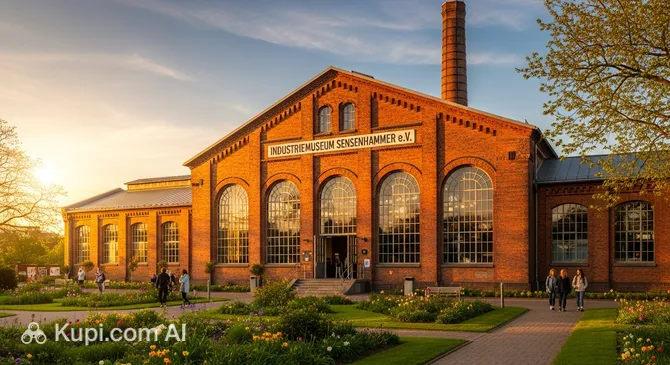
Sensenhammer Industrial Museum
Sensenhammer Industrial Museum. Иллюстрация. Источник: Kupi.com AI

The museum occupies the building of the former H.P. Kuhlmann Söhne factory, which provided tools to farmers for 150 years. Since 2005, this site has functioned as a cultural center where original equipment, heavy forging hammers, and workspaces are preserved in their original state. The symbol of the enterprise became the “heart”—a brand mark that guaranteed the highest quality of forged steel.

Today, it is not just a warehouse for antiquities, but a dynamic space combining technical history and modern culture. Here, you can see a rare combination of massive 19th-century machinery and the atmosphere of a real working village, making Sensenhammer a must-visit for all history and technology enthusiasts.

Contacts

For more information about visiting, booking tours, or organizing events, you can use the following contact details:

How to contactContact
AddressIndustriemuseum Freudenthaler Sensenhammer, Freudenthal 68, 51375 Leverkusen, Германия
Phone+49 214 5007268
Websitewww.sensenhammer.de

What to Do

The highlight of a visit to the museum is the regular blacksmithing demonstrations. You can see with your own eyes how experienced craftsmen transform a red-hot steel bar into an elegant sickle. The process involves 12 complex processing stages, and the roar of historical hammers and the heat of real furnaces allow you to fully experience the intensity and beauty of this ancient craft.

In addition to the permanent exhibition dedicated to the social history of workers and the evolution of agriculture, the museum functions as an active cultural center. Temporary exhibitions, literary readings, and theatrical performances are often held here. Jazz festivals held in the authentic interiors of the former workshops have gained particular popularity.

For those looking for an unusual location for their own events, the museum offers opportunities to organize private functions. The industrial charm and preserved architecture make this a popular spot for weddings, corporate events, and retro-style photoshoots.

Getting There

The Freudenthal Sensenhammer Industrial Museum is located at Freudenthal 68 in the picturesque district of Schlebusch. This site is situated in the state of North Rhine-Westphalia, approximately 20 kilometers south of Cologne, making it easily accessible for tourists traveling through the region.

The most convenient way to reach the museum is by public transport or car. Leverkusen has excellent rail connections with neighboring metropolises. From the central station or the nearest subway stations, you can take a bus to the Schlebusch district, followed by a local taxi or a short walk. For those who prefer their own transport, parking is available on the museum grounds.

Ближайший город: Leverkusen

History & Facts

The history of this site began as far back as 1778, when the merchant Derich van Hees received permission to build the first hammer mill on the Dhünn River. Initially, it produced steel blanks, and it was only decades later, in 1837, under the ownership of the Kuhlmann family, that the factory specialized in the production of agricultural tools—scythes and sickles.

At the beginning of the 20th century, the enterprise experienced its heyday. In 1906, the factory was connected to the power grid, and by 1914, production volumes reached their peak at over 200,000 units per year. Tools under the “Heart” (Herz) brand were exported worldwide and were famous for their unsurpassed forging quality.

Unfortunately, the era of manual labor gradually faded away due to the mechanization of agriculture. In 1987, production was finally halted. However, thanks to the efforts of a community organization, the state-protected building was saved and transformed into a unique museum complex in 2005.

Time Needed

To fully appreciate the exhibition and the atmosphere of the museum, it is recommended to set aside 2 to 3 hours. This is enough time to leisurely explore the historic workshops, watch the blacksmiths at work, and study the evolution of the technology.

If your visit coincides with a cultural event, such as a jazz concert or a theatrical performance, you should plan for half a day. The unique industrial setting encourages visitors to stay longer and enjoy art in an unusual environment.

Working Hours

The Sensenhammer Industrial Museum is open to visitors according to the following schedule: Tuesday, Wednesday, and Thursday — from 10:00 to 13:00; Saturday and Sunday — from 12:00 to 17:00. Monday and Friday are closing days.

Please note that the schedule may change on days when special concerts or private events are held. We strongly recommend checking the information on the museum's official website before your trip.

DayWorking hours
понедельникЗакрыто
вторник10:00–13:00
среда15:00–18:00
четверг10:00–13:00
пятницаЗакрыто
суббота12:00–17:00
воскресенье12:00–17:00

Nearby

Exploring the surroundings of the Schlebusch district can significantly enrich your trip. After immersing yourself in the industrial aesthetics of the museum, it is worth strolling through the quiet streets and visiting local establishments to experience the authentic spirit of a German town.

NameDistance
Am Hornpottweg1.9 km
Aiko Sushi & Grill2.3 km
Hana Sushi Lounge & Restaurant3.5 km
Notenschlüssel4.7 km
Stilbruch4.9 km
FUN FABRIK Leverkusen5.6 km
Hatay Döner5.6 km

Reached the end of the page?

That means the route is fully explored