Support

Styrum

About

Imagine a corner of tranquility and history tucked away on the banks of the scenic Ruhr River. Schloss Styrum (Styrum Castle) is a magnificent architectural monument that serves as a reminder of the region's medieval grandeur. Located in the Mülheim an der Ruhr district, this castle is closely linked to the history of the city of Oberhausen and is a must-visit for those drawn to the charm of old-world Germany.
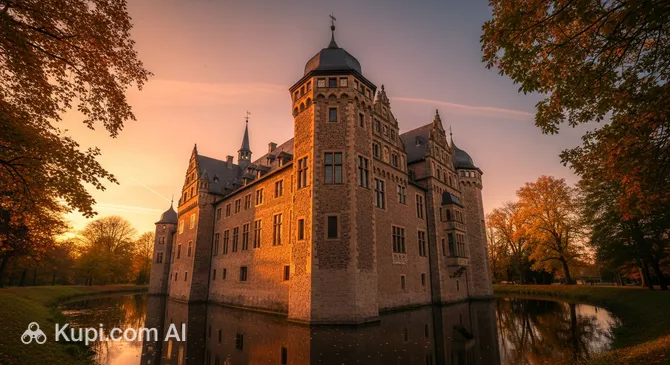
Styrum Castle
Styrum Castle. Иллюстрация. Источник: Kupi.com AI

Founded back in 1289 by Count Dietrich von Altena-Isenburg, the castle served for centuries as the ancestral seat of the influential Limburg-Styrum dynasty. Its appearance is a fascinating blend of eras: from its rugged medieval roots to elegant Baroque elements and late 19th-century modernization carried out by the famous industrialist August Thyssen.

Today, it is not just a historical building but an important cultural site surrounded by a magnificent formal park. The castle attracts travelers with its cozy atmosphere, its preserved clock tower, and its status as a former Imperial fiefdom, making it a significant monument of the country's cultural heritage.

Contacts

To clarify visit details or room rentals, you can use the official contact information. The castle is located in a quiet area and is easy to find using navigation.

How to contactContact
AddressMoritzstraße 102, 45476 Mülheim an der Ruhr, Германия
Phone+49 1517 4451082
Websitewww.schloss-styrum-muelheim.de

What to Do

A visit to this site offers an opportunity to touch history through its architectural details. First and foremost, you should take note of the manor house and the famous clock tower, erected in the 17th century. Walking around the buildings, you can see how Baroque elements and later reconstructions intertwine, creating the unique appearance of the residence.

A walk through the formal park, which was laid out in the 18th century, will be particularly enjoyable. Here, you can enjoy the silence, have a small picnic in the shade of the trees, or take up photography—the views of the castle and the banks of the Ruhr are truly postcard-perfect. The park was completely renovated for the 1992 garden show, so it delights visitors with its neatness and beauty at any time of year.

For history buffs, the castle is interesting as a subject for studying the industrial development of the region and the lives of noble families. Although the castle is not always open for interior tours, its exteriors and information displays about the Limburg-Styrum dynasty allow you to immerse yourself in the atmosphere of the past. It is an excellent place for a quiet family getaway, where you can combine an educational walk with relaxation in the fresh air.

Getting There

Reaching this historical location is quite simple. If you are traveling from the center of Oberhausen, the most convenient option is to take the S-Bahn train to the Mülheim (Ruhr)-Styrum station. The journey takes about 20 minutes, followed by a 10–15 minute walk through the scenic streets of the district.

For those preferring local public transport within Mülheim, trams and buses run regularly to the Styrum district. The walk to the castle from the public transport stops is also short. Alternatively, you can always use a local taxi, which will quickly take you to the main gates from any metro or train station.

Travelers by car should follow the A40 autobahn, taking the Mülheim an der Ruhr-Styrum exit. The drive from nearby Essen or Düsseldorf takes between 30 and 45 minutes. Parking spaces are available in the vicinity of the castle. Additionally, the area is popular with cyclists due to its proximity to the Ruhr River and well-maintained bike paths.

Ближайший город: Oberhausen

History & Facts

The history of this site is rooted in the High Middle Ages. As far back as 1067, King Henry IV granted these lands to Kaiserswerth Abbey. However, the construction of the castle itself did not begin until 1289. Its founder was Count Dietrich von Altena-Isenburg, who settled here after the defeat at the Battle of Worringen. His son, Eberhard I, became the progenitor of the famous Limburg-Styrum dynasty, and the estate itself received the prestigious status of an Imperial fiefdom.

The castle has undergone many transformations, reflecting the changing eras. For a long time, there was no grand manor house on its territory—it only appeared in 1442. In the mid-17th century, under Count Moritz, the complex was graced by an elegant clock tower, which became one of its symbols. After a devastating fire in the early 18th century, the castle was restored in the then-fashionable Baroque style, and a formal park was laid out around it.

In the 19th century, the appearance of the castle changed once again: in 1890, it was purchased by the industrial tycoon August Thyssen. He modernized the building, adapting it as a residence for the director of his enterprise. It was then that the castle acquired features close to its modern appearance. The Limburg-Styrum family, who owned these lands for centuries, left an indelible mark on the region's history, turning the castle into one of the most important cultural centers on the banks of the Ruhr.

The modern chapter in the monument's life began in 1959 when it passed into municipal ownership. For the large-scale garden show in 1992, a thorough restoration was carried out, which allowed this centuries-old heritage to be preserved for future generations of tourists and locals.

Time Needed

A leisurely introduction to the architecture and atmosphere of this place usually takes about 1–2 hours. This is quite enough time to view the exterior of the manor house, admire the clock tower, and take a stroll along the well-kept paths of the park.

If you plan to have a small picnic on the grass or want to study the information boards telling the history of the Limburg-Styrum dynasty in detail, it is worth setting aside about 3 hours for the visit. The castle is often visited as part of a larger route along the Ruhr Valley, combined with tours of neighboring fortresses and museums.

Working Hours

Currently, access to the grounds of the park adjacent to the castle is usually open to visitors throughout the day. Regarding the interior rooms of the castle itself, access to them may be limited or coincide with special events and exhibitions.

As the castle is under municipal management, operating hours may vary. Before your trip, we strongly recommend checking the latest information on the official website or contacting the administration by phone to clarify the possibility of viewing the interiors.

Nearby

Exploring the surroundings of the castle can significantly enrich your trip. The region is famous for its industrial heritage transformed into art spaces and modern entertainment centers that will be of interest to both adults and children.

Nearby, you will find many outdoor activity areas, theme parks, and unique landscape sites that offer a different perspective on the region's history and culture.

NameDistance
Aquarius Water Museum0.1 km
Ruhr Park2 km
Desnaa Bar2.9 km
LVR Industrial Museum Zinc Factory Altenberg3.5 km
Zentrum Altenberg3.6 km
Maki & Tea Oberhausen4.5 km
Planet Lasertag4.7 km

Reached the end of the page?

That means the route is fully explored