Support

Stadtmuseum Siegburg

About

If you want to truly discover the essence and development of historic Siegburg, your journey should begin right here. The Siegburg City Museum is more than just a repository of antiquities; it is a vibrant cultural center housed within the walls of the former Latin School. This building is also notable as the birthplace of the great German composer Engelbert Humperdinck.
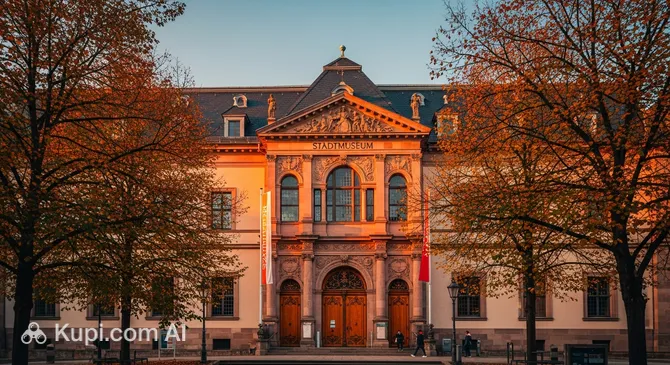
Siegburg City Museum
Siegburg City Museum. Иллюстрация. Источник: Kupi.com AI

Today, this museum in Germany is considered one of the most important regional collections, covering a vast period of time—from prehistoric fossils to contemporary art. Unique artifacts are spread across 2,000 m², including a world-class collection of medieval and Renaissance ceramics that made this region famous throughout Europe.

Visitors can expect four floors of fascinating discoveries, including atmospheric medieval cellars with vaulted ceilings. Thanks to recent renovations, the museum has become part of a modern cultural space that combines history, a library, and a venue for concerts, making it a point of attraction for all connoisseurs of European culture.

Contacts

For further details before your visit or to organize a group tour, you can use the official communication channels. Museum staff will promptly answer your questions via phone or email.

Detailed contact information is provided below:

How to contactContact
AddressMarkt 46, 53721 Siegburg, Германия
Phone+49 2241 1027410
Websitewww.stadtmuseum-siegburg.de

What to Do

Within the museum's halls, a fascinating journey through the centuries awaits: from rare Upper Oligocene fossils to exquisite craftsmanship of the past. The main highlight for visitors is the world-famous collection of Siegburg ceramics from the 13th to 17th centuries. By examining these vessels and everyday objects, one can trace how the tastes and techniques of artisans evolved over hundreds of years.

Be sure to head down to the medieval vaulted cellars, where preserved elements of the ancient town hall foundations are integrated directly into the exhibition space. Art lovers will appreciate the temporary exhibitions featuring works by contemporary artists, including large-scale installations and graphics, creating an intriguing contrast with the historical artifacts.

Since the museum functions as an open cultural forum, you can often attend a lecture, an intimate concert, or a creative evening here. For those traveling with family, special pedagogical programs are available that turn the study of history into an exciting quest for children. After touring the exhibits, it is pleasant to visit the adjacent library building, which is connected to the museum in a single modern complex.

Getting There

Finding your way to the museum is easy, as it is located in the heart of the city at Markt 46. If you prefer public transport, the best option is to take the S-Bahn suburban trains (lines S12, S13, or S19) to the Siegburg Bf station. From the station, the museum complex is just a 5–10 minute walk away, following Hauptstraße directly to the market square.

For those traveling by car, the most convenient route is via the A3 motorway (Kreuz Bonn/Siegburg interchange), transitioning to the A560 toward Bonn/Siegburg. Take exit No. 3 (St. Augustin) and follow Bonner Straße toward the city center. Several city parking lots are located in the immediate vicinity of the Markt square where you can leave your car during your visit.

The museum is also easily reachable by taxi from anywhere in the city center, with the ride taking only a few minutes. Its convenient location allows you to combine your cultural program with a visit to the Michaelsberg hill, which is within walking distance.

Ближайший город: Siegburg

History & Facts

The history of the museum's collection began in 1903 on the initiative of Mayor Karl Plum. It was then that an archaeological society was founded with the goal of preserving the region's cultural heritage. For decades, the collection moved from one building to another, including the premises of Michaelsberg Abbey, until it found its permanent home in the current building on the Markt square in 1990.

The museum building itself is an important architectural monument—it is the former Latin School, built in 1826 in the Neoclassical style. It stands on the foundations of the medieval town hall, and the famous composer Engelbert Humperdinck was born within its walls in 1854. Until the beginning of the 20th century, it housed a grammar school, and later the building was occupied by judicial and financial authorities.

During a major reconstruction from 1988 to 1990, architect Hartmut de Corné successfully harmonized the historic layout with modern museum requirements. One of the most impressive architectural features was the integration of the medieval vaulted cellars directly into the exhibition space, allowing visitors to literally touch the city's history, which is rooted deep in the past.

Time Needed

To leisurely explore all four levels of the museum, discover the archaeological finds, and appreciate the famous ceramics collection, a typical visitor will need approximately 2–3 hours. This is enough time to walk through the main halls and visit the historic cellars.

If you plan to visit one of the temporary art exhibitions or if your visit coincides with a cultural event in the museum's forum, you should budget up to 4 hours. Families traveling with children are also recommended to allow more time, as the exhibition includes interactive elements that often capture the attention of young explorers.

Working Hours

The museum's doors are open to guests throughout the week, except for Monday, which is traditionally the day off. From Tuesday to Saturday, the exhibitions are accessible from 10:00 AM to 5:00 PM, and on Sunday, the opening hours are extended until 6:00 PM, which is convenient for those planning a weekend trip.

Before visiting on public holidays, it is recommended to check the current schedule on the institution's official website, as there may be temporary changes to the hours. Special entry conditions are often available for regional tourist card holders, which is worth considering when planning your budget.

DayWorking hours
понедельникЗакрыто
вторник10:00–17:00
среда10:00–17:00
четверг10:00–17:00
пятница10:00–17:00
суббота10:00–17:00
воскресенье10:00–18:00

Nearby

After exploring the museum collections, be sure to take some time to stroll around the neighborhood. The city center is rich in historical details and cozy corners that will help you feel the local atmosphere even more deeply.

Exploring the nearby sites will allow you to see the remains of ancient fortifications and enjoy the panoramic views offered by the surrounding heights.

NameDistance
Roestburg0.3 km
Tuscolo Siegburg0.3 km
Tapeña Tapas Bar0.4 km
Agger Weir2.3 km
HUMA Shopping Park Sankt Augustin2.4 km
Minigolf Troisdorf2.5 km
Butcher's Sportsbar2.5 km

Reached the end of the page?

That means the route is fully explored